
Contagious Footrot In Sheep: 5-Point Control Plan For Flocks
Comprehensive guide to understanding, treating, and preventing contagious footrot in sheep flocks for optimal animal welfare and farm productivity.
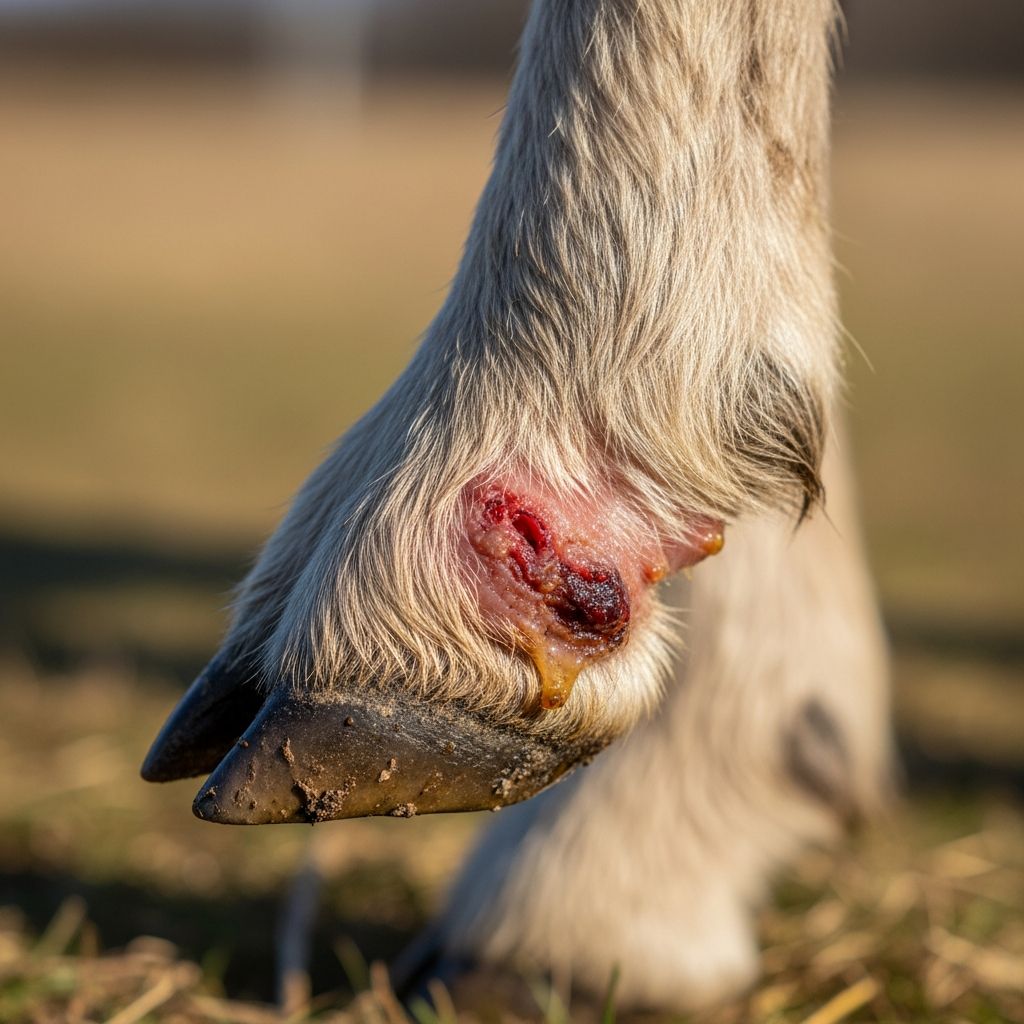
Contagious footrot represents a significant bacterial infection affecting sheep hooves, leading to widespread lameness and substantial production losses in flocks worldwide. This polymicrobial disease primarily involves Dichelobacter nodosus and Fusobacterium necrophorum, thriving in moist environments and causing separation between the hoof wall and underlying tissues.
Understanding the Bacterial Culprits Behind Footrot
The development of footrot hinges on a synergistic interaction between two key bacteria. Fusobacterium necrophorum, commonly present in soil, manure, and the sheep rumen, initiates the process by penetrating minor hoof cracks or abrasions, leading to interdigital dermatitis or foot scald—a milder precursor condition. This bacterium produces toxins that soften and erode the skin between the toes, creating an entry point for the more virulent Dichelobacter nodosus.
Dichelobacter nodosus is the primary pathogen responsible for true footrot, as it invades the softened tissues and enzymatically digests the hoof matrix, resulting in under-running of the hoof wall. This bacterium is highly contagious, spreading via direct contact, contaminated environments, or fomites like bedding and pasture. Unlike F. necrophorum, D. nodosus cannot survive long outside the host, emphasizing the importance of flock management in controlling outbreaks.
Factors That Promote Footrot Outbreaks
Several environmental and management factors exacerbate footrot incidence. Prolonged wet weather, especially temperatures below 10°C combined with high rainfall, maintains damp conditions ideal for bacterial proliferation. Overgrown hooves from irregular trimming trap moisture and feces, fostering infection.
- High stocking densities increase contamination through shared mud and manure.
- Poor drainage in paddocks and housing leads to persistent wetness.
- Nutritional deficiencies, particularly in minerals like zinc, weaken hoof integrity.
- Introduction of carrier sheep without quarantine spreads virulent strains.
Genetic resistance varies among breeds; some lines show higher susceptibility, influencing selective breeding programs.
Recognizing Early and Advanced Clinical Signs
Early detection is crucial for limiting spread. Initial signs mimic foot scald: mild lameness, redness, and swelling between the digits, often with a grayish exudate. Affected sheep may avoid hard ground, showing a characteristic hopping gait.
As infection progresses to virulent footrot, under-running lesions extend proximally, lifting the hoof wall and exposing sensitive corium. Key indicators include:
- Acute pain causing reluctance to bear weight, leading to recumbency.
- Fetid odor from necrotic tissue breakdown.
- Hoof wall detachment, sometimes with purulent discharge.
- Chronic cases feature deformed hooves and persistent carriers.
Systemic signs like elevated rectal temperature (above 40°C), tachycardia, and tachypnea may occur in severe cases. Differentiate from other lameness causes like white line disease or abscesses via characteristic odor and lesion location.
Diagnostic Approaches for Accurate Confirmation
Veterinary diagnosis combines clinical examination with laboratory tests. Thorough hoof inspection after paring reveals under-running and odor. Bacteriological culture or PCR from lesion swabs confirms D. nodosus serotypes, aiding targeted vaccination.
Flock-level assessment involves scoring systems: Score 0 (sound), 1 (scald), 2 (mild footrot), 3 (severe), 4 (chronic). Radiography detects deep bone involvement in refractory cases. Early intervention prevents escalation, reducing culling rates.
Core Treatment Protocols: Trimming, Footbaths, and Medications
Effective treatment demands an integrated approach. Begin with precise hoof paring to expose infected tissue without excessive bleeding, which obscures lesions.
Footbaths are cornerstone therapy. Zinc sulfate (8-10% solution) or copper sulfate penetrates crevices, killing bacteria and promoting epithelialization. Protocol:
| Step | Details | Frequency |
|---|---|---|
| Preparation | Pare hooves, clean feet | Once at start |
| Footbath | Zinc/copper sulfate, 15-20 min soak | Daily x 3-5 days, then weekly |
| Drying | Stand on slats/dry lot 1-2 hours post-bath | After each bath |
Antibiotics target systemic spread. Long-acting oxytetracycline (10 mg/kg IM) for 3-5 days, combined with topical sprays, yields high cure rates. Anti-inflammatories like meloxicam (0.5 mg/kg) alleviate pain and swelling. Avoid standalone antibiotics; pair with hygiene.
Vaccination Strategies for Footrot Control
Multivalent vaccines against D. nodosus serogroups reduce lesion severity and transmission, especially in endemic areas. Administer two doses 4-6 weeks apart, with boosters every 10-12 weeks during risk periods. Vaccines protect clean sheep but offer limited cure for infected ones. Efficacy reaches 70-90% in naive flocks.
Prevention: Building Resilient Flock Environments
Proactive measures form the five-point plan for lameness control:
- Cull carriers: Identify and remove chronically infected sheep post-treatment.
- Early treatment: Monitor and isolate lame animals weekly.
- Quarantine newcomers: Inspect and footbath introductions for 4 weeks.
- Routine footbaths: Every 7-14 days in wet seasons.
- Optimize environments: Ensure dry bedding, pasture rotation, and drainage.
Regular hoof trimming (every 6-8 weeks), genetic selection for resistance, and zinc supplementation bolster defenses. Avoid overcrowding; maintain 10-15 sheep per acre in pastures.
Eradication Programs for Persistent Infections
For total elimination, implement phased programs: Inspect all feet biweekly, treat aggressively, vaccinate, then cull scores 3-4 after 8-10 weeks dry weather. Success rates exceed 95% with compliance, though labor-intensive. Monitor via ELISA for subclinical carriers.
Economic Impacts and Farm-Level Decision Making
Footrot costs millions annually through reduced weight gain (20-30%), wool loss, and culling. Treatment expenses include labor, drugs, and vaccines, but ROI from prevention averages 5:1. Small flocks prioritize footbaths; large operations invest in eradication.
Frequently Asked Questions (FAQs)
What causes footrot in sheep?
Primarily Dichelobacter nodosus following Fusobacterium necrophorum invasion in wet conditions.
How do I differentiate footrot from foot scald?
Scald lacks hoof separation and odor; footrot shows under-running and foul smell.
Can footrot be cured completely?
Yes, with thorough paring, footbaths, antibiotics, and culling—eradication possible in 8-12 weeks.
Is vaccination 100% effective?
No, 70-90% reduction in severity; best for prevention in clean flocks.
How often should I footbath my flock?
Weekly during outbreaks or wet weather; biweekly for maintenance.
References
- Foot Rot in Sheep: Symptoms, Treatment, and Prevention — RVS Vet. Accessed 2026. https://rvsvet.com/foot-rot-in-sheep-symptoms-treatment-and-prevention/
- Footrot in Sheep — Cornell Small Farms. 2024-04-01. https://smallfarms.cornell.edu/2024/04/footrot-in-sheep/
- Ovine Footrot and Its Clinical Management — Dove Press (VMRR). Accessed 2026. https://www.dovepress.com/ovine-footrot-and-its-clinical-management-peer-reviewed-fulltext-article-VMRR
- Contagious Foot Rot – An Update — Utah State University Digital Commons. Accessed 2026. https://digitalcommons.usu.edu/cgi/viewcontent.cgi?article=1133&context=extension_histall
- Footrot in Sheep and Goats — Leatherstocking Veterinary Group. Accessed 2026. https://leatherstockingvetgroup.com/footrot-in-sheep-and-goats/
- Treating Sheep with Footrot — Agriculture Victoria (.gov.au). Accessed 2026. https://agriculture.vic.gov.au/biosecurity/animal-diseases/sheep-diseases/footrot-in-sheep/treating-sheep-with-footrot
- Foot Rot Control — Oklahoma State University Extension. Accessed 2026. https://extension.okstate.edu/fact-sheets/foot-rot-control.html
Similar Articles








Read full bio of Sneha Tete


