

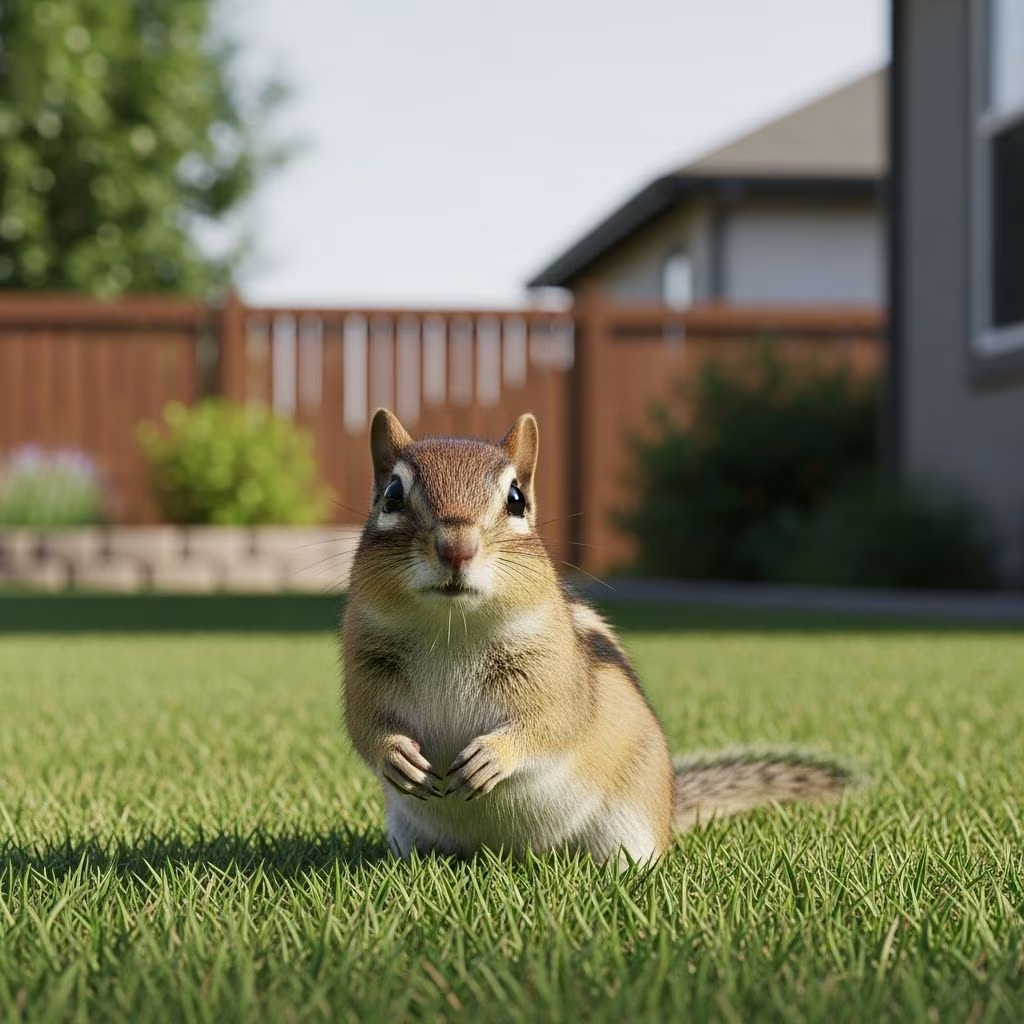
Chipmunks are small, striped rodents common in North American yards, forests, and urban edges. While charming, their burrowing and foraging can damage gardens, foundations, and patios. This guide provides humane strategies to understand and address chipmunk presence effectively.
Understanding Chipmunk Biology and Appearance
Chipmunks belong to the squirrel family, measuring 5 to 6 inches long with bushy tails and distinctive stripes: one central stripe on the back flanked by two on each side, plus facial stripes. Eastern chipmunks (*Tamias striatus*) are widespread in the east, while western species like least chipmunks inhabit drier regions. They weigh 1 to 5 ounces, with males slightly smaller than females.
These agile climbers and diggers thrive from sea level to high altitudes, adapting to forests, rocky areas, and suburbs. Their cheek pouches expand to carry food, enabling efficient hoarding. Lifespan averages 2-3 years in the wild, though some reach 8 years in captivity.
Preferred Habitats and Daily Movements
Chipmunks favor areas with dense ground cover like shrubs, logs, rocks, and stumps, providing escape from predators. Deciduous forests and woodland edges are ideal, but they readily inhabit urban parks, hedges, and residential yards near cover.
Burrows form complex networks up to 3 feet deep and 12 feet long, featuring shallow foraging tunnels, deeper nests lined with soft plants, food chambers, and waste areas. Entrances, often under foundations or patios, are 1-2 inches wide with dirt piles nearby. Chipmunks rarely stray beyond a third of a mile from home, staying territorial.
- Shallow burrows for daytime refuge.
- Deep burrows for nesting, storage, and winter torpor.
- Proximity to cover reduces predation risk.
Diet and Foraging Patterns
Omnivorous chipmunks eat seeds, nuts, berries, grains, fruits, bulbs, roots, fungi, insects, worms, snails, slugs, bird eggs, and occasionally small vertebrates. Near homes, they raid bird feeders, pet food, gardens, and crops like corn.
| Food Category | Examples | Seasonal Notes |
|---|---|---|
| Plants | Nuts, seeds, berries, bulbs, mushrooms | Hoarded in fall for winter |
| Animals | Insects, worms, eggs, small frogs | Opportunistic year-round |
| Human Sources | Birdseed, pet food, veggies | Common in yards |
Diurnal foragers stuff cheek pouches—up to 72 sunflower seeds—and cache food in burrows. They climb trees for acorns or berries, aiding seed dispersal ecologically.
Seasonal Behaviors and Reproduction
Active daytime from spring to fall, chipmunks hoard in late summer/fall. Eastern species enter torpor (not full hibernation), with body temperature dropping to 5-7°C, waking for cached snacks. Western chipmunks rely solely on stores without torpor. Warm winter days prompt brief surfacing.
Breeding occurs twice yearly (spring/summer); litters of 2-8 young emerge after 30 days’ gestation, independent in 8 weeks. Vocalizations include shrill chirrs for alarms.
Signs of Chipmunk Activity Around Homes
Detect issues early:
- Small dirt mounds (1-2 inches) near foundations, patios, walkways.
- Chewed bulbs, raided feeders, eaten veggies/berries.
- Shrill chipping sounds, quick scampering.
- Greasy rub marks on beams from grooming.
- Visible 1-2 inch burrow holes under cover.
Burrows weaken structures, flood basements, or undermine sidewalks.
Why Chipmunks Cause Property Concerns
Though ecologically vital for seed spread and fungi dispersal, chipmunks near homes excavate under slabs, eat gardens, and compete with birds. Dense populations amplify damage in suburbs.
Humane Deterrence Techniques
Prevention prioritizes exclusion over removal.
Habitat Changes
- Clear ground cover: Trim shrubs, remove woodpiles, rocks within 20 feet of structures.
- Install gravel (1/4-inch) 2-3 feet wide around foundations to deter digging.
- Seal cracks >1/4-inch in foundations, chimneys with hardware cloth (1/4-inch mesh).
Repellents and Barriers
Use predator urine (fox/coyote), capsaicin sprays on plants/feeders, or ultrasonic devices. Cover bulbs with wire mesh; use baffles on feeders/poles.
| Method | Pros | Cons |
|---|---|---|
| Gravel Barriers | Long-lasting, low-cost | Initial labor |
| Capsaicin Repellents | Plant-safe | Needs reapplication |
| Hardware Cloth Fencing | Exclusion-focused | Installation time |
Trapping and Relocation Best Practices
If needed, use single-door live traps baited with peanut butter/seeds. Check hourly, provide shade/water. Release >10 miles away in similar habitat per local laws. Cover traps to reduce stress.
Advanced Exclusion for Persistent Issues
For heavy infestations:
- Bury 1/4-inch mesh 2 feet deep, 1 foot above around patios.
- Fill burrows with gravel/soil, monitor collapses.
- Professional one-way doors on active burrows.
Avoid poisons/glue traps—inhumane and risky to pets/wildlife.
Coexisting with Chipmunks Naturally
Encourage distance:
- Plant deterrents: Alliums, marigolds, daffodils.
- Provide bird feeders >5 feet high with baffles.
- Attract predators: Owls via boxes, hawks with perches.
Chipmunks benefit ecosystems by dispersing seeds/plants.
Common Questions About Chipmunks
FAQ
Do chipmunks damage home foundations?
Yes, burrows under slabs can cause settling/cracking.
Are chipmunks active in winter?
Eastern chipmunks torpor; may emerge on warm days.
What’s the best bait for chipmunk traps?
Peanut butter, sunflower seeds, oats.
Can I keep chipmunks as pets?
Not recommended; wild temperament, legal issues.
How to stop chipmunks from eating garden bulbs?
Plant in wire baskets, use repellents.
Legal and Seasonal Considerations
Check local wildlife laws before trapping. Peak activity: spring-fall; reduce food sources then. Populations peak post-breeding.
References
- Chipmunk Facts — Havahart. Accessed 2026. https://www.havahart.com/chipmunk-facts
- Chipmunk Information and Biology — AAAnimal Control. Accessed 2026. http://www.aaanimalcontrol.com/professional-trapper/chipmunkinformation.html
- Chipmunks — Mass Audubon. Accessed 2026. https://www.massaudubon.org/nature-wildlife/mammals-in-massachusetts/chipmunks
- Chipmunk — Wikipedia (informed by primary sources). Accessed 2026. https://en.wikipedia.org/wiki/Chipmunk
- Keeping the Peace Between Gardeners and Chipmunks — National Wildlife Federation. 2014-05. https://blog.nwf.org/2014/05/keeping-the-peace-between-gardeners-and-chipmunks/
- Chipmunk Behavior — Critter Control. Accessed 2026. https://www.crittercontrol.com/wildlife/chipmunks/behavior/
- How To Care For Pet Chipmunks — RSPCA. Accessed 2026. https://www.rspca.org.uk/adviceandwelfare/pets/rodents/chipmunks



