Carp Pox In Koi Fish: Comprehensive Management Guide
Discover effective strategies to identify, manage, and prevent carp pox in your koi pond for healthier, vibrant fish.
Managing Carp Pox in Koi Fish
Carp pox, a persistent viral condition primarily affecting koi and common carp, manifests as distinctive skin growths but rarely threatens the fish’s life. Effective management revolves around bolstering the fish’s immune response through optimal environmental conditions rather than curative treatments, as the herpesvirus responsible remains lifelong in infected individuals.
Recognizing the Signs of Carp Pox
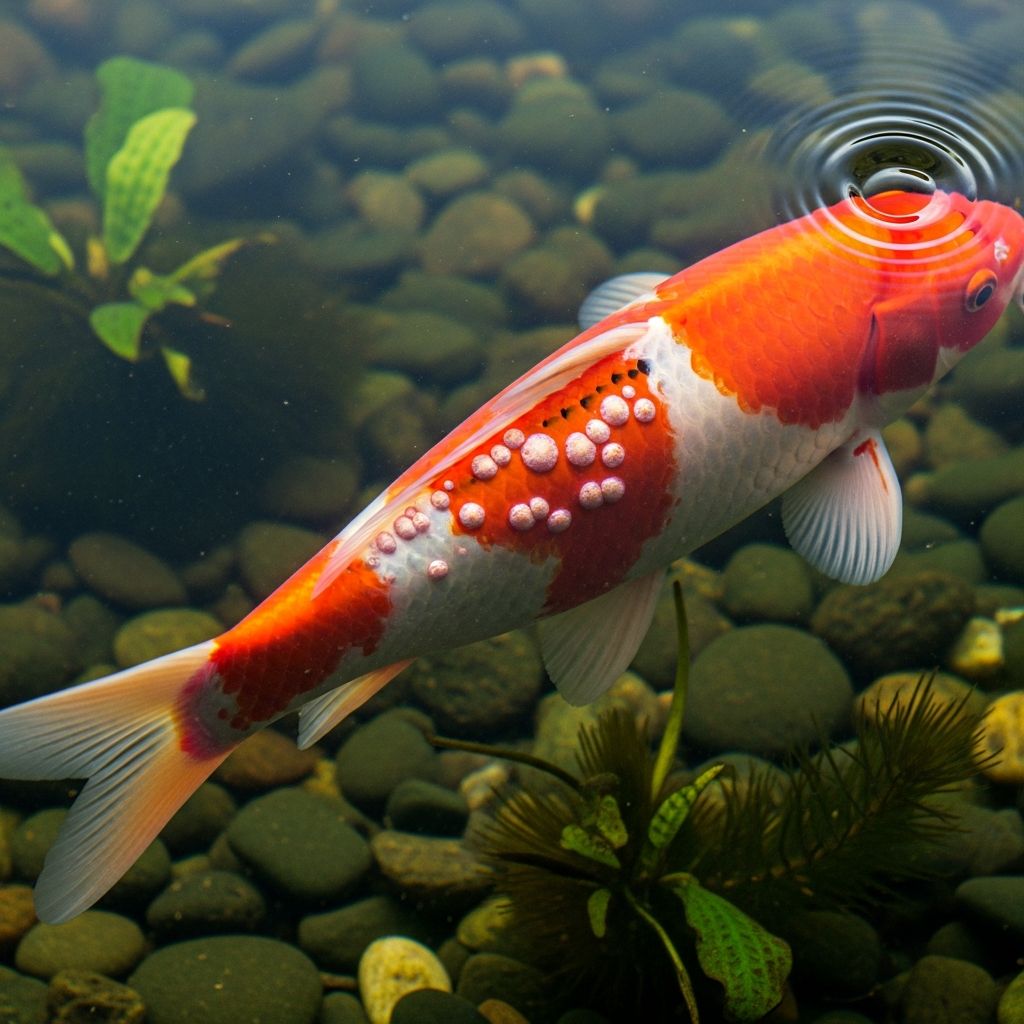
Early identification of carp pox is crucial for preventing complications. The condition typically presents with raised, smooth lesions on the skin that resemble droplets of wax, varying in color from milky white to gray or brownish hues. These growths can appear anywhere on the body, including fins, where they may cause epidermal thickening mistaken for mucus buildup or parasitic activity.
In mild cases, lesions are small and isolated, causing no apparent distress. However, severe outbreaks feature numerous, larger nodules that disfigure the fish, potentially reducing its market value or aesthetic appeal in ornamental ponds. Affected koi might exhibit subtle behavioral shifts, such as reduced feeding enthusiasm or increased lethargy, signaling underlying immune suppression.
- Primary visual cues: Wax-like bumps, smooth texture, variable sizing.
- Common locations: Body flanks, head, barbels, fin edges.
- Associated behaviors: Appetite loss, hiding, slower swimming.
The Viral Culprit Behind Carp Pox
Carp pox stems from a herpesvirus, specifically Cyprinid herpesvirus-1 (CyHV-1), one of the earliest documented fish pathogens. This DNA virus targets epidermal cells, inducing hyperplasia—the excessive growth of skin tissue—leading to the characteristic papillomas. Unlike acute viruses, it establishes latency in neural tissues, allowing lifelong carriage without constant symptoms.
Transmission occurs rapidly in shared waters via direct contact, contaminated equipment, or latent carriers shedding virus intermittently. Stressors like poor water quality, overcrowding, or temperature fluctuations trigger outbreaks by compromising immunity, enabling viral replication.
| Factor | Impact on Outbreak |
|---|---|
| Water Temperature | Higher temps (>24°C) promote faster skin shedding and symptom resolution; cooler waters prolong lesions. |
| Immune Status | Weakened by stress, leading to visible signs in carriers. |
| Transmission Mode | Waterborne, contact; all pond mates infect upon first sign. |
Differentiating Carp Pox from Similar Conditions
Misdiagnosis can lead to ineffective interventions. Carp pox lesions mimic several issues: parasitic infestations produce excess mucus without firm nodules; bacterial ulcers feature ragged edges and redness; skin cancers like hikui present firmer, darker growths unresponsive to temperature changes.
Professional differentiation often involves gill biopsies or PCR testing to detect viral DNA, ruling out mimics. Visual exams by aquatic vets distinguish epidermal thickening from fin rot or columnaris infections.
Core Management Strategies for Affected Koi
No antiviral eliminates the herpesvirus, but symptoms regress naturally with immune support. Warmer water accelerates epidermal turnover, sloughing off infected layers; aim for 24-30°C during active phases if heating is feasible.
Surgical excision of prominent lesions improves cosmetics but risks stress and bacterial entry—reserve for show fish under veterinary supervision. Prioritize holistic care:
- Maintain pristine water: Ammonia/nitrite at 0 ppm, pH 7.0-8.0, regular partial changes.
- Enhance nutrition: High-quality koi feed with immunostimulants like beta-glucans.
- Minimize stressors: Reduce handling, ensure ample oxygenation.
Monitor for secondary invaders—Aeromonas or Pseudomonas bacteria exploiting lesion breaches. Vet-prescribed antibiotics (e.g., via bath or injection) target these, preventing ulcers or sepsis.
Environmental Optimization for Prevention
Proactive pond husbandry curbs outbreaks. Quarantine new fish for 4-6 weeks, testing for carriers. UV sterilizers and biofilters curb viral loads indirectly by fostering beneficial microbes.
Seasonal management is key: Elevate temperatures in spring/fall to suppress replication; overwintering below 10°C halts activity but preserves latency. Avoid overstocking—limit to 1 koi per 1000 gallons.
Long-Term Prognosis and Fish Well-Being
Infected koi often thrive indistinguishably from healthy peers post-symptom resolution, enjoying normal lifespans. Lesions may recur with stress but pose minimal mortality risk unless compounded by neglect.
Owners report success raising temperatures seasonally, yielding blemish-free fish for exhibitions. Emphasize resilience: A robust immune system, not eradication, defines success.
Frequently Asked Questions
Is carp pox fatal to koi?
No, it is cosmetic and self-limiting in most cases, with fish living full lives as carriers.
Can I remove the lesions myself?
Avoid DIY surgery; professional intervention minimizes infection risk.
How do I prevent spread to new fish?
Quarantine rigorously; consider culling carriers in high-value collections, though destruction of entire systems is extreme.
Does salt treat carp pox?
Salt aids general health but does not target the virus; use for secondary issues.
Will heating my pond eliminate it forever?
No, symptoms fade but the virus persists lifelong.
Advanced Veterinary Interventions
For breeders or exhibitors, consult specialists for PCR confirmation and tailored plans. Experimental vaccines show promise in trials, but none are commercially available. Cryotherapy suits cancer mimics, not viral pox.
References
- Understanding Carp Pox in Koi: Causes, Symptoms, and Treatment — PondsGuide. Accessed 2026. https://pondsguide.com/carp-pox-in-koi/
- Koi Pox (aka Carp Pox) — Aquatic Veterinary Services. Accessed 2026. https://cafishvet.com/fish-health-disease/koi-pox-aka-carp-pox/
- Carp Pox in Fish — PetMD. Accessed 2026. https://www.petmd.com/fish/conditions/skin/c_fi_Carp_Pox
- KOI FISH POND**CARP POX, WHAT IT IS AND HOW I MANAGE IT — YouTube (Koi TV). Accessed 2026. https://www.youtube.com/watch?v=pwd_uBKggPA
Similar Articles





Read full bio of Sneha Tete