

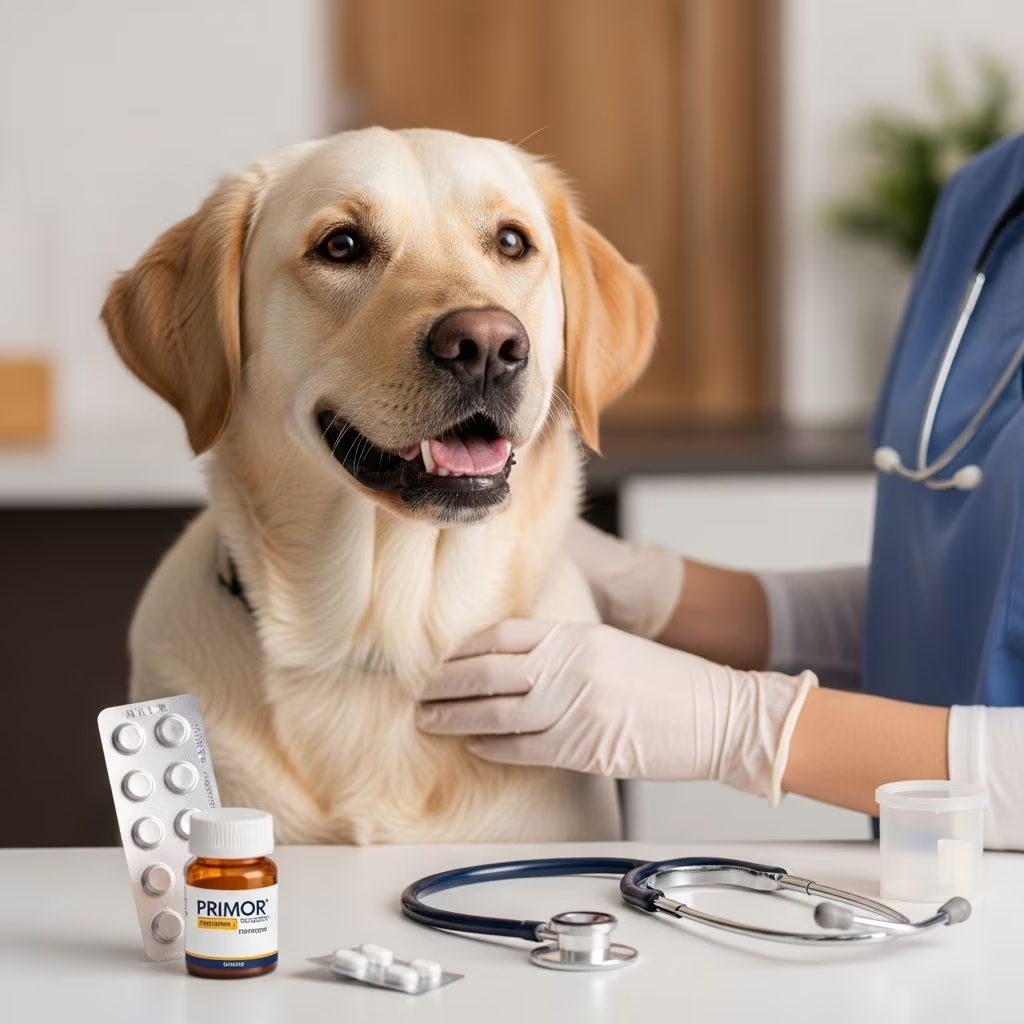
Urinary tract infections (UTIs) represent one of the most frequent bacterial conditions encountered in canine veterinary practice, often requiring targeted antibiotic interventions like Primor to restore urinary health and prevent complications. Primor, a combination of trimethoprim and sulfadiazine, stands out as a reliable option for addressing these infections due to its broad-spectrum activity against common urinary pathogens.
Understanding the Basics of Canine Urinary Tract Infections
Dogs can develop UTIs when bacteria ascend from the lower urinary tract into the bladder or beyond, leading to inflammation and discomfort. Factors such as age, gender, breed predispositions, and underlying health issues like diabetes or incontinence heighten susceptibility. Early recognition of symptoms is crucial for prompt intervention with agents like Primor to minimize risks of chronicity or kidney involvement.
- Common Symptoms: Frequent urination attempts, straining, blood-tinged urine, lethargy, and foul-smelling urine indicate active infection.
- Risk Groups: Senior females, dogs with uroliths, or those on immunosuppressive therapies face elevated risks.
- Pathogen Profile: Escherichia coli dominates, followed by Staphylococcus and Proteus species, many of which respond well to trimethoprim-sulfonamide combinations.
Diagnostic Approaches for Accurate UTI Confirmation
Diagnosis begins with a thorough history and physical exam, followed by urinalysis to detect pyuria, hematuria, and bacteriuria. Definitive identification demands quantitative urine culture via cystocentesis to isolate pathogens and assess susceptibility, guiding Primor use effectively. Avoid empirical treatment without this step in complicated cases to curb resistance.
| Diagnostic Test | Purpose | Key Findings |
|---|---|---|
| Urinalysis | Screen for infection markers | White blood cells >5/HPF, bacteria, nitrites |
| Urine Culture | Identify bacteria and sensitivities | Growth >10^5 CFU/ml prompts antibiotics like Primor |
| Imaging (Ultrasound/Radiographs) | Detect structural issues | Stones, tumors contributing to recurrent UTIs |
These steps ensure Primor is deployed against susceptible strains, optimizing outcomes.
Primor as a Cornerstone Antibiotic for Canine UTIs
Primor excels in uncomplicated UTIs due to its synergistic action: trimethoprim inhibits folate synthesis, while sulfadiazine blocks a parallel pathway, effectively targeting gram-negative and some gram-positive bacteria. Veterinary guidelines endorse trimethoprim-sulfonamides as first-line for empirical therapy in dogs pending culture results.
- Dosage Guidelines: Typically 22-44 mg/kg of combined drug daily, divided q12h, adjusted by weight and severity.
- Administration Tips: Give with food to reduce GI upset; ensure ample water intake to promote diuresis.
- Pharmacokinetics: Achieves high urinary concentrations ideal for time-dependent killing.
Differentiating Uncomplicated from Complicated Canine UTIs
Uncomplicated UTIs occur in otherwise healthy dogs with no anatomical or functional urinary abnormalities, responding swiftly to short Primor courses. Complicated cases involve pyelonephritis, prostatitis, or comorbidities, necessitating culture-guided longer therapy.
| UTI Type | Characteristics | Primor Role | Duration |
|---|---|---|---|
| Uncomplicated | Healthy dog, first episode, lower tract only | First-line empirical choice | 3-7 days |
| Complicated | Recurrent, upper tract, underlying disease | Initial option if susceptible | Up to 4-6 weeks |
Always confirm susceptibility before extending Primor use in complicated scenarios.
Optimizing Treatment Duration and Protocols
Modern guidelines advocate shorter courses to combat resistance: 3-7 days for uncomplicated cystitis suffices, mirroring human standards, with clinical resolution as the endpoint. For complicated infections, extend to 10-14 days or longer based on follow-up cultures. Reculture 5-7 days post-therapy to verify clearance.
- Monitoring Progress: Assess symptoms at day 3; switch if no improvement.
- Adjunctive Care: NSAIDs for pain (check renal function first), increased hydration.
- De-escalation: Narrow spectrum once sensitivities known.
Potential Side Effects and Safety Considerations with Primor
While effective, Primor may cause vomiting, anorexia, or keratoconjunctivitis sicca in susceptible dogs. Monitor for sulfonamide hypersensitivity; contraindicated in cats due to risks. Hydration mitigates crystalluria. Regular bloodwork tracks for rare marrow suppression.
- Common Issues: GI upset (10-20% cases), resolve with dose adjustment.
- Serious Risks: Avoid in dry eye history or breeding animals.
- Interactions: Caution with warfarin or methotrexate.
Handling Recurrent and Resistant Canine UTIs
Recurrence signals underlying issues like stones or endocrine disease; investigate via imaging and endocrinologic panels. Resistant cases demand alternative antibiotics per culture (e.g., fluoroquinolones). Pulse therapy or low-dose prophylaxis with Primor may suit chronic subclinical bacteriuria, though guidelines caution against routine treatment without signs.
Prevention Strategies to Minimize UTI Incidence
Proactive measures reduce UTI frequency: promote frequent voiding, maintain ideal weight, manage predisposing conditions, and consider urinary acidifiers. Evidence for cranberries remains weak, but hygiene post-exercise helps.
- Frequent potty breaks for females.
- Dietary management of struvite stones.
- Annual urinalysis in at-risk breeds like Shih Tzus or Dalmatians.
FAQs on Primor for Canine UTI Treatment
Q: Can I start Primor without a vet visit?
A: No, urine culture is essential to confirm infection and susceptibility; self-treatment risks resistance.
Q: How soon do symptoms improve on Primor?
A: Most dogs show relief within 48 hours; full course completion prevents relapse.
Q: Is Primor safe for puppies or pregnant dogs?
A: Use caution; consult vet for age/breed-specific dosing.
Q: What if culture shows resistance to Primor?
A: Switch to amoxicillin or cephalexin based on sensitivities.
Q: Should I treat asymptomatic bacteriuria?
A: Generally no, unless immunocompromised; monitor closely.
Long-Term Management and Prognosis
With proper Primor-guided therapy and addressing root causes, prognosis excels; over 90% uncomplicated cases resolve fully. Vigilant owners partnering with vets ensure sustained urinary health, averting costly escalations.
References
- Use of Antibiotics for Treating UTIs in Dogs and Cats — Today’s Veterinary Practice. 2023. https://todaysveterinarypractice.com/pharmacology/antibiotic-use-urinary-tract-infections-dogs-cats/
- ISCAID Guidelines & management of bacterial urinary tract infections – Part 1 — VetGirl on the Run. 2023. https://vetgirlontherun.com/podcasts/iscaid-guidelines-bacterial-uti-part1-vetgirl-veterinary-podcasts/
- Antimicrobial use guidelines for treatment of urinary tract disease in dogs and cats — International Society for Companion Animal Infectious Diseases (ISCAID). 2010. https://www.iscaid.org/wp-content/uploads/2013/10/Urinary-guidelines.pdf
- ISCAID Urinary Guidelines 2019 — International Society for Companion Animal Infectious Diseases (ISCAID). 2019. https://www.vdl.ndsu.edu/wp-content/uploads/2022/02/ISCAID-Urinary-Guidelines-2019.pdf
- Urinary tract infections — Cornell University College of Veterinary Medicine. 2024. https://www.vet.cornell.edu/departments-centers-and-institutes/riney-canine-health-center/canine-health-topics/urinary-tract-infections
- Pharmacotherapeutics in Bacterial Urinary Tract Infections in Animals — Merck Veterinary Manual. 2023. https://www.merckvetmanual.com/pharmacology/systemic-pharmacotherapeutics-of-the-urinary-system/pharmacotherapeutics-in-bacterial-urinary-tract-infections-in-animals



