

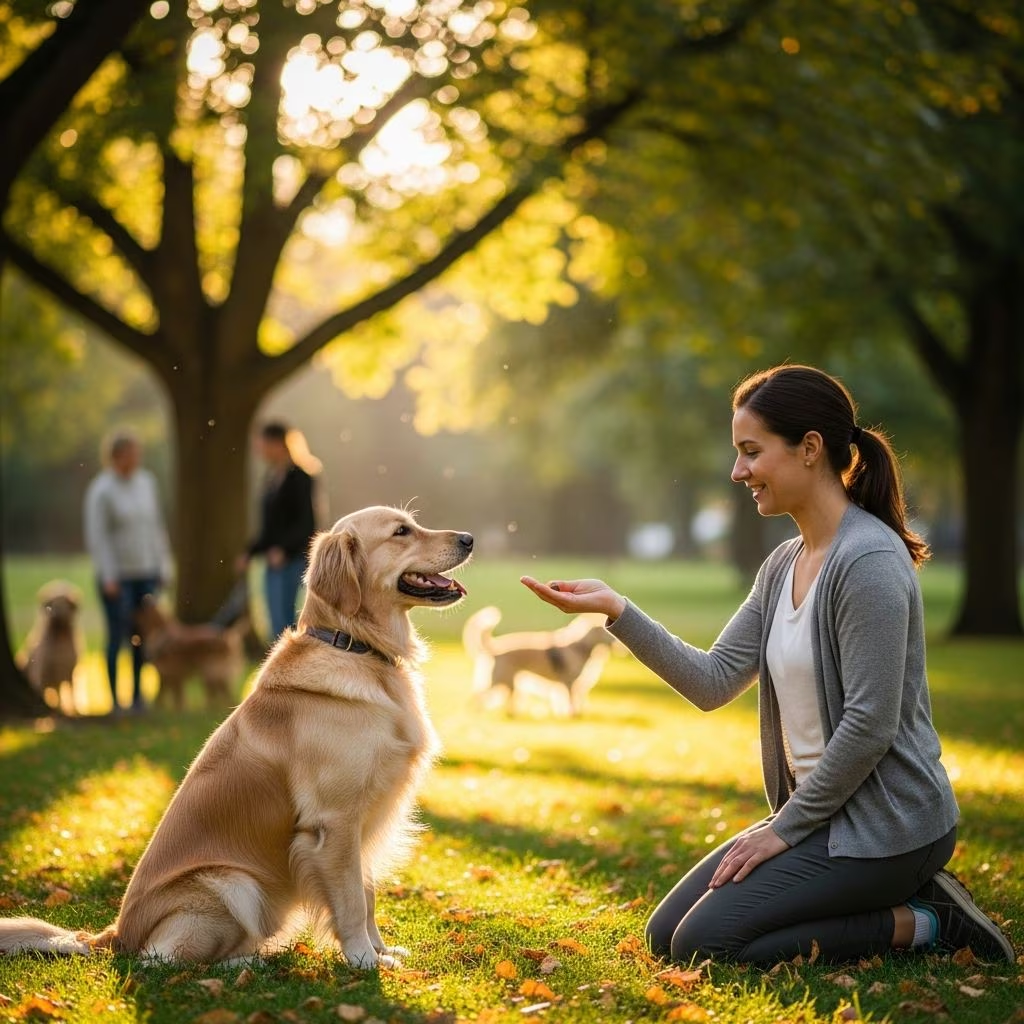
Dogs experience stress just as humans do, and this emotional state can manifest in various behavioral and physical ways. Whether triggered by loud noises, unfamiliar environments, separation from owners, or social situations, stress in dogs requires thoughtful intervention. Understanding the root causes of your dog’s anxiety and implementing structured training approaches can significantly improve their quality of life and strengthen your bond with them. This guide explores practical, science-based methods to help your dog develop better coping mechanisms and achieve a more relaxed state of being.
Understanding the Stress Response in Canines
Before addressing stress management, it’s essential to recognize how stress manifests in dogs. Dogs communicate their emotional state through body language, behavioral patterns, and physiological changes. A stressed dog may display signs such as excessive panting, pacing, trembling, loss of appetite, or destructive behavior. Some dogs become hyperactive or overly focused on their environment, while others withdraw and hide. Recognizing these signals early allows you to intervene before anxiety escalates.
The foundation of any effective stress-reduction program begins with careful observation and documentation. Spend time noting what specific situations trigger your dog’s anxiety, how intense the response becomes, and what calms them down. This information becomes invaluable when designing a personalized training plan tailored to your individual dog’s needs and temperament.
Systematic Desensitization: Building Tolerance Through Gradual Exposure
One of the most widely recognized approaches to reducing anxiety involves gradually exposing your dog to anxiety-inducing stimuli at manageable intensities. Desensitization works on the principle that repeated exposure to a trigger at low levels, paired with positive experiences, can help your dog develop increased tolerance over time.
The desensitization process follows these key steps:
- Identify specific triggers: Determine which situations, sounds, objects, or environments cause your dog’s stress response
- Establish safe distance: Begin exposure at a distance where your dog remains calm and shows no anxiety signals
- Reward calm behavior: Immediately provide high-value treats, verbal praise, or playtime whenever your dog maintains composure
- Reduce distance gradually: Over multiple training sessions spanning weeks or months, incrementally move closer to the trigger while continuing to reward calm responses
- Increase stimulus intensity: Once your dog adapts to the basic trigger, slowly increase its intensity or duration, maintaining the reward structure throughout
For example, if your dog fears vacuum cleaners, begin by keeping the vacuum in a separate room while rewarding your dog for calm behavior nearby. Gradually move the unplugged vacuum closer over several sessions. Once your dog remains calm with the vacuum present, briefly turn it on at low settings while maintaining the reward system. This methodical approach prevents overwhelming your dog and builds genuine confidence rather than mere tolerance.
Counter-Conditioning: Transforming Fear Into Positive Anticipation
While desensitization focuses on reducing the fear response, counter-conditioning takes a different approach by creating new, positive associations with previously anxiety-inducing stimuli. This technique pairs the trigger with something your dog genuinely enjoys, fundamentally changing their emotional response over time.
Counter-conditioning works best when implemented consistently and with high-value reinforcements. The key principle is that the reward must appear only in the presence of the trigger, creating a strong association between the two. Unlike occasional reward strategies, this method requires deliberate pairing during every exposure.
Implementing counter-conditioning effectively involves:
- Selecting rewards your dog finds irresistible—special treats they don’t normally receive, favorite toys, or extended playtime
- Timing the reward to coincide exactly with the trigger’s appearance or occurrence
- Maintaining consistency so the reward reliably follows the trigger
- Practicing regularly across multiple sessions and contexts
- Gradually reducing reward frequency only after the positive association is well-established
A practical example involves a dog anxious about thunderstorms. Each time you hear distant thunder, immediately offer your dog a high-value treat they only receive during storms. Over time, the sound of thunder becomes predictive of something positive, gradually shifting your dog’s emotional response from fear to anticipation.
Strengthening Confidence Through Positive Reinforcement Training
Beyond addressing specific fears, building your dog’s overall confidence through basic obedience training creates a foundation for managing stress. When dogs understand what’s expected of them and feel competent in their training, they develop a greater sense of control over their environment, which translates to reduced anxiety.
Commands such as “sit,” “stay,” and “come” teach your dog that their behavior influences outcomes and that following through on requests results in positive consequences. This sense of agency and predictability reduces generalized anxiety. Training sessions also provide mental stimulation and focused attention, both of which help anxious dogs redirect stress-related energy.
Key principles for stress-reducing training include:
- Using high-value rewards your dog values above all else, reserving these specifically for training sessions
- Keeping sessions short (5-10 minutes) to maintain focus and prevent frustration
- Celebrating small victories and progress rather than focusing on setbacks
- Maintaining a calm, patient demeanor during training—your emotional state directly influences your dog’s stress levels
- Practicing commands in safe, low-distraction environments before introducing real-world challenges
Creating Environmental Predictability and Safe Retreat Spaces
Stress reduction extends beyond training techniques into environmental management. Dogs thrive when they understand what to expect, and creating a predictable daily routine significantly reduces baseline anxiety. Consistent meal times, regular walks, scheduled play sessions, and established bedtimes provide structure that helps your dog feel secure.
Equally important is providing designated safe spaces where your dog can retreat when overwhelmed. These might include crates, specific rooms, or cozy corners equipped with comfortable bedding. The key is establishing these spaces as positive, pressure-free zones where your dog can decompress without interference. Never use these spaces for punishment, as doing so undermines their effectiveness as anxiety refuges.
Environmental considerations for stress reduction:
- Maintaining consistent daily schedules and routines
- Designating quiet areas away from household activity
- Using visual barriers to reduce overwhelming environmental stimuli
- Playing calming music or white noise to mask stress-inducing sounds
- Ensuring adequate physical exercise to burn stress-related energy
Mental Engagement and Enrichment Activities
Anxiety often intensifies when dogs lack mental stimulation and have excessive energy. Interactive games, puzzle toys, and scent work provide outlets for mental activity that can redirect anxious thoughts and behaviors. These activities require focus and problem-solving, engaging your dog’s mind in productive ways.
Effective enrichment strategies include:
- Puzzle toys and treat-dispensing games: Toys that require your dog to work for rewards maintain mental engagement while providing controlled reward delivery
- Hide-and-seek with treats or toys: Hide valued items around your home and encourage your dog to search for them, combining physical activity with mental stimulation
- Scent work training: Teach your dog to identify and locate specific scents, creating a rewarding activity that builds confidence
- Sniffing games: Scatter food across designated areas and allow your dog to forage naturally, tapping into instinctive behaviors
Relaxation Training and Settle Commands
Teaching your dog an explicit “settle” or “relax” command provides a practical tool for managing anxiety in real-time situations. This trained behavior gives your dog an alternative response to stress beyond reactive behaviors, essentially teaching emotional self-control.
Settle training begins in calm, distraction-free environments. Start by gently guiding or luring your dog into a lying down position using treats. Once they’re down, deliver calm praise and rewards without excessive excitement. The goal is to reward increasingly longer periods of genuine relaxation, not just the physical position. Look for signs of true calm such as soft eye contact, normal breathing, or spontaneous yawning.
Progressive steps for settle training:
- Begin with very short duration goals—just 2-3 seconds of calm lying down
- Gradually increase hold times in 2-5 second increments as your dog demonstrates consistent calm
- Practice in various locations once solidly established at home
- Introduce the verbal cue “settle” or “relax” immediately before your dog naturally offers the behavior
- Eventually use the command proactively before stressful situations occur
Once your dog reliably settles on command in calm conditions, you can begin practicing near mild triggers. The key is always working at the edge of your dog’s stress tolerance without crossing into overwhelm, gradually expanding their ability to remain calm despite environmental challenges.
Gentle Handling and Touch-Based Calming Techniques
For dogs who are tactile and seek physical comfort during stress, gentle handling and massage can provide significant relief. Slow, steady massage with consistent pressure activates the parasympathetic nervous system, promoting relaxation at a physiological level. This technique works particularly well for dogs who gravitate toward their owners for comfort during anxiety.
Begin with simple petting in calm situations, then gradually introduce different types of touch—varying pressure, speed, and the body areas you touch. Pair gentle handling with treats to create positive associations, and consistently reward your dog for remaining calm during touch. This builds tolerance for handling that may be necessary during veterinary care or grooming situations.
Additionally, training your dog to accept calm touch signals—such as a gentle hand on the shoulder or soft ear massage—provides an in-the-moment tool for conveying reassurance and encouraging relaxation during stressful events.
Managing Stress During High-Anxiety Situations
Storms, fireworks, family gatherings, and other high-stress events present challenges that require strategic management. Rather than waiting for these situations to occur, proactive preparation significantly reduces their impact. Begin practicing your dog’s relaxation skills well before predictable events, building their capability to respond even as stress increases.
During actual stressful events, maintain your own calm demeanor. Dogs are highly attuned to their owners’ anxiety levels, and your stress will amplify theirs. Speaking in quiet, reassuring tones and maintaining normal activities as much as possible prevents rewarding anxious behavior with excessive attention. Create safe spaces where your dog can retreat, and consider environmental modifications such as closing blinds during storms or playing masking music during fireworks.
Frequently Asked Questions
How long does it typically take to see improvement in my dog’s stress levels?
Improvement timelines vary based on the severity of anxiety, your dog’s age and temperament, and consistency of training. Some dogs show progress within 2-3 weeks of regular training, while others may require several months of patient work. Consistency matters more than speed—regular short training sessions yield better results than sporadic intensive efforts.
Can training alone resolve severe anxiety, or does my dog need medication?
For severe anxiety, consulting with your veterinarian is crucial. Some dogs benefit from anti-anxiety medication that works alongside training to make learning possible. Dogs who are too anxious to learn respond much better when their baseline stress is managed pharmacologically while behavior modification occurs. Training and medication are complementary rather than competitive approaches.
Should I avoid exposing my dog to anxiety triggers entirely?
Complete avoidance actually worsens anxiety over time, as it prevents your dog from developing coping mechanisms. Controlled, gradual exposure paired with positive experiences helps your dog build genuine confidence. Avoidance essentially teaches your dog that the trigger is truly dangerous, reinforcing anxiety. Strategic exposure at manageable levels is far more effective.
What mistakes should I avoid when implementing stress-reduction training?
Common mistakes include moving too quickly through desensitization steps, using punishment or forceful methods that increase fear, rewarding anxious behavior with attention, inconsistent training approaches, and expecting results before sufficient practice time has passed. Additionally, owners sometimes accidentally reinforce anxiety by hovering over or reassuring their dog excessively during stressful moments.
Are certain dog breeds more prone to stress than others?
While individual temperament varies dramatically within breeds, some breeds have been selectively bred for traits associated with anxiety sensitivity. However, environmental factors, early experiences, and training have enormous influence. Even dogs from anxious genetic lines can develop resilience through consistent, positive training approaches.
Tailoring Approaches to Your Individual Dog
The most effective stress-management programs are individualized, taking into account your dog’s age, breed characteristics, prior experiences, and specific triggers. A young, energetic dog may respond well to increased physical activity combined with training games, while an older dog might benefit more from gentle handling and consistent routine. A dog with limited social experience may need different exposure protocols than one with extensive socialization history.
Work with your dog’s natural strengths rather than fighting their temperament. Some dogs respond eagerly to toy-based rewards while others are purely food-motivated. Some thrive in training classes while others perform better with private sessions. Observing your dog’s individual preferences and adapting your approach accordingly accelerates progress and makes training more enjoyable for both of you.
Conclusion: Building a Less Stressful Life Together
Reducing your dog’s stress is an investment that pays dividends throughout their life. Dogs who have learned to manage anxiety demonstrate improved behavior, better health outcomes, and stronger bonds with their owners. The techniques explored here—desensitization, counter-conditioning, positive reinforcement, environmental management, and relaxation training—work together to create comprehensive stress reduction.
Remember that progress isn’t always linear. Some days will feel like setbacks, but consistent effort over time produces genuine behavioral change. The goal isn’t eliminating all stress, which is impossible and unnecessary, but rather helping your dog develop healthy coping mechanisms and resilience. Start with one or two techniques that seem most relevant to your dog’s situation, practice consistently, and gradually expand your toolkit as your dog responds to training.
References
- 5 Training Techniques to Reduce Anxiety in Dogs — PUPS Pet Club. Retrieved from https://pupspetclub.com/5-anxiety-training-techniques/
- 5 Ways To Reduce A Dog’s Stress In Class — The Modern Dog Trainer. Retrieved from https://www.themoderndogtrainer.net/5-ways-reduce-dogs-stress-class/
- How Training Helps Reduce Anxiety in Dogs — K9s Place. Retrieved from https://k9splace.com/blog/training/how-training-helps-reduce-anxiety-in-dogs/
- Dog Behavior and Training: Teaching Settle and Calm — VCA Animal Hospitals. Retrieved from https://vcahospitals.com/know-your-pet/dog-behavior-and-training—teaching-calm—soft-and-handling-exercises
- Teaching Relaxation Exercises to Dogs — Today’s Veterinary Practice. Retrieved from https://todaysveterinarypractice.com/pet-owner-resources/teaching-relaxation-exercises-to-dogs/
- Expert Tips to Help Soothe Your Dog’s Anxiety — American Kennel Club. Retrieved from https://www.akc.org/expert-advice/training/soothe-dog-anxiety/
- Dog to Person – Low Stress Handling — Canine Welfare Science Center, Purdue University. Retrieved from https://caninewelfare.centers.purdue.edu/behavior/social-interactions/dog-to-person-low-stress-handling/



