

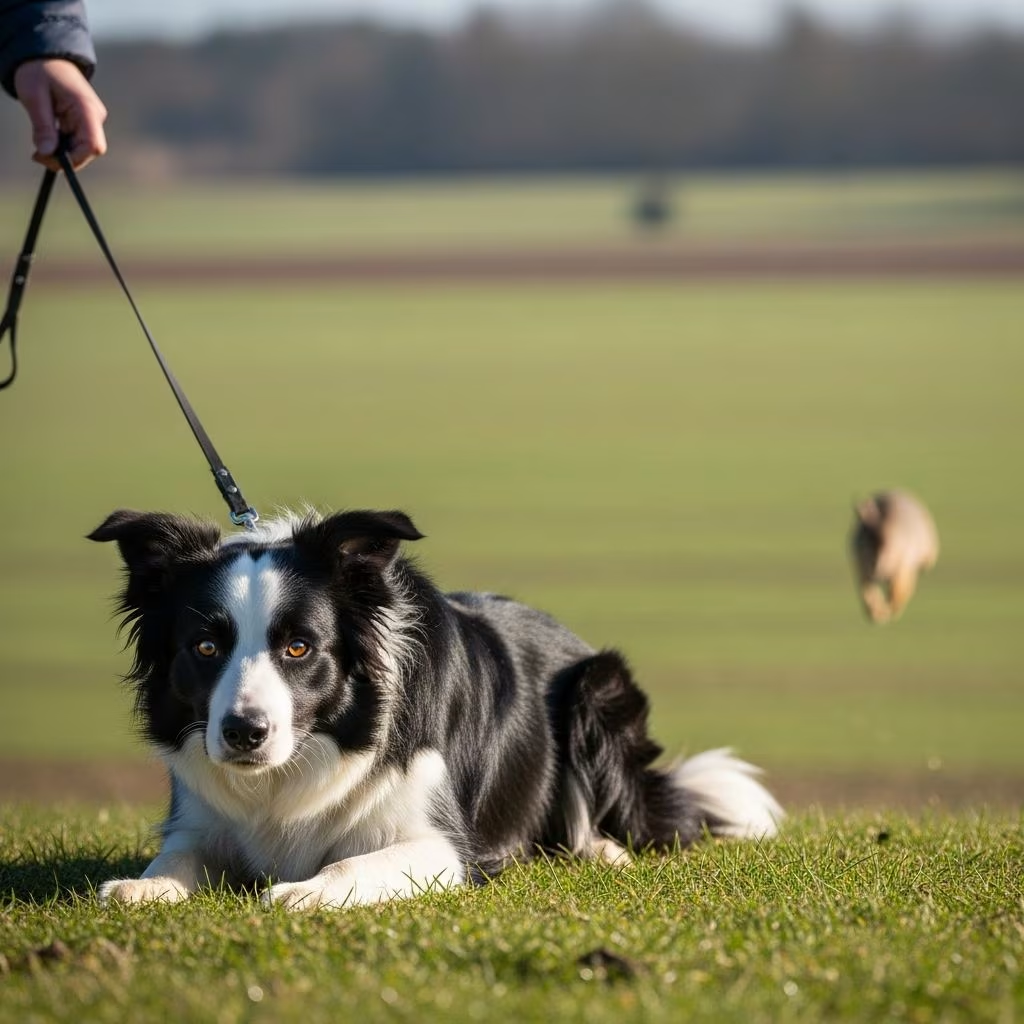
Dogs possess an innate predatory instinct known as prey drive, which can lead to chasing small animals like cats if not properly managed. This guide provides comprehensive strategies to understand this behavior, implement effective training, and create safe outlets for high-energy dogs.
The Biological Roots of Prey Drive in Dogs
Prey drive stems from a dog’s evolutionary heritage as a hunter, manifesting as a sequence of instinctive behaviors triggered by movement or small prey-like stimuli. This sequence includes orientation toward a target, intense staring, stalking, pursuit, grabbing, and sometimes a kill phase, deeply embedded in canine genetics.
Breeds such as terriers, hounds, and herding dogs often exhibit heightened versions due to selective breeding that emphasizes certain sequence elements. Recognizing this as a survival mechanism rather than malice is crucial for effective management.
Recognizing Signs of Active Prey Drive
Early identification prevents dangerous situations. Common indicators include sudden freezing with ears perked, wide-eyed fixation on moving objects, body stiffening followed by explosive lunges, and obsessive pulling toward small animals or fast-moving items like bicycles.
- Freeze and Stare: Initial ‘eye’ phase where the dog locks onto prey.
- Stalking Creep: Low, silent approach building tension.
- High-Speed Chase: Uncontrollable bolting upon release.
- Post-Chase Fixation: Reluctance to disengage even after capture.
These behaviors release dopamine, reinforcing the cycle and making repetition likely without intervention.
Environmental Management for Immediate Safety
Before advanced training, prioritize prevention using physical barriers. Long lines (20-50 feet) allow exploration while blocking self-rewarding chases, essential until recall is reliable.
Secure fencing and supervised interactions with cats or small pets are non-negotiable. Virtual fence collars provide additional off-leash security in open areas.
| Management Tool | Purpose | Best For |
|---|---|---|
| Long Line Leash | Prevents full chases | Walks and yards |
| High Fences | Blocks access to prey | Home containment |
| GPS Collar | Remote boundaries | Off-leash hikes |
| Crate Training | Supervised downtime | Indoor safety |
Impulse Control Foundations
Build self-regulation starting with basics. The ‘wait’ command at doors, meals, and thresholds teaches pausing for permission, transferable to prey sightings.
‘Leave it’ begins with low-value items like treats on the ground, progressing to motion distractions. Reward calm observation to rewire emotional responses.
Predation Substitute Training: A Science-Based Approach
Developed in response to collar bans, Predation Substitute Training (PST) channels the full predatory chain into safe activities without suppression. It comprises management, substitution tools, games, and relationship building.
Key elements include:
- Substitution Tools: Allow stalking or chasing toys mimicking prey.
- Games: Structured play satisfying sequence phases.
- Teamwork Focus: Positions handler as enabler of fun, not interrupter.
Practical Games to Satisfy Instincts
Flirt Pole Mastery
A lunge whip with a lure simulates prey, demanding ‘sit-wait-release’ cycles. This fulfills stalk-chase-grab phases under control, equating 10 minutes to an hour’s walk.
- Tug lure erratically to trigger orient-eye.
- Command ‘sit’ before movement.
- Release for pursuit, recall to restart.
Look at That (LAT) Protocol
Counter-condition triggers: Mark sighting of a cat with a clicker, reward looking back at you. This pairs prey with positivity, reducing bolt urges.
Scent Work and Find-It Games
Hide treats or toys to engage orient-search phases mentally. Nose work exhausts without physical risk, ideal for high-drive dogs.
Advanced Recall and Premack Application
Emergency recall uses ultra-high rewards like steak, practiced distraction-free then with mild triggers. Premack Principle leverages chase as reinforcer: ‘Sit’ earns sniffing or ball play, making compliance the fun gateway.
Phase training per rewards-based methods: Cue ‘leave it’ on animal sight, fade cues as reliability grows, test off-leash in controlled settings.
| Training Phase | Focus | Duration |
|---|---|---|
| Phase 1: Cue Reliance | Use ‘leave it’ immediately | 2-4 weeks |
| Phase 2: Observation Practice | Watch animal 5 seconds calmly | 4-6 weeks |
| Phase 3: Independence | No cue, self-control | Ongoing |
Enrichment Activities Table
| Activity | Sequence Phases | Mental/Physical Benefit |
|---|---|---|
| Flirt Pole | Stalk, Chase, Grab | Impulse control + cardio |
| Scent Games | Orient, Search | Brain fatigue |
| Barn Hunt | Stalk, Search | Competitive outlet |
| FAST Cat | Chase | Speed satiation |
| Box Shredding | Dissect | Destructive release |
Realistic Expectations and Breed Considerations
High-prey-drive breeds like Greyhounds or Jack Russells may never fully ignore cats but can achieve 95% reliability with consistent effort. Multi-dog homes require separate management during training.
Patience yields results: Redirected energy fosters stronger bonds, turning potential liabilities into athletic partners.
Common Pitfalls to Avoid
- Punishing mid-chase reinforces fear, not control.
- Inadequate outlets lead to frustration-induced issues.
- Skipping management risks ingrained habits.
FAQs
Can prey drive be eliminated?
No, it’s genetic, but it can be managed through channeling and control.
Is shock training effective?
Force-free methods like PST are safer and build positive associations long-term.
How long until off-leash safe?
3-12 months depending on drive level and consistency.
What if my dog injured a cat?
Immediately separate, consult a professional trainer for assessment.
Best for apartment dogs?
Yes, flirt poles and scent work fit small spaces.
Building a Lasting Handler-Dog Partnership
View your dog as a high-performance athlete needing outlets. Consistent management, fun substitutions, and reward-based training transform challenges into joys. Professional guidance accelerates progress for severe cases.
References
- Training High-Drive Dogs: Manage Prey Drive — Halo Collar Blog. 2023. https://www.halocollar.com/blog/dog-training/dog-training-prey-drive-high-drive-dogs/
- How to Channel & Control Your Dog’s Prey Drive on Walks — American Kennel Club (AKC). 2023-10-12. https://www.akc.org/expert-advice/training/channel-control-dog-prey-drive/
- Understanding Prey Drive in Dogs — Whole Dog Journal. 2024. https://www.whole-dog-journal.com/behavior/understanding-prey-drive-in-dogs/
- How to Train Your Dog to STOP Chasing Animals — YouTube (Training Video). 2023. https://www.youtube.com/watch?v=tXURX0apmS8
- Four Training Tips for Dogs With a High Prey Drive — Whole Dog Journal (excerpt). 2024. https://www.whole-dog-journal.com/behavior/understanding-prey-drive-in-dogs/



