

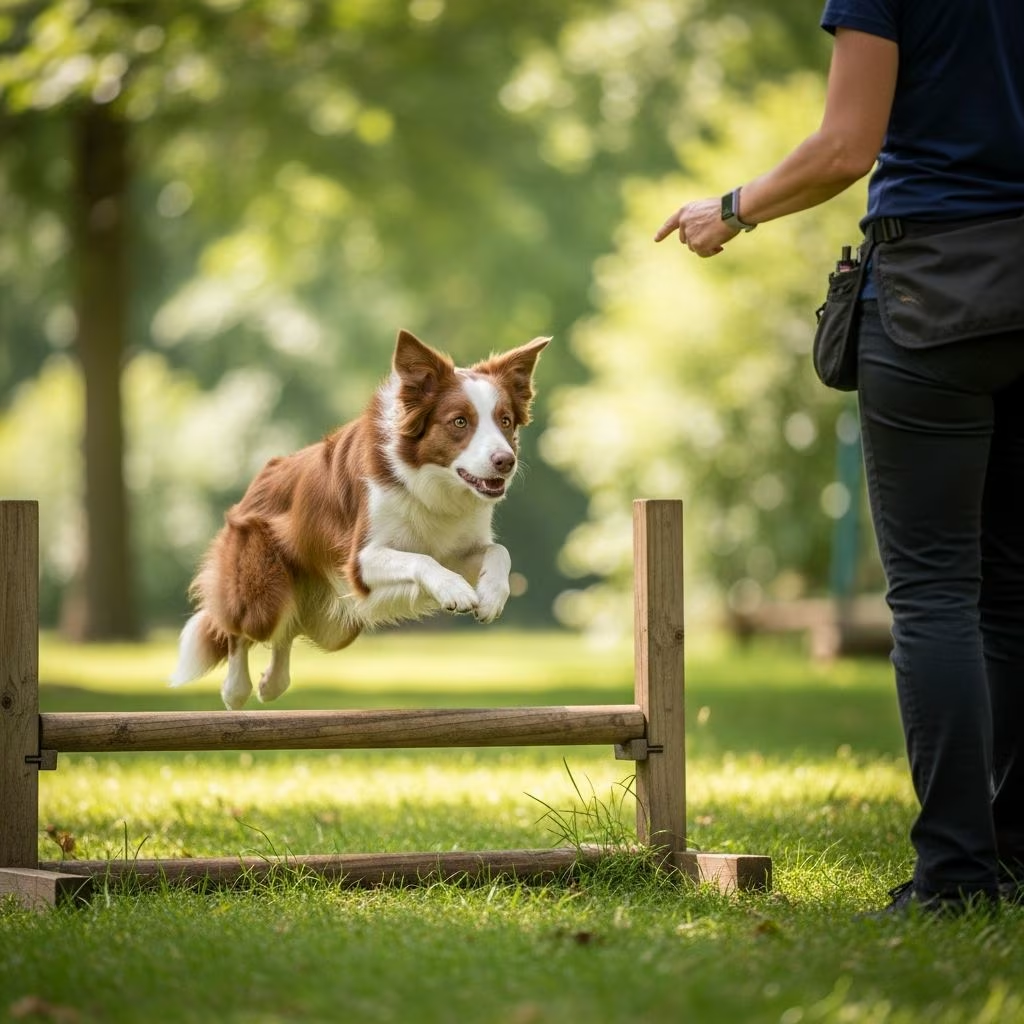
One of the most frequently encountered behavioral challenges dog owners face is managing inappropriate jumping, whether directed toward household members, visitors, or strangers encountered during daily activities. While this behavior might appear harmless or even endearing when displayed by a small puppy, it can escalate into a significant problem as dogs mature and gain strength. Understanding the root causes of jumping and implementing appropriate corrective strategies is essential for creating a safe and harmonious living environment for both the dog and everyone it encounters.
Recognizing Why Dogs Engage in Jumping Behavior
Before addressing solutions, it is crucial to understand the underlying motivations that drive dogs to jump. Dogs do not typically jump to be disobedient or deliberately frustrate their owners; instead, jumping usually stems from specific emotional or learned responses. Identifying these triggers is the first step toward effective behavior modification.
Seeking Attention and Interaction
The most prevalent reason dogs jump is to gain attention from people around them. Dogs are inherently social animals that thrive on interaction and engagement. When a dog jumps and receives any form of response—whether verbal, physical, or emotional—it reinforces the behavior as an effective way to obtain desired attention. This is particularly true when owners respond by speaking to the dog, petting it, or even pushing it away, as all these responses constitute a form of engagement. Dogs may not distinguish between positive and negative attention; both serve to reward the jumping behavior and make it more likely to occur in the future.
Emotional Excitement and Overstimulation
Jumping frequently occurs when dogs experience heightened emotional arousal, particularly in excitement-driven situations. When greeting familiar family members, welcoming new visitors, or encountering other dogs, a dog’s emotional state can reach levels where they struggle to contain their excitement through conventional body control. This burst of energy seeks an outlet, and jumping provides a natural physical expression of this heightened emotional state. Dogs exhibiting excitement-related jumping typically display additional signs such as rapid tail wagging, loose body posture, and panting.
Frustration and Redirected Energy
Dogs may also jump as a manifestation of frustration when they cannot access something they desire. This could involve wanting attention from a specific person, reaching another dog, or proceeding forward during a walk. When the source of frustration is not directly accessible, dogs sometimes redirect this energy toward the nearest person, jumping as a physical outlet for their unmet needs. For example, a dog on a leash might jump at the handler if they cannot access something on the opposite side of the street.
Anxiety and Stress Management
Contrary to common assumptions, some dogs jump due to anxiety or stress rather than excessive enthusiasm. Dogs experiencing uncertainty, social conflict, or overwhelming situations may use jumping as a displacement behavior—a physical mechanism to manage their anxiety and release tension in an uncomfortable interaction. Anxious dogs may appear less exuberant than excited dogs but still engage in jumping as a coping mechanism.
Learned Behavioral Patterns
Many cases of jumping behavior stem from unintentional training by owners and family members. When a dog was young and jumped, if anyone in the household responded with attention, laughter, or interaction, this reinforced the behavior. Over time, the dog learns that jumping is an effective strategy for obtaining engagement, creating a self-perpetuating cycle that can be challenging to reverse.
The Critical Role of Consistency in Training
One of the most significant factors determining success in addressing jumping behavior is consistency across all family members and interactions. If a dog is sometimes rewarded for jumping and sometimes not, or if some family members permit jumping while others discourage it, the behavior often intensifies rather than diminishes. This variable reinforcement creates a particularly persistent behavioral pattern, as the dog remains motivated by the unpredictable rewards. For training to succeed, every person the dog encounters must follow the same protocol without exception.
Redirecting Energy Through Alternative Behaviors
Rather than focusing solely on stopping the unwanted behavior, the most effective approach involves teaching and reinforcing alternative behaviors that are incompatible with jumping. The most commonly recommended alternative is the “sit” command, which physically prevents jumping while simultaneously providing the dog with a more appropriate way to interact with people.
Teaching the Sit-Based Greeting Protocol
When implementing this strategy, owners should begin by teaching their dog a solid, reliable sit command in low-distraction environments. Once the dog reliably responds to the sit command, the behavior should be systematically practiced in increasingly exciting scenarios. When visitors arrive or during greetings, the owner should cue the sit command and immediately reward the dog with treats, praise, or affection for maintaining this position. This approach accomplishes multiple objectives simultaneously: it prevents jumping from occurring, it provides the dog with the attention they seek through jumping, and it teaches them that sitting results in positive outcomes while jumping does not.
Timing and Reward Delivery
Critical to this approach is rewarding the sitting behavior immediately and generously before the dog has an opportunity to jump. The reward must be sufficiently valuable to capture the dog’s motivation and make the sitting behavior more reinforcing than the alternative of jumping. This process should continue until the dog develops a strong habit of sitting when greeting people, at which point the behavior becomes increasingly automatic.
Managing the Environment and Circumstances
Beyond training, managing the situations in which jumping is likely to occur can significantly reduce both the frequency of the behavior and the opportunities for it to be reinforced. Environmental management serves as a foundational component of any comprehensive jumping reduction program.
Controlling Initial Contact
When visitors arrive, the dog should be managed in ways that prevent jumping before it begins. This might include using baby gates to control access to entryways, keeping the dog on a leash during visitor arrivals, or requesting that visitors wait until the dog is calm before greeting them. The goal is to create situations where the dog can only succeed by remaining calm and sitting.
Outdoor Management Strategies
During walks and outdoor activities, keeping the dog on a leash provides immediate control over their ability to approach and jump on strangers. For dogs with reliable recall in open spaces, a long line provides more freedom while maintaining control. Additionally, using high-value treats or toys can redirect the dog’s attention toward the handler rather than toward other people they encounter.
Respecting the Dog’s Boundaries
An often-overlooked aspect of managing jumping is recognizing that dogs should never be forced to interact with people against their will. Owners should always allow their dog to choose whether to approach and engage with others. This is particularly important for anxious dogs, as forcing interaction can increase anxiety and actually worsen jumping behavior in these cases.
Building Confidence and Emotional Resilience
For dogs whose jumping stems from anxiety or low confidence, a different approach becomes necessary. Rather than focusing exclusively on behavior modification, owners must work to build the dog’s emotional security and confidence over time. This process is typically gradual and requires patience.
Progressive Desensitization
Building confidence begins by establishing safe distances from triggering situations and gradually decreasing these distances as the dog demonstrates calm behavior. For example, a dog that jumps when strangers approach might initially be positioned far from pedestrians during walks. As the dog remains calm at this distance, treats are offered and praise is given. Over successive sessions, the distance is gradually reduced while continuing to reward calm behavior. This gradual progression allows the dog to build positive associations with the presence of people without becoming overwhelmed.
Establishing Predictable Routines
Dogs with anxiety benefit significantly from predictable daily routines that create a sense of security. Establishing consistent schedules for exercise, feeding, toileting, training, and rest helps reduce the uncertainty that contributes to anxiety. Additionally, building in wind-down time after stimulating activities—such as walks or training sessions—allows the dog’s arousal level to return to baseline and helps prevent jumping triggered by excessive stimulation.
Enrichment and Arousal Management
Appropriate enrichment activities that engage the dog’s natural behaviors can significantly reduce overall arousal levels and anxiety. Activities such as sniffing or licking enrichment are particularly effective at lowering arousal states and preparing the dog for calm interactions.
Why Punishment Approaches Are Counterproductive
A fundamental principle that must guide any training program is the complete avoidance of punishment-based methods for addressing jumping behavior. Punishment—whether physical correction, shouting, or other aversive techniques—does not address the underlying motivation for the behavior and often produces unintended negative consequences.
When dogs are punished for jumping, they may become confused about what behavior is actually desired, leading to anxiety and uncertainty about human interactions. In some cases, punishment can escalate into learned fear or aggression, as the dog begins to associate people and greetings with unpredictable negative outcomes. This represents a far more serious behavioral problem than the original jumping behavior and is far more difficult to resolve.
Addressing Persistent Jumping: Family Coordination
When dogs continue jumping despite training efforts, the issue frequently involves insufficient consistency in the household or around the dog. A family meeting to review the training protocol and ensure everyone understands and follows the same approach is often necessary. Even a single household member who provides inconsistent reinforcement can maintain or strengthen the jumping behavior.
The key principle to communicate is that the dog should never receive any reward—positive attention of any kind—for jumping behavior. This includes looking at the dog, speaking to it, or touching it. Family members should be instructed to calmly walk away or position themselves behind a gate when jumping occurs, removing all possible reinforcement while the dog learns that jumping produces no positive outcome.
Practical Implementation Timeline
| Training Phase | Duration | Key Activities |
|---|---|---|
| Foundation Building | 1-2 weeks | Practice sit command in calm environments; establish family protocol |
| Scenario Integration | 2-4 weeks | Practice sit during family member arrivals; reward consistently |
| Guest Preparation | 2-3 weeks | Practice with visitors; ensure sit behavior during greetings |
| Real-World Application | Ongoing | Maintain protocol during all interactions; continue reinforcement |
Frequently Asked Questions
What should I do if my dog jumps on guests who refuse to follow my training protocol?
Explain that maintaining consistency is essential for the dog’s progress and ask guests to avoid rewarding jumping with attention. If necessary, manage the dog by using a leash or gate until the dog demonstrates calm greeting behavior, then release once calm.
How long does it typically take to resolve jumping behavior?
Timeline varies depending on the dog’s age, how long the behavior has been reinforced, and consistency of implementation. Most dogs show improvement within 3-4 weeks of consistent training, though complete resolution may require 2-3 months or longer.
Can jumping behavior indicate a medical issue?
While rarely the primary cause, dogs experiencing pain or discomfort may display jumping as an attempt to change their physical position or communicate distress. If jumping behavior develops suddenly or is accompanied by other concerning signs, veterinary evaluation is recommended.
Is jumping behavior more common in certain dog breeds?
Jumping occurs across all breeds and sizes, though the impact may vary based on the dog’s weight and strength. Highly energetic or naturally enthusiastic breeds may display jumping more frequently, but the solution remains the same regardless of breed.
References
- My Dog Jumps Up at Visitors, How Can I Stop Him? — Goddard Vet Group. https://www.goddardvetgroup.co.uk/blog/my-dog-jumps-up-at-visitors-how-can-i-stop-him/
- How to Stop Your Dog Jumping Up at People – Training — Dogs Trust. https://www.dogstrust.org.uk/dog-advice/training/unwanted-behaviours/jumping-up-training
- Dog Behavior Problems – Greeting Behavior – Jumping Up — VCA Animal Hospitals. https://vcahospitals.com/know-your-pet/dog-behavior-problems-greeting-behavior-jumping-up



