Dog Jumping Behavior: 11 Proven Strategies To Stop Jumping
Learn evidence-based techniques to redirect your dog's jumping habits effectively
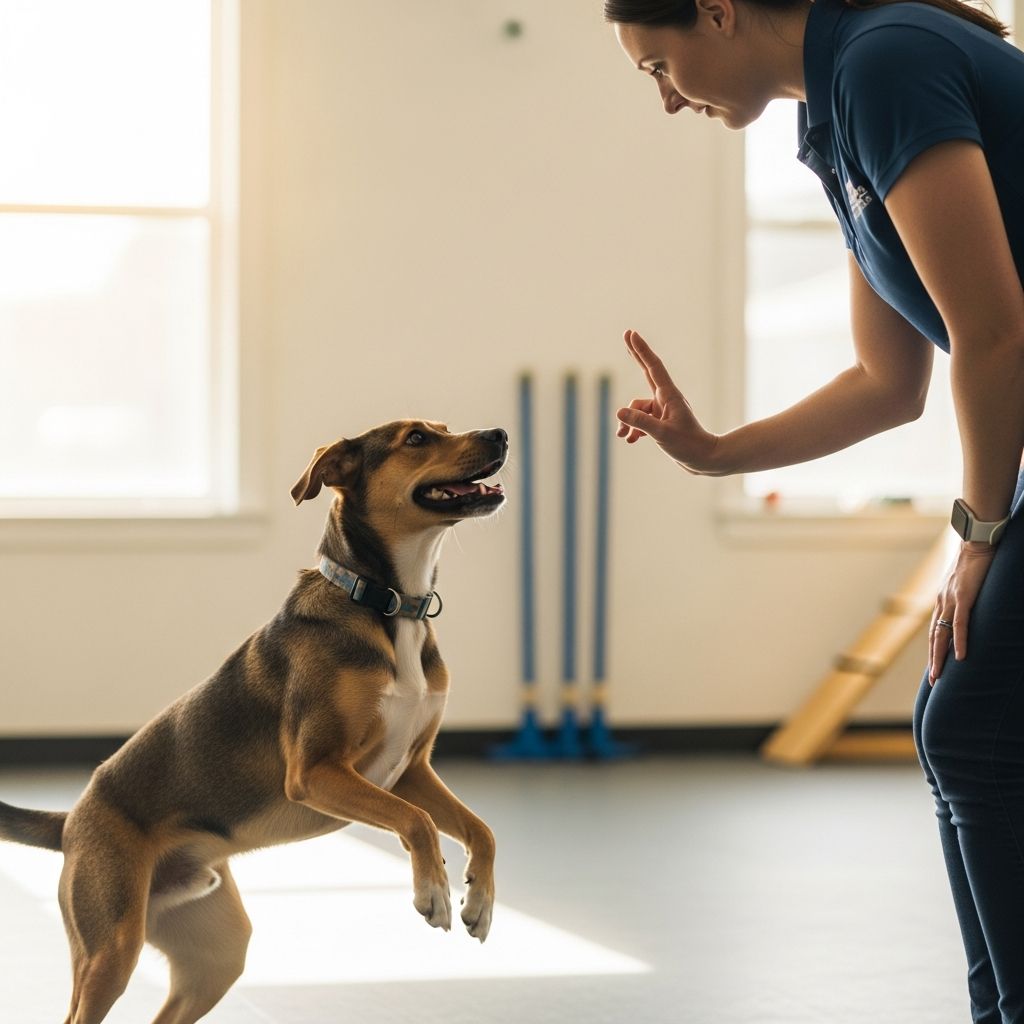
Understanding and Addressing Your Dog’s Jumping Behavior
Jumping represents one of the most common behavioral challenges dog owners face when welcoming visitors or during daily interactions. While this behavior often stems from excitement and enthusiasm, it can become problematic when it frightens guests, injures elderly family members, or simply becomes an unwanted habit. Understanding why dogs jump and implementing systematic training approaches can help resolve this issue effectively.
Why Dogs Jump: Understanding the Root Causes
Dogs engage in jumping for various interconnected reasons that go beyond simple excitement. Natural greeting instincts play a significant role, as dogs are considerably shorter than the humans they encounter and instinctively jump to bring themselves closer to face level during interactions. This behavior is deeply embedded in canine social communication.
Beyond greeting impulses, jumping frequently serves as a mechanism for seeking attention. Dogs quickly learn that jumping generates responses from their owners—whether through verbal acknowledgment, physical contact, or focused attention. From the dog’s perspective, any response becomes a rewarding outcome, reinforcing the behavior.
Emotional states significantly influence jumping behavior as well. Playful dogs experiencing high excitement or overstimulation may jump uncontrollably, while counterintuitively, anxious or less confident dogs sometimes jump as a stress-relief mechanism or to manage discomfort about pending social interactions. Understanding which emotional driver motivates your individual dog helps tailor your training approach appropriately.
The Critical Role of Prevention in Behavior Modification
Most dog owners focus immediately on correcting jumping once it occurs, but behavioral experts emphasize that prevention should be the foundational strategy. Prevention works because it eliminates the opportunity for the behavior to be rewarded in the first place.
When a dog’s paws land on a person during a jump, the interaction itself—regardless of the human’s intended response—often serves as a reward from the dog’s perspective. This means that even corrections sometimes inadvertently reinforce jumping by providing attention. The most efficient path forward involves making jumping nearly impossible to perform through proactive management.
Prevention strategies include:
- Controlling the environment when guests arrive by using baby gates or crates to manage initial excitement
- Keeping your dog on a leash during greetings to prevent uncontrolled jumping
- Strategically placing high-value treats on the floor to redirect focus downward before jumping occurs
- Ensuring your dog has expelled excess energy through exercise before social interactions
- Providing mental enrichment through puzzle toys and interactive feeders to reduce overall excitability
The “Four on the Floor” Foundation Technique
This fundamental training principle teaches your dog that keeping all four paws on the ground generates positive outcomes. “Four on the floor” serves as the alternative behavior that replaces jumping and becomes the new greeting protocol.
Implementation requires precise timing and strategic treat placement:
- Treat placement matters critically—deliver treats at your dog’s lower jaw level or toss them on the floor directly to avoid accidentally encouraging jumping by raising your hand too high
- Timing is essential—reward the correct behavior before jumping has a chance to occur, anticipating the moment when your dog might normally jump
- Use high-value rewards—select treats your dog finds exceptionally rewarding, such as small pieces of boiled chicken or hot dogs cut into pea-sized portions
- Provide consistent reinforcement—reward four-on-the-floor behavior reliably until your dog makes this the default greeting response
When your dog does jump despite your efforts, remove all reward by crossing your arms, turning your body away, and withdrawing attention completely. This teaches your dog that jumping extinguishes the very attention they sought through jumping.
Redirecting Jumping Through Incompatible Behaviors
An effective advanced technique involves teaching your dog an incompatible behavior that cannot physically occur simultaneously with jumping. Sitting represents the most practical incompatible behavior because a dog cannot jump while maintaining a sit position.
To establish sitting as your dog’s automatic greeting response:
- Teach your dog to sit reliably in various contexts through standard obedience training
- Specifically reward sitting during greeting scenarios with high-value treats, playtime, or enthusiastic praise
- Request sitting before allowing any interaction with visitors
- Have visitors themselves reward sitting behavior to reinforce the connection between sitting and positive social outcomes
- Chain multiple cues together if needed—for example, sit, then wait, then greet—to create a complete greeting protocol
By making sitting the prerequisite for receiving attention and rewards, your dog learns that sitting, not jumping, unlocks the social interaction they desire.
Managing Guest Arrivals and Social Situations
Guest visits present particularly challenging scenarios where jumping often escalates due to novelty and heightened excitement. Practical management strategies help set your dog up for success during these high-stimulation moments:
Pre-arrival preparation:
- Exercise your dog adequately before guests are expected to reduce excess energy and excitability
- Prepare an enrichment item such as a stuffed Kong or treat-dispensing toy to occupy your dog during initial greetings
- Brief your guests beforehand about your training protocol so everyone responds consistently
- Consider keeping your dog on a leash during the greeting phase until excitement levels decrease
During guest arrival:
- Keep your dog behind a baby gate initially while guests settle in and arrival excitement naturally diminishes
- Ask guests to reward sitting or four-on-the-floor behavior with treats they’ve brought specifically for this purpose
- Instruct guests never to pet, acknowledge, or make eye contact with a jumping dog, as any attention becomes reinforcement
- Have everyone redirect their attention away if jumping occurs, then resume interaction only when your dog settles
The Strategic Use of Ground Treats
Ground-based treat placement represents one of the most effective prevention techniques available. By strategically tossing treats onto the floor, you redirect your dog’s focus downward and keep their paws grounded during moments when jumping would normally occur.
This technique works because:
- It gives your dog an alternative activity that’s immediately rewarding
- It prevents the jumping behavior from occurring in the first place
- It teaches your dog to anticipate treats arriving on the ground rather than requiring jumping to achieve interaction
- It provides consistent messaging across all family members and guests
The critical element is timing—you must toss treats before your dog initiates jumping. This proactive approach requires observation skills to recognize your dog’s pre-jump signals such as tensing, crouching, or forward weight shifting.
Establishing Consistent Household Leadership
Jumping behavior often persists because dogs haven’t established clear boundaries regarding appropriate behavior. When dogs understand that their owners make decisions about interactions, resources, and activities, they naturally become more respectful of household rules.
Building this foundation involves:
- Establishing designated eating areas—feeding your dog in one consistent location at set times teaches structured boundaries
- Creating boundaries during relaxation—having your dog remain on a bed or placeboard while you sit on the couch establishes your space as separate
- Requiring commands for activities—asking for sit, stay, or down before granting access to play, walks, or meals demonstrates that your dog must earn privileges
- Maintaining consistent rules—ensuring all family members enforce identical jumping protocols prevents confusion
When dogs recognize that their owners lead the household and make all decisions about when, where, and how interactions occur, respect for boundaries naturally develops, and jumping behavior diminishes significantly.
Training Timeline and Realistic Expectations
The timeframe for eliminating jumping varies based on how established the behavior has become and your dog’s individual temperament. High-energy breeds such as Border Collies, German Shepherds, Golden Retrievers, and Doodles may require more extensive training investment than more laid-back dogs.
Realistic training expectations include:
- Quick wins possible: Some dogs can grasp basic four-on-the-floor behavior in minutes or within one to two days
- Regular training time investment: Dedicating 15-30 minutes daily beyond normal walks and activities typically produces noticeable improvements
- High-energy dog consideration: Dogs requiring significant mental and physical stimulation may need extended training periods and ongoing enrichment
- Consistency matters most: The most critical factor is never wavering in reinforcement patterns—inconsistent application actually strengthens jumping behavior through variable reward scheduling
Why Training Sometimes Fails and How to Course-Correct
Many owners implement training techniques but still observe persistent jumping. When this occurs, the underlying cause is usually that your dog is still receiving rewards for jumping somewhere in their environment.
Common causes of training failure include:
- Family members inconsistently applying the training protocol—some people rewarding jumping while others discourage it
- Accidentally reinforcing jumping through any response, including scolding, which dogs may interpret as attention
- Guests rewarding jumping despite your instructions due to their own discomfort managing the behavior
- Insufficient prevention during high-risk situations, allowing jumping to occur and become briefly rewarded
- Failure to consistently reward the desired four-on-the-floor behavior, leaving your dog uncertain about what generates positive outcomes
To troubleshoot, hold a family meeting where everyone commits to identical responses. Create a written protocol for guests, and ensure that absolutely no reward—attention, touch, eye contact, or verbal response—occurs during jumping, while four-on-the-floor behavior receives abundant positive reinforcement.
Addressing Anxiety-Related Jumping
Some dogs, particularly those with underlying anxiety or confidence issues, jump as a stress-management mechanism. For these dogs, addressing the emotional foundation becomes necessary alongside behavior modification. Consider:
- Consulting with a certified professional dog trainer or veterinary behaviorist to identify anxiety triggers
- Providing safe spaces where your dog can retreat when feeling overwhelmed
- Using desensitization techniques to gradually acclimate your dog to social interactions
- Working with your veterinarian to discuss whether anxiety management tools might support training efforts
Understanding that jumping serves an emotional function for these dogs creates more compassion and better training outcomes than viewing jumping as purely attention-seeking or misbehavior.
Long-Term Success and Maintenance
After successfully training your dog to stop jumping, continued consistency maintains the behavior change. Dogs can regress to old patterns if rewarding circumstances resurface, so ongoing reinforcement of four-on-the-floor behavior during all greetings keeps the training solid.
Maintenance strategies include:
- Continuing to reward four-on-the-floor behavior even after it becomes established, using variable reinforcement schedules to maintain strength
- Reminding regular visitors about your protocol to ensure they continue supporting it
- Maintaining adequate exercise and enrichment to keep your dog mentally and physically satisfied
- Recognizing and immediately addressing any slight increases in jumping behavior before it escalates
References
- Why Your Dog Jumps… and How To Stop It NOW! — NOVA Canine Academy. YouTube. https://www.youtube.com/watch?v=xYc1s8bdAV8
- How to Reduce Jumping — Wisconsin Humane Society. https://www.wihumane.org/behavior/ask-the-experts/dogs/jumping
- What should I do when my dog jumps on me? — Koinonia Dogs. https://www.koinoniadogs.com/blog/kdt3dnhnl4xbrn98323kk6rwzhmbsy
- Dog Behavior Problems – Greeting Behavior – Jumping Up — VCA Animal Hospitals. https://vcahospitals.com/know-your-pet/dog-behavior-problems-greeting-behavior-jumping-up
- How to Stop Your Dog From Jumping Up on People — American Kennel Club. https://www.akc.org/expert-advice/training/how-to-stop-your-dog-from-jumping-up-on-people/
- Stop Dog Jumping with Jeff Millman Dog Training, LLC. — Jeff Millman. https://www.jeffmillman.com/index.php/training-topics/dog-obedience/stop-dog-jumping
Similar Articles







Read full bio of Sneha Tete