

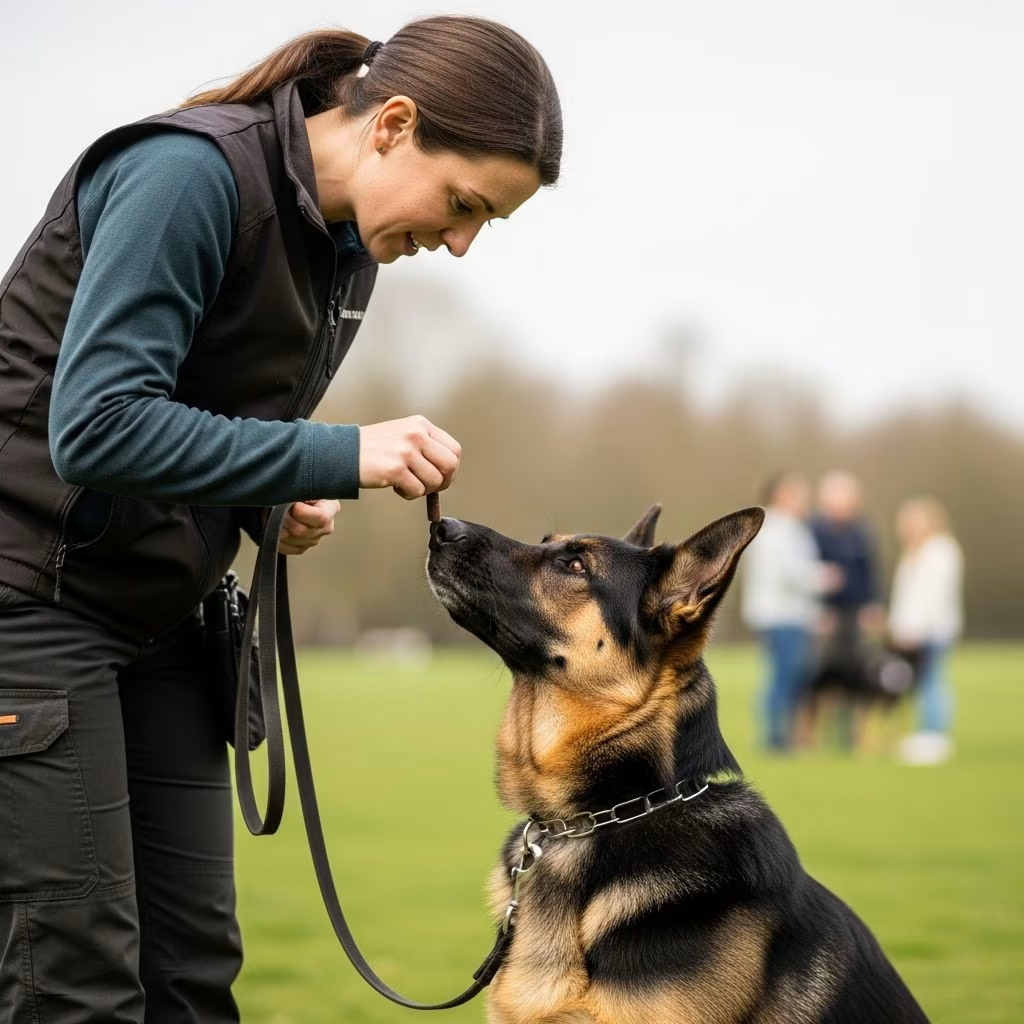
Dog aggression is a serious behavioral issue that can endanger people, other pets, and the dog itself. It often stems from underlying fear, stress, medical problems, or inadequate early experiences. Effective management requires a multifaceted approach prioritizing safety, professional assessment, and gradual behavioral changes to improve the dog’s welfare and household dynamics.
Understanding the Roots of Aggression in Dogs
Aggression in dogs arises from a complex interplay of genetic, environmental, and experiential factors. Genetic predispositions can lower a dog’s threshold for aggressive responses, while prenatal stress or poor early socialization exacerbates this risk. Fear and anxiety frequently drive aggressive displays, as dogs resort to growling, snapping, or biting to create distance from perceived threats.
Medical conditions play a critical role too. Pain from arthritis, dental disease, or neurological issues can make a dog irritable and reactive. Environmental stressors, such as resource guarding or territorial intrusions, further compound these problems. Recognizing these origins is essential before implementing any intervention.
- Fear-based triggers: Unfamiliar people, noises, or sudden movements provoke defensive reactions.
- Pain-induced irritability: Undiagnosed health issues lead to uncharacteristic snapping.
- Resource protection: Food, toys, or resting spots become flashpoints for conflict.
Conducting a Thorough Risk Assessment
The first step in addressing aggression is a detailed risk evaluation. Consult a veterinarian to rule out medical causes through physical exams, bloodwork, and imaging if needed. Assess the dog’s history of bites, intensity of reactions, and predictability of triggers to gauge danger levels.
Owners should document incidents: What preceded the aggression? Was it predictable? High-risk dogs may need immediate separation measures like muzzles or crates. Prognosis varies; complete resolution is rare, but minimizing episodes to ensure household safety is achievable with consistent effort.
| Risk Factor | Low Risk Indicators | High Risk Indicators |
|---|---|---|
| Bite History | No bites, only growls | Multiple bites with injury |
| Predictability | Clear, avoidable triggers | Unpredictable outbursts |
| Inhibition | Stops after warning | Escalates despite retreat |
Prioritizing Safety Through Environmental Control
Environmental management forms the cornerstone of any aggression protocol. The goal is to prevent aggressive encounters entirely, allowing stress levels to decrease and creating space for positive learning. This involves identifying and eliminating triggers while restructuring daily routines.
Key strategies include:
- Using baby gates, crates, or leashes to maintain physical separation during high-risk interactions.
- Supervising all dog-human and dog-dog contacts; never leave aggressive dogs unattended with others.
- Muzzle training for outings or vet visits—introduce gradually with treats to build positive associations.
- Securing resources: Feed in isolated areas, remove high-value items from reach, and avoid disturbing the dog while resting.
Confined spaces heighten defensive responses, so provide ample room and predictable schedules. This phase protects everyone and prevents reinforcement of aggressive patterns through repeated rehearsals.
Positive Reinforcement Training Foundations
Once safety is ensured, build foundational skills using reward-based methods. Aversive techniques like punishment worsen fear and aggression, so focus on positive reinforcement to foster calm behaviors.
Start with basic commands away from triggers:
- Attention cue: Teach “look” or “watch me” with treats to redirect focus.
- Impulse control: Practice “sit-stay” and “leave it” for self-regulation.
- Relaxation protocol: Reward settling on a mat in quiet settings.
Mental stimulation through puzzle toys and scent games reduces overall frustration. Physical exercise tailored to the breed—daily walks, fetch—channels energy constructively without over-arousal.
Desensitization and Counter-Conditioning Techniques
For long-term change, desensitization exposes the dog to triggers at sub-threshold levels, paired with counter-conditioning to shift emotional responses from fear to positivity. This requires professional guidance to avoid setbacks.
Process overview:
- Identify trigger gradient: Start with distant, mild exposures (e.g., stranger at 50 feet).
- Pair with high-value rewards: Treats flow when the trigger appears, without aggression.
- Progress slowly: Only advance when the dog remains relaxed.
Success demands patience; sessions last 5-10 minutes, multiple times daily. Track progress in a journal to monitor improvements.
Role of Veterinary Interventions and Medications
If fear or anxiety persists, veterinarians may recommend medications like fluoxetine or trazodone to lower reactivity thresholds, enabling training. These are adjuncts, not cures, used alongside behavioral plans.
Regular checkups ensure no emerging health issues fuel aggression. Holistic supports like pheromone diffusers or CBD (under vet supervision) can aid calming.
Prevention Strategies for New and Young Dogs
Proactive steps curb aggression before it develops. Early socialization exposes puppies to diverse stimuli positively between 3-14 weeks. Enroll in group classes for controlled interactions.
Ongoing prevention:
- Consistent routines build security.
- Positive-only training from day one.
- Spay/neuter at appropriate ages to reduce hormone-driven issues.
- Monitor for stress signals like lip-licking or yawning, intervening early.
Common Types of Dog Aggression and Targeted Responses
Dogs exhibit various aggression forms, each needing tailored strategies.
| Type | Common Triggers | Management Focus |
|---|---|---|
| Fear Aggression | Strangers, vets | Desensitization, confidence-building |
| Possessive Aggression | Food/toys | Trade-up games, resource control |
| Redirected Aggression | Frustration (leash) | Impulse control training |
| Territorial | Door intrusions | Controlled greetings |
Addressing specifics improves outcomes.
When to Seek Professional Help
Not all cases resolve at home. Certified trainers (CPDT), veterinary behaviorists (DACVB), or animal behaviorists offer expertise. Red flags: Bites breaking skin, aggression toward children, or failed management.
Family commitment is key; partial adherence dooms plans.
FAQs on Dog Aggression Management
Can all aggressive dogs be rehabilitated?
Most can achieve manageable levels with multimodal treatment, though complete elimination is uncommon. Safety remains paramount.
Is punishment ever appropriate?
No— it escalates fear. Stick to rewards.
How long does treatment take?
Weeks to months, depending on severity and consistency.
What if my dog bit someone?
Immediately consult a vet and behaviorist; report if required by law.
Does neutering fix aggression?
Not reliably; it’s one tool among many.
References
- Aggression in Dogs: Etiology, Signalment, and Management — Today’s Veterinary Practice. 2023. https://todaysveterinarypractice.com/behavior/aggression-in-dogs-etiology-signalment-and-management/
- Behavior Problems of Dogs — Merck Veterinary Manual. 2024. https://www.merckvetmanual.com/behavior/behavior-of-dogs/behavior-problems-of-dogs
- Preventing Dog Aggressive Behavior — Evergreen Animal Hospital. 2025-11-14. https://evergreenanimalhospital.com/2025/11/14/preventing-dog-aggressive-behavior/
- Dog Behavior Problems – Aggression: Getting Started – Safety and Management — Pets Ahoy Animal Hospital. 2024. https://www.pets-ahoy.com/articles/dog-behavior-problems-aggression—getting-started—safety-and-management
- Preventing Aggression in Dogs: What to Know — American Kennel Club. 2024. https://www.akc.org/expert-advice/training/preventing-aggression-in-dogs/
- Dog Behavior Problems – Aggression to Family Members – Introduction and Safety — VCA Animal Hospitals. 2024. https://vcahospitals.com/know-your-pet/dog-behavior-problems-aggression-to-family-members-introduction-and-safety
- Canine Aggression: Diagnosis and Treatment — Canadian Veterinary Medical Association. 2023. https://www.canadianveterinarians.net/media/phwj42pc/outline-canine-aggression.pdf



