

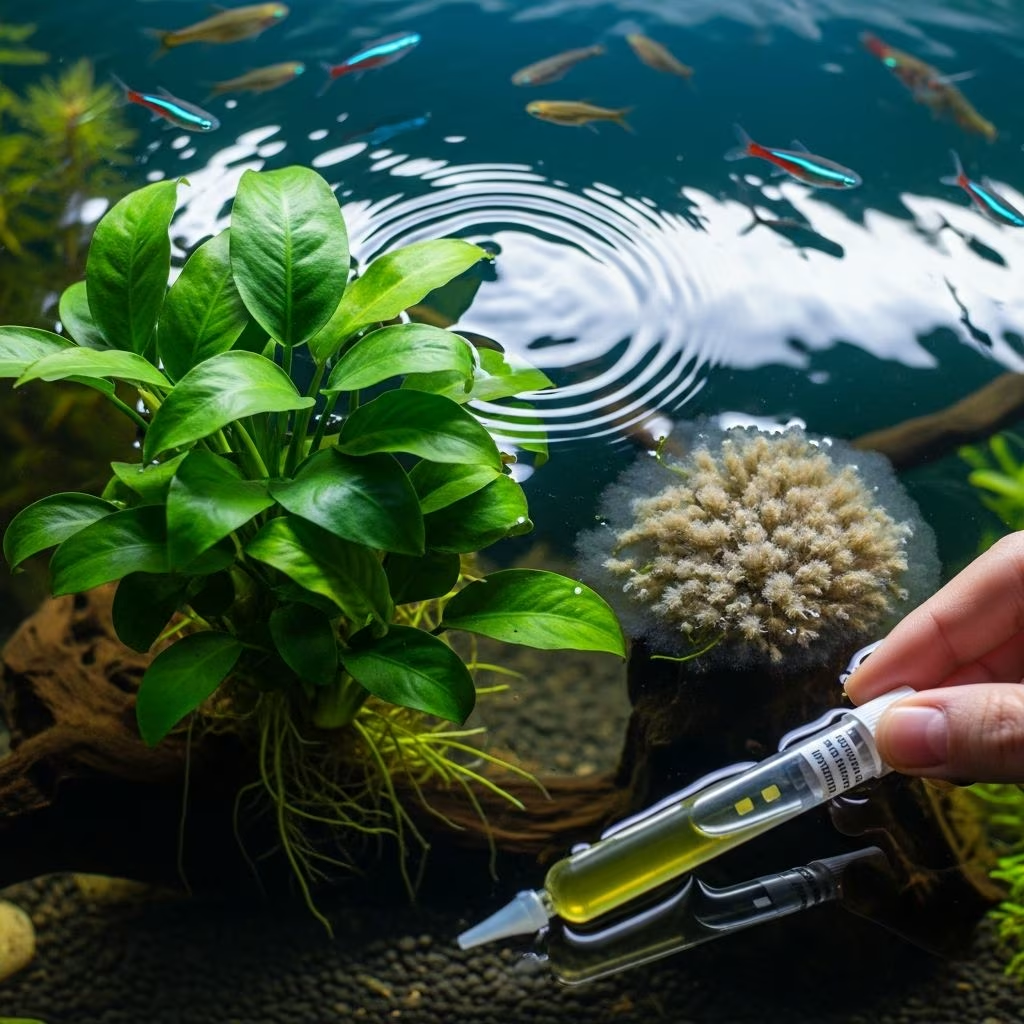
Ammonia buildup is one of the most critical threats to aquarium health, silently damaging fish gills, stressing shrimp, and stunting plant growth if left unchecked. Maintaining low levels through proper cycling and monitoring ensures a stable environment for all inhabitants.
The Nitrogen Cycle: Foundation of Aquarium Balance
The nitrogen cycle is the biological process that converts toxic ammonia into safer compounds, relying on beneficial bacteria to sustain life in your tank. Fish waste and decaying matter produce ammonia, which ammonia-oxidizing bacteria like Nitrosomonas transform into nitrite. Nitrite-oxidizing bacteria, such as Nitrobacter, then convert nitrite to nitrate, which plants absorb or filters remove.
Disruptions occur in new setups or overstocked tanks, halting this cycle and causing spikes. High temperatures or pH shifts exacerbate issues, as unionized ammonia (NH3) becomes more prevalent and toxic above pH 7 or warmer waters.
- New tanks: Lack established bacteria, leading to initial spikes.
- Overfeeding: Uneaten food decomposes rapidly.
- Filter failures: Dirty media or power outages kill beneficial colonies.
Why Ammonia is Deadly to Fish
Unionized ammonia diffuses across fish gills into the bloodstream, disrupting respiration, osmoregulation, and nervous function. This leads to internal buildup, organ damage, and heightened disease risk. Chronic low levels stunt growth and cause gill pathologies, while acute spikes trigger immediate distress.
Symptoms include:
- Gasping at the surface or labored breathing.
- Lethargy, loss of appetite, and clamped fins.
- Red or inflamed gills, mucus overproduction.
- Convulsions, darkening color, or sudden death.
| pH Level | Toxicity Risk | Effect on Fish |
|---|---|---|
| <7.0 | Low (mostly ionized NH4+) | Minimal gill damage |
| 7.5-8.0 | Moderate | Reduced growth, stress |
| >8.5 | High (unionized NH3) | Acute poisoning, mortality |
Impacts on Shrimp and Sensitive Invertebrates
Shrimp suffer more acutely than fish due to their delicate exoskeletons and high sensitivity. Ammonia erodes shells, causes disorientation, and triggers molting failures, often resulting in mass die-offs. Respiratory distress mirrors fish symptoms but progresses faster in soft-water species like Neocaridina.
Harm to Aquarium Plants and Algae Dynamics
Excess ammonia inhibits photosynthesis, causing leaf yellowing, melting (especially in Bucephalandra), and stunted roots. It disrupts substrate microbes, limiting nutrient uptake and inviting algae blooms that outcompete plants. Balanced levels support plant health as a natural nitrate sink.
Accurate Testing for Ammonia Levels
Regular testing with liquid kits or strips detects total ammonia nitrogen (TAN), distinguishing safe ammonium from toxic unionized forms. Test weekly, especially post-setup or changes. Ideal levels: 0 ppm; anything above 0.25 ppm unionized demands action.
Testing Steps:
- Collect water mid-tank, away from filters.
- Follow kit instructions precisely.
- Factor pH and temperature for unionized calculation using charts.
- Retest after interventions.
Safe Thresholds Across Species
| Aquatic Life | Safe Unionized NH3 (ppm) | Chronic Limit (ppm) |
|---|---|---|
| Tropical Fish | <0.02 | 0.03-0.05 |
| Shrimp | <0.01 | 0.02 |
| Plants | <0.1 | 0.5 (growth inhibition) |
Step-by-Step Fixes for Ammonia Spikes
Address spikes methodically to avoid shocking the system.
Immediate Actions
- Perform 25-50% water changes with dechlorinated, temperature-matched water daily until below 0.5 ppm.
- Reduce feeding to every other day, minimal amounts.
- Add ammonia absorbers like zeolite temporarily.
Boosting Biological Filtration
Seed with mature media or bottled bacteria to accelerate cycling. Avoid antibiotics or harsh chemicals that kill nitrifiers. Clean filters gently in tank water to preserve colonies.
Long-Term Prevention Strategies
Stock gradually: one inch of fish per 5 gallons. Maintain 78-82°F for most setups, pH 6.8-7.5. Use live plants and regular maintenance.
- Weekly 20% water changes.
- Monitor all parameters: ammonia, nitrite, nitrate.
- Upgrade filtration for bioload.
Common Mistakes Leading to Spikes
Avoid overcleaning filters, ignoring uneaten food, or rapid parameter swings. New tank syndrome hits 80% of setups without proper cycling—wait 4-6 weeks before adding fish.
Advanced Monitoring Tools
Digital probes and auto-top-off systems with alerts provide real-time data. Pair with algae scrubbers for holistic balance.
Frequently Asked Questions
What causes sudden ammonia spikes in established tanks?
Filter clogs, dead organisms, or overfeeding disrupt bacteria. Check for hidden decay.
Is ammonia worse in saltwater aquariums?
Yes, higher pH increases unionized form toxicity.
Can plants alone control ammonia?
They help with nitrates but need bacteria for ammonia conversion.
How long to cycle a new tank?
4-8 weeks; test zero ammonia/nitrite before stocking.
Does carbon dioxide injection affect ammonia?
Lowers pH, reducing toxicity but not total levels.
Maintaining a Thriving Ecosystem
Proactive management turns potential disasters into stable havens. Consistent testing and moderation yield vibrant communities where fish dart energetically, shrimp graze confidently, and plants flourish lushly.
References
- How Ammonia Harms Fish, Shrimp & Aquarium Plants + Test, Cycle & Combat Guide — Aquarzon. 2023. https://www.aquarzon.com/blog/post/how-to-ammonia-harms-fish-shrimp-aquarium-plants-test-cycle-combat-guide.html
- Ammonia — US EPA. 2024-02-01. https://www.epa.gov/caddis/ammonia
- 5.2.1. Ammonia in Depth — Aquarium Science. 2023. https://aquariumscience.org/5-2-1-ammonia-in-depth/
- Ammonia and your fish tank – everything you need to know — Swell UK. 2024. https://www.swelluk.com/help-guides/ammonia-and-your-fish-tank-everything-you-need-to-know/
- How to Detect and Fix Aquarium Ammonia Issues — Aqueon. 2023-10-15. https://www.aqueon.com/articles/how-to-detect-and-fix-aquarium-ammonia-issues
- Ammonia poisoning — Wikipedia (informational, primary sources referenced). 2025-01-20. https://en.wikipedia.org/wiki/Ammonia_poisoning



