

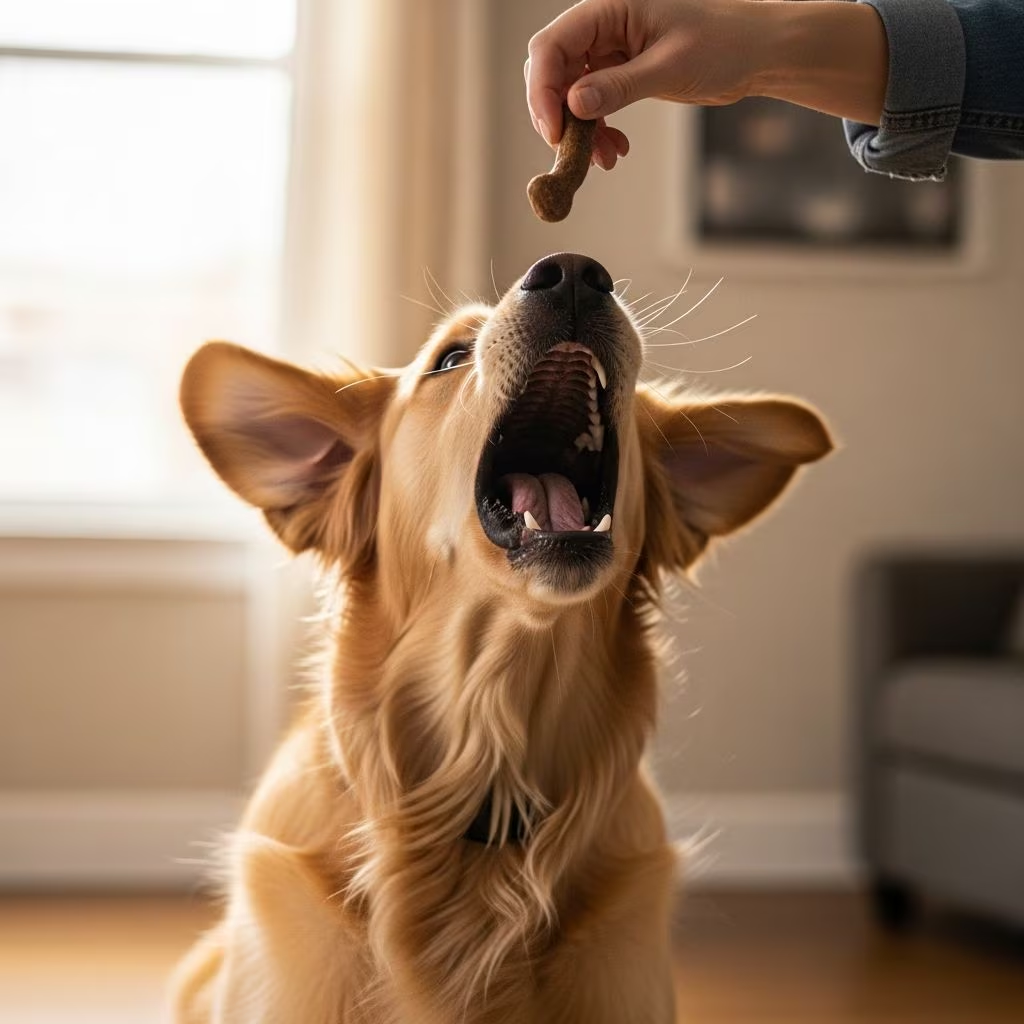
Many dog owners experience the uncomfortable and sometimes painful experience of their dogs biting down too forcefully when receiving treats from their hands. This behavior, commonly referred to as “hard mouth,” ranges from an occasional uncomfortable nip to consistently aggressive grab-and-gulp behavior that leaves fingers bruised and hands sore. Understanding the underlying causes and implementing appropriate interventions can transform treat time from a source of stress into an enjoyable bonding experience for both dog and owner.
Understanding the Root Causes of Hard-Mouth Behavior
Dogs who exhibit aggressive treat-taking behaviors may do so for various interconnected reasons. The most significant factor relates to bite inhibition development during puppyhood. When puppies engage in play with littermates and learn appropriate mouthing boundaries, they develop what behaviorists call “bite inhibition”—the ability to control jaw pressure. Dogs who miss this critical learning window often struggle to modulate their mouth force throughout adulthood, resorting to powerful, uncontrolled biting whenever food is involved.
However, not all hard-mouth cases stem from early developmental issues. Some dogs demonstrate perfectly acceptable soft-mouth behavior under normal circumstances but resort to aggressive treat-taking only when experiencing elevated stress or excitement levels. Environmental factors such as high-energy situations, the anticipation of high-value rewards, or increased arousal can temporarily override a dog’s learned impulse control. This distinction matters significantly when selecting an appropriate intervention strategy, as temporary behavioral escalations require different solutions than ingrained bite patterns.
The Immediate Fixes: Quick Solutions for Daily Treat Distribution
For owners seeking immediate relief from painful treat interactions, several practical alternatives to hand-feeding eliminate the problem without requiring extensive training investment. These methods work particularly well for managing the problem while implementing longer-term behavioral modifications.
The Flat-Palm Feeding Technique
One of the simplest yet effective approaches involves changing how treats are physically delivered. By offering treats on the flat palm of your hand rather than between your fingers, you reduce the likelihood of your dog’s teeth making contact with sensitive skin. This technique mimics how equestrian handlers safely feed treats to horses, protecting fingers from accidental nips. The method requires positioning your hand horizontally with fingers extended flat and relaxed. While this approach doesn’t completely eliminate risk, it significantly reduces the potential for injury while your dog learns improved manners.
Ground-Based Distribution Methods
Tossing treats onto the ground or grass creates distance between your hands and your dog’s mouth, making this an effective immediate solution. This method proves particularly useful during walks or outdoor training sessions when stress or environmental stimulation might trigger harder biting. The ground-based approach works especially well when combined with other techniques, such as using treat scatters to encourage natural sniffing behaviors that naturally calm overstimulated dogs. Research indicates that sniffing activities can positively influence canine heart rates and stress levels, creating a calming effect that may naturally reduce the intensity of subsequent treat-taking behaviors.
Specialized Feeding Tools
Several purposefully designed tools enable safe treat delivery without direct finger contact. Silicone squeeze tubes, originally designed for camping and moist food storage, allow owners to dispense soft treats like peanut butter, cream cheese, or canned dog food without any risk of teeth making contact with hands. Dogs simply lick the substance from the tube’s opening, removing the biting component entirely.
Other practical alternatives include metal spoons or finger splints. Many dogs naturally bite more gently on metal surfaces, as the unpleasant sensation discourages hard biting. Metal spoons work particularly well with sticky treats that adhere to the surface, allowing dogs to lick rather than bite. Finger splints—small foam-padded metal covers that Velcro onto individual fingers—provide protection while still allowing somewhat traditional treat-delivery methods. These tools let you maintain normal training protocols while your dog develops better impulse control.
Creative Treat Alternatives
Commercial “squeeze cheese” products, while not nutritionally ideal for regular use, can serve as excellent training treats during intervention periods. The tube design makes it impossible for dogs to bite, as they must lick the cheese from the nozzle. Additionally, using lower-value treats like regular kibble instead of high-value options can reduce your dog’s enthusiasm level enough to decrease bite pressure. Counterintuitively, training after your dog has eaten, rather than before meals when hunger is heightened, can also tone down treat-motivated excitement that might otherwise result in painful interactions.
Long-Term Behavioral Solutions: Building Better Bite Inhibition
While immediate fixes address the symptom, developing genuine improved bite inhibition provides lasting solutions that benefit your dog throughout life. These methods require more time investment but produce sustainable behavioral changes rather than merely managing the problem.
Remedial Bite Inhibition Training
Dogs who missed early learning opportunities can still develop better mouth control through dedicated training. This involves teaching your dog to take treats gently through positive reinforcement protocols. Begin by offering treats in low-stress situations and immediately reward your dog when he demonstrates soft-mouth behavior. Use a consistent marker—a clicker or specific word like “gentle”—to indicate the exact moment your dog’s behavior meets your expectations, followed immediately by praise and rewards.
Progress gradually by introducing slightly higher-value treats as your dog demonstrates consistent improvement. The goal is helping your dog understand that soft-mouthed behavior reliably produces positive consequences, making gentleness his preferred approach to treat-taking. This method works best when practiced regularly in brief sessions rather than sporadically.
Addressing Arousal and Stress Factors
For dogs whose hard-mouth behavior specifically emerges during high-arousal situations, addressing the underlying stimulation level becomes critical. Dogs experiencing excessive excitement or environmental stress may physically lack the impulse control needed for gentle behavior, regardless of prior training. Managing stimulation through calming activities—such as encouraging sniffing games that naturally reduce heart rate and stress—can help your dog achieve the mental state necessary for demonstrating learned bite inhibition.
Some dogs benefit from anxiety-reduction strategies during periods when treat-taking problems are most pronounced. Pheromone diffusers, anxiety wraps, or other calming aids can help lower overall arousal, making it easier for your dog to access his learned impulse control. Consulting with a veterinarian about whether temporary calming supplements might support your training efforts can provide additional helpful tools.
Response-Based Training
Another evidence-based approach involves teaching your dog to actively modify his behavior when he makes mistakes. When your dog’s teeth make hard contact during treat-taking, respond with a high-pitched “Ouch!” sound that startles and interrupts the behavior. If your dog releases your hand and backs away, immediately reward him with treats and enthusiastic praise. This method capitalizes on your dog’s natural learning patterns—behaviors that produce rewards get repeated, while those followed by interruption and no reward tend to decrease.
When to Seek Professional Guidance
Bite-inhibition challenges that don’t respond to owner-implemented strategies may benefit from professional dog training consultation. Certified professional dog trainers or veterinary behaviorists can assess whether your dog’s behavior stems from learned deficits, medical issues like dental disease or pain, or anxiety factors that require specialized intervention. Some dogs benefit from customized training protocols designed specifically for their individual learning styles and triggering situations.
Frequently Asked Questions
Is hard-mouth behavior dangerous?
Hard-mouth treat-taking typically causes discomfort rather than serious injury, but it does warrant attention. This behavior can escalate if not addressed, and it may indicate underlying anxiety or impulse-control challenges in other contexts as well.
Can adult dogs learn improved bite inhibition?
Yes. While puppies naturally learn bite inhibition through littermate play, adult dogs can develop better mouth control through consistent positive reinforcement training. This learning process typically takes several weeks of regular practice.
Should I punish my dog for biting my hand?
Punishment-based approaches often increase anxiety and may worsen the behavior. Positive reinforcement-based methods that reward gentle behavior produce more reliable, lasting results.
Which solution works fastest?
Immediate fixes like squeeze tubes or ground-feeding eliminate the problem instantly. Behavioral training takes longer but produces permanent improvements rather than merely managing the symptom.
Does treat value affect how hard my dog bites?
Yes. High-value treats often trigger more intense grab-and-gulp behavior. Using lower-value rewards or training after meals can reduce bite pressure while your dog develops better impulse control.
Creating a Comprehensive Management Plan
Addressing hard-mouth behavior most effectively involves combining immediate harm-reduction strategies with longer-term behavioral training. Begin with whatever method feels most practical for your situation—whether that means using feeding tools, changing treat-delivery location, or adjusting training timing. Simultaneously implement a positive reinforcement-based bite-inhibition training program that builds your dog’s capability for gentle behavior.
Consistency matters significantly in modifying any learned behavior pattern. When all family members and anyone else interacting with your dog apply the same standards and techniques, your dog receives clear, repetitive messaging about appropriate treat-taking behavior, accelerating learning and behavior change.
Over time and with patience, most dogs develop dramatically improved treat-taking manners. The combination of removed opportunities for hard biting (through your chosen feeding method) and positive reinforcement for gentle behavior creates an environment where your dog learns that softness produces rewards while hard biting does not. This shift in understanding gradually transforms treat time from a painful interaction into something enjoyable for everyone involved.
References
- Does Your Dog Bite Your Hand While Receiving Treats? — Whole Dog Journal. https://www.whole-dog-journal.com/behavior/does-your-dog-bite-your-hand-while-receiving-treats/
- Mouthing, Nipping and Play Biting in Adult Dogs — ASPCA. https://www.aspca.org/pet-care/dog-care/common-dog-behavior-issues/mouthing-nipping-and-play-biting-adult-dogs
- Why Your Dog Might be Biting and How You can Stop it — MetLife Pet Insurance. https://www.metlifepetinsurance.com/blog/pet-behavior/why-your-dog-might-be-biting-and-how-you-can-stop-it/
- Dog Takes Treats Painfully? Try These 3 EASY Fixes! — Happy Hounds Dog Training. https://www.youtube.com/watch?v=0ae8IyGUi3E
- How to Stop Food Aggression and Resource Guarding in Dogs — Best Friends Animal Society. https://bestfriends.org/pet-care-resources/how-stop-food-aggression-and-resource-guarding-dogs
- Dog Bites 101: Why They Happen and How to Prevent Them — Cloquet Veterinary Clinic. https://cloquetvet.com/dog-bites-101-why-they-happen-and-how-to-prevent-them/



