

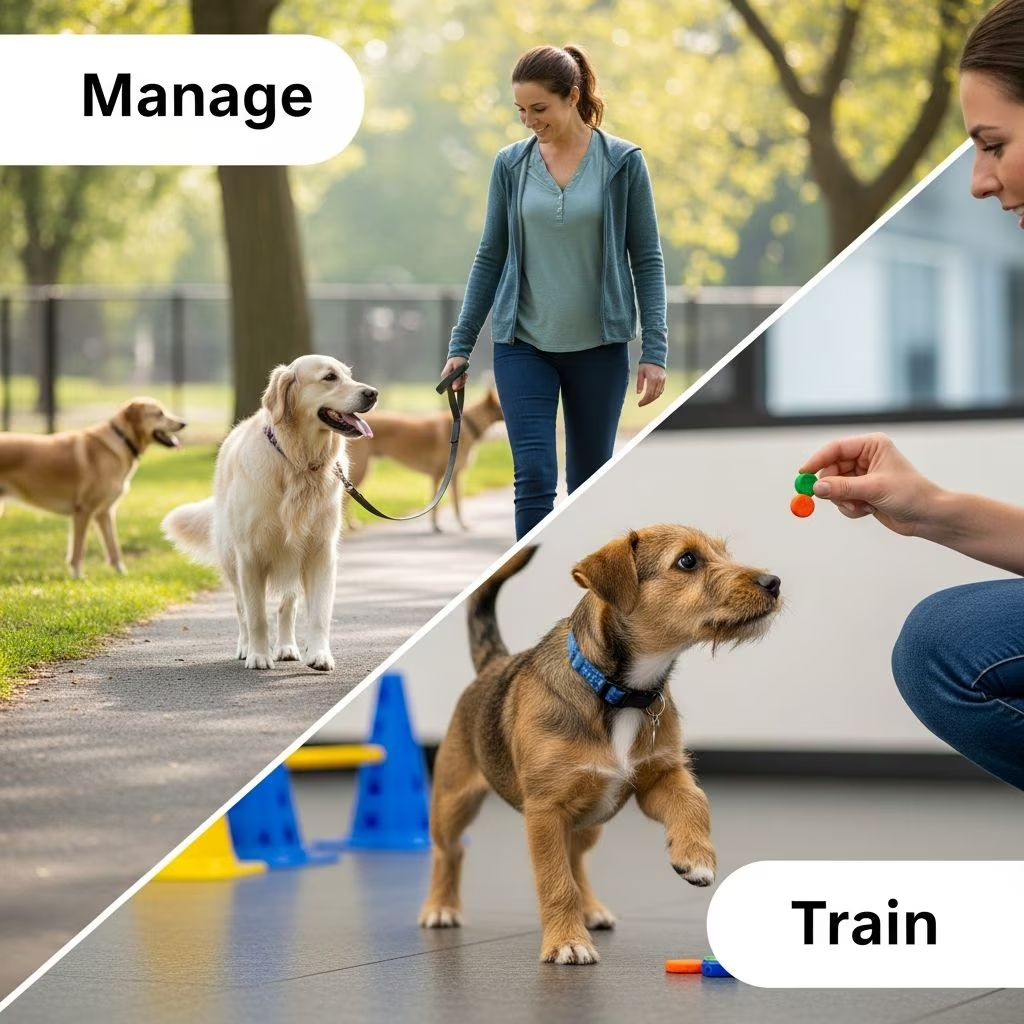
Addressing problematic dog behaviors requires a thoughtful approach that balances immediate prevention with long-term skill-building. Owners often face choices between simply controlling situations to avoid issues or investing in training to reshape habits. This article outlines key principles, drawing from established veterinary and training practices, to help you decide when to manage and when to train effectively.
Understanding the Core Difference: Management vs. Training
**Management** involves environmental adjustments to prevent unwanted actions, providing safety and time for learning without direct confrontation. It acts as a temporary safeguard while you prepare for deeper interventions. **Training**, conversely, employs structured exercises, often rooted in positive reinforcement, to teach alternative responses and build reliable obedience.
Positive reinforcement, endorsed by veterinarians, rewards desired actions to encourage repetition, fostering trust and faster learning without fear. Studies and expert consensus show dogs retain skills better when associated with rewards like treats or praise, rather than punishment.
Common Dog Behaviors and Initial Management Steps
Many behaviors stem from instinct, boredom, or unmet needs. Start with management to halt escalation:
- Jumping on Guests: Keep your dog leashed or in another room during arrivals until calm.
- Chewing Household Items: Remove access to tempting objects; provide safe chew toys instead.
- Excessive Barking: Limit window views or use visual barriers to reduce external triggers.
- Pulling on Leash: Avoid walks in high-distraction areas; use a front-clip harness for control.
- Digging in Yard: Designate a digging zone with sand and bury toys to redirect energy.
These steps, recommended by behavior academies, ensure supervision and confinement in safe spaces like crated areas or gated rooms. Consistency prevents reinforcement of bad habits, buying time for training.
Shifting to Training: Building Positive Habits
Once management stabilizes the situation, transition to training using positive methods. Begin in low-distraction environments, rewarding small successes to shape behaviors gradually.
| Behavior Issue | Management Tactic | Training Technique | Expected Timeline |
|---|---|---|---|
| Jumping | Leash control at door | Reinforce ‘sit’ with treats on greeting | 1-2 weeks |
| Chewing | Remove items, crate when unsupervised | Trade toys for chews, praise engagement | 2-4 weeks |
| Barking | Block triggers | ‘Quiet’ cue paired with rewards | 3-6 weeks |
| Leash Pulling | Short, controlled walks | Stop walking until slack; reward progress | 4-8 weeks |
| Digging | Fenced off-limits area | Guide to dig pit, reward use | 1-3 weeks |
This table illustrates a phased approach: management first, then incremental training. Track progress by noting frequency and reliability of responses.
Positive Reinforcement in Action: Step-by-Step Guide
Positive reinforcement delivers rewards immediately after a behavior to strengthen it. Key tips include:
- Select high-value rewards like small treats your dog loves.
- Use a marker (clicker or ‘yes’) timed precisely with the action.
- Practice in distraction-free zones, gradually increasing challenges.
- End sessions on success to build confidence.
For basic commands:
- Sit: Lure with treat above nose, reward when bottom touches ground.
- Stay: Start with 1-second holds, build duration with praise.
- Come: Call in enclosed space, reward approach enthusiastically.
Sessions should last 10-15 minutes multiple times daily, aligning with short attention spans.
Advanced Behavior Modification Techniques
For persistent issues like fear or aggression, employ desensitization and counterconditioning. **Desensitization** exposes dogs to triggers at sub-threshold levels, paired with rewards to change emotional responses. **Counterconditioning** replaces negative associations with positive ones, such as treating during doorbell rings.
Professionals recommend:
- Behavioral assessments to identify triggers.
- Custom plans with controlled exposures.
- Owner involvement for home reinforcement.
A structured weekly plan enhances results:
| Day | Focus | Activities |
|---|---|---|
| Monday | Basic Commands | 10-min sit/stay sessions x2 |
| Tuesday | Manners | Leave-it practice during meals |
| Wednesday | Socialization | Controlled park exposure |
| Thursday | Leash Work | 15-min loose-leash drills |
| Friday | Review | Mix commands with rewards |
| Weekend | Enrichment | Tricks, puzzles for mental stimulation |
Such routines promote calm temperaments and reliability.
When to Seek Professional Guidance
If behaviors endanger safety or persist despite consistent efforts, consult certified trainers using positive methods. Look for experience with behavior modification, avoiding punitive approaches that can worsen issues. Board-and-train programs offer immersion in routines, teaching coping skills under expert supervision.
Essential Tips for Long-Term Success
- Consistency: Same cues and rewards every time.
- Exercise: Daily physical and mental activity reduces unwanted actions.
- Patience: Progress varies; celebrate small wins.
- Prevention: Manage environments to avoid rehearsing bad behaviors.
Reinforce desired actions generously while withdrawing rewards for undesired ones.
Frequently Asked Questions (FAQs)
What if my dog ignores commands during training?
Reduce distractions, use higher-value rewards, and ensure proper technique. Track improvements over sessions.
Is positive reinforcement suitable for aggressive dogs?
Yes, combined with desensitization, but professional oversight is crucial for safety.
How long until I see changes?
Basic behaviors: 1-4 weeks; complex issues: 1-3 months with daily practice.
Can puppies and seniors both benefit?
Absolutely; adapt sessions to energy levels for all ages.
What if management feels like giving up?
It’s a foundation for effective training, preventing setbacks.
Holistic Lifestyle Integration for Better Behavior
Beyond targeted fixes, integrate routines: regular exercise releases energy, structured feeding builds security, and socialization prevents fear. Mental games like puzzle toys curb boredom-driven issues. A balanced life supports training success, creating confident companions.
By discerning when to manage environments and when to train skills, owners achieve sustainable harmony. Positive methods not only curb problems but strengthen bonds, leading to joyful, obedient dogs.
References
- Effective Dog Behavior Modification Techniques for Owners — Insight K9 Solutions. 2023. https://insightk9solutions.com/dog-behavior-modification/
- Best Techniques for Effective Dog Obedience Training — Mannered Mutt. 2024. https://manneredmutt.com/best-techniques-for-effective-dog-obedience-training/
- Top 10 Dog Training Tips — Small Door Veterinary. 2024. https://www.smalldoorvet.com/learning-center/behavior/top-10-dog-training-tips
- How To Train a Dog With Positive Reinforcement — PetMD. 2024-01-15. https://www.petmd.com/dog/behavior/how-to-train-a-dog-with-positive-reinforcement
- How to Curb Unwanted Dog Behaviors — American Kennel Club. 2023. https://www.akc.org/expert-advice/training/how-to-curb-unwanted-dog-behaviors/
- Is Your Dog’s Behavior Out of Control? Board & Train Help — Dog Dynamics. 2024. https://dogdynamics.org/training-tips/improve-dog-behavior-with-board-and-train/
- Dog Management Techniques — Academy of Canine Behavior. 2023. https://www.aocb.com/training/dog-training-tools-tips/dog-management-techniques/



