

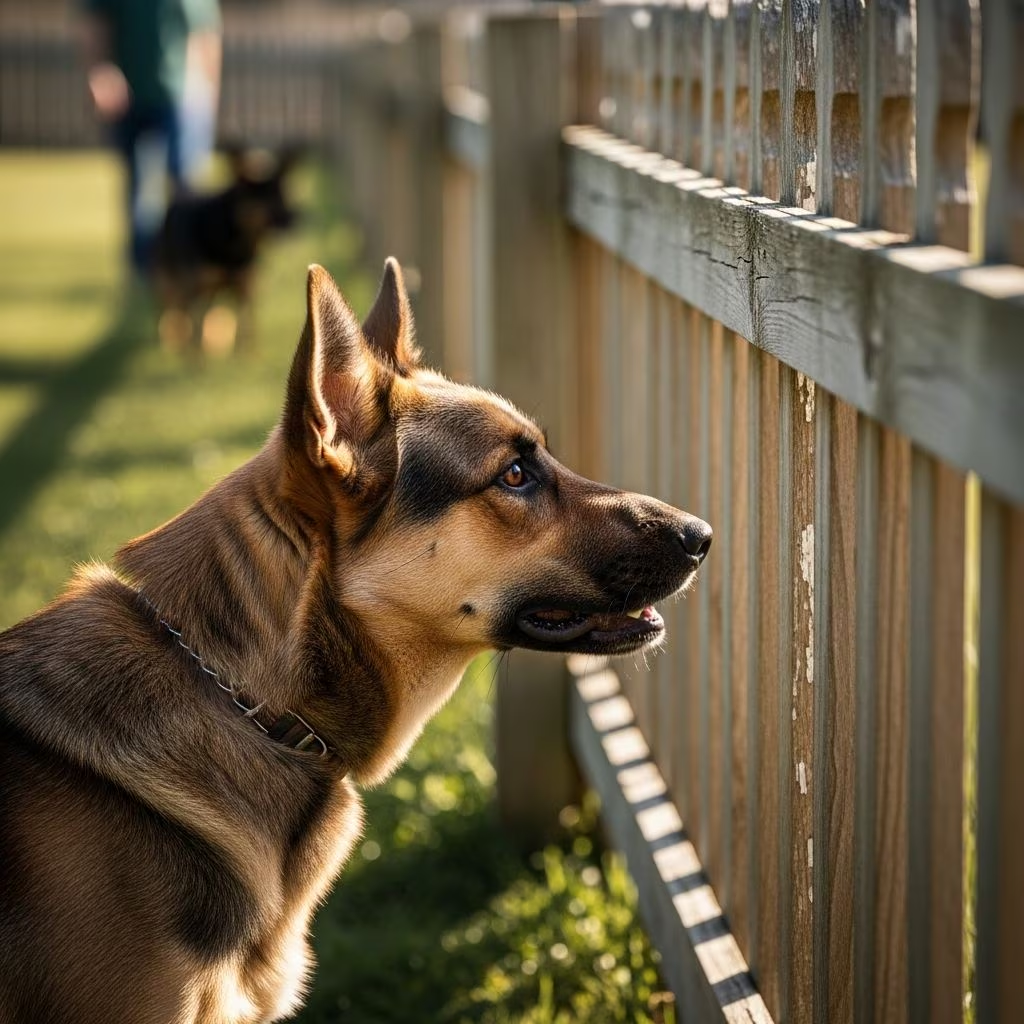
Understanding Barrier Frustration in Dogs
When dogs display aggressive behaviors along fence lines, including barking, lunging, and growling at passing animals or people, they are typically experiencing a condition known as barrier frustration or restraint frustration. This occurs when a dog can see something that interests or threatens them but cannot physically reach it due to the fence barrier. The disconnect between visual stimulation and the inability to access the source creates significant psychological stress in the animal.
Barrier frustration often manifests as fence-running behavior—the repetitive pacing and running along the fence line—and can escalate into fence-fighting when another dog is present on the opposite side. The behavior stems from the dog’s natural territorial instincts combined with frustration at being confined. Without intervention, this frustration frequently develops into more serious behavioral issues, including canine obsessive-compulsive disorders and generalized aggression that may persist even when the fence barrier is removed.
Understanding that fence aggression is fundamentally rooted in anxiety and stress rather than true aggression is crucial for dog owners seeking solutions. The arousal generated by fence-running creates a cycle where the dog becomes increasingly reactive, and the behavior becomes self-reinforcing through repetition.
Early Intervention: The Critical First Step
The most important factor in managing fence aggression is recognizing the problem early and taking immediate action. Dogs that have limited opportunities to practice barrier frustration behaviors are significantly easier to manage than those who have repeated the behavior over weeks or months. Each repetition strengthens the neural pathways associated with the behavior, making it progressively more difficult to modify.
Owners should monitor their dogs for initial signs of fence reactivity, including:
- Increased alertness when near the fence line
- Barking or whining when other dogs or animals pass by
- Pacing along the fence perimeter
- Attempts to climb or dig under the fence
- Fixation on movement beyond the fence
Upon noticing these early warning signs, owners should implement management strategies immediately to prevent the behavior from becoming habituated.
Structural Solutions: Building Better Physical Barriers
Installing Solid Fencing
The most effective structural solution for managing fence aggression is installing a solid fence that completely blocks the dog’s visual access to external stimuli. When dogs cannot see the objects or animals that trigger their arousal, they are far less likely to engage in reactive behaviors. Solid fencing eliminates the primary trigger for fence-running and fence-fighting in most cases.
Solid fence construction offers additional benefits beyond behavioral management, including enhanced security and improved aesthetic appeal to many property owners. However, this solution carries significant financial investment and may face regulatory restrictions in certain communities that have adopted no-fence ordinances.
Modifying Existing See-Through Fences
For homeowners with chain-link or other transparent fencing materials, several modification strategies can reduce visual stimulation without complete fence replacement. Installing privacy slats—plastic or composite strips that slide into chain-link framework—can partially obscure the dog’s view of external areas. While this approach works for dogs with mild barrier frustration, more determined fence-runners may still see through gaps between slats and continue reactive behaviors.
For more comprehensive visual blocking, owners can line the interior of existing fences with materials such as fiberglass-reinforced plastic (FRP), plywood, or tarps. FRP represents the most durable long-term option despite higher initial costs, while temporary solutions like tarps can help owners test whether visual blocking effectively reduces their dog’s aggression before committing to permanent modifications.
Creating an Airlock System
An airlock configuration involves constructing a second fence inside the existing perimeter fence, creating a buffer zone between the dog and the neighboring fence line. This double-barrier approach can reduce actual fence-fighting incidents by increasing physical distance between opposing dogs. The airlock design provides an additional benefit by protecting dogs from external hazards, such as objects or fingers being poked through the fence by neighboring children.
However, airlock systems represent a substantial financial investment and may not completely eliminate barrier frustration behaviors in all dogs. The psychological stress of knowing another dog exists on the far side of the inner fence may persist even with the added physical separation.
Environmental and Stimulus Management
Reducing Access to Triggering Stimuli
Beyond physical barriers, proactively managing the stimuli that trigger fence aggression can significantly reduce problematic behaviors. If specific animals or people consistently trigger a dog’s reactive response, eliminating or minimizing these triggers directly addresses the root cause. For example, if a neighbor’s outdoor cat frequents your yard, relocating that cat—with the neighbor’s permission—can substantially reduce fence-related stress for the dog.
This approach requires cooperation with neighbors and may not always be feasible, but when possible, it addresses the problem at its source rather than only managing symptoms.
Supervision and Controlled Exposure
When solid fences are not feasible or while other management strategies are being implemented, restricting yard access and requiring supervision during outdoor time becomes essential. Dogs should be allowed in the yard only under direct owner supervision, with immediate redirection if fence-related behaviors begin to emerge.
Limiting outdoor time in unsupervised settings prevents the dog from practicing and reinforcing fence aggression behaviors through repetition. This management strategy works in conjunction with other solutions to create a comprehensive behavior modification approach.
Training and Behavioral Modification Techniques
Obedience Foundation
Comprehensive obedience training establishes a foundation for managing fence aggression by teaching dogs to respond to commands even amid challenging environmental distractions. Teaching reliable responses to commands such as “sit,” “stay,” and “leave it” enables owners to redirect the dog’s attention away from fence-line stimuli before reactive behaviors escalate. When a dog recognizes that attending to the owner brings rewards and positive outcomes, the dog becomes more likely to disengage from fence-related stimuli.
Counter-Conditioning Approaches
Counter-conditioning involves changing the dog’s emotional response to triggering stimuli by pairing the trigger with something pleasant. If bicycles trigger fence-running, an owner might sit in the yard with the dog and deliver high-value treats as bicycles pass by, gradually teaching the dog to associate the previously triggering stimulus with positive outcomes rather than arousal.
This technique requires patience and consistency but can fundamentally alter how a dog perceives and responds to environmental triggers.
Recall and Attention Training
Developing a strong recall command enables owners to remove the dog from fence-line situations before serious aggression develops. Teaching the dog to come reliably when called provides a reliable interruption strategy when fence-related behaviors begin. Rewarding the dog for disengaging from fence-focused behaviors and engaging with the owner instead reinforces an alternative response pattern.
Collaboration with Neighbors
Addressing fence aggression often requires coordination with neighbors, particularly when the problem involves fence-fighting between adjacent dogs. Approaching neighbors with a collaborative mindset and focusing on mutual concerns creates the foundation for cooperative problem-solving.
Potential collaborative strategies include:
- Coordinating fence modifications that benefit both properties
- Scheduling yard time to minimize direct contact between dogs
- Working with a professional trainer to implement synchronized training protocols
- Sharing information about the underlying causes and solutions for barrier frustration
When neighbors understand that fence aggression stems from stress and frustration rather than malice, they become more willing to participate in solutions that benefit both households and their respective dogs.
Professional Support and Expert Guidance
Consulting with certified professional dog trainers or behavior specialists provides customized guidance tailored to the specific needs of individual dogs and household situations. Professionals can assess whether fence aggression stems primarily from territorial instincts, barrier frustration, lack of socialization, or a combination of factors. This accurate diagnosis enables the development of targeted intervention strategies more likely to succeed than generic approaches.
Professional trainers can also monitor progress, adjust strategies when initial approaches prove ineffective, and provide support as owners work through what can be a lengthy behavior modification process.
Frequently Asked Questions
Can fence aggression between dogs persist when the fence barrier is removed?
Yes, through a process called generalization, dogs that have engaged in repeated fence-fighting sometimes develop lasting aggression toward the other dog even in situations without a fence. However, not all dogs generalize their aggression; some dogs that are aggressive at the fence may remain friendly when meeting off-leash in neutral territory.
How long does it take to modify fence-aggressive behavior?
Timeline varies significantly depending on the severity of the behavior, the dog’s age and temperament, consistency of implementation, and which strategies are employed. Environmental management and structural solutions may show immediate results, while behavior modification through training typically requires weeks to months of consistent work.
Is fence aggression related to the dog’s temperament or breed?
While any dog can develop barrier frustration, some dogs with naturally higher arousal levels or strong territorial instincts may be predisposed to fence aggression. However, the behavior is fundamentally a result of environmental factors and repeated practice rather than an inherent personality trait that cannot be modified.
What if my dog continues fence aggression despite implementing multiple solutions?
Persistent fence aggression despite comprehensive management may indicate a need for professional assessment, possible underlying anxiety disorders that require veterinary behavioral consultation, or identification of triggers that have not yet been adequately addressed. Professional trainers can help identify which components of a comprehensive plan are working and which require adjustment.
Creating a Comprehensive Management Plan
Effective management of fence aggression typically requires implementing multiple strategies simultaneously rather than relying on any single solution. A comprehensive plan might include structural modifications, environmental management, training protocols, and neighbor coordination, tailored to the specific circumstances of the dog and household.
Starting with early intervention when the behavior first emerges, maintaining consistency across all household members, and adjusting strategies based on observed results increases the likelihood of success in managing this challenging behavior.
References
- Solve Fence Aggression with a Better Dog Fence — Whole Dog Journal. https://www.whole-dog-journal.com/behavior/leash-barrier-reactivity/solve-fence-aggression-with-a-better-dog-fence/
- Methods to Reduce Dogs Fence Fighting — Freak on a Leash Dog Training. https://freakonaleashdogtraining.com/methods-to-reduce-dogs-fence-fighting/
- Tips to Stop Dog Fence Fighting with Neighborhood Dogs — Doggone Problems. https://www.doggoneproblems.com/thor-stop-fence-fighting/
- Fence Fighting – Why it Occurs and How to Resolve It — Dog Training Fresno. https://www.dogtrainingfresno.com/fence-fighting-why-it-occurs-and-how-to-resolve-it/



