

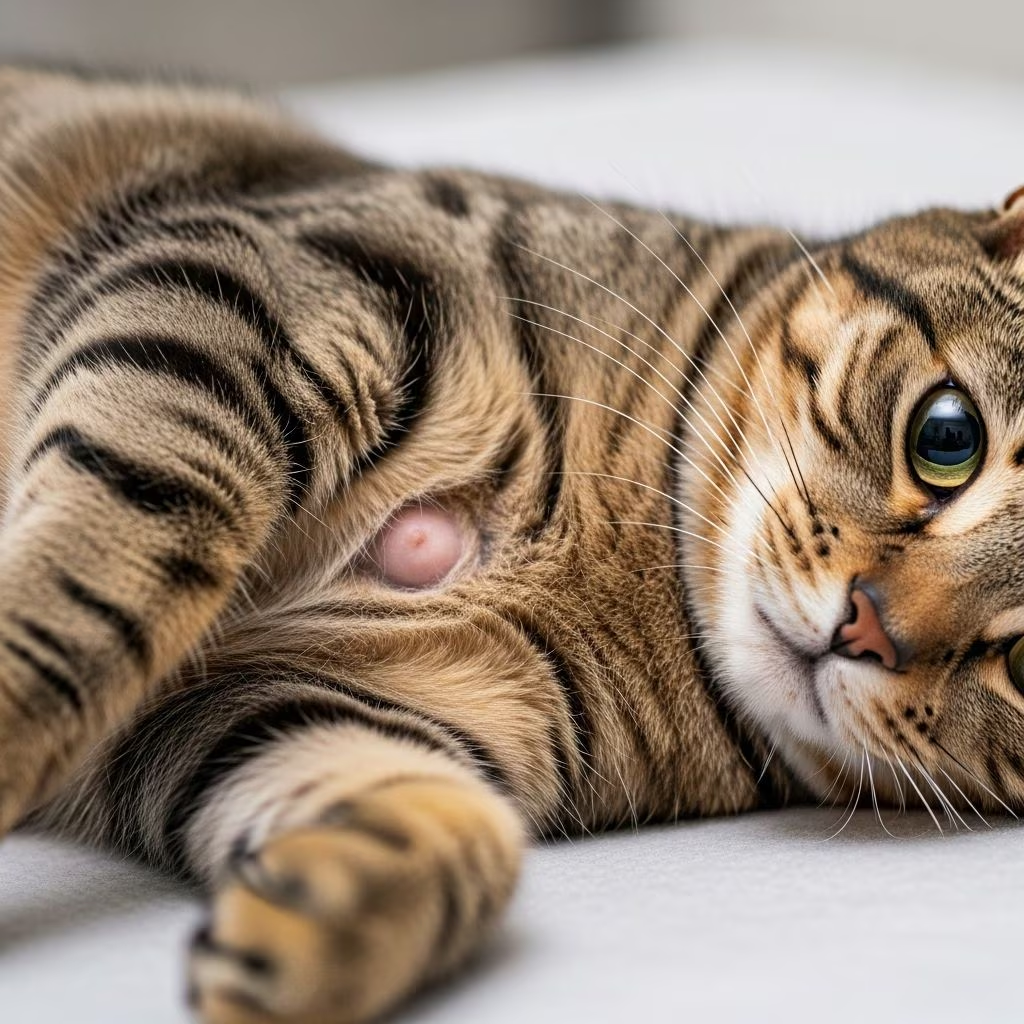
Understanding Mammary Tumors in Cats
Mammary tumors represent one of the most significant health concerns affecting domestic cats, particularly intact females. These abnormal growths in the breast tissue warrant serious attention from cat owners, as they are among the most common malignant cancers diagnosed in feline patients. Understanding the nature of these tumors, their risk factors, and available treatment options is essential for anyone responsible for a cat’s wellbeing.
Unlike many other cancers that may develop slowly, mammary tumors in cats tend to be aggressive and require prompt intervention. The prevalence and severity of these tumors make early recognition and treatment critically important for improving survival outcomes and maintaining your cat’s quality of life.
What Are Mammary Tumors?
Mammary tumors are abnormal growths that develop in the breast tissue of cats. These tumors originate from the mammary glands, which are present in both male and female cats. In cats, most mammary tumors (80-96%) are malignant, meaning they have the potential to spread to other parts of the body. This high rate of malignancy distinguishes feline mammary tumors from those in dogs, where approximately 50% are benign.
There are several different types of mammary tumors, with carcinomas being the most common. Carcinomas often arise from the tubules of the mammary glands or other cells found in the mammary chain. The most common subtypes include simple tubular carcinomas, tubulopapillary carcinomas, and solid carcinomas. While other types of cancer can affect the mammary glands, including osteosarcomas, carcinomas represent the predominant malignant form encountered in clinical practice.
Risk Factors for Developing Mammary Tumors
Hormonal Status and Spaying
The incidence of mammary tumors in cats is directly related to hormone status, particularly whether a cat is intact or has been spayed. Sexually intact cats face a dramatically increased risk compared to their spayed counterparts. Specifically, intact female cats have a seven-fold increased risk for developing mammary tumors compared to spayed cats. This significant difference underscores the protective effect of ovariohysterectomy, commonly known as spaying.
Early spaying is the most effective preventive measure available. Cats spayed before six months of age have only a 9% risk of developing mammary tumors throughout their lifetime. The protective effect increases further with earlier intervention—cats spayed before six months have a 91% decreased risk of mammary tumor development. Even cats spayed between seven and twelve months benefit from protection, with a 14% risk of development, representing an 86% decreased risk compared to intact females. However, the protective effect of spaying diminishes significantly with age, offering no meaningful benefit after a cat reaches two years old.
Gender Differences
Male cats rarely develop mammary tumors, with the disease predominantly affecting females. This gender predisposition reflects the hormonal influences driving tumor development, as mammary tissue in males is generally less responsive to the stimuli that promote malignant transformation.
Exogenous Hormone Administration
Beyond a cat’s natural hormonal status, the administration of exogenous progestins or hormone combinations can increase mammary tumor risk. Cats exposed to these medications face an elevated risk and may develop either benign or malignant mammary tumors as a result.
Clinical Signs and Presentation
Recognizing the clinical signs of mammary tumors is essential for early detection. Many cats show no obvious signs in the early stages, making regular physical examinations crucial. The most common finding in cats with mammary tumors is a palpable mass underneath the skin of the abdomen or near a nipple. These masses typically present as firm, sometimes ulcerated nodules that may cause visible changes in the overlying skin.
Additional clinical signs may include:
- Swollen or reddened nipples
- Discharge from the nipples, which may be tan to yellow in color
- Skin ulceration or lesions over the affected area
- Skin adherence to the underlying mass
- Behavioral changes or signs of discomfort
It is important to note that cats have four pairs of mammary glands, and it is not uncommon for cats to develop multiple mammary tumors. Therefore, when examining a cat with a known or suspected mammary mass, all mammary glands should be carefully palpated to identify additional lesions.
Diagnosis of Mammary Tumors
Physical Examination and Palpation
The diagnostic process typically begins with a thorough physical examination. Your veterinarian will carefully palpate all four pairs of mammary glands to identify any masses and assess their characteristics, including size, texture, mobility, and whether they appear fixed to underlying tissue.
Biopsy and Histopathology
A biopsy is the most reliable diagnostic tool for confirming mammary tumor diagnosis and distinguishing between benign and malignant masses. During this procedure, a small tissue sample is collected from the suspected tumor and examined under a microscope by a pathologist. This examination provides crucial information about the tumor type, grade, and histological characteristics that inform treatment decisions and prognosis assessment.
Laboratory and Imaging Studies
Once a mammary tumor is suspected or confirmed, additional diagnostic tests are performed to assess the overall health status and determine whether cancer has spread. A complete blood count, serum chemistry panel, and urinalysis evaluate organ function and ensure the cat can tolerate treatment. Chest X-rays and abdominal ultrasound examine internal organs for signs of metastatic disease. Lymph nodes that may be affected by cancer can be evaluated through palpation and fine needle aspiration, where cells are collected with a small needle for microscopic examination.
Tumor Grading and Staging
Histological Grading
Once histological results from a biopsy become available, feline mammary carcinomas can be graded using the Elston and Ellis grading system. This system classifies tumors based on tissue differentiation, nuclear pleomorphism, and mitotic count, resulting in grades I, II, or III. Higher tumor grade is associated with poorer prognosis, with cats diagnosed with grade III mammary carcinomas exhibiting significantly shorter median survival times compared with those with grade I tumors.
Clinical Staging
Clinical staging is essential for establishing prognosis and guiding treatment decisions. The staging system most commonly applied to cats with mammary tumors is adapted from the WHO staging system. Stage advances based on the size of the primary tumor: stage I includes tumors less than 2 centimeters, stage II includes tumors measuring 2-3 centimeters, and stage III includes tumors greater than 3 centimeters. Regardless of tumor size, lymph node involvement also represents stage III disease, and distant metastasis constitutes stage IV disease. Larger tumors greater than 3 centimeters in diameter carry a worse prognosis than smaller tumors. If caught early, survival chances are very good—three years or more if a tumor is smaller than two centimeters in diameter.
Prognosis and Survival Outcomes
Overall clinical stage, which considers tumor size, lymph node involvement, and distant metastasis, is predictably associated with survival time. Cats with stage IV disease exhibit notably short median survival times of approximately 44 days. The location of metastasis also influences prognosis in cats with mammary adenocarcinoma, with cats having nodal, pulmonary, and pleural metastasis experiencing progressively worse median survival times.
Lymph node metastasis represents a significant adverse prognostic factor. In clinical studies, all cats with lymph node metastasis at the time of surgery developed progressive disease within eight months, highlighting the predictive value of this finding. However, a more aggressive surgical approach, such as bilateral mastectomy, has demonstrated protective effects against disease progression, even in cases where local lymph nodes were metastatic, suggesting a positive impact of comprehensive surgical intervention on prognosis.
Treatment Options
Surgical Treatment
Surgical excision remains the treatment of choice for mammary tumors in cats. The surgical approach depends on several factors, including tumor location, size, and whether multiple tumors are present. If tissue involvement is confined to the mammary glands, mastectomy may be performed to remove one or both chains of the patient’s nipples, mammary glands, and underlying tissue. Bilateral mastectomy, which removes both chains of mammary tissue, has shown protective effects against disease progression compared to more limited surgical approaches.
Chemotherapy
The role of adjuvant chemotherapy in treating feline mammary tumors remains controversial and not well established. While chemotherapy may be considered in certain cases, particularly those with evidence of metastatic spread, no studies have definitively shown that chemotherapy significantly extends survival time. If cancer has spread throughout a cat’s body, treatment may center on chemotherapy as a palliative measure to manage symptoms and potentially slow disease progression.
Prevention Strategies
The most effective preventive measure for mammary tumors in cats is early spaying. Since the protective effect of ovariohysterectomy is greatest when performed before hormonal cycles begin, veterinarians recommend spaying cats before six months of age whenever possible. This simple surgical procedure can reduce the lifetime risk of mammary tumor development by as much as 91%.
For intact female cats beyond the optimal spaying window, awareness of clinical signs becomes increasingly important. Regular self-examination of all four pairs of mammary glands and prompt reporting of any masses or abnormalities to your veterinarian can facilitate early detection and treatment.
Living with a Cat Diagnosed with Mammary Tumors
If your cat has been diagnosed with a mammary tumor, working closely with your veterinary team is essential. Regular follow-up examinations will monitor for signs of recurrence or metastatic spread. Pain management and supportive care become increasingly important as treatment progresses. Your veterinarian can recommend appropriate pain medications and dietary modifications to support your cat’s comfort and wellbeing during treatment and recovery.
Frequently Asked Questions
Q: How common are mammary tumors in cats?
A: Mammary tumors are among the most common cancers diagnosed in cats, making up a significant portion of feline malignancies. They occur predominantly in intact females.
Q: Can male cats develop mammary tumors?
A: While male cats can develop mammary tumors, this occurrence is rare. The disease predominantly affects females due to hormonal factors.
Q: Is spaying always effective in preventing mammary tumors?
A: Spaying is most effective when performed before six months of age. After two years of age, spaying offers no meaningful protective benefit against mammary tumor development.
Q: What is the survival rate for cats with mammary tumors?
A: Survival rates vary significantly based on tumor stage, size, and grade at diagnosis. Cats with early-stage, small tumors (less than 2 centimeters) may survive three years or more with treatment, while stage IV disease carries a median survival of only about 44 days.
Q: How often should I examine my cat’s mammary glands?
A: Regular monthly self-examination of all four pairs of mammary glands is recommended, particularly for intact females. Any new masses or abnormalities should be reported to your veterinarian promptly.
References
- Mammary Tumors in Cats — Merck Veterinary Manual. 2024. https://www.merckvetmanual.com/reproductive-system/mammary-tumors-in-cats/mammary-tumors-in-cats
- Mammary Tumors in Cats — VCA Animal Hospitals. 2024. https://vcahospitals.com/know-your-pet/mammary-tumors-in-cats
- Mammary Tumours in the Cat: Size matters, so early intervention — PubMed Central, National Center for Biotechnology Information. 2024. https://pmc.ncbi.nlm.nih.gov/articles/PMC10816587/
- Feline Mammary Tumors — North Carolina State University College of Veterinary Medicine. 2024. https://hospital.cvm.ncsu.edu/services/small-animals/cancer-oncology/oncology/medical-oncology-feline-mammary-tumors/
- Mammary Tumors — Cornell University College of Veterinary Medicine. 2024. https://www.vet.cornell.edu/departments-centers-and-institutes/cornell-feline-health-center/health-information/feline-health-topics/mammary-tumors
- Mammary Tumors – Feline — Veterinary Society of Surgical Oncology. 2024. https://vsso.org/mammary-tumors-feline
- Mammary Tumors — American College of Veterinary Surgeons. 2024. https://www.acvs.org/small-animal/mammary-tumors/



