

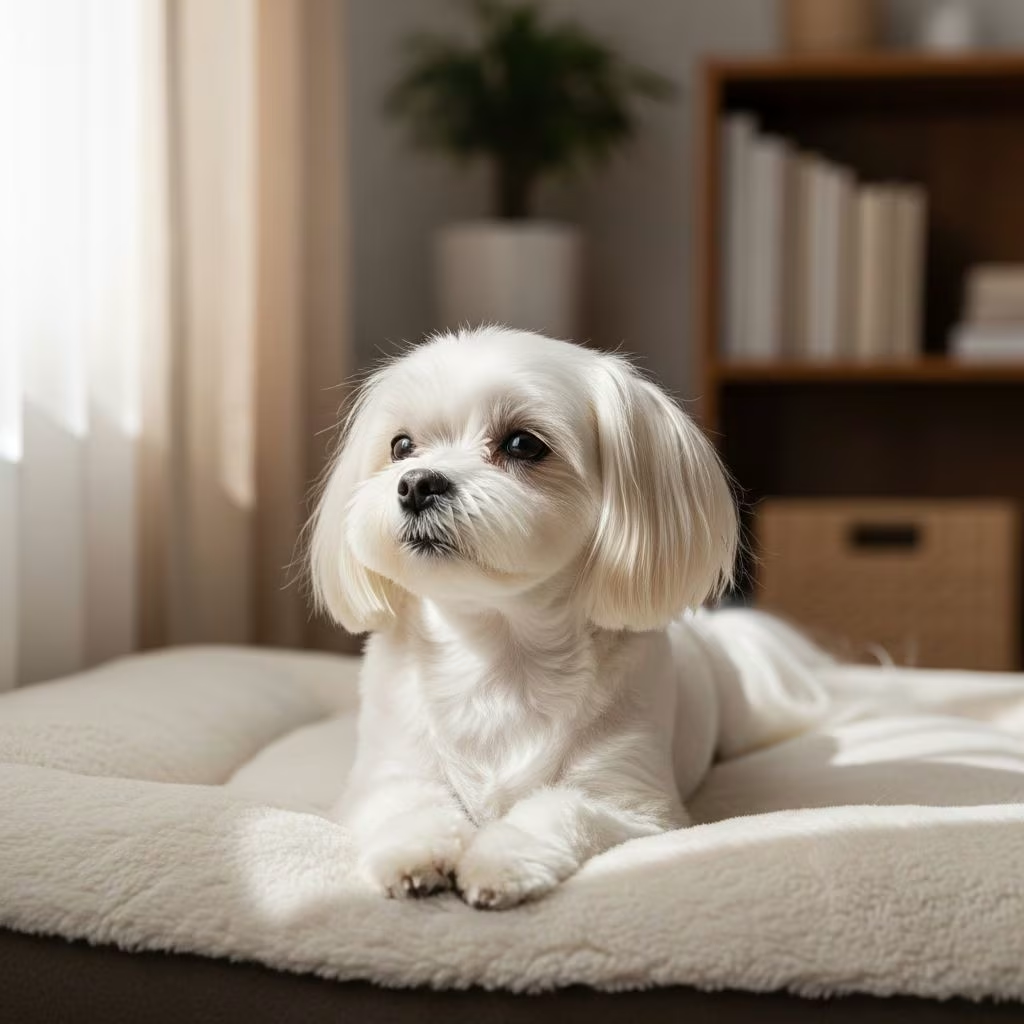
Maltese dogs are delightful companion animals known for their affectionate nature and strong bonds with their owners. However, this very characteristic that makes them wonderful pets can create challenges when their humans need to leave them home alone. Understanding the complexities of leaving your Maltese unattended is essential for responsible pet ownership, as it directly impacts your dog’s physical health, emotional wellbeing, and behavioral development.
Understanding Your Maltese’s Solitude Capacity
The fundamental question many Maltese owners ask is straightforward: can I leave my Maltese alone? The answer is nuanced and depends heavily on individual circumstances. Generally speaking, adult Maltese dogs in good health can remain alone for up to 8 hours, though this represents an upper limit rather than a daily target. Puppies, however, require significantly more frequent attention and should not be left unattended for more than 2 hours at a time.
The variation in solo time capacity stems from the breed’s inherent characteristics. Maltese dogs were historically bred as companion animals, meaning their genetic predisposition involves close human interaction. This background influences their psychological needs and their tendency toward separation anxiety when isolated for extended periods.
Critical Factors That Influence Alone-Time Tolerance
Several interconnected variables determine whether your specific Maltese can comfortably handle being home alone:
Age and Development Stage
A Maltese’s age significantly affects their ability to manage solo time. Young puppies lack bladder control and emotional maturity, making extended alone periods both physically challenging and psychologically stressful. As dogs mature into adulthood (typically around 2-3 years), their capacity for independent time increases substantially. Senior Maltese dogs, while physically capable of remaining alone if healthy, may experience different challenges related to cognitive decline or age-related health conditions that necessitate more frequent monitoring.
Temperament and Personality Traits
Individual personality variations play a crucial role in how your Maltese experiences solitude. Some Maltese dogs naturally possess independent streaks and may contentedly nap or entertain themselves during your absence, while others are intensely people-oriented and struggle considerably with any separation. Dogs accustomed to regular social interaction with multiple caregivers tend to adapt better to solo time than those with highly exclusive bonds to a single person.
Overall Health Status
Health conditions dramatically alter the equation for leaving your Maltese alone. Dogs requiring medication on specific schedules, recovering from surgery, managing chronic illnesses, or experiencing incontinence issues cannot safely be left for standard durations. Additionally, behavioral health concerns such as separation anxiety require specialized management approaches rather than standard alone-time protocols.
Prior Conditioning and Routine Establishment
Maltese dogs that have been systematically introduced to alone time through gradual desensitization typically adapt far better than those suddenly left for extended periods. A dog that maintains a consistent daily routine, including predictable times when their owner leaves and returns, develops psychological confidence in these patterns. This conditioning essentially teaches the dog that temporary absences are normal and manageable.
Preparing Your Maltese for Independence
Successfully managing your Maltese’s solo time requires intentional preparation and environmental optimization:
Environmental Configuration
The physical space where your Maltese remains during your absence deserves careful consideration. Rather than allowing free roam of a large house—which can amplify feelings of isolation in a small breed dog—designating a specific, appropriately sized area proves more effective. A canine playpen positioned in a room where family members typically spend time creates a contained, secure environment that reduces anxiety.
The pen should include:
- A comfortable bed with bolstering (elevated orthopedic beds for senior dogs)
- Water access for extended absences
- Designated potty pads, typically unnecessary for well-trained dogs since they rarely soil their own belongings and other pen items naturally discourage accidents
- Strategically selected toys and enrichment items
Pre-Departure Routines
Establishing consistent pre-departure activities serves multiple purposes. A 20-30 minute walk before leaving allows your Maltese to address bathroom needs, expend physical energy, and return in a calmer state conducive to resting during your absence. This timing is crucial—dogs allowed to rest after exercise often sleep through significant portions of your absence, naturally managing the time.
Equally important is the manner in which you leave. Drawn-out goodbyes, excessive attention, or guilt-driven interactions can actually heighten your dog’s anxiety by making departures emotionally significant events rather than routine occurrences.
Enrichment and Mental Engagement
Appropriate toy selection requires thoughtful consideration. Not all toys serve the enrichment function effectively—some may go unused while others could pose safety hazards. Interactive toys that dispense treats gradually, puzzle toys requiring problem-solving, or toys designed to occupy attention span work better than simple toys. The goal is occupying your dog’s mind sufficiently to reduce fixation on your absence.
Managing the Challenges of Extended Solo Time
Separation Anxiety Concerns
Maltese dogs show higher predisposition toward separation anxiety compared to some other breeds, directly attributable to their breeding history as human companion animals. Recognizing early warning signs allows for intervention before severe behavioral problems develop. These signs include excessive vocalization, destructive behaviors, elimination accidents, or extreme restlessness upon your departure.
Prolonged solo time for dogs with separation anxiety creates a negative feedback cycle—extended absences worsen anxiety, which intensifies behavioral problems, which then reinforces the dog’s anxiety about future alone time.
Bathroom Management
Maltese dogs left alone for extended periods may experience involuntary elimination accidents despite house training, simply due to physical needs and psychological stress. Understanding this distinction prevents inappropriate punishment. Gradually acclimating your dog to longer absences, combined with strategic pre-departure bathroom breaks, minimizes this issue.
Physical and Mental Stagnation
Dogs confined alone for many hours experience both physical deconditioning and mental understimulation. This combination creates behavioral problems including destructive chewing, excessive barking, or inappropriate aggression upon reunion with family members.
Professional Support Options
When your schedule necessitates longer absences than your Maltese can comfortably manage, professional services provide valuable solutions:
- Dog Walkers: Mid-day visits provide bathroom breaks, exercise, and social interaction, effectively breaking up extended alone periods
- Pet Sitters: In-home caregivers offer companionship and more personalized attention than kennel environments
- Doggy Daycare: Facilities providing supervised socialization eliminate alone time entirely on attendance days
- Veterinary Behaviorists: Professional guidance proves essential for dogs with significant separation anxiety, offering desensitization protocols and sometimes pharmaceutical support
Creating Sustainable Alone-Time Protocols
Success in managing your Maltese’s solo time requires systematic, consistent approaches:
Graduated Exposure
Rather than immediately jumping to extended absences, gradually increase alone time. Start with brief 15-minute departures, progress to 30 minutes, then incrementally extend duration as your dog demonstrates comfort. This gradual approach builds psychological confidence and prevents the shock of sudden isolation.
Routine Establishment
Dogs thrive on predictability. Establishing consistent daily patterns—regular departure times, predictable return times, and established pre-departure activities—creates psychological security. Your Maltese learns that departures follow patterns and that your return is inevitable.
Addressing Underlying Anxiety
For dogs showing signs of separation anxiety beyond typical alone-time adjustment, professional intervention becomes necessary. Veterinarians and certified dog trainers employ evidence-based desensitization techniques, environmental modifications, and sometimes pharmaceutical support to address underlying anxiety rather than simply managing symptoms.
Frequently Asked Questions
What is the absolute maximum time a healthy adult Maltese should remain alone?
While healthy adult Maltese can technically remain alone for up to 8 hours, this represents an upper limit for occasional situations rather than a daily standard. Most dogs function optimally with breaks for bathroom needs, exercise, and social contact within this timeframe.
Can Maltese puppies be left alone overnight?
No. Puppies require frequent bathroom breaks due to underdeveloped bladder control and experience significant psychological distress from overnight isolation. Puppies should not be left alone for more than 2 hours at a time.
Is crate training necessary for managing alone time?
While not absolutely essential, crate training provides considerable benefits when properly implemented. A properly conditioned crate becomes a secure sanctuary where your dog feels safe, actually reducing anxiety compared to free-roaming arrangements.
How can I tell if my Maltese has separation anxiety versus normal alone-time adjustment?
Separation anxiety involves severe distress, destructive behaviors, excessive vocalization, and elimination accidents that persist despite adequate bathroom breaks and exercise. Normal adjustment involves temporary fussiness that gradually decreases as the dog becomes acclimated to routines.
Should I leave a television or radio on for my Maltese?
Background noise can provide some comfort and mask external sounds that might trigger reactivity. However, this alone does not address core enrichment or social needs. It serves as a supplementary measure rather than a primary solution.
Are there supplements or medications that help with separation anxiety?
Consult your veterinarian regarding pharmaceutical options. Some dogs benefit from anti-anxiety medications used alongside behavioral modification, but medication alone without addressing underlying issues typically proves ineffective.
What’s the difference between leaving my Maltese alone versus in a kennel?
Home environments maintain familiar surroundings and routines, generally proving less stressful than unfamiliar kennel settings. However, quality kennels with experienced staff can provide appropriate care when home arrangements aren’t possible. The choice depends on your specific dog’s anxiety levels and the facility’s quality.
Conclusion: Balancing Independence and Companionship
Maltese dogs can successfully manage solo time when their owners approach the challenge systematically, considering individual needs and implementing appropriate preparations. The key lies not in forcing independence but in building gradual tolerance through consistent routines, environmental optimization, and targeted enrichment. Understanding your individual dog’s personality, health status, and emotional needs allows you to establish realistic expectations and implement strategies that maintain your Maltese’s wellbeing while accommodating your lifestyle requirements. Through thoughtful planning and professional support when needed, you can create a sustainable arrangement where your Maltese remains happy, secure, and well-adjusted despite periods of solo time.
References
- Can I Leave My Maltese Alone at Home? Vet-Verified Behavior & FAQ — Dogster. Accessed January 30, 2026. https://www.dogster.com/dog-health-care/can-i-leave-my-maltese-alone-at-home
- Maltese Separation Anxiety | Help When Home Alone — Pet Maltese. Accessed January 30, 2026. https://www.petmaltese.com/maltese-separation-anxiety
- Can Maltese Dog Stay Alone at Home? — Animal Guide, YouTube. January 14, 2023. https://www.youtube.com/watch?v=wULVOCyy0fo



