

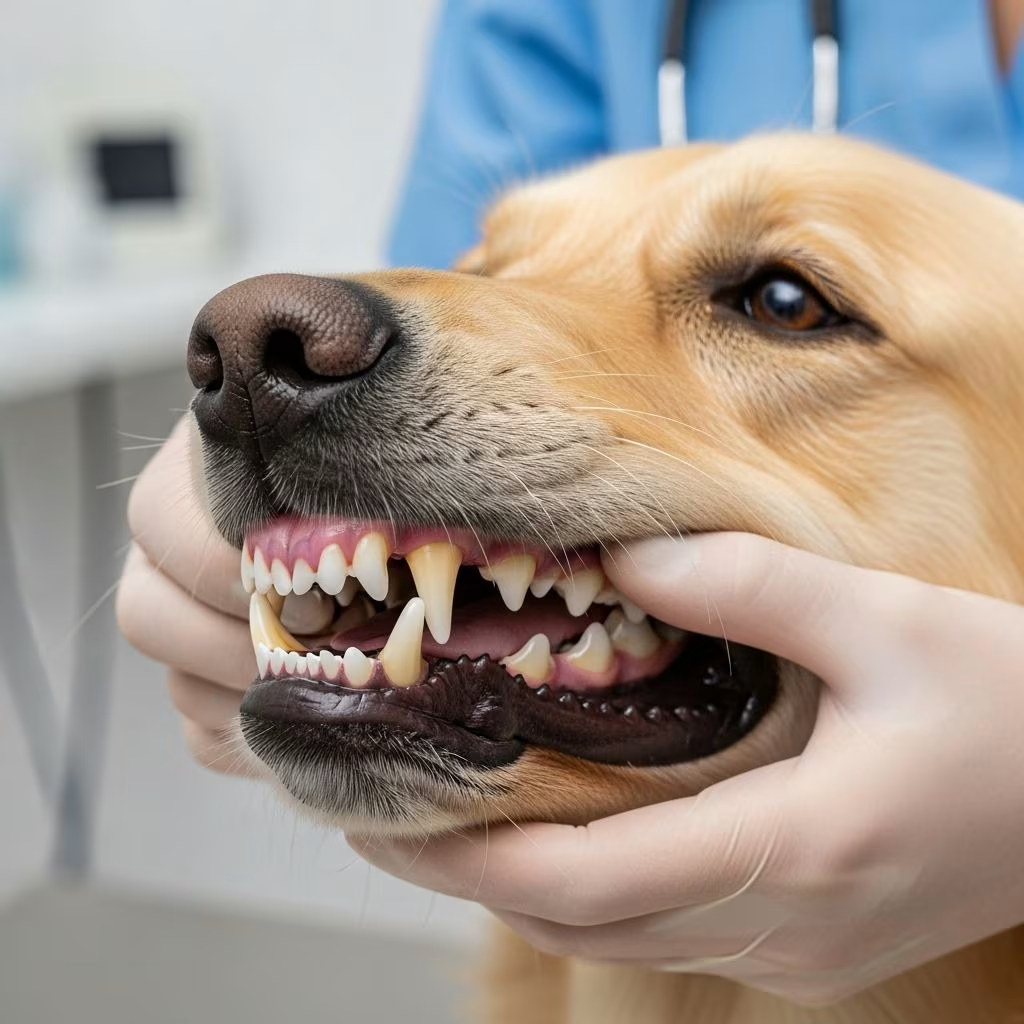
Dogs with malocclusions experience improper alignment of their teeth or jaws, which disrupts normal bite function and can lead to serious health issues. This condition, common across various breeds, ranges from mild cosmetic concerns to severe cases causing chronic pain and dental disease.
Defining Malocclusion and Its Impact on Canine Health
Malocclusion refers to any deviation from the ideal dental alignment where upper and lower teeth meet properly in a scissor-like fashion. In healthy dogs, the upper incisors slightly overlap the lower ones, and cheek teeth interlock efficiently for chewing. When this fails, it compromises oral function and invites complications like tissue trauma, infections, and nutritional deficits.
These abnormalities affect dogs of all ages but often manifest during teething or adulthood. Early detection through routine exams allows for interventions that preserve quality of life.
Primary Types of Malocclusions Observed in Dogs
Malocclusions are categorized into skeletal (jaw length discrepancies) and dental (tooth position issues) types. Each subtype presents unique challenges.
- Class 2 Malocclusion (Mandibular Distoclusion): Known as overbite or overshot jaw, the lower jaw is shorter than the upper, causing upper teeth to protrude forward excessively.
- Class 3 Malocclusion (Mandibular Mesioclusion): Or underbite, where the lower jaw extends beyond the upper, pushing lower teeth ahead. Prevalent in brachycephalic breeds like Bulldogs.
- Class 4 Malocclusion (Jaw Asymmetry): One side of the jaw grows unevenly, leading to lateral or front-back misalignments that hinder chewing.
- Dental Malpositions: Includes rostral/caudal crossbites (teeth fitting inside opposites), open bites (gaps between incisors), and level bites (edge-to-edge contact causing wear).
- Linguoversion of Canines: Lower canines tilt inward, stabbing the palate and causing ulcers.
Root Causes Behind Dental Misalignments
Several factors contribute to malocclusions, often intertwining genetics with environmental influences.
| Cause Category | Description | Examples |
|---|---|---|
| Genetic Predisposition | Inherited jaw or tooth development flaws, breed-specific | Brachycephalic breeds (Pugs, Boxers); small breeds prone to retained deciduous teeth |
| Trauma or Injury | Jaw fractures or tooth damage shifting alignment | Falls, fights, or accidents displacing canines |
| Developmental Anomalies | Abnormal growth during puppyhood | Retained baby teeth blocking permanent eruption |
| Extra or Missing Teeth | Supernumerary teeth crowding the mouth | Leads to plaque buildup and gingivitis |
Genetics dominate in predisposed breeds, while injuries account for many acquired cases in others.
Recognizing Symptoms of Bite Problems in Your Dog
Dogs may not vocalize dental pain overtly, but observable signs signal malocclusion.
- Excessive drooling or saliva buildup from discomfort.
- Reluctance to chew hard foods, preferring soft diets.
- Frequent pawing at the mouth or face rubbing.
- Foul breath indicating trapped debris or infection.
- Visible tooth jutting, gaps, or jaw misalignment.
- Gum swelling, bleeding, or ulcers from tooth trauma.
- Weight loss due to eating difficulties.
Severe cases involve nasal discharge from palate perforations or tooth root exposure causing hypersensitivity.
Potential Health Complications from Untreated Malocclusions
Beyond discomfort, malocclusions foster secondary problems that escalate over time.
- Chronic Pain: Teeth penetrating gums or palates create ongoing agony, altering behavior.
- Periodontal Disease: Misalignments trap food, promoting plaque, tartar, and bone loss.
- Tooth Damage: Abnormal wear fractures enamel or exposes pulp.
- Oro-Nasal Fistulas: Holes between mouth and nasal cavity from perforations.
- Jaw Growth Interference: Puppy malpositions stunt mandibular development.
These issues compound, potentially requiring extensive interventions if ignored.
Veterinary Diagnosis: How Experts Assess Bite Issues
Diagnosis starts with a thorough oral exam under sedation for full visualization. Veterinarians use:
- Visual inspection and manual palpation of jaws and teeth.
- Dental radiographs to check roots, bone, and deciduous remnants.
- Occlusal analysis classifying the malocclusion type.
Skull X-rays help differentiate skeletal from dental causes, guiding treatment.
Treatment Strategies for Correcting Malocclusions
Approaches vary by severity, age, and type, prioritizing pain relief and function restoration.
Conservative Options for Mild Cases
- Monitoring if asymptomatic, especially inherited skeletal types in adults.
- Extraction of retained baby teeth in puppies to allow realignment.
Orthodontic and Surgical Interventions
- Crown reduction with vital pulp therapy for linguoverted canines, reshaping without extraction.
- Orthodontic appliances to gradually shift teeth in young dogs.
- Jaw surgeries (osteotomies) for severe skeletal discrepancies, though rare due to complexity.
- Extractions for traumatized or non-functional teeth.
Treatments aim for comfort over perfect cosmetics, especially in breeding dogs where function trumps aesthetics.
Preventive Measures and Home Care Tips
While genetics can’t be altered, proactive steps mitigate risks:
- Annual dental check-ups from puppyhood.
- Daily tooth brushing with enzymatic toothpaste.
- Dental diets and chews reducing plaque.
- Breed selection considering hereditary traits.
Prompt injury treatment prevents secondary malpositions.
Commonly Asked Questions About Dog Malocclusions
Can malocclusions be fixed in adult dogs?
Yes, though options are limited compared to puppies. Extractions or reshaping often suffice for comfort.
Are underbites harmful in breeds like Bulldogs?
Mild cases may not cause issues, but monitoring for trauma is essential, especially if teeth contact soft tissues.
How much does malocclusion treatment cost?
Varies widely; exams start at $200, surgeries up to thousands depending on complexity and location.
Do all malocclusions cause pain?
Not initially, but many progress to discomfort or disease if untreated.
Should I breed a dog with malocclusion?
Consult a vet; skeletal types may pass traits, but dental ones might not affect offspring.
Choosing the Right Veterinary Specialist
For complex cases, board-certified veterinary dentists offer advanced diagnostics like CT scans and custom appliances. Early referral improves outcomes.
References
- Malocclusions in Dogs | Palmyra Vets — Palmyra Animal Clinic. 2024-07-15. https://www.palmyraac.com/site/blog/2024/07/15/malocclusions-dogs
- Malocclusions in Dogs — North Bay Veterinary Dentist. N/A. https://northbayvetdentist.com/malocclusions-in-dogs/
- Malocclusion — VDSPets. N/A. https://www.vdspets.com/malocclusion/
- Malocclusion Factsheet — Abbey House Vets. 2023-11. https://www.abbeyvetspets.co.uk/images/Content/dental/Abbey_House_Vets_Oral_Health_Care_Malocclusion_Factsheet_Nov23.pdf
- Dental malocclusion in dogs and cats: Diagnosis, classification and treatment — Centre DM Vet. N/A. https://centredmvet.com/en/dental-malocclusion-in-dogs-and-cats-diagnosis-classification-and-treatment/
- Malocclusions in Dogs | Brentwood Vets — Brentwood Vets. 2023-08-15. https://www.brentwoodvet.com/site/blog/2023/08/15/malocclusions-dogs
- Malocclusions in Dogs – When Teeth Are Malaligned — VCA Animal Hospitals. N/A. https://vcahospitals.com/know-your-pet/malocclusions-in-dogs-when-teeth-dont-align



