

Understanding Malignant Mammary Tumors in Dogs
Mammary tumors represent one of the most common malignancies found in female dogs, accounting for a significant portion of canine cancer cases. While these tumors can occasionally occur in male dogs, they are exceptionally rare in this population. Malignant mammary tumors develop from the tissue of the mammary glands and can vary significantly in their behavior, aggressiveness, and potential for spread throughout the body. Understanding the nature of these tumors is crucial for pet owners, as early detection and appropriate treatment can substantially improve outcomes and quality of life for affected dogs.
The mammary glands in dogs form a chain along the abdomen, and tumors can develop in any of these glands. Some tumors remain localized and may grow slowly, while others are more aggressive and have a higher propensity to metastasize, or spread to other organs such as the lungs, lymph nodes, and bones. The stage and grade of the tumor, determined through comprehensive diagnostic testing, play critical roles in determining the most appropriate treatment strategy and predicting survival outcomes.
Clinical Signs of Malignant Mammary Tumors
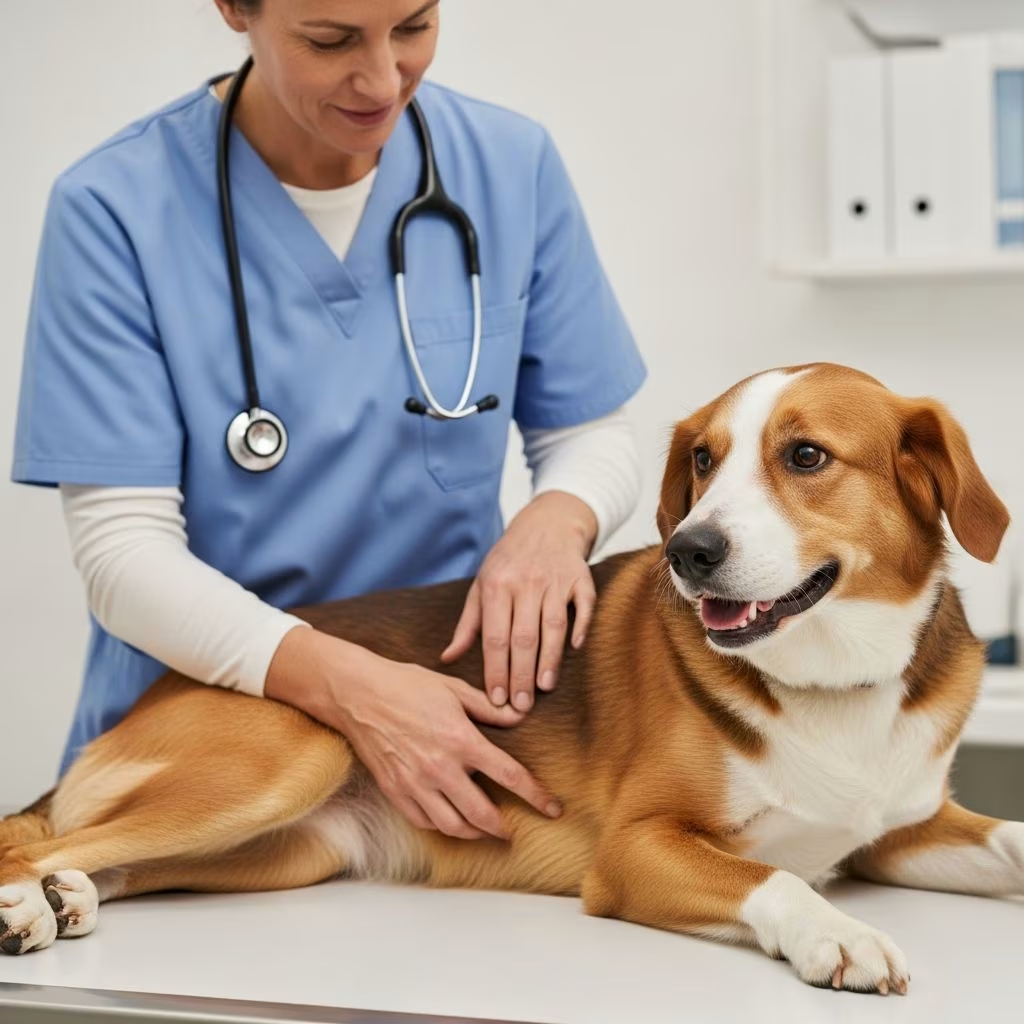
Recognizing the clinical signs of malignant mammary tumors is essential for early intervention. The most common and obvious indicator is the presence of one or more palpable masses underneath the skin of the abdomen. These masses typically appear next to or within the nipple and follow along the mammary chain. Pet owners may first notice these lumps while grooming or petting their dogs, or a veterinarian may discover them during a routine examination.
The appearance and characteristics of mammary tumors can vary considerably. Most are firm and nodular to the touch, though their size may range from quite small to quite large. In more advanced cases, the skin overlying the mass may become ulcerated, potentially opening and bleeding. The affected area may feel warm to the touch and become painful or tender. Additionally, the mammary gland may produce an abnormal discharge, ranging from clear to bloody or purulent material.
When malignant mammary tumors have metastasized to other areas of the body, systemic signs become apparent. These may include:
- General malaise and lethargy
- Decreased appetite and subsequent weight loss
- Reduced energy levels and reluctance to exercise
- Breathing difficulties or persistent cough if lungs are involved
- Lameness or difficulty moving if bones are affected
Any dog exhibiting these signs, particularly if a mammary mass is detected, should be evaluated by a veterinarian promptly to determine whether the tumor has spread and to establish an appropriate treatment plan.
Diagnostic Evaluation and Staging
Proper diagnosis and staging of malignant mammary tumors is fundamental to developing an effective treatment strategy. When a veterinarian suspects a mammary tumor, the diagnostic process typically begins with physical examination and palpation of all mammary glands. A thorough assessment helps determine the number, size, and location of tumors present.
Imaging studies are crucial for identifying whether the tumor has spread. Chest radiographs (X-rays) are taken to examine the lungs, as this is the most common site of metastasis in dogs with mammary cancer. Additional imaging may include ultrasound of the abdomen to assess lymph nodes and other abdominal organs. In some cases, computed tomography (CT) scans may be recommended for more detailed evaluation.
Biopsies and cytology samples are often obtained to determine the histological type of the tumor, which significantly influences treatment recommendations and prognosis. The tissue examination can reveal whether the tumor is low-grade (slow-growing and less aggressive) or high-grade (faster-growing and more aggressive). This information helps veterinarians classify the tumor according to the TNM staging system, which considers tumor size, regional lymph node involvement, and evidence of distant metastasis.
Treatment Options for Malignant Mammary Tumors
Surgical Intervention
Surgery remains the gold standard treatment for malignant mammary tumors in dogs. For dogs presenting with solitary tumors that are small and show no evidence of spread on staging, surgical removal may be the only treatment necessary. The surgical approach depends on the number, location, and extent of the tumors present.
Several surgical techniques are available to veterinary surgeons:
- Lumpectomy: Removal of the individual mass with a margin of surrounding tissue
- Simple Mastectomy: Removal of the tumor along with the affected mammary gland
- Regional Mastectomy: Removal of multiple glands in one area of the mammary chain
- Unilateral Total Mastectomy: Removal of all glands on one side of the body
- Bilateral Mastectomy: Removal of all mammary glands on both sides
For dogs with multiple tumors affecting one or both mammary chains, the associated glands or even all mammary glands may need to be removed. Wide surgical margins are recommended for malignant tumors to reduce the likelihood of leaving behind cancerous tissue that could lead to recurrence.
If the dog is not spayed, an ovariohysterectomy (spay) is typically recommended and may be performed during the same surgical procedure as mastectomy. Research demonstrates that spaying concurrent with or within two years of tumor removal significantly improves survival times compared to dogs that remain intact or are spayed more than two years after surgery.
Chemotherapy
Chemotherapy is recommended for dogs with larger tumors, high-grade tumors, or evidence of spread to other areas of the body. The role of chemotherapy in treating malignant mammary tumors is increasingly recognized, particularly when combined with surgery. Several chemotherapy protocols have demonstrated effectiveness in canine patients.
Doxorubicin has shown superior efficacy compared to platinum-based drugs, while carboplatin and cisplatin demonstrate equivalent effectiveness. A combination of 5-fluorouracil and cyclophosphamide has been shown to significantly improve survival times in dogs with high-risk mammary carcinomas following surgical resection, extending median survival time to approximately 24 months compared to 6 months with surgery alone.
Chemotherapy is typically administered every two to three weeks via intravenous injection by a veterinary oncologist, with a treatment course usually consisting of four to five sessions. Unlike in humans, dogs rarely experience hair loss from chemotherapy and typically tolerate treatments well, with only mild side effects such as transient loss of appetite and occasional vomiting. Treatments are generally performed on an outpatient basis and may take approximately 90 minutes per visit.
Radiation Therapy
Radiation therapy is increasingly recognized as a beneficial adjunct to chemotherapy, particularly for specific tumor types. For dogs with inflammatory mammary carcinomas, radiation therapy combined with nonsteroidal anti-inflammatory drugs (NSAIDs) has shown promise in providing pain relief and potentially extending survival. Piroxicam combined with radiation therapy has emerged as the most effective treatment for this aggressive subtype.
Radiation therapy may also be considered for dogs with incompletely resected tumors or those unsuitable for surgery. Treatment typically involves daily sessions over three to four weeks. While radiation therapy represents a more intensive commitment than other treatments, emerging evidence suggests it may provide meaningful benefits for select patients, particularly those with inflammatory carcinoma or incomplete surgical removal.
Hormonal and Targeted Therapies
Research into hormonal therapies continues to evolve. Tamoxifen, an estrogen receptor antagonist used in human breast cancer treatment, has been investigated in dogs with estrogen receptor-positive tumors. Results have been variable, with response rates ranging from 0% to 71% depending on tumor characteristics, and median survival times around four months when used alone.
Emerging targeted therapies, such as sodium dichloroacetate (DCA), show promise as complementary treatments that may enhance traditional surgery and chemotherapy by promoting metabolic changes within tumor cells. These targeted approaches enable treatment with reduced systemic side effects compared to conventional chemotherapy.
Palliative Care and NSAIDs
Nonsteroidal anti-inflammatory drugs play an important role in managing many types of mammary carcinomas in dogs. NSAIDs can help reduce inflammation, manage pain, and may have direct anti-tumor effects. For dogs with inoperable or metastatic disease, palliative care focused on comfort and quality of life becomes paramount.
Prognosis and Survival Outcomes
The prognosis for dogs with malignant mammary tumors varies considerably based on multiple factors. Clinical stage at the time of diagnosis is perhaps the most significant prognostic indicator. Dogs with stage I disease (tumors confined to the affected gland with no lymph node involvement or distant metastasis) have substantially better outcomes, with median survival times around 500 days or approximately 16-17 months.
Dogs with more advanced disease experience progressively worse prognosis. Stage II disease carries a median survival time of approximately 420 days (14 months), stage III disease approximately 210 days (7 months), and stage IV disease only about 90 days (3 months). The tumor grade, histological type, and size also influence outcomes, with high-grade and larger tumors generally associated with poorer prognosis.
The combination of treatments also affects survival. Dogs receiving combination therapy with surgery and chemotherapy typically survive longer than those receiving surgery alone. Additionally, as previously mentioned, spaying concurrent with or shortly after tumor removal significantly improves survival compared to dogs that remain intact.
Special Considerations for Inflammatory Mammary Carcinoma
Inflammatory mammary carcinoma represents a particularly aggressive subtype of mammary cancer with a grave prognosis. Unlike other mammary tumors, surgery alone is not recommended for inflammatory carcinomas because it does not improve survival outcomes. Instead, the treatment approach focuses on radiation therapy combined with NSAIDs, particularly piroxicam, to provide the best pain relief and maximize comfort.
Unfortunately, even with optimal treatment, the prognosis for inflammatory mammary carcinoma remains poor, emphasizing the importance of early detection and aggressive multimodal treatment approaches when diagnosis is made.
Post-Treatment Monitoring
Following completion of treatment, regular follow-up examinations are essential to monitor for recurrence or metastasis. Veterinarians typically recommend physical examinations at regular intervals, with chest radiographs performed periodically to screen for lung involvement. Any new lumps, discharge, or systemic signs should be promptly evaluated.
Frequently Asked Questions
Q: Can mammary tumors be prevented in dogs?
A: Spaying female dogs before their first or second estrous cycle significantly reduces the risk of developing mammary tumors later in life. Early spaying provides substantial protective benefit compared to intact females.
Q: How often should I examine my dog’s mammary glands?
A: Pet owners should perform regular self-examinations of their dog’s abdomen and mammary glands during routine petting and grooming. Any new lumps or changes should be reported to a veterinarian immediately.
Q: Is malignant mammary cancer contagious between dogs?
A: No, mammary tumors are not contagious between dogs. Each dog develops tumors independently based on genetic predisposition and hormonal factors.
Q: What is the typical cost of treatment for mammary tumors?
A: Treatment costs vary widely depending on the extent of surgery, staging requirements, and additional therapies. Surgery may range from $1,500 to $4,000, chemotherapy $500-$700 per treatment, and radiation therapy $8,000-$10,000 for a complete course.
Q: Can older dogs tolerate cancer treatment?
A: Many older dogs tolerate appropriate cancer treatment well. Age alone should not preclude treatment; rather, the dog’s overall health status and ability to withstand anesthesia should guide treatment decisions.
Q: Is chemotherapy painful for dogs?
A: Chemotherapy administration is not painful. Most dogs experience only mild side effects such as temporary appetite loss or mild nausea, making treatment generally well-tolerated.
References
- Malignant Mammary Tumors in Dogs — VCA Animal Hospitals. 2024. https://vcahospitals.com/know-your-pet/mammary-tumors-in-dogs-malignant
- Mammary Tumors – Canine — Veterinary Society of Surgical Oncology. 2024. https://vsso.org/mammary-tumors-canine
- Medical Oncology: Canine Mammary Tumors — North Carolina State University College of Veterinary Medicine. 2024. https://hospital.cvm.ncsu.edu/services/small-animals/cancer-oncology/oncology/canine-mammary-tumors/
- Mammary Gland Tumors in Dogs — PetMD. 2024. https://www.petmd.com/dog/conditions/cancer/c_dg_mammary_gland_tumor
- Treatment of Mammary Gland Tumors in Bitches: Effects of Sodium Dichloroacetate — National Center for Biotechnology Information. 2024. https://pmc.ncbi.nlm.nih.gov/articles/PMC11187584/
- Mammary Tumors in Dogs — BluePearl Pet Hospital. 2024. https://bluepearlvet.com/medical-articles-for-pet-owners/mammary-tumors-in-dogs/
- New Treatment Strategies for Canine Mammary Tumors — AKC Canine Health Foundation. 2024. https://www.akcchf.org/breakthrough/new-treatment-strategies-for-1/



