
Malignant Catarrhal Fever: Guide For Livestock Managers In 2025
Understanding the deadly viral threat to cattle, bison, and ruminants from herpesviruses transmitted by sheep and wildebeest.
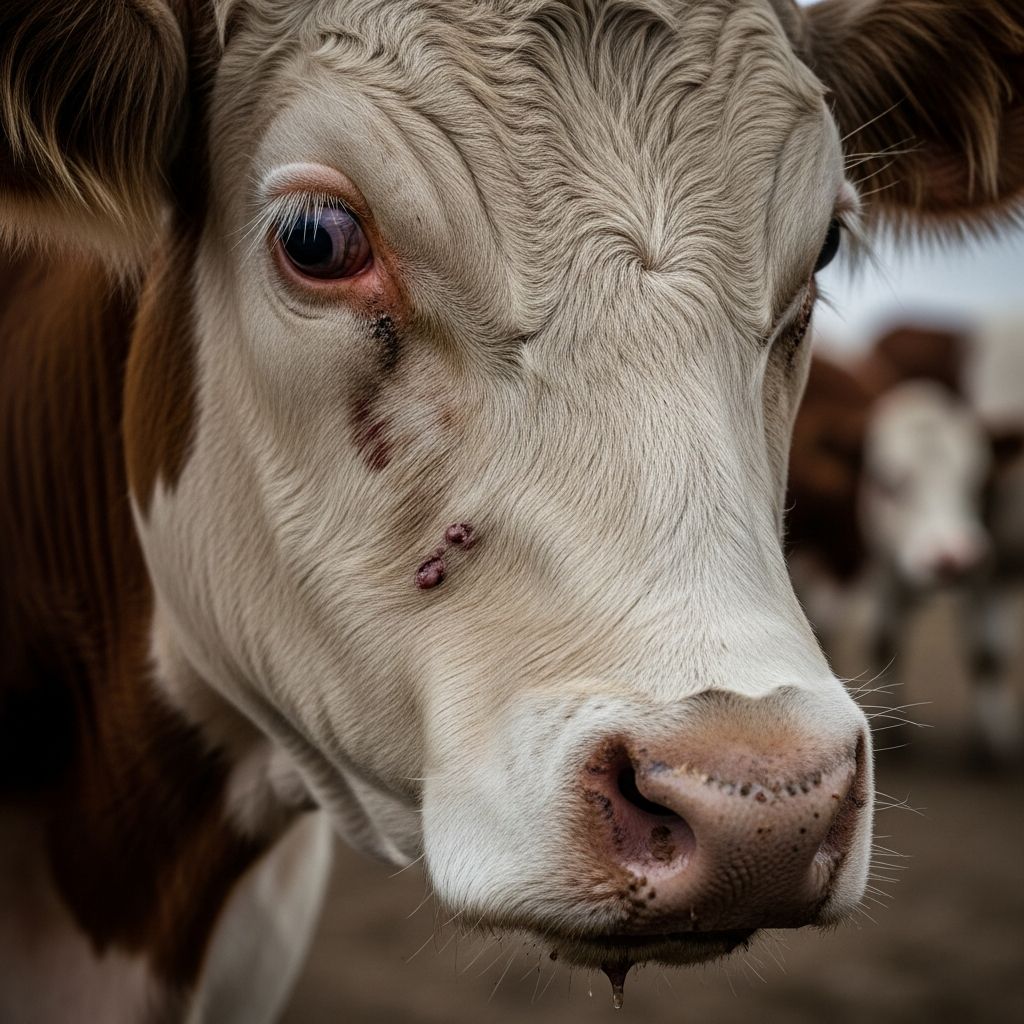
Malignant catarrhal fever (MCF) represents a severe, often fatal viral illness primarily impacting cattle and various wild ruminants. This disease arises from infection with specific herpesviruses, leading to widespread vascular damage and immune dysregulation in affected animals.
The Viral Culprits Behind MCF
At the core of MCF are gammaherpesviruses from the Macavirus genus, notably ovine herpesvirus 2 (OvHV-2) and alcelaphine herpesvirus 1 (AlHV-1). OvHV-2, the predominant strain in sheep-associated cases, infects cattle without causing symptoms in its natural sheep hosts. These viruses target lymphocytes, particularly CD8+ T-cells, triggering an aberrant immune response that culminates in tissue destruction.
OvHV-2 spreads from sheep during late pregnancy or shortly after lambing, when viral shedding peaks. Direct contact or shared environments facilitate transmission to susceptible ruminants, though the precise mechanism—possibly aerosols or fomites—remains unclear. AlHV-1, linked to wildebeest, poses a risk in regions with wildebeest-cattle interactions.
Susceptible Species and Global Patterns
Cattle top the list of susceptible animals, but MCF strikes bison, deer, water buffalo, and even pigs. Wild ruminants like wildebeest carry AlHV-1 asymptomatically, while domestic sheep harbor OvHV-2. The disease manifests sporadically, with occasional outbreaks devastating herds in close proximity to sheep flocks.
Geographically, MCF appears worldwide, with higher incidence in areas of mixed farming. In North America, sheep-cattle operations report cases, while African regions see wildebeest-related outbreaks. Pigs occasionally succumb, highlighting the broad host range.
Recognizing Clinical Manifestations
MCF unfolds acutely, with animals exhibiting profound depression, anorexia, and fever exceeding 40.5°C (104.9°F). Ocular involvement dominates, featuring corneal opacity, conjunctivitis, and blindness, forcing cattle to shun light.
- Respiratory signs: Copious mucopurulent nasal discharge and dyspnea.
- Dermatological changes: Crusting on the muzzle, erosions on lips, tongue, and udder; skin sloughing in severe cases.
- Systemic effects: Lymphadenopathy, diarrhea, hematuria, and neurological signs like aggression, seizures, or incoordination.
- Acute outcomes: Sudden death or progression to fatality within 5-10 days.
A rare chronic form affects young cattle, presenting as poor growth and seropositivity without overt illness. Latent infections occur in clinically normal animals, complicating herd management.
Pathophysiological Mechanisms
MCF’s lethality stems from immunopathology rather than direct viral cytolysis. Infected lymphocytes proliferate uncontrollably, infiltrating vessels and causing vasculitis, thrombosis, and necrosis across organs—kidneys, gut, skin, and CNS.
Research reveals downregulated interleukin-2 (IL-2) expression in lymph nodes, mirroring immunodeficiencies and fostering cytotoxic T-cell accumulation. Viral DNA abounds in lymphocytes and tissues, but productive replication is sparse, emphasizing latency’s role.
| Clinical Form | Key Features | Common Sites Affected |
|---|---|---|
| Head-and-Eye | Corneal opacity, nasal discharge, muzzle erosions | Eyes, nasal mucosa, skin |
| Intestinal | Diarrhea, mucosal ulcers | Gut, lymph nodes |
| Cutaneous | Skin erosions, udder lesions | Skin, teats, genitalia |
| Systemic/Peracute | Sudden death, fever | Multiple organs |
This table outlines MCF’s variable presentations, underscoring diagnostic challenges.
Diagnostic Approaches
Diagnosis hinges on clinical suspicion amid compatible signs, confirmed via PCR for viral DNA in blood, tissues, or swabs; serology detects antibodies; histopathology reveals characteristic lesions—fibrinoid necrosis and lymphocytic vasculitis.
Differentials include bovine viral diarrhea (BVD), infectious bovine rhinotracheitis (IBR), bluetongue, and listeriosis. Post-mortem findings—enlarged lymph nodes, corneal clouding, mucosal erosions—aid confirmation.
Treatment Limitations and Welfare Considerations
No antiviral treatments exist; supportive care proves futile against relentless progression. Euthanasia is mandated for humane reasons upon diagnosis, preventing prolonged suffering.
Vaccines remain elusive due to the virus’s host specificity and latency. Experimental attempts falter, as sheep vaccines risk enhancing transmission.
Prevention and Control Measures
Biosecurity forms the cornerstone: separate cattle from sheep, especially periparturient ewes, by at least 1-2 miles or physical barriers. Avoid shared pastures or equipment. Monitor mixed farms vigilantly.
- Maintain spatial separation between species.
- Quarantine new sheep arrivals.
- Test high-risk herds serologically.
- Educate on early recognition and culling.
In zoos or wildlife settings, stringent protocols prevent spillover.
Economic and Epidemiological Impact
Though sporadic, MCF inflicts losses via mortality (95%+), reduced productivity, and trade restrictions. Outbreaks in valuable bison or deer herds amplify costs. Enhanced diagnostics and surveillance curb spread.
Research Frontiers
Ongoing studies probe viral latency, immune evasion, and immunopathogenesis. Gene expression analyses link IL-2 deficits to disease, inspiring immunomodulatory therapies. Rabbit models replicate MCF, aiding vaccine development.
Frequently Asked Questions (FAQs)
What causes malignant catarrhal fever?
MCF results from herpesviruses like OvHV-2 from sheep and AlHV-1 from wildebeest, causing immune-mediated damage in cattle and ruminants.
Is MCF contagious between cattle?
No, cattle do not transmit MCF to each other; infection originates from sheep or wildebeest.
Can MCF be treated?
No effective treatment exists; affected animals rarely survive and require euthanasia.
How can I prevent MCF on my farm?
Separate cattle from sheep, implement biosecurity, and monitor for clinical signs.
Does MCF affect humans?
No, MCF poses no zoonotic risk to people.
Key Takeaways for Livestock Managers
MCF demands proactive avoidance through species separation and awareness. Early detection via veterinary consultation saves herds indirectly by isolating cases swiftly.
References
- Malignant Catarrhal (ca-tar’-al) Fever (MCF) in Cattle — Oregon Veterinary Medical Association. 2008. https://www.oregonvma.org/sites/default/files/MCF-Fact-Sheet-2008.pdf
- Malignant Catarrhal Fever (MCF) – NADIS — NADIS. Accessed 2026. https://www.nadis.org.uk/disease-a-z/cattle/malignant-catarrhal-fever-mcf/
- Malignant Catarrhal Fever of Cattle Is Associated with Low Interleukin-2 Transcript Abundance — PMC (PLoS ONE). 2009-06-24. https://pmc.ncbi.nlm.nih.gov/articles/PMC2705673/
- Malignant Catarrhal Fever — Texas A&M University Veterinary Medicine. Accessed 2026. https://vetmed.tamu.edu/fadr/diseases/malignant-caterrhal-fever/
- Malignant Catarrhal Fever Fast Facts — Center for Food Security and Public Health, Iowa State University. 2008. https://www.cfsph.iastate.edu/FastFacts/pdfs/malignant_catarrhal_fever_F.pdf
- Hide and Seek – Malignant Catarrhal Fever — USDA Agricultural Research Service. Accessed 2026. https://scientificdiscoveries.ars.usda.gov/tellus/stories/articles/hide-and-seek
- Malignant Catarrhal Fever Fact Sheet — American Association of Zoo Veterinarians. Accessed 2026. https://www.aazv.org/page/80/Malignant-Catarrhal-Fever-Fact-Sheet.htm
Similar Articles








Read full bio of Sneha Tete


