

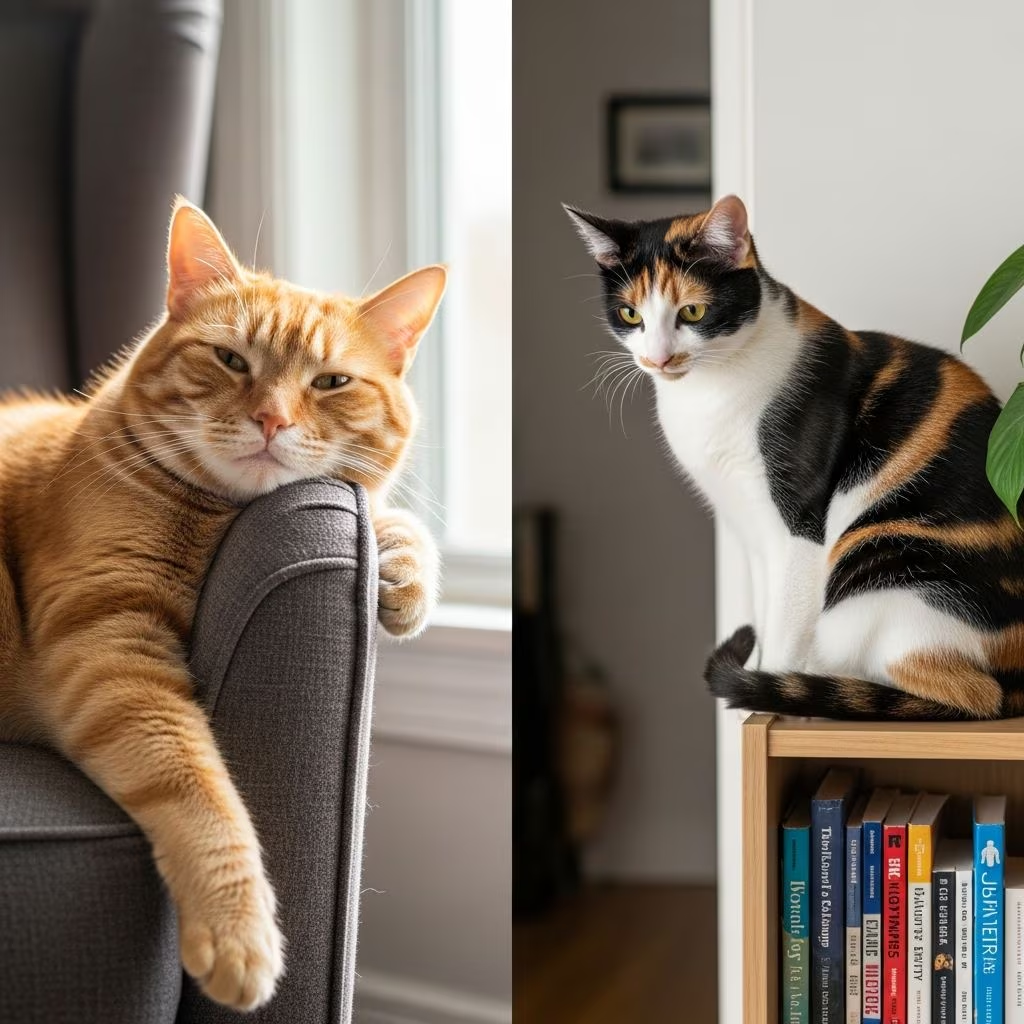
Male and female cats exhibit some general personality differences, primarily influenced by hormones, but neutering significantly reduces these variations, making individual traits more prominent than gender. While stereotypes exist, such as males being more affectionate and females more independent, factors like early socialization, environment, and genetics play larger roles in shaping behaviour.
The differences between male and female cats
Physically, male cats are typically larger and heavier than females, with intact males developing prominent cheeks and heads due to testosterone. Behaviourally, intact males display stronger territorial instincts, roaming farther and showing aggression, while females focus on nurturing spaces. However, spayed and neutered indoor cats show minimal gender-based differences, as reproductive drives diminish.
Understanding these traits helps owners choose a cat that fits their lifestyle, but experts emphasize observing individuals rather than relying on gender generalizations. For instance, early handling in kittenhood fosters affection regardless of sex.
What are the behavioural differences between male and female cats?
The most pronounced behavioural differences stem from reproductive hormones in intact cats living in colonies or outdoors. Neutered cats indoors exhibit far less divergence, with personality shaped more by upbringing and environment. Key areas include territoriality, affection, aggression, and spraying.
Territorial behavior
Intact male cats are highly territorial, roaming extensively, spraying urine to mark areas, and engaging in fights that lead to injuries or accidents. Neutering and indoor living drastically reduce these risks. Females are territorial but subtler, prioritizing secure spaces over aggression.
- Intact males: Frequent roaming, spraying, dominance displays
- Females: Subtle marking, home-focused defence
- Neutered effect: Behaviours align closely across genders
Affection toward caregivers
Males are often described as more affectionate, outgoing, and attention-seeking, rubbing against legs and following owners. Females may appear more reserved initially but form deep, loyal bonds once trusting. Affection primarily depends on socialization during the 2-7 week critical period, not gender.
Intact males’ testosterone can increase aggression, masking affection, while neutered males bond readily with humans and other cats.
Aggression
Intact males show higher aggression towards other cats and sometimes humans to defend territory. Studies note increased inter-male fights and human-directed aggression in unaltered toms. Females are less overtly aggressive, influenced by nurturing instincts. Neutering mitigates this in both sexes.
Spraying
Urine spraying is predominantly an intact male behaviour for territory marking, though females can spray too. In neutered cats, spraying signals stress, anxiety, medical issues, or multi-cat competition rather than gender.
| Behaviour | Male (Intact) | Female (Intact) | Neutered Effect |
|---|---|---|---|
| Territoriality | High: Roaming, spraying | Moderate: Subtle marking | Greatly reduced |
| Affection | Outgoing, social | Independent, loyal | Individual variation dominates |
| Aggression | Frequent fights | Less common | Minimal |
| Spraying | Common | Occasional | Stress-related only |
Are male or female cats more affectionate?
No definitive answer exists; affection ties more to socialization, age, health, and genetics than gender. Males are stereotyped as ‘cuddle bugs’ for their sociability, while females seem aloof but warm up profoundly. Cats handled young show more human-directed affection universally.
Neutered males often seek companionship eagerly, but many females cuddle equally. Observe rescues to match personalities.
Are male or female cats better hunters?
Females may excel as hunters due to evolutionary roles feeding litters, making them adept mousers. However, all cats hunt effectively when domesticated instincts persist, regardless of gender. Playfulness aids hunting skills in both.
A note about neutering and spaying
Neutering/spaying eliminates most hormone-driven differences, curbing spraying, roaming, aggression, and vocalizing in intact females. Intact males risk health issues like injuries; intact females face heat cycles. Early procedures (4-6 months) preserve best behaviours.
- Benefits: Reduced cancers, longer life, calmer temperament
- Males: Less territorial post-neuter
- Females: No yowling heats
Playfulness and activity levels
Males, especially young ones, are energetic, rough players, and explorers. Females play calculatedly, often nurturingly, protecting ‘kittens’ in mock scenarios. Neutering balances energy across genders.
Sociability with other cats
Neutered males integrate well with all cats if introduced properly. Females can be selective, viewing others as family or rivals based on instincts. Multi-cat homes succeed with gradual intros.
Understanding individuality beyond gender
Gender offers insights, but environment, genetics, health, and experiences define personality. Shy males or bold females abound. Spend time with potentials to find the best match.
Frequently Asked Questions (FAQs)
Are male cats more playful than females?
Males tend towards rough, high-energy play, while females are more strategic, but both are playful.
Do female cats get along better with other pets?
No clear winner; neutered males are often sociable, females selective.
Is a male or female cat better for first-time owners?
Depends on lifestyle: males for social homes, females for independents.
Can you tell a cat’s personality by gender alone?
No, individuality trumps gender.
Does neutering change personality?
It reduces hormone effects, enhancing calm traits.
References
- The Purr-sonality Traits of Male vs. Female Cats: A Detailed Exploration — Frisky Business Cat Cafe. 2023. https://www.friskybusinesscatcafe.com/blog/the-purr-sonality-traits-of-male-vs-female-cats-a-detailed-exploration
- How to Spot the Personality Differences Between Male and Female Cats — Ingleside Animal Hospital. 2024-05-15. https://www.ingleside.com/services/cats/blog/how-spot-personality-differences-between-male-and-female-cats
- How to Spot the Difference Between Male and Female Cats — Kinship. 2024. https://www.kinship.com/cat-behavior/male-vs-female-cats
- Battle of the Sexes — PDSA (People’s Dispensary for Sick Animals). 2023-08-10. https://www.pdsa.org.uk/pet-help-and-advice/looking-after-your-pet/kittens-cats/battle-of-the-sexes
- Boy vs Girl Cats? Gender + Personality + Health Differences — YouTube (Dr. Butzer’s Best). 2023-11-20. https://www.youtube.com/watch?v=BhV6w-bBVL0
- Male or Female Cat? — Cats Protection. 2024-02-01. https://www.cats.org.uk/cats-blog/should-i-get-a-male-or-female-cat



