

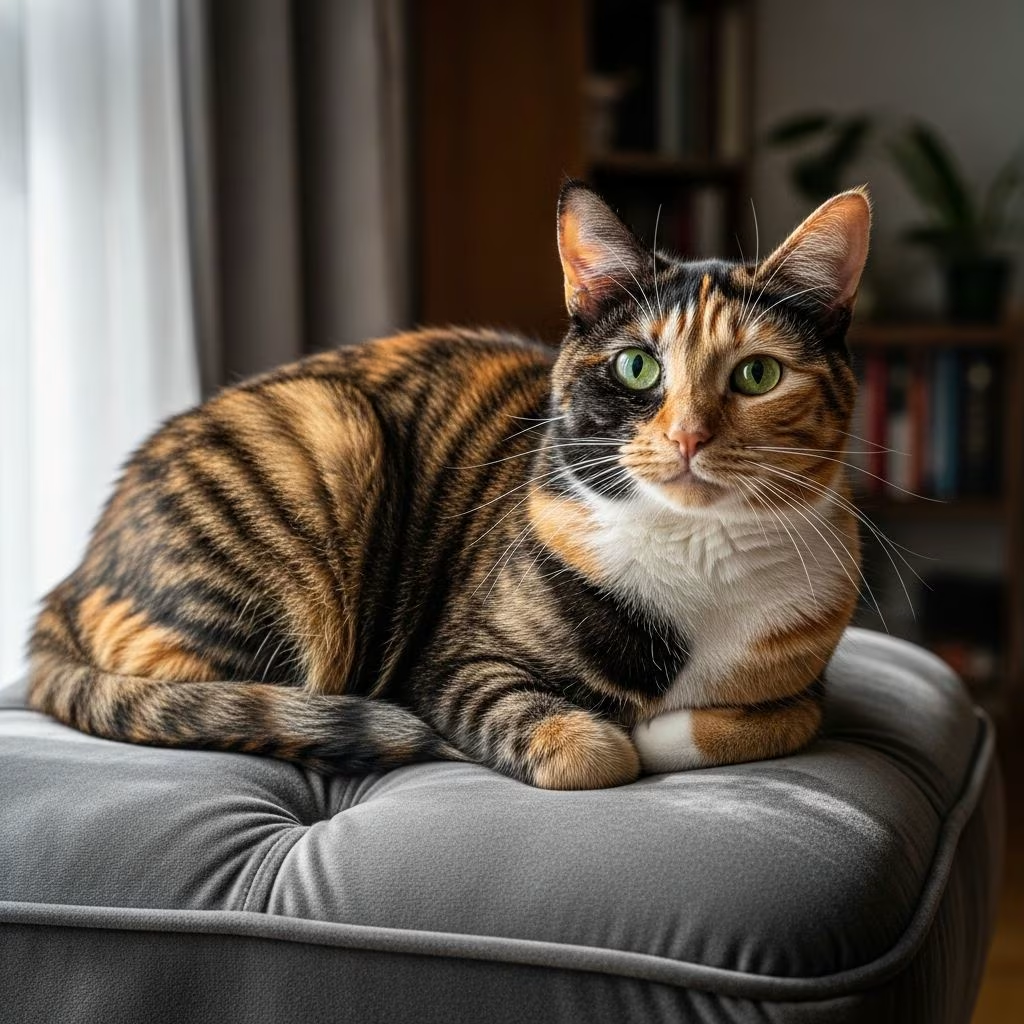
Male tortoiseshell cats, often called male torties, are extraordinarily rare feline wonders characterized by their distinctive multicolored coats blending black, orange, and sometimes cream hues in a mottled, brindled pattern reminiscent of tortoiseshell material. Unlike the common female torties, which make up over 99.9% of this coat type, males occur at a rate of approximately 1 in 3,000 due to a unique genetic anomaly involving an extra X chromosome (XXY), akin to Klinefelter syndrome in humans.
What Is a Male Tortoiseshell Cat?
A tortoiseshell cat features a coat with intermixed patches of black and orange fur, created by two co-dominant genes on the X chromosome that express simultaneously—one for black (o) and one for orange (O)—resulting in the iconic marbled appearance without white unless it’s a calico variant. In females, who have two X chromosomes (XX), random X-inactivation (Lyonization) in each cell leads to this patchwork: some cells express black, others orange. Males, typically XY, can only express one color fully, making true tortoiseshell coats impossible without genetic exceptions.
The term ‘tortoiseshell’ derives from the material’s similarity in humans, prized for its variegated look. Torties aren’t a breed but a color pattern seen across breeds like American Shorthair, Persian, or domestic shorthairs. Male versions are prized for rarity but come with biological caveats.
How Rare Are Male Tortoiseshell Cats?
Male tortoiseshell cats are profoundly scarce, with estimates placing their occurrence at 1 in 3,000 tortoiseshell cats overall, as documented in studies from the University of Missouri College of Veterinary Medicine. This rarity stems from the genetic impossibility in standard XY males; only those with XXY can achieve the dual-color expression via X-inactivation.
- Over 99.9% of torties are female, requiring two X chromosomes for black and orange pigments.
- Males with this pattern represent a genetic mutation, not a norm, amplifying their allure among enthusiasts.
- Global sightings are anecdotal but confirm the 1:3,000 ratio persists across populations.
This scarcity makes encountering a fertile male tortie even rarer, as most are sterile, limiting propagation of the trait.
Genetics of the Tortoiseshell Coat in Males
The tortoiseshell pattern hinges on X-linked genes: the Orange gene (O) produces red/orange phaeomelanin, while its allele (o) yields black eumelanin. Females (X^O X^o) mosaic these via inactivation; males (X^O Y or X^o Y) are uni-colored. Male torties possess XXY, allowing X-inactivation and dual expression, but this trisomy disrupts normal meiosis, causing infertility.
| Genotype | Sex | Coat Possibility | Fertility |
|---|---|---|---|
| XX | Female | Tortoiseshell (common) | Fertile |
| XY | Male | Uni-color (black or orange) | Fertile |
| XXY | Male Tortie | Tortoiseshell (rare) | Usually sterile |
Dilute torties feature softer grays and creams from a recessive modifier gene. Chimerism (fusion of XX and XY embryos) or mosaicism can rarely produce fertile males, but XXY dominates.
Are Male Tortoiseshell Cats Sterile?
Yes, the vast majority of male tortoiseshell cats are sterile due to their XXY karyotype impairing sperm production via meiotic imbalance, mirroring human Klinefelter syndrome where testicular dysgenesis occurs. Veterinary records confirm infertility in nearly all cases, as the extra X disrupts gametogenesis.
- Sterility rate approaches 100% in confirmed XXY males.
- Rare fertile exceptions exist via chimerism, but require genetic testing to verify.
- Owners should neuter regardless, aligning with standard pet care to prevent health issues.
This trait underscores their status as genetic curiosities rather than breeding stock.
Health Issues in Male Tortoiseshell Cats
XXY male torties face elevated health risks from sex chromosome aneuploidy, including:
- Klinefelter-like syndrome: Small testes, hormonal imbalances, increased diabetes/cancer risk.
- Cardiovascular and skeletal anomalies due to gene dosage effects.
- Higher susceptibility to urinary tract issues and obesity from metabolic disruptions.
- Reduced lifespan potential without vigilant care; regular vet checkups essential.
Early diagnosis via karyotyping aids management, though no cure exists. Owners report no overt differences in daily vigor, but monitoring is key.
Male Tortoiseshell Cat Personality
Male torties exhibit ‘tortitude’—a feisty, independent streak—but perceptions vary. Owners describe them as playful, affectionate, talkative, and bold, countering myths of aggression. A UC Davis study of 1,200+ tortie owners linked coat to mild behaviors like vocalization or assertiveness, but not severe aggression; gender and environment dominate personality.
- Strong-willed, possessive of humans, with dramatic meows/hisses.
- Energetically sensitive ‘sponges,’ amplifying displays.
- No scientific coat-personality link; socialization trumps color.
Males may temper ‘tortitude’ slightly versus females, appearing sweeter.
Tortoiseshell Cat Myths and Misconceptions
Common myths include inevitable aggression or bad luck, fueled by female bias and anecdotes. Reality: No coat-behavior correlation per studies; ‘tortitude’ is perceptual. Culturally, torties symbolize luck in Japan (‘money cats’). Misconceptions arise from independence mistaken for hostility.
Famous Male Tortoiseshell Cats
Notable examples include rare documented cases like those in vet journals, but few celebrities. Online communities share stories of beloved XXY pets, highlighting resilience. No major pop culture icons, but their rarity inspires viral tales.
Caring for a Male Tortoiseshell Cat
Care mirrors standard felines with extras:
- Neutering (even if sterile) prevents roaming/testicular cancer.
- High-protein diet combats metabolic risks; monitor weight.
- Enrichment for spirited energy: toys, scratching posts, vertical space.
- Annual bloodwork for hormonal screens; genetic consult if breeding considered (rare).
- Socialize early to harness affectionate side.
They thrive as indoor companions, rewarding patient owners with loyalty.
Frequently Asked Questions (FAQs)
Why are male tortoiseshell cats so rare?
They require an XXY genotype, occurring in 1 in 3,000 torties due to X chromosome nondisjunction.
Can male tortoiseshell cats have kittens?
Almost never; XXY causes sterility, though chimeric rarities exist.
Do male torties have different personalities?
They share ‘tortitude’ but may be more affectionate; environment shapes traits.
Are male torties healthier than females?
No, XXY poses risks like infertility and metabolic issues.
How do I identify a male tortie?
Visual coat plus vet karyotyping confirms XXY; external genitals appear male.
References
- 10 Things to Know About the Tortoiseshell Cat — Ziggy Family. 2023. https://ziggyfamily.com/en/blogs/cats/10-things-to-know-about-the-tortoiseshell-cat
- “Tortitude” – The Unique Personality of Tortoiseshell Cats: Fact or Fiction? — Ingrid King. 2014-09-30 (updated 2019). https://ingridking.com/2014/09/30/tortitude-unique-personality-tortoiseshell-cats-fact-fiction/
- Tortoiseshell cat — Wikipedia (citing primary genetic studies). 2026. https://en.wikipedia.org/wiki/Tortoiseshell_cat
- Tortitude: understanding your tortoiseshell cat — Trusted House Sitters (citing UC Davis study). 2023. https://www.trustedhousesitters.com/blog/pets/totitude-tortie-cat/
- Fascinating Facts About Tortoiseshell Cats — Cat Town Oakland. 2021-03. https://www.cattownoakland.org/cat-town-blog/2021/03/fascinating-facts-about-tortoiseshell-cats



