

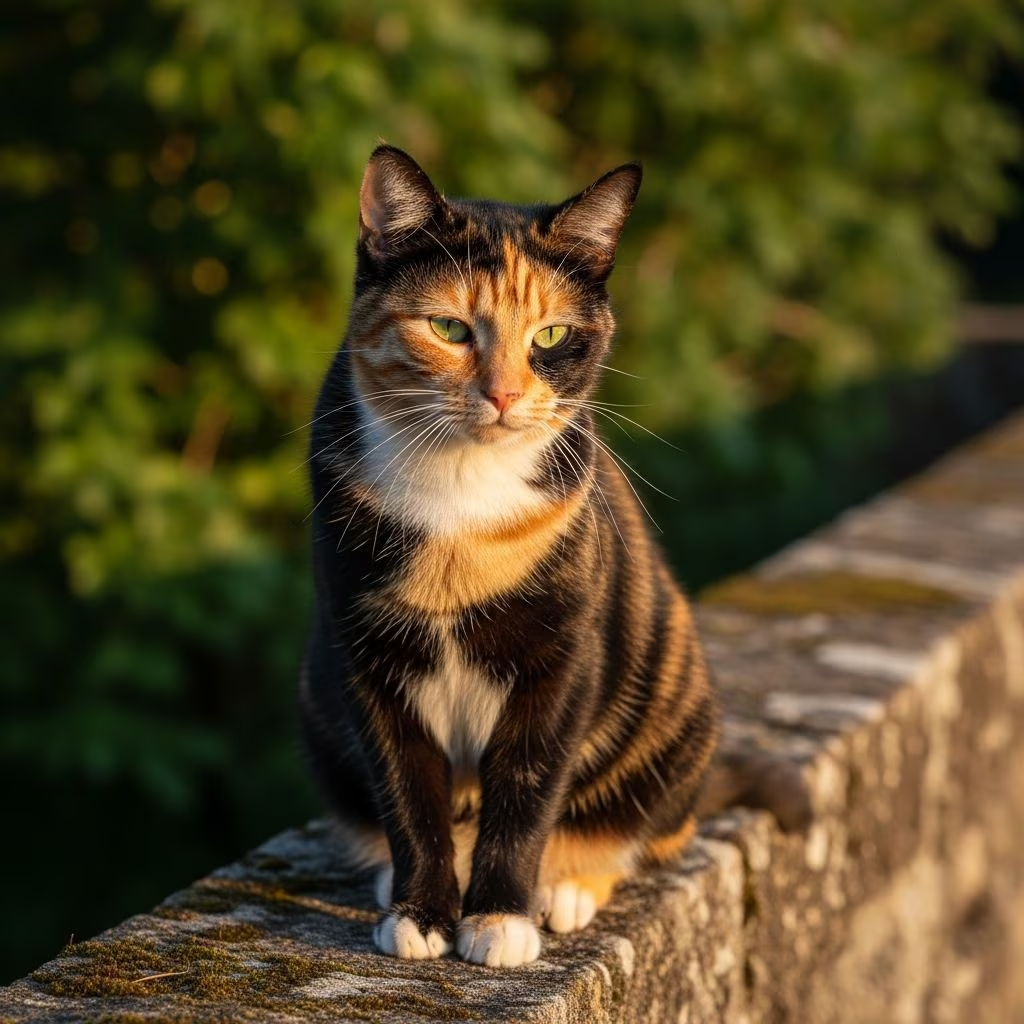
Male tortoiseshell cats represent one of the rarest occurrences in feline genetics, appearing in approximately 1 in 3,000 tortoiseshell cats due to an XXY chromosome anomaly that typically renders them sterile. These cats display the signature brindled pattern of black, orange, and sometimes cream patches, a coloration almost exclusively linked to female cats because it requires two X chromosomes.
What Is a Tortoiseshell Cat?
A **tortoiseshell cat**, often called a tortie, features a striking coat pattern resembling the mottled shell of a tortoise, blending black, orange, and reddish hues in a marbled or brindled effect. This multicolored patchwork results from two co-dominant genes on the X chromosome—one for black (o) and one for orange (O)—that mingle during embryonic development due to X-inactivation, creating the unique tortie mosaic. Unlike solid-colored cats, torties exhibit random patches where cells express either the black or orange gene exclusively.
Tortoiseshell is not a breed but a color pattern found across breeds like American Shorthair, Persian, or domestic shorthairs. Variations include ‘dilute torties’ with softer gray and cream tones from a recessive gene diluting the base colors, and ‘tortoiseshell-and-white’ or calicos blending white into the mix. The pattern’s complexity arises from Lyonization, where one X chromosome inactivates in female cells, leading to the patchy expression.
How Rare Are Male Tortoiseshell Cats?
**Male tortoiseshell cats are extraordinarily rare**, comprising only about 1 in 3,000 tortoiseshell cats, as confirmed by veterinary studies. Female cats (XX) can inherit both orange and black alleles on their two X chromosomes, enabling the tortie pattern, while standard males (XY) inherit only one X allele, resulting in uniform orange or black coats.
For a male to exhibit tortoiseshell coloring, it must possess an extra X chromosome (XXY), akin to Klinefelter syndrome in humans—a genetic anomaly occurring spontaneously. This rarity underscores why spotting a male tortie feels like a once-in-a-lifetime event for cat enthusiasts. Population data from shelters and vets reinforce this: over 99.9% of torties are female.
The Genetics Behind Male Tortoiseshell Cats
The tortie pattern stems from X-linked genetics: the orange gene (X^O) and non-orange (black) gene (X^o). Females (X^O X^o) undergo random X-inactivation in each cell during development, producing patches of each color. Males (X^O Y or X^o Y) express only one color uniformly.
Male torties require XXY configuration, where two X chromosomes allow both alleles, but the extra chromosome disrupts normal meiosis, causing sterility. This somatic mosaicism mirrors female processes but is triggered by nondisjunction during gamete formation. Research from the University of Missouri’s College of Veterinary Medicine pegs the male incidence at 1:3000. Dilute variants involve additional recessive dilution genes modifying intensity.
Are Male Tortoiseshell Cats Sterile?
Yes, **nearly all male tortoiseshell cats are sterile** due to their XXY karyotype, which impairs sperm production and fertility. The chromosomal imbalance prevents proper sex cell division, similar to human Klinefelter cases. Rare fertile males exist but are exceptional anomalies.
- XXY males cannot pass on the tortie trait reliably, preserving the pattern’s rarity.
- Veterinary exams confirm azoospermia (no sperm) in most cases.
- Owners should neuter regardless, aligning with standard cat care.
Genetic testing via karyotyping can verify XXY status, recommended for breeders encountering males.
Personality and ‘Tortitude’ in Male Tortoiseshell Cats
The myth of **’tortitude’**—a sassy, bold, independent streak in torties—stems from owner anecdotes describing torties as feisty, vocal, possessive, and unpredictable. Terms like ‘hot-tempered’ or ‘talkative’ abound, with torties reportedly hissing, meowing loudly, or asserting dominance.
However, science debunks a direct coat color-personality link. A UC Davis study of 1,200+ owners found slight aggression correlations (e.g., biting, scratching), but researchers attributed this to sex differences—females generally more assertive—not color. Dr. Elizabeth Colleran notes personality arises from genetics, environment, and socialization, not fur. Another study found no tameness-color relation. Male torties, being XXY, may exhibit female-like behaviors due to hormonal influences.
| Perceived Tortitude Traits | Scientific View |
|---|---|
| Bossy, vocal, independent | Linked to female sex bias, not color |
| Aggressive (hissing, biting) | Minimal evidence; owner bias possible |
| Unpredictable, sassy | Individual variation > pattern |
Male torties might temper stereotypes with unique XXY-driven traits, but early socialization fosters affectionate companions.
Health Considerations for Male Tortoiseshell Cats
XXY males face heightened risks akin to Klinefelter syndrome: infertility, potential cryptorchidism (undescended testes), and increased vulnerability to conditions like heart disease or diabetes. Regular vet checkups monitor these.
- Reproductive: Sterility primary; neutering prevents issues.
- Hormonal: Lower testosterone may affect muscle, energy.
- General: Standard cat care applies—vaccines, diet, dental.
No tortie-specific diseases, but genetic screening advised. Owners report healthy lifespans with proper care.
Caring for a Male Tortoiseshell Cat
Treat male torties like any cat: provide high-quality diet, daily play, litter access, and annual vets. Their rarity warrants extra monitoring.
- Neutering: Essential, even if infertile.
- Socialization: Early handling curbs potential independence.
- Enrichment: Toys, scratching posts for energy.
- Diet: Balanced for coat health.
- Monitoring: Watch for XXY symptoms like lethargy.
They thrive indoors, bonding deeply despite myths.
Facts and Myths About Male Tortoiseshell Cats
- Myth: All torties are feisty females.Fact: Males exist rarely via XXY.
- Myth: Tortitude is genetic.Fact: Environment key.
- Fact: Good luck symbols in folklore.
- Myth: Males breed true torties.Fact: Sterile.
Frequently Asked Questions
What makes male tortoiseshell cats so rare?
They require an XXY chromosome setup, occurring in 1:3,000 torties.
Can male tortoiseshell cats have kittens?
No, they are typically sterile due to chromosomal issues.
Do male torties have tortitude?
Perceptions exist, but no proven color-personality link; varies individually.
Are there health risks for XXY male torties?
Yes, infertility and potential hormonal imbalances; vet monitoring advised.
How do I care for a male tortoiseshell cat?
Standard care: neuter, socialize, enrich environment, regular checkups.
References
- 10 Things to Know About the Tortoiseshell Cat — Ziggy Family. 2023. https://ziggyfamily.com/en/blogs/cats/10-things-to-know-about-the-tortoiseshell-cat
- “Tortitude” – The Unique Personality of Tortoiseshell Cats: Fact or Fiction? — Ingrid King. 2014-09-30 (updated 2019). https://ingridking.com/2014/09/30/tortitude-unique-personality-tortoiseshell-cats-fact-fiction/
- Tortoiseshell cat — Wikipedia (citing veterinary sources). 2023. https://en.wikipedia.org/wiki/Tortoiseshell_cat
- Tortitude: understanding your tortoiseshell cat — Trusted House Sitters (citing UC Davis). 2023. https://www.trustedhousesitters.com/blog/pets/totitude-tortie-cat/
- Fascinating Facts About Tortoiseshell Cats — Cat Town Oakland. 2021-03. https://www.cattownoakland.org/cat-town-blog/2021/03/fascinating-facts-about-tortoiseshell-cats



