

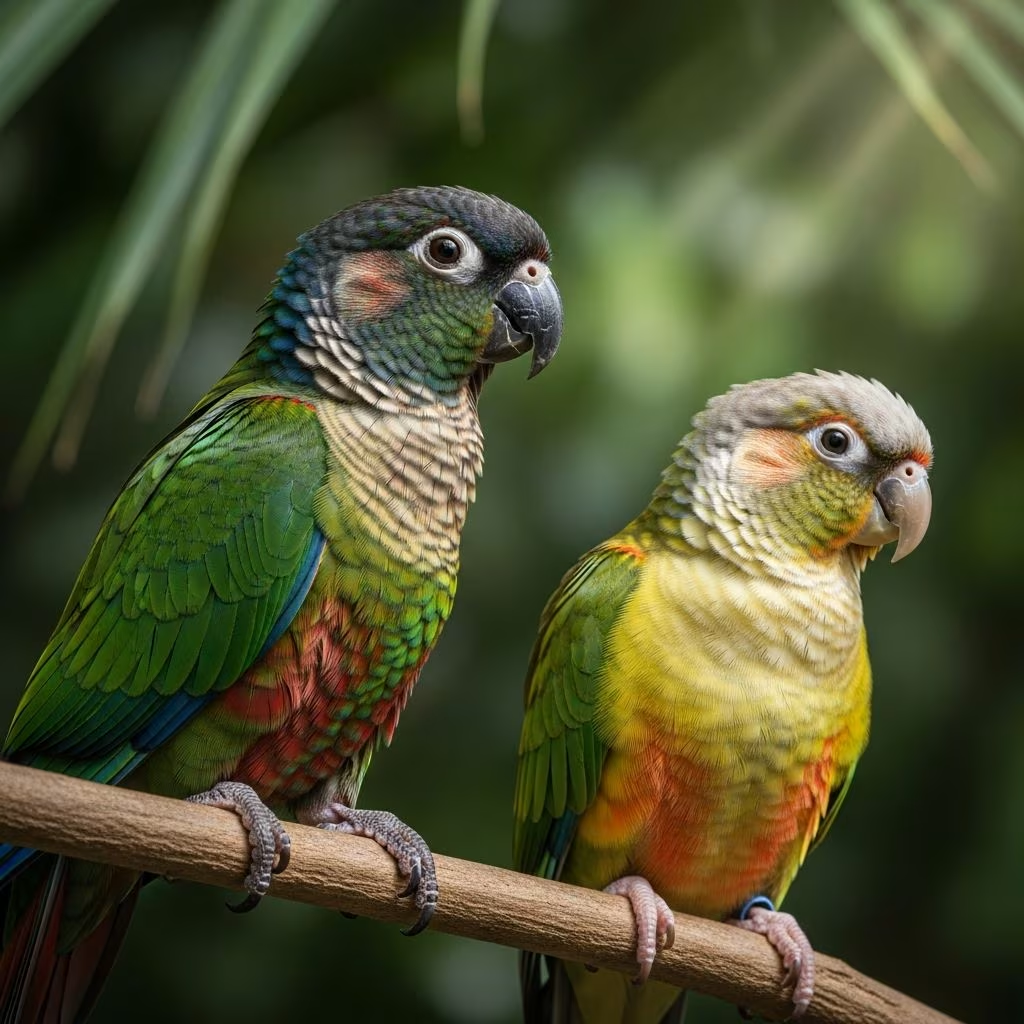
Male-Female Conure Behavior Differences
Conures represent a vast and diverse family within the parrot species, encompassing numerous subspecies with their own unique characteristics. Due to this remarkable diversity, it becomes challenging to make sweeping generalizations about behavioral differences between male and female conures. However, by examining specific conure species and the patterns observed by experienced avian specialists, we can identify meaningful behavioral distinctions that prospective and current conure owners should understand. These differences—rooted in territoriality, vocalization patterns, nesting behaviors, and social preferences—can significantly influence the overall temperament and compatibility of your conure with your household environment.
Understanding Pyrrhura Conures
Pyrrhura conures, which include the widely popular green-cheeked conures, black-capped conures, and painted conures, represent one of the smaller conure species available to pet owners. Among this group, the behavioral distinctions between males and females are notably minimal. Both male and female Pyrrhura conures tend to exhibit what can best be described as a delightful combination of curiosity, playfulness, and mischievousness. These birds are naturally inquisitive explorers who take great pleasure in investigating their surroundings thoroughly.
While males may demonstrate a slightly more pronounced inclination toward exploration and territorial inspection of their environment, this tendency is not absolute. Many female Pyrrhura conures also exhibit adventurous behaviors and engage in dramatic expeditions throughout their living spaces. What truly characterizes Pyrrhura conures—regardless of gender—is their nature as perpetual busy-bodies. Both males and females are inclined to use their beaks and tongues as investigative tools, constantly touching and exploring everything within their reach to learn about their world. This tactile and exploratory nature makes them engaging and entertaining companions, though it also requires owners to be mindful of household safety and appropriate toy selection.
Aratinga Conures: The Most Well-Known Species
Aratinga conures represent the most recognized and commonly kept group of conures in captivity, with over 20 documented species. This group includes several beloved species: blue-crowned conures, cherry-headed conures, sun conures, jenday conures, and gold-capped conures. Unlike some other conure groups, Aratinga conures display more pronounced behavioral differences between males and females, making them an excellent case study for understanding gender-based distinctions.
Female Aratinga Behaviors
Female Aratinga conures typically demonstrate a calm and affectionate demeanor that many owners find particularly rewarding. These birds show a strong preference for close physical contact with their favored human companions. A characteristic behavior frequently observed in female Aratinga conures is their tendency to perch contentedly on a favorite person’s clothing, particularly with their heads popping out above the collar line. This behavior reflects a desire for security and companionship without excessive stimulation. Female Aratingas generally appear satisfied with quiet cuddle sessions and seem to thrive on gentle, predictable interaction with their human families.
Male Aratinga Behaviors
Male Aratinga conures, while equally capable of affection and bonding, tend to exhibit more pronounced territorial behaviors. These birds are more likely to display protective tendencies toward their bird cages and their preferred human companions. Males demonstrate increased vigilance regarding their environment and may react more defensively to perceived threats or changes in their surroundings. This territorial instinct appears particularly pronounced in sun conures, a species with a widespread reputation for being loud, intense screamers. Research suggests that male sun conures’ vocalization patterns are significantly tied to their intense need to protect their territory, and this tendency should be considered when evaluating whether a male or female sun conure is appropriate for your living situation.
Vocalization Patterns and Communication
Vocalization represents one of the more noticeable differences between male and female conures across most species. As a general rule, male conures tend to be more vocal than their female counterparts. This increased vocalization can manifest in multiple ways: more frequent calls, louder intensity, and greater persistence in vocalizing. Interestingly, this heightened vocalization tendency can work to a bird owner’s advantage or disadvantage, depending on perspective and household circumstances.
The increased vocalization in males can translate into better talking ability. Since talking requires vocal expression and practice, male conures who are naturally more inclined to vocalize may have an easier time developing their talking skills. However, this same vocal tendency can also result in excessive screaming and noise that challenges household harmony. The key to managing this trait lies in proper guidance and training. A knowledgeable and patient caregiver can work with a male conure’s natural screaming tendencies and channel this vocal energy into more positive expressions, such as learning to talk or producing pleasant, purposeful sounds rather than random screeching.
Territorial Tendencies and Aggression
Territoriality emerges as one of the most significant behavioral differences between male and female conures. Male conures, across multiple species, demonstrate a stronger inclination toward territorial behavior. This territorial nature makes males more likely to be on guard against perceived intruders or environmental changes. While this vigilance can be endearing and even protective, it can also predispose some males toward aggressive behaviors under certain circumstances.
When environmental changes occur—such as the introduction of new people, rearrangement of living spaces, or changes in routine—territorial males may respond with increased defensiveness or even aggression. This does not mean that all male conures are aggressive; rather, it indicates a greater potential for aggression when triggered by territorial concerns. Understanding this tendency allows owners to implement appropriate management strategies, such as gradual introductions to new situations and consistent routine maintenance.
Affection and Cuddling Preferences
One of the most frequently cited behavioral generalizations regarding conure gender differences concerns affection and cuddling preferences. Female conures, as a broad generalization with notable exceptions, tend to be more naturally affectionate and cuddly. They often seem content to spend extended periods in close physical contact with their preferred human companions, engaging in quiet bonding activities without requiring high levels of stimulation or play.
While males can certainly be affectionate and form strong bonds with their owners, this affection may require more intentional development and cultivation. A male conure can become just as loving and cuddly as a female, but achieving this outcome typically requires dedicated effort from the owner. Regular gentle interaction, consistent handling, and positive reinforcement help develop the affectionate traits that may be more naturally pronounced in females. The takeaway here is that both male and female conures have the capacity for deep affection; the difference lies primarily in how readily and naturally this trait manifests.
Special Consideration: Patagonian Conures
Patagonian conures deserve special mention, as they represent an interesting exception to many generalized patterns. Many avian enthusiasts humorously refer to Patagonian conures as “misplaced cockatoos” because of their exceptional cuddliness and affectionate nature. These medium-to-large conures are renowned for their consistent friendliness and desire for close contact. Remarkably, both male and female Patagonian conures typically exhibit these cuddly, affectionate traits with relatively few gender-based distinctions. Whether you bring home a male or female Patagonian conure, you can reasonably expect a notably cuddly and bonded companion. This species represents one of the best choices for individuals prioritizing affection and close human-bird relationships.
Behavioral Differences at a Glance
| Behavioral Trait | Male Conures | Female Conures |
|---|---|---|
| Territoriality | More territorial; protective of cage and favorite people | Less territorial; more accepting of changes |
| Vocalization | Generally more vocal; louder calls | Generally quieter; less frequent vocalization |
| Talking Ability | Potentially better talkers due to increased vocalization | Can learn to talk but may be less vocal overall |
| Affection | Can be affectionate but may require more development | Tend to be naturally more cuddly and affectionate |
| Aggression Risk | Higher potential for territorial aggression | Generally less aggressive under normal circumstances |
| Play Style | More active, exploratory, occasionally nippy | Calm, content with quieter interactions |
Individual Personality Matters Most
While these behavioral generalizations provide useful frameworks for understanding potential differences, it is crucial to recognize that individual personality plays a substantial role in shaping each bird’s unique character. Two male conures of the same species raised in different households may exhibit dramatically different behaviors based on their individual temperaments, early socialization experiences, and the quality of care they receive. Similarly, two female conures may range from quite energetic and independent to calm and clingy.
Factors such as early socialization, consistent handling, diet quality, environmental enrichment, and the owner’s own temperament and communication style significantly influence how behavioral predispositions manifest in actual day-to-day interactions. A male conure raised in a stable, engaging environment by an experienced owner may display far fewer aggressive or screaming tendencies than a female conure neglected or mishandled. The bird’s individual genetic predisposition serves as a starting point, but environmental factors and human interaction shape the final behavioral outcome.
Choosing Between Male and Female
When selecting a conure as a companion, prospective owners should weigh their personal preferences and household circumstances against these behavioral tendencies. Those seeking a naturally affectionate, cuddly bird that requires fewer behavioral management interventions might find a female more aligned with their expectations. Conversely, owners interested in a more vocal, interactive, and potentially talkative companion might appreciate a male conure’s natural inclinations—provided they are prepared to channel territorial behaviors constructively.
The most important consideration is that either a male or a female conure can become an exceptionally rewarding companion when provided with appropriate care, attention, socialization, and environmental enrichment. Success depends far more on the owner’s commitment to meeting the bird’s physical and psychological needs than on the choice of gender.
Frequently Asked Questions
Q: Can you tell a conure’s gender by appearance alone?
A: No, conures are not sexually dimorphic, meaning males and females cannot be reliably distinguished by visual appearance alone. While some physical traits like head shape or foot color may show slight tendencies, these are not definitive indicators. The most reliable method to determine a conure’s gender is through DNA testing using blood or molted feathers, or by observing egg-laying behavior.
Q: Are male conures more aggressive than females?
A: Male conures show a higher tendency toward territorial behavior and may be more prone to aggression in territorial contexts. However, this does not mean all males are aggressive. Proper socialization, consistent handling, and appropriate environmental management can minimize aggressive behaviors regardless of gender.
Q: Will a female conure definitely be calmer than a male?
A: While females tend to be calmer as a general pattern, individual personality variations are substantial. Some females may be quite active and energetic, while some males might be naturally laid-back. Early experiences and environmental factors play significant roles in shaping behavior.
Q: Do male conures talk better than females?
A: Male conures may have a slight advantage in talking due to their naturally higher vocalization levels. However, many female conures also learn to talk effectively. Success in developing talking skills depends more on consistent training, repetition, and the individual bird’s cognitive abilities than on gender alone.
Q: Should I choose based on gender or individual bird personality?
A: While gender can provide useful behavioral predictions, individual personality is paramount. When possible, spend time interacting with the specific bird before committing to adoption. A particular bird’s temperament will be a far better indicator of compatibility with your household than gender alone.
Q: Can male conures be as affectionate as females?
A: Absolutely. While females may naturally gravitate toward affectionate behaviors more readily, male conures can develop equally strong bonds and affectionate tendencies with consistent, patient interaction and positive reinforcement from their caregivers.
References
- Male-Female Conure Behavior Differences — Chewy Editors. 2025. https://www.chewy.com/education/bird/conure/male-female-conure-behavior-differences
- New To Conures? Answers to Common Conure Questions — Lafeber Company. 2025. https://lafeber.com/pet-birds/new-to-conures-answers-to-common-conure-questions/
- How To Tell A Male Green-Cheeked Conure From A Female — Cuteness. 2025. https://www.cuteness.com/article/tell-green-cheeked-conure-female/
- Is Your Conure A Male Or Female? — TheParrotTeacher (YouTube). 2025. https://www.youtube.com/watch?v=ozMFqGy7mtY
- Male Female Conure Behavior Differences — Whiskers Paws Love. 2025. https://whiskerspawslove.org/article/male-female-conure-behavior-differences/



