

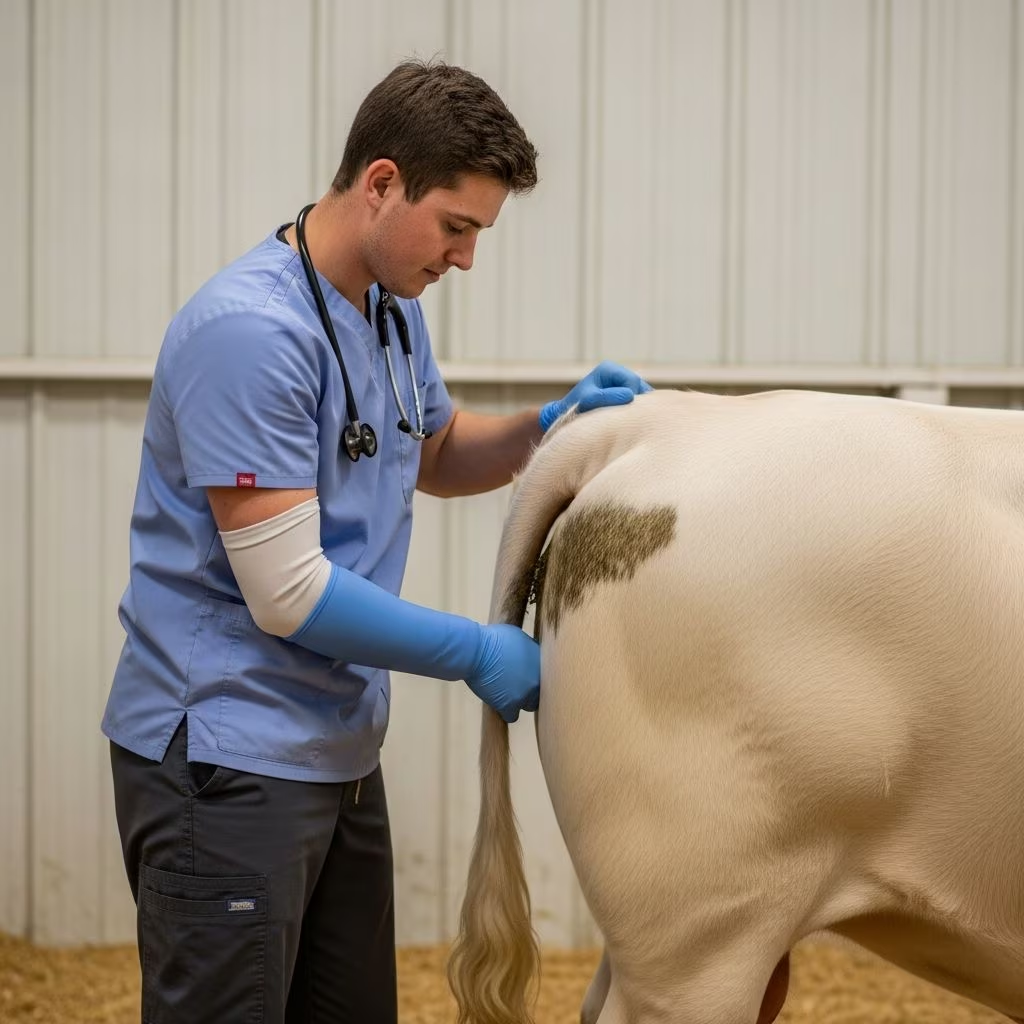
Breeding soundness examinations (BSEs) serve as critical tools in veterinary practice for determining the reproductive capability of male animals across species like cattle, sheep, goats, dogs, and cats. These assessments combine physical evaluations, reproductive tract inspections, and semen analysis to predict an animal’s ability to sire offspring effectively. By identifying potential issues early, BSEs help livestock producers and pet breeders maximize fertility rates and minimize economic losses from poor breeding performance.
Why BSEs Matter in Modern Animal Husbandry
In livestock operations, a single infertile male can compromise an entire breeding season, leading to reduced herd sizes and financial setbacks. For instance, in ruminant herds, BSEs ensure that males can detect estrus, mount females successfully, and deliver viable sperm. Similarly, in companion animals like dogs, annual BSEs detect heritable defects and infectious diseases that could affect future generations. The process typically takes 10-20 minutes per animal and provides actionable insights for management decisions.
Key benefits include early detection of conditions such as testicular degeneration or infections, which might otherwise go unnoticed until breeding failures occur. Producers who invest in BSEs often see improved conception rates and healthier progeny, underscoring the exam’s role in sustainable breeding programs.
Preparing for a Successful BSE
Optimal timing for BSEs varies by species. In ruminants like bulls, rams, and bucks, exams are ideally conducted 60 days before the breeding season to allow for any necessary rechecks. Dogs and cats should undergo annual evaluations, especially those entering new breeding programs or at least one year old. Animals must be in good body condition—typically a score of 3.0-3.5 on a 1-5 scale—neither emaciated nor obese, as extremes can impair libido and sperm quality.
- Review breeding history: Past fertility rates, mating observations, and any previous health issues.
- Ensure health clearances: Tests for breed-specific genetic conditions via radiography, ultrasonography, or DNA screening.
- Gather facilities: Quiet handling areas reduce stress, which can affect semen collection.
Step-by-Step Physical Examination Process
The BSE begins with a thorough physical assessment to rule out systemic health problems that could hinder breeding. Veterinarians start with a lameness check while the animal walks, observing gait for any musculoskeletal issues that might prevent mounting.
General Health and Body Condition
A full-body palpation identifies non-reproductive disorders. Body condition scoring ensures nutritional adequacy; thin animals may lack energy for breeding, while overweight ones risk reduced sperm motility. Eyesight is evaluated, as partial blindness can impair estrus detection.
Scrotal and Testicular Assessment
Scrotal palpation is foundational. Testes must feel firm, symmetrical, and freely movable within a soft scrotum. Measurements of scrotal circumference are species-specific: minimums predict sperm production reserves. For example, yearling bulls require at least 30 cm, scaling up with age.
| Species | Age Group | Minimum Scrotal Circumference |
|---|---|---|
| Bulls | 12-18 months | 32 cm |
| Rams/Bucks | Adults | 28-30 cm |
| Dogs | Adults | 14-16 cm (varies by breed) |
Ultrasound enhances this step, detecting subtle pathologies like degeneration, more common in young or aged males. Thermography may identify inflammation hotspots.
Reproductive Tract Inspection
In ruminants, the penis is manually exteriorized by applying pressure to the sigmoid flexure. Checks for preputial adhesions, ulcers, or tumors are vital. In dogs, prostate, testicles, and penis receive focused exams; cats may need viral testing for leukemia or immunodeficiency.
Semen Collection and Evaluation Techniques
Semen analysis quantifies fertility potential. Collection methods include electroejaculation for ruminants or manual stimulation for dogs.
- Volume and Concentration: Measured immediately post-collection.
- Motility: Assessed microscopically; progressive motility should exceed 30-50%.
- Morphology: At least 70% normal sperm for passing classification in live-cover scenarios.
Sperm defects are categorized as primary (spermatogenesis issues) or secondary (epididymal storage problems), further divided into compensable (dose-adjustable) or uncompensable (fertility-impacting). High secondary defects early in the season warrant a two-week recheck; primary defects need 60 days.
Interpreting BSE Results and Classifications
Veterinarians classify males as Satisfactory, Unsatisfactory, or Deferred based on combined findings.
- Satisfactory: Meets all criteria; expected to settle 80-100% of females.
- Unsatisfactory: Fails key parameters like low motility (<30%) or poor morphology; not recommended for breeding.
- Deferred: Borderline results needing re-evaluation, e.g., due to recent illness.
For artificial insemination, stricter morphology thresholds apply, as cryopreservation amplifies defects.
Common Abnormalities and Management Strategies
Issues like varicocele, infections (e.g., Brucella in dogs), or thyroid imbalances require targeted interventions. Testicular degeneration, visible via ultrasound as hyperechoic parenchyma, carries poor prognosis in older animals but may resolve in juveniles. Libido testing via serving capacity evaluates mounting efficiency.
Post-BSE, recommendations include nutritional tweaks, parasite control, or culling. Genetic screening complements BSEs for heritable defects like hip dysplasia.
Species-Specific Considerations
Ruminants (Bulls, Rams, Bucks)
Emphasis on scrotal size and libido; ultrasound for parenchymal quality. Boer goats show strong TBV-semen correlations.
Dogs and Cats
Include Brucella testing, thyroid panels, and breed-specific clearances. Semen eval post-prostate check.
Limitations and What BSEs Don’t Guarantee
BSEs snapshot current status; they don’t predict 100% success, as factors like female fertility or management affect outcomes. No single test replaces holistic herd health.
Frequently Asked Questions (FAQs)
What is the cost of a BSE?
Typically $50-200 per animal, depending on species and location; savings from avoided losses justify it.
How often should BSEs be done?
Annually for active breeders; pre-season for livestock.
Can BSE detect genetic issues?
Indirectly via physical/genetic tests; not comprehensive alone.
What if my animal fails?
Follow vet advice for rechecks or alternatives like AI.
Is electroejaculation safe?
Yes, when performed by trained vets; minimal stress.
References
- Breeding Soundness Exam – Village Center Veterinary Care — Village Center Veterinary Care. Accessed 2026. https://www.villagecentervet.com/services/pets/reproduction/breeding-soundness-exam
- The Breeding Soundness Examination in Dogs and Cats — MSD Veterinary Manual. Accessed 2026. https://www.msdvetmanual.com/management-and-nutrition/management-of-reproduction-dogs-and-cats/the-breeding-soundness-examination-in-dogs-and-cats
- Male Ruminant Breeding Soundness Exams — University of Illinois College of Veterinary Medicine. 2016-09. https://vetmed.illinois.edu/wp-content/uploads/2016/09/9.-Stewart-Breeding-Soundness-Exams-in-Male-Ruminants.pdf
- Breeding Soundness Exams in Small Ruminants — University of Tennessee Extension. Accessed 2026. https://www.kysheepandgoat.org/post/breeding-soundness-exams-in-small-ruminants
- Breeding soundness examination (BSE): a decision-making tool that … — PubMed (Peer-reviewed). 2022. https://pubmed.ncbi.nlm.nih.gov/35488000/



