

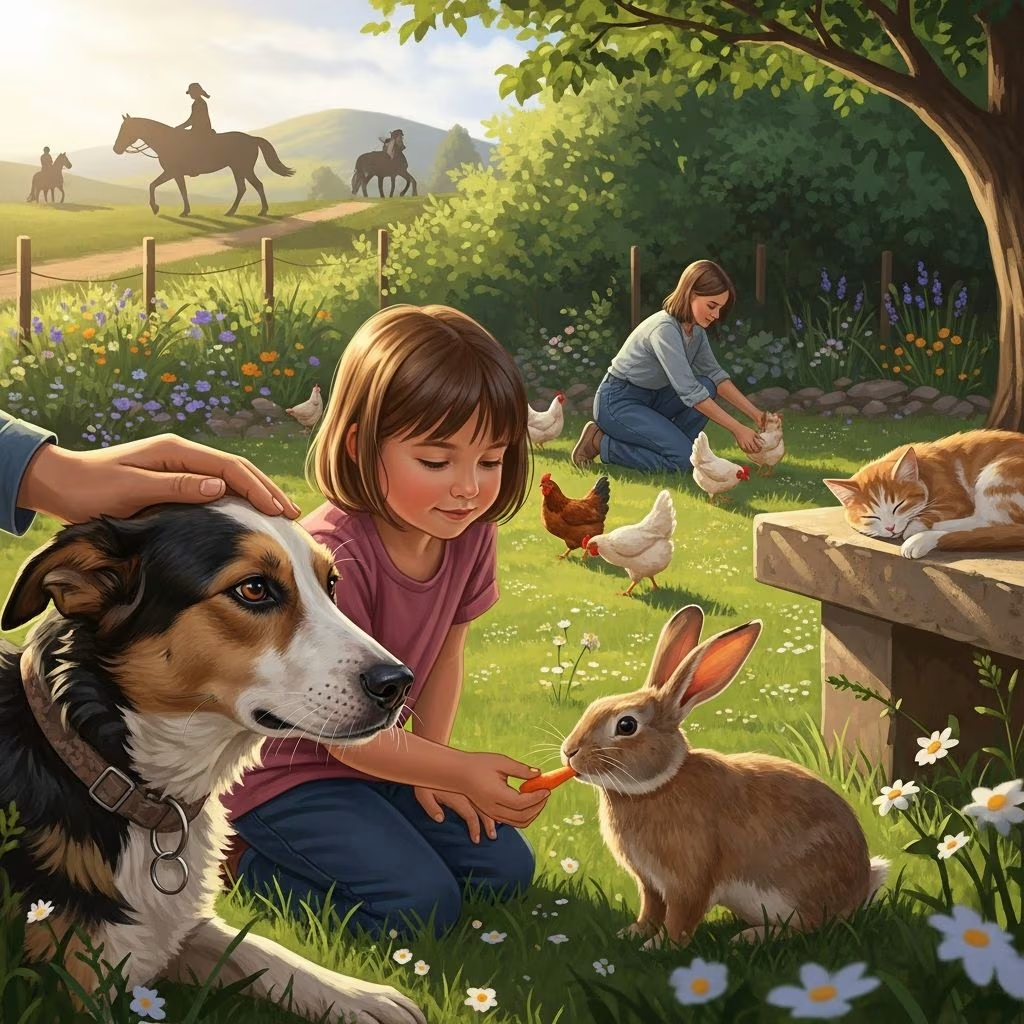
Making a Better World Through Kindness to Animals
The vision of creating a better world often feels like an ambitious, even impossible goal in a society driven by power, money, and competing interests. Yet there exists a profound and transformative approach that can fundamentally shift how we interact with one another and our environment: kindness to animals. This isn’t merely about providing food and shelter to our pets, but rather about recognizing that compassion toward the most vulnerable creatures among us creates a cascading effect of positive change that ultimately benefits everyone. When we commit to understanding and caring for animals, we initiate a process of personal transformation that ripples outward, affecting our homes, communities, and the world at large.
The Philosophy Behind Kindness to Animals
At the heart of this philosophy lies a simple but revolutionary idea: if we focus on the well-being of the least empowered among us—including animals—we cast a net that encompasses the entire world. This concept recognizes that kindness is not a zero-sum game where showing compassion to animals somehow diminishes our capacity to care for human beings. Instead, kindness multiplies. When you practice gentleness and consideration toward animals, you develop neural pathways and emotional habits that enhance your relationships with all beings. The practice of animal kindness becomes a training ground for empathy, patience, and mindfulness that extend into every aspect of your life.
Many skeptics argue that focusing on animal welfare in a world full of human suffering is naive or misplaced. However, this perspective misses a crucial insight: the development of compassion is not compartmentalized. The person who learns to recognize and respect the emotional needs of their pet develops a capacity for empathy that naturally extends to human relationships as well. Being kind to animals is not a distraction from addressing human concerns; it is a foundational practice that strengthens our capacity to address all forms of suffering.
Starting with Your Own Household
The journey toward a kinder world begins not in distant places or through grand gestures, but in your own home. Consider how your mood and behavior affect the animals with whom you share your space. When you stomp around your house in frustration or anger, your pets sense this emotional turbulence and often respond by hiding, becoming anxious, or exhibiting stress behaviors. This simple observation reveals an important truth: your emotional state directly impacts those who depend on you.
Practicing kindness to animals in your household means pausing to consider their perspective before allowing your emotions to overflow. Taking a deep breath before snapping at your dog, or reflecting on how your bad mood affects your cat, represents a conscious choice to protect creatures who are powerless to manage the emotional environment you create. This small act of consideration accomplishes two things simultaneously: it protects your animals from unnecessary stress, and it transforms your household into a more peaceful, harmonious space for everyone. What begins as an act of kindness toward your pet becomes a practice that improves your entire family dynamic.
The Mirror Effect: What Animals Teach Us About Ourselves
Animals function as remarkably accurate mirrors for our own behavior and emotional patterns. Unlike human relationships, where people may mask their reactions or adjust their behavior based on social expectations, animals respond authentically to how we treat them. They cannot pretend to enjoy your company if you’ve been harsh, and they cannot hide their contentment when you’ve truly made them feel safe and valued. This authenticity makes pets invaluable teachers about the impact of our actions.
When you observe your animals independent of yourself—watching how they move through the world, what brings them comfort, and what frightens them—you open access to a rich and fascinating dimension of existence. You begin to recognize that your pet is not simply a reflection of your needs but a complete being with their own interests, fears, desires, and social relationships. This shift in perspective transforms how you interact with them and, by extension, how you approach all relationships. You become more attuned to nonverbal communication, more patient with differences in preference, and more committed to understanding rather than judging.
Learning to Listen to Animals
Animals communicate constantly, yet most humans never learn to listen. They express themselves through vocalizations, body language, the places they choose to rest, the direction they face, and countless other subtle signals. Learning to interpret these communications requires patience, attention, and a genuine desire to understand their perspective rather than imposing your own expectations onto them.
The relationship between humans and animals often mirrors a game of charades where the animal works tirelessly to convey their needs while the human struggles to understand. Animals may be attempting to communicate something important—hunger, fear, pain, affection, or a need for play—but if we’re not truly present and listening, we miss these messages. This requires developing a different quality of attention, one that is quiet and observant rather than rushed and task-focused.
When you commit to truly listening to your animal companions, you discover they operate with remarkable sophistication. They maintain complex relationships, solve problems, make decisions, and navigate their lives with intention and purpose. What might appear to be simple pet behavior—a dog learning to open doors, squirrels systematically defeating bird feeders—actually represents thoughtful problem-solving and learning. Your animals are not empty vessels to be filled with your expectations; they are intelligent beings with their own goals and strategies for achieving them.
The Sophistication of Animal Lives
One of the most transformative realizations that emerges from true observation is understanding that animal lives have depth and texture comparable to our own. Animals don’t simply exist in a perpetual present moment; they form meaningful relationships, experience a range of emotions, and engage in activities that bring them satisfaction and joy. They worry about their offspring, grieve their losses, celebrate their triumphs, and work through complex social hierarchies within their communities.
Recognizing this complexity shifts your responsibility toward animals from mere provision of basic needs to a commitment to supporting their well-being and allowing them to express their natural behaviors and preferences. This might mean providing environmental enrichment for your pets, respecting their need for social connection, or allowing them autonomy in choices where safe to do so. It means acknowledging that your relationship with them is not one of dominion but of mutual respect and care.
How Personal Kindness Extends to Community Impact
While acts of kindness to your own animals create immediate benefits in your household, the ripple effects extend far beyond your front door. When you model compassion toward animals, you influence how others—particularly children—view their responsibility toward all creatures. A parent who demonstrates patience and gentleness with a struggling pet teaches their children more about empathy than any lecture could accomplish.
Furthermore, the mindset shift that accompanies genuine animal kindness naturally extends to broader concerns about animal welfare in society. People who practice kindness toward their own pets often become advocates for animal protection, supporters of no-kill shelters, and activists for improved animal welfare standards. The personal practice becomes the foundation for systemic change.
Practical Ways to Practice Daily Kindness to Animals
Implementing kindness toward animals doesn’t require dramatic lifestyle changes. Instead, it involves small, consistent practices that gradually transform how you relate to all beings:
– Before reacting emotionally to your pet’s behavior, pause to consider what they might be trying to communicate- Spend time simply observing your animals without trying to direct their activity- Learn to recognize your pet’s individual personality, preferences, and needs- Create a calm household environment that allows your animals to feel safe and secure- Respect your pet’s boundaries and body language- Provide regular play, exercise, and mental stimulation appropriate to their species and personality- Educate yourself about your pet’s natural behaviors and needs- Consider how your emotional state affects those around you, both human and animal- Practice gratitude for what your animals teach you about yourself and the world
The Broader Implications for Society
When enough individuals commit to practicing kindness toward animals, the cumulative effect creates cultural shift. Communities begin to prioritize animal welfare in policy decisions. Shelters receive support to implement life-saving programs. Wildlife populations receive protection. The agricultural industry faces pressure to improve conditions for animals in their care. None of this change happens through forceful imposition, but rather through the natural consequence of people whose consciousness has been expanded through contact with animals.
The vision of a better world through kindness to animals isn’t naive or impractical. It’s a recognition that transformation happens from the inside out, beginning with how we treat those most dependent on our care and expanding outward to reshape our entire society. The animals in your life offer you a daily opportunity to practice the values you wish to see in the world.
Frequently Asked Questions
Q: How can I tell if my pet is trying to communicate something important?
A: Pay attention to changes in behavior, body language, and vocalizations. Animals communicate through where they position themselves, the direction they face, sounds they make, and changes in their normal patterns. Spending quiet time observing your animal helps you learn their individual communication style.
Q: Will practicing kindness to my pet really make a difference in the world?
A: Yes. Personal practices create ripple effects through your household and community. When you model compassion toward animals, you influence others, particularly children, and you develop the emotional capacities that enable broader social change.
Q: What should I do if my pet seems anxious or stressed?
A: First, evaluate your household environment and your own emotional state. Ensure your pet has safe spaces, appropriate exercise, and mental stimulation. Consider consulting with a veterinarian or animal behaviorist to rule out medical issues and develop strategies to support your pet’s well-being.
Q: How do I balance my own emotional needs with being kind to my animals?
A: Taking care of yourself ultimately benefits your animals because they depend on your emotional stability. Practicing self-care, stress management, and seeking support when needed allows you to show up more compassionately for those who depend on you.
Q: Can animals really solve problems and make decisions?
A: Absolutely. Research demonstrates that animals engage in complex problem-solving, learn from experience, and make strategic decisions based on their goals and understanding of their environment. Observing your own pet will reveal evidence of this intelligence.
References
- Making a better world through kindness to animals — Best Friends Animal Society. https://bestfriends.org/stories/best-friends-magazine/making-better-world-through-kindness-animals
- The Science of Animal Behavior and Cognition — American Psychological Association. https://www.apa.org/science/about/psa/animal-behavior
- Human-Animal Interaction and Mental Health Benefits — National Institutes of Health. https://www.nih.gov/health-information



