

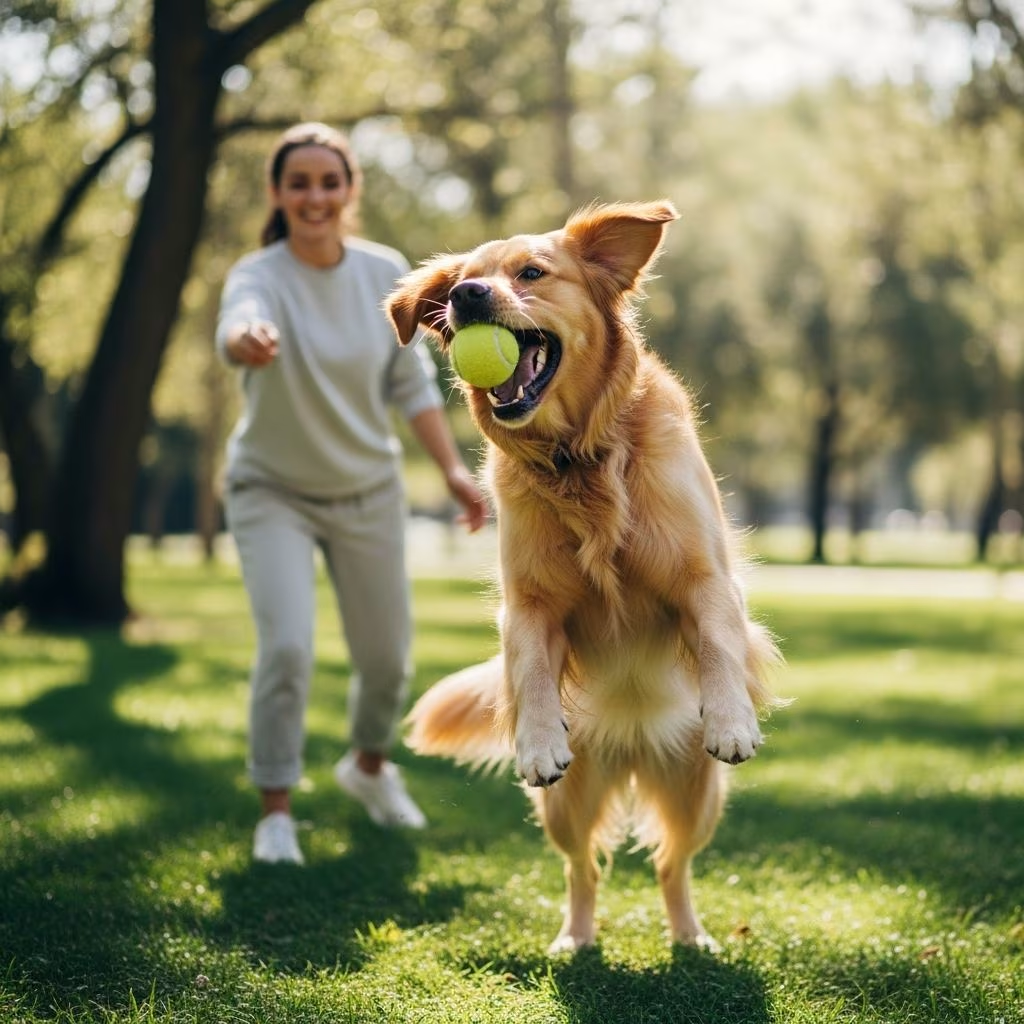
Why Fun Matters in Dog Training
Many pet owners approach training as a one‑sided task: the human talks, the dog listens, and obedience is the only acceptable outcome. But research and practical experience in animal learning show that playfulness and joy dramatically improve how well dogs pay attention, remember cues, and respond to commands. When training feels like a game, your dog becomes more willing to engage, less likely to resist, and more emotionally connected to you.
Play taps into a dog’s natural curiosity and motivation to explore. Instead of drilling repetitions that feel like chores, you can build sessions around activities your dog already enjoys—tugging, fetching, chasing, sniffing, and searching. These activities become powerful tools for teaching basic manners, impulse control, focus, and even advanced skills. The result is a dog that listens not because they fear correction, but because they expect fun.
Shifting from Rigidity to Playful Guidance
One of the biggest barriers to joyful training is the mindset that seriousness equals effectiveness. When we think something is important—like sit, down, or stay—we often tighten our bodies, raise our voices, and treat mistakes as failures. That kind of pressure can make training feel threatening rather than inviting.
A more effective approach is to see yourself as a playful guide rather than a stern instructor. When you ask for a sit, for example, you can turn it into a brief game: toss a treat under your chair so your dog has to sit to reach it, then reward enthusiastically. Or pair ‘sit’ with tossing a ball: the sit is the doorway to a fun game. Suddenly, the cue becomes a cue for enjoyment instead of obligation.
This shift changes your dog’s internal narrative. Instead of thinking, “Here we go again, I have to do something I don’t like,” they begin to think, “When humans ask me to do things, good stuff tends to follow.” Over time, that optimism makes your dog more responsive and less reactive.
Using Everyday Games as Learning Opportunities
Training doesn’t have to happen in formal sessions with a clicker and a treat bag. In fact, many of the most effective lessons occur when you turn ordinary play into structured games with clear rules.
- Tug‑and‑Release Games: Use tug as a reward for self‑control. Ask your dog to sit, wait, or look at you, then release them into a short tug session. During play, practice ‘drop it’ or ‘give’ by offering a better treat or a quick toss of the toy. This teaches your dog that letting go leads to more fun, not less.
- Playful Fetch with Cues: Turn fetch into a training game by adding a sit or stay before the throw. Ask for eye contact or a quick downs before releasing your dog to chase. This builds impulse control and keeps the game from turning into a chaotic, unresponsive tug‑of‑war for the ball.
- Indoor Movement Games: During rainy days or short attention spans, play quick bursts of movement: spin, bow, crawl, or jump over a low pillow. These movements are fun but can also reinforce body awareness, focus, and coordination.
By threading cues into natural play, you avoid separating “training” from “fun” in your dog’s mind. To them, learning just becomes another part of play, not a separate category of work.
Short, Frequent Sessions Keep Energy High
Dogs have limited attention spans, especially when they’re learning something new. Long, repetitive sessions often lead to frustration, mental fatigue, and disengagement. Positive reinforcement trainers and veterinary behavior experts recommend short, frequent sessions because they match how dogs actually learn best.
Aim for sessions that last roughly 3–10 minutes, depending on your dog’s age, energy level, and familiarity with the skill. You can repeat these mini‑sessions several times a day instead of one long block. This approach offers several benefits:
- Prevents burnout for both dog and handler.
- Allows for quick repetition without repetition fatigue.
- Keeps your dog eager for the next round rather than overdone.
Ending on a high note is another key. Finish each session with a game your dog already knows and loves, or reward a behavior they’ve just learned with a fun activity like a short tug or a ball toss. This creates a positive emotional association with training and leaves your dog looking forward to the next time.
High‑Value Rewards Make Training Irresistible
What feels like a reward to you may not feel like a reward to your dog. A scrunchy treat, a squeaky toy, or a belly rub might all have different levels of appeal depending on your dog’s personality and mood. High‑value rewards are things your dog finds especially motivating and will work harder to obtain.
Common high‑value rewards include:
- Pieces of chicken, cheese, or another favorite food.
- Chewing on a favorite toy for a short period.
- Playtime with another dog or a favorite human.
- A short game of tug or fetch.
Using these rewards strategically keeps your dog engaged. For example, you might use medium‑value treats for easier cues (like sit) and save the highest‑value items (like chicken chunks or an extra‑exciting toy) for more challenging behaviors or when your dog is learning in a distracting environment.
Positive reinforcement, including food rewards, is widely supported by veterinary behaviorists and organizations such as the American Veterinary Society of Animal Behavior (AVSAB) as a humane and effective method for teaching new behaviors and managing problem behaviors.
Incorporating Tricks to Lighten the Mood
Trick training is often misunderstood as being “just for fun,” with no real training value. In reality, teaching tricks can be one of the most powerful tools for building a playful, cooperative mindset in your dog. Tricks like spin, roll over, bow, crawl, or play dead require clear communication, body awareness, patience, and impulse control—all of which transfer directly to everyday obedience.
There’s another subtle benefit: people usually approach tricks with a lighthearted attitude. When you ask your dog to spin, you’re more likely to smile, move playfully, and laugh whether they get it right on the first try or need a few attempts. This relaxed atmosphere reduces stress and makes your dog more willing to experiment and try new things.
You can intentionally weave tricks into your regular training. For example, after a few successful sits, ask for a spin or bow as a “fun break.” The trick becomes a mental reset that keeps training from feeling repetitive. This mix of basic cues and playful tricks also strengthens your dog’s listening skills without making every moment feel like a test.
Building Focus Amidst Distractions
One of the biggest challenges in family dog training is maintaining focus in real‑life environments. Doorbells, visitors, squirrels, children, and other dogs can pull your dog’s attention away from you in an instant. Playful training can help you teach focus in a way that feels natural rather than forced.
Instead of only practicing in a quiet room, gradually bring training into more stimulating settings. You can start with mild distractions—like a person standing at a distance or a toy lying nearby—then slowly move closer and add more complexity. At each stage:
- Use high‑value rewards to make paying attention to you more rewarding than looking at the distraction.
- Keep sessions short and fun so your dog isn’t overwhelmed.
- Step back one level if your dog struggles, then build again from there.
This kind of playful, incremental exposure builds confidence and focus. Over time, your dog learns that keeping an eye on you usually leads to something awesome, even when the world around them is noisy and exciting.
Games That Double as Training Tools
Specific games can be designed to target particular skills while still feeling like play. Here are a few examples that double as training tools:
- Find‑it Sniffing Games: Hide treats or toys around a room or yard and cue your dog to “find it.” This sharpens search skills, builds confidence, and channels natural sniffing behavior into a structured game. It’s also excellent for dogs who are anxious or overaroused, because it gives them a focused, calming task.
- Drop‑It and Leave‑It Games: During tug or fetch, practice smooth transitions from “take it” to “drop it.” Similarly, you can place a toy or treat on the floor and reward your dog for ignoring it on cue. Over time, these games teach impulse control and help prevent resource guarding or stealing.
- Directional Games (Go, Turn, Spin): Use hand signals or cues to guide your dog around obstacles, cones, or chairs. These games build coordination, deepen understanding of cues, and can act as a gentle warm‑up for more complex training.
The key to these games is clarity and consistency. Use the same cues every time, keep the rules simple, and be generous with praise and rewards when your dog follows them.
Table: Pairing Rewards with Training Goals
The table below shows how you can match different rewards to various training objectives to keep your dog motivated and engaged.
| Training Goal | Suitable Rewards | Why It Works |
|---|---|---|
| Basic cues (sit, down, stay) | Small, quick treats; short verbal praise | Keeps sessions fast and efficient without overstimulation. |
| Impulse control and focus | High‑value treats; brief play or toy access | Reinforces delayed gratification and attention. |
| Tricks and fun behaviors | Toys, verbal celebration, occasional “jackpot” treat | Makes learning feel exciting and playful. |
| Training in distracting environments | High‑value food or toy; lots of praise | Compensates for competing distractions. |
FAQs About Playful Dog Training
Can playful training really replace traditional obedience?
Playful training is still traditional obedience when you use positive reinforcement effectively. The difference is in tone and timing. Playful training relies on the same principles—clear cues, consistent consequences, and repetition—but wraps them in activities your dog enjoys. For most family dogs, this approach is not only as effective as traditional methods, but often more effective because the dog is emotionally invested in the process.
How do I know when to stop a session?
Listen to your dog’s body language. If they start to look away, sniff the floor excessively, lie down and disengage, or perform behaviors slowly or half‑heartedly, it’s time to end. A good rule of thumb is to end before your dog is fully tired. This keeps them eager for the next session and prevents frustration.
Is it okay to mix food rewards with toys?
Yes. Some dogs respond better to food, others to toys, and many enjoy both. You can even alternate: use treats for precise behaviors and toys for big expressions of energy. Just be sure to use whichever motivator is strongest for the situation you’re in.
My dog gets too excited during play. How can I keep training calm?
Start with low‑arousal activities—like slow sniffing games or gentle sits—and gradually increase intensity. If your dog becomes too charged, pause, ask for a calm behavior like a sit or a down, and reward them for focusing. Over time, this teaches your dog to cycle between excitement and calmness on cue.
Do I need to train every day?
Daily short sessions are ideal, but consistency matters more than duration. Even 5–10 minutes of playful training a few times a week can lead to noticeable improvement. The key is to keep it positive, predictable, and fun so your dog continues to look forward to participating.
Transitioning from Play to Real‑World Politeness
All of this playful training translates directly into real‑world behavior. Sit and stay become the tools that keep your dog from rushing out the door. Recall and drop‑it games help prevent them from grabbing unsafe items. Impulse control games reduce jumping on guests or lunging at other dogs.
To make the transition smooth, practice in environments that slowly resemble real‑life situations. Practice stays near the front door, recalls with people in the background, or drop‑it games with food on the floor. Because these behaviors were introduced playfully, your dog is more likely to cooperate even when distractions are present.
Positive Reinforcement and Long‑Term Emotional Health
Using play and positive reinforcement doesn’t just produce better behavior; it supports your dog’s emotional well‑being. Dogs trained with fear‑based or punitive methods often become anxious or suppressive, showing fewer spontaneous behaviors and sometimes developing fear responses.
In contrast, reward‑based training that includes play is associated with lower stress levels, higher confidence, and stronger human–dog bonds. Organizations such as the American Veterinary Society of Animal Behavior emphasize that positive reinforcement is both humane and effective for teaching new behaviors and reducing problem behaviors without relying on punishment.
Conclusion: Training as a Shared Adventure
When you bring playfulness into your training, you’re not just teaching commands—you’re building a relationship anchored in trust, curiosity, and joy. Each sit, each stay, each trick becomes a tiny invitation to your dog: “Come play with me, and let’s figure this out together.”
By keeping sessions short, using high‑value rewards, mixing basic cues with fun tricks, and turning everyday games into learning opportunities, you create a training experience your dog will consistently choose to engage in. Over time, this approach leads to a dog who listens more readily, behaves more politely, and feels safer and happier with you at their side.
References
- AVSAB Position Statement on Humane Dog Training — American Veterinary Society of Animal Behavior. 2023‑07‑15. https://avsab.org/wp-content/uploads/2020/03/Position-Statement-Humane-Dog-Training-2023.pdf
- Obedience Training and Behavioral Outcomes — Journal of Veterinary Behavior: Clinical Applications and Research. 2022‑06‑01. https://www.journalvetbehavior.com/article/S1558-7878(22)00001-0/fulltext
- Positive Reinforcement in Dog Training — American Kennel Club, Canine Training & Behavior Resources. 2023‑08‑10. https://www.akc.org/expert-advice/training/positive-reinforcement-dog-training/



