

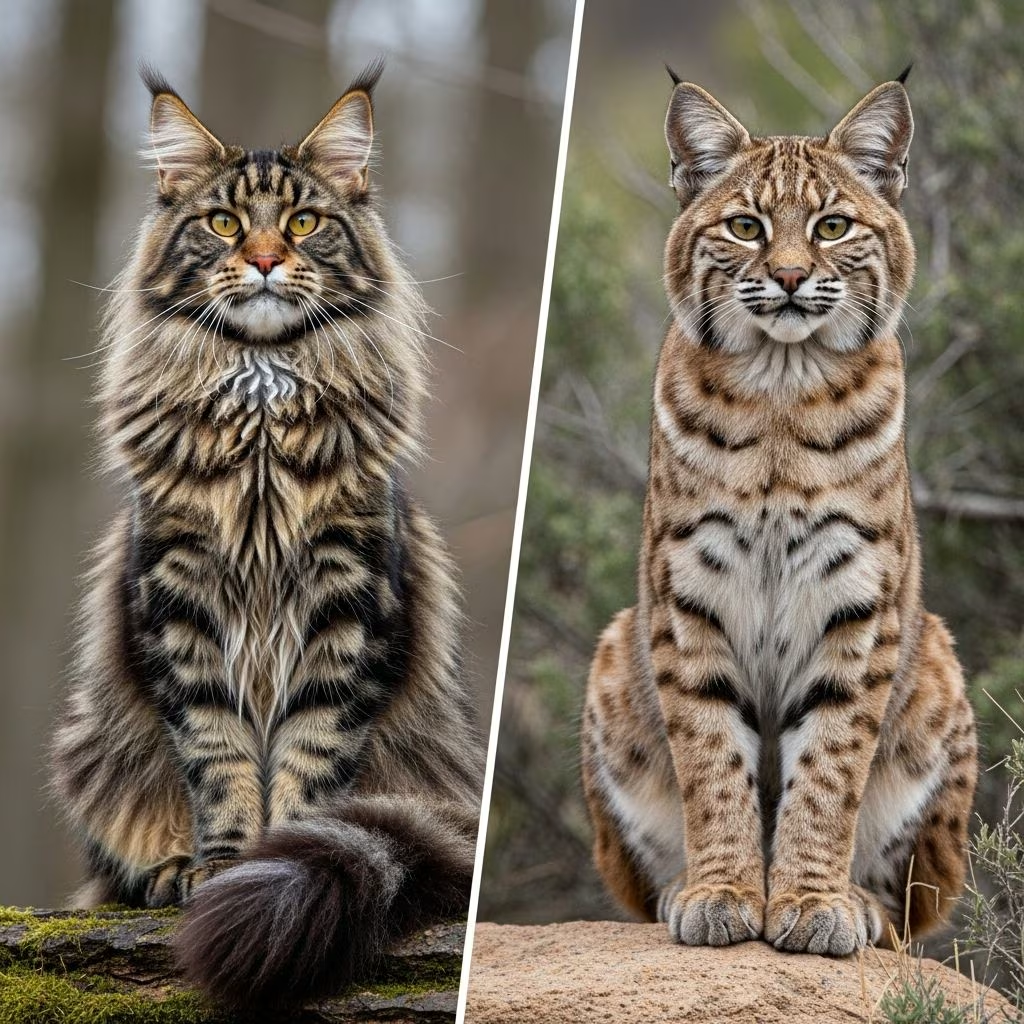
The Maine Coon and the bobcat represent two ends of the feline spectrum: one a beloved household companion, the other a stealthy wilderness dweller. Despite occasional superficial resemblances in build and stature, their evolutionary paths have led to vastly different adaptations, lifestyles, and interactions with humans. This in-depth analysis draws from reliable observations to highlight what sets these cats apart, helping enthusiasts appreciate both the domesticated charm of the Maine Coon and the untamed prowess of the bobcat.
Origins and Evolutionary Background
Maine Coons trace their roots to the rugged landscapes of North America, particularly New England, where they emerged as a natural breed in the 19th century. Folklore suggests influences from longhaired cats brought by sailors or even European angoras, but genetic studies confirm their status as a purely domestic variety, prized for resilience in harsh winters.
Bobcats, or Lynx rufus, are native wild felids spanning much of North America, from forests to deserts. Evolving over millennia as adaptable predators, they belong to the Lynx genus, with fossils indicating presence for at least 2.5 million years. Their survival hinges on keen predatory skills rather than human intervention.
Physical Attributes: Size, Build, and Distinctive Traits
Both species impress with substantial frames, but measurements reveal nuances. Maine Coon males typically weigh 18-22 pounds, females 12-15 pounds, standing 10-16 inches tall and stretching up to 38 inches with tail. Bobcats overlap here: males average 21 pounds (14-40 pounds range), females 15 pounds (8.8-33.7 pounds), reaching heights up to 21 inches and lengths of 26-41 inches.
However, bobcats edge out in raw power, with longer legs suited for leaping up to 10 feet in hunts. A record bobcat tipped 49 pounds, dwarfing even the largest Maine Coons.
| Feature | Maine Coon | Bobcat |
|---|---|---|
| Male Weight | 18–22 lbs | 14–40 lbs (avg 21 lbs) |
| Female Weight | 12–15 lbs | 8.8–33.7 lbs (avg 15 lbs) |
| Height | 10–16 inches | Up to 21 inches |
| Length (with tail) | Up to 38 inches | 26–41 inches |
| Tail Length | Up to 14 inches (bushy) | 4–8 inches (bobbed) |
Appearance further diverges. Maine Coons boast luxurious, shaggy coats in diverse colors, massive tufted paws for snow traversal, and prominent ear tufts evoking lynx-like majesty without wild ancestry. Bobcats display tawny coats with black streaks, spots on flanks, barred legs, and rosettes—hallmarks absent in Maine Coons. Their short fur, pointed ears with black tufts, and stubby tail define their wild silhouette.
Coat Variations and Grooming Demands
Maine Coons require moderate grooming due to their semi-long, water-repellent fur, which sheds seasonally. Weekly brushing prevents matting, supporting their moderate exercise needs indoors. Bobcats, with sleek, low-maintenance pelage, self-groom efficiently in the wild, needing no human intervention. Their coat adapts to climates, thickening in northern ranges.
Hunting Instincts and Dietary Preferences
Hunting styles underscore their worlds. Bobcats are crepuscular ambush predators, claiming territories of 1-18 square miles (males up to 30, females 5). They pounce on rabbits (snowshoe hares northward, cottontails southward), rodents, birds, bats, even deer fawns, using silence and stealth.
Maine Coons channel instincts playfully: chasing laser pointers or insects, but thrive on balanced kibble or wet food. Their ‘hunting’ suits homes, not wild expanses.
- Bobcat prey: Rabbits (primary), rodents, birds, larger game like peccaries.
- Maine Coon ‘prey’: Toys, treats; diet: commercial cat food.
Behavioral Patterns and Social Dynamics
Bobcats embody solitude, vocalizing rarely beyond mating yowls or hisses. They shun humans, marking territories with scent for prey avoidance. Maine Coons contrast vividly: vocal ‘chatterers’ with dog-like loyalty, shadowing owners, greeting with trills, and tolerating children or dogs.
Temperament tables highlight compatibility:
| Trait | Maine Coon | Bobcat |
|---|---|---|
| Temperament | Friendly, intelligent, loyal | Active, independent, reserved |
| Family-Friendly | Yes | No |
| Other Pet-Friendly | Often | No |
| Trainability | Easy | Extremely difficult |
Habitat Requirements and Daily Activity
Maine Coons adapt to apartments or homes with climbing trees and windows for bird-watching, active moderately via play. Bobcats demand vast wild spaces: forests, swamps, deserts with cover for stalking, roaming dawn/dusk/night. Captive bobcats suffer stress, often landing in rescues.
Health Profiles and Longevity Factors
Domestic perks extend Maine Coon lives to 12-15 years (up to 20), aided by vets screening for hip dysplasia or hypertrophic cardiomyopathy. Bobcats average 7-10 wild years, shorter due to starvation, vehicles, predators; captives fare marginally better but lack natural stimuli.
Myths, Misconceptions, and Genetic Realities
Urban legends claim Maine Coons hybridize with bobcats, fueled by size and tufts. Reality: No genetic evidence supports this; bobcats’ 38 chromosomes differ from domestic cats’ 38 but with incompatible structures. Spots/rosettes on bobcats never appear in pure Maine Coons.
Which Feline Fits Your Lifestyle?
For families, Maine Coons shine: sociable, trainable, low-aggression. Bobcats suit no home—wild needs make them illegal or unethical pets in most areas, prone to aggression. Respect bobcats’ ecological role controlling pests.
Conservation Insights for Bobcats
As least-concern species, bobcats thrive (millions across habitats), but habitat loss threatens edges. They regulate ecosystems sans human aid.
Frequently Asked Questions
Can a Maine Coon defeat a bobcat?
Unlikely; bobcats’ wild athleticism and ferocity outmatch domestic builds, even at similar weights.
Do Maine Coons have bobcat ancestry?
No, confirmed by genetics—similarities are convergent evolution.
How big can Maine Coons get compared to bobcats?
Large Maine Coons match small bobcats (20+ lbs), but averages favor bobcats slightly.
Are bobcats good pets?
No; their needs exceed home capabilities, leading to welfare issues.
What makes Maine Coons unique?
Their gentle giant persona, adaptability, and social bonds set them apart.
References
- Maine Coon vs Bobcat: Size, Behavior & Key Differences Guide — Maine Coon Guides. 2023. https://mainecoonguides.com/maine-coon-vs-bobcat/
- Maine Coon vs Bobcat: What’s the Difference? (With Pictures) — Catster. 2023. https://www.catster.com/cat-breeds/maine-coon-cat-vs-bobcat/
- Do Maine Coons Really Come From Bobcats? — YouTube (Facts about Cats). 2023. https://www.youtube.com/watch?v=PHjfmEfAg4A
- Bobcat vs Maine Coon – Who Would Win? — YouTube (Facts about Cats). 2023. https://www.youtube.com/watch?v=sB8g1CV279s



