
Macaw Personality, Food & Care: Complete Pet Bird Guide
Learn about macaw species, care requirements, diet, and personality traits for pet owners.
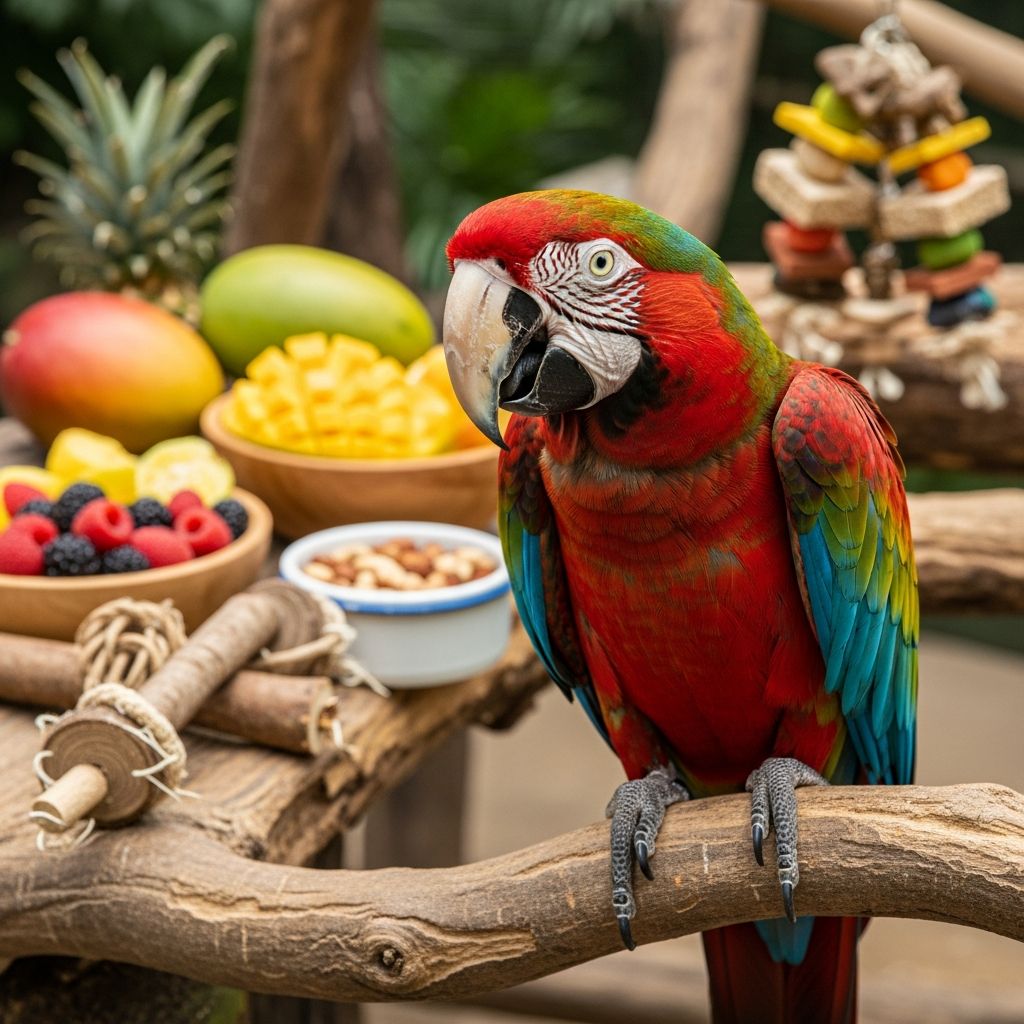
Macaws are magnificent birds that command attention with their striking appearance and vibrant personalities. These large, colorful parrots have become increasingly popular as companion animals, but potential owners should understand that macaws are big birds in both size and personality. Their intelligence, social needs, and longevity make them a significant long-term commitment. Whether you’re considering a macaw as a pet or simply curious about these remarkable creatures, understanding their specific requirements is essential for their wellbeing and your success as an owner.
Understanding Macaw Species and Classification
Macaws are informally classified into two distinct groups: large macaws and mini macaws, each with unique characteristics and care requirements. This classification helps potential owners determine which species might best suit their living situation and lifestyle.
Large Macaws
The large macaws include species from the genera Ara, Anodorhynchus, and Cyanopsitta. These impressive birds are the most recognizable macaw species and include popular pet varieties such as the blue and gold macaw, green-winged macaw, and scarlet macaw. Large macaws typically weigh between 900 and 1,600 grams, depending on the species, and can reach lengths of 35 inches or more with wingspans extending up to 45 inches. The “blue macaws” group within this category includes the hyacinth macaw, along with the critically endangered Lear’s macaw and Spix’s macaw, which are rarely kept in captivity.
Mini Macaws
Mini macaws are significantly smaller than their large counterparts, representing genera such as Diopsittaca, Orthopsittaca, and Primolius. The yellow-collared macaw and Hahn’s macaw are examples of mini macaw species. Despite their smaller stature, ranging from 120 to 300 grams, mini macaws retain many of the personality traits and vocal abilities of larger species, making them suitable alternatives for owners with space constraints.
Popular Pet Species
Among the most commonly kept pet macaw species are:
– Blue and gold macaw (Ara ararauna)- Green-winged macaw (Ara chloropterus)- Scarlet macaw (Ara macao)- Hahn’s macaw (Diopsittaca nobilis nobilis)- Hyacinth macaw (Anodorhynchus hyacinthinus)- Military macaw (Ara militaris)- Severe macaw (Ara severus)
Physical Characteristics and Appearance
Macaws possess distinctive physical features that make them instantly recognizable among parrot species. These slender birds are characterized by long, tapered tails, strong and heavy bills, and a distinctive bare facial patch that lacks feathers. The bare facial patch is particularly notable and serves communicative purposes within their social hierarchies.
All macaws are sexually monomorphic, meaning males and females are virtually indistinguishable by appearance alone. This characteristic requires genetic or surgical sexing to determine an individual bird’s sex with certainty. However, certain species can be distinguished from one another by specific markings. For instance, the green-winged macaw is notably larger than the scarlet macaw and features distinctive bands of small red feathers around its eyes, whereas scarlet macaws display yellow feathers on their wings rather than green.
The blue and gold macaw is aptly named for its gorgeous blue body and dark lemon-yellow chest, creating a striking color combination that makes this species unmistakable. These birds possess remarkable plumage that has been prized throughout history; in pre-Columbian society, large tapestries were created using the blue and yellow feathers of this species, testament to their aesthetic value.
Native Habitat and Geographic Distribution
Macaws are native to diverse regions spanning from the southern portion of North America through Central America and into South America. Their range is particularly extensive in Mexico, Central America, and South America, with specific distributions varying by species.
In their natural habitats, macaws are found in varied ecosystems including gallery forests and mangrove swamps throughout the Amazon Basin. Different species have adapted to specific ecological niches within these regions. For example, blue and gold macaws inhabit forests and woodlands across their range, which extends from Venezuela south through Peru, Brazil, Bolivia, and Paraguay, as well as parts of Panama. The scarlet macaw possesses the largest range of all macaw species, extending from eastern Mexico through Central America and throughout the Amazon rainforest, with two distinct subspecies adapted to different regions.
Historical evidence indicates that the Caribbean once hosted native macaw species, including the Cuban macaw, which are now extinct. This fact underscores the vulnerability of macaw populations to environmental pressures and habitat loss.
Macaw Personality and Social Needs
Macaws are highly social birds with vibrant personalities that dominate their households. Potential owners should understand that these birds require substantial interaction and mental stimulation to thrive in captivity. Their intelligence and social nature mean that macaws can become destructive or develop behavioral problems if their emotional and social needs are not adequately met.
Scarlet macaws, for instance, are frequently described as “sassy” birds filled with energy and personality. They are highly intelligent and known as capable escape artists, requiring secure housing and constant supervision. Similarly, all macaw species demonstrate vocal abilities and use communication extensively with their flock members and human companions. These birds are vocal communicators that can produce loud calls, both as a natural form of communication and sometimes as an expression of boredom or stress.
Macaws thrive on interaction with their owners and form strong bonds with their primary caregivers. They are typically social birds that enjoy being part of family activities and appreciate out-of-cage time for physical exercise and mental engagement. The level of socialization required means that macaws are best suited for owners who can dedicate significant daily time to their care and companionship.
Lifespan and Sexual Maturity
One of the most important considerations for prospective macaw owners is the bird’s extraordinary lifespan. Large macaws typically live between 30 and 45 years in captivity, with some individuals reaching 75 to 100 years under optimal care conditions. Smaller macaw species generally live between 20 and 25 years, with some reports of individuals reaching 35 years.
The scarlet macaw is reported to have a lifespan exceeding 70 years when properly fed and cared for, making these birds a truly lifelong commitment. This extended lifespan means that macaw ownership is a decision that will impact your life for decades, requiring careful consideration of long-term care plans and potential changes in circumstances.
Sexual maturity varies by macaw size, with small macaws reaching maturity between 4 and 6 years of age, while large macaws mature between 5 and 7 years. Understanding reproductive behavior is important for owners, as mature birds may exhibit nesting behaviors or aggression during breeding seasons.
Diet and Nutrition Requirements
Proper nutrition is fundamental to maintaining macaw health and vitality. In captivity, companion macaws miss out on the natural foraging behaviors that occupy significant portions of their wild counterparts’ daily routines. Macaws thrive on nutritionally balanced diets that provide mental stimulation through the act of eating.
An appropriate macaw diet consists of:
– High-quality pellets formulated specifically for macaws- Fresh fruits and vegetables daily- Healthy table foods in moderation- Specialized bird foods designed for interaction and mental stimulation
Lafeber’s formulated foods are particularly suitable for macaws due to their berry and cake shapes, which invite more interaction and mimic natural foraging behaviors. Macaws tend to appreciate Pellet-Berries, Avi-Cakes, and Nutri-Berries, which provide both nutrition and enrichment. Premium Daily Diet Pellets form the foundation of a balanced diet, supplemented with fresh produce and occasional healthy table foods.
The key to proper macaw nutrition is variety and nutritional balance. While macaws enjoy seeds, these should constitute only a small portion of their diet due to their high fat content. A diet primarily composed of pellets, supplemented with fresh fruits and vegetables, supports optimal health and longevity.
Physical and Physiological Characteristics
Understanding macaw physiology is helpful for recognizing health status and normal behavior. Macaws have an average body temperature of 42°C (107.7°F), higher than human body temperature. Heart rate varies by macaw size, with small macaws averaging 389 beats per minute and large macaws averaging 275 beats per minute. Normal respiration rates are between 20 and 25 breaths per minute.
Body weight varies significantly among macaw species. Hahn’s macaw weighs only 120 to 160 grams, while large species like the green-winged macaw can weigh between 1,200 and 1,600 grams, and the hyacinth macaw ranges from 1,250 to 1,695 grams. These variations reflect the substantial size differences across the macaw family.
Macaws possess several unique anatomical features, including a craniofacial hinge of the beak that functions as a synovial joint, allowing for exceptional mobility and manipulation. They have zygodactyl feet with two toes pointed backward and two pointed forward, providing exceptional gripping ability. Additionally, macaws possess the only avian tongue with intrinsic muscles, contributing to their dexterity in manipulating food and objects.
Environmental and Housing Requirements
While macaws can tolerate a range of temperatures, ideal environments mimic their natural habitat as closely as possible. Household temperatures between 70 and 80°F (21-27°C) are generally acceptable, though healthy macaws can tolerate both hot and cold temperatures. However, extreme temperature fluctuations should be avoided, and adequate lighting cycles are important for maintaining normal circadian rhythms.
Housing requirements for macaws are substantial due to their size and activity level. These large birds require spacious cages with room for wing stretching and movement. Bar spacing must be appropriate for the species to prevent injury. Natural perches of varying diameters should be provided, and the environment should offer enrichment opportunities including toys, foraging opportunities, and safe areas for chewing and climbing.
Conservation Status and Legal Considerations
Many macaw species face significant conservation challenges. According to the IUCN Red List, nine macaw species are currently at risk of extinction. Three species are critically endangered: the glaucous macaw (Anodorhynchus glaucus), blue-throated macaw (Ara glaucogularis), and Spix’s macaw (Cyanopsitta spixii). Three additional species are listed as endangered: Lear’s macaw (Anodorhynchus leari), great green macaw (Ara ambiguus), and red-fronted macaw (Ara rubrogenys).
Most macaw species are listed on the Convention on International Trade in Endangered Species (CITES) Appendix I, indicating they are threatened with extinction globally and commercial trade is prohibited. However, some species including the blue and gold, green-winged, Hahn’s, noble, red-bellied, severe, and yellow-collared macaws are listed on CITES Appendix II, meaning their trade is strictly regulated but not completely prohibited.
Is a Macaw Right for You?
Macaw ownership requires careful consideration of multiple factors. These birds demand substantial daily interaction, spacious housing, appropriate nutrition, and veterinary care. Their exceptional intelligence means they require ongoing mental stimulation and enrichment. Their vocal abilities may pose challenges in shared living situations. Most importantly, their 30 to 75+ year lifespan represents a commitment spanning most of your adult life.
Potential macaw owners should honestly assess their lifestyle, living situation, and long-term plans. Do you have the space for a large cage and out-of-cage activities? Can you commit to several hours of daily interaction? Are you prepared for veterinary expenses and specialized care? Will you be able to maintain consistent care throughout significant life changes? Only those who can affirmatively answer these questions should pursue macaw ownership.
Frequently Asked Questions
Q: How long do macaws live?
A: Large macaws typically live 30 to 45 years in captivity, with some reaching 75 to 100 years. Small macaws usually live 20 to 25 years. Scarlet macaws can exceed 70 years with proper care.
Q: What is the difference between large and mini macaws?
A: Large macaws weigh 900 to 1,600 grams and measure up to 35+ inches long. Mini macaws are significantly smaller, weighing only 120 to 300 grams, but retain similar personality traits and vocal abilities.
Q: What should macaws eat?
A: Macaws thrive on nutritionally balanced diets including high-quality pellets, fresh fruits and vegetables, and healthy table foods. Specialized bird foods like Nutri-Berries and Pellet-Berries provide both nutrition and foraging enrichment.
Q: How can I tell male and female macaws apart?
A: Macaws are sexually monomorphic, meaning males and females look identical. Genetic or surgical sexing is required to determine a bird’s sex.
Q: Are macaws endangered?
A: Several macaw species are endangered or critically endangered. Most species are listed on CITES, with strict regulations governing their trade and protection in the wild.
Q: How much interaction do macaws need?
A: Macaws are highly social birds requiring substantial daily interaction and mental stimulation. They form strong bonds with owners and can develop behavioral problems without adequate engagement.
Q: What are the best macaw species for beginners?
A: While no macaw is truly beginner-friendly due to their demands, smaller species like Hahn’s macaw may be more manageable. However, all macaws require experienced bird owners who understand their complex needs.
References
- Basic Information Sheet: Macaw — Lafeber Company. 2024. https://lafeber.com/vet/basic-information-sheet-for-the-macaw/
- Macaw Personality, Food & Care – Pet Birds by Lafeber Co. — Lafeber Company. 2024. https://lafeber.com/pet-birds/species/macaw/
- Scarlet Macaw Personality, Food & Care – Pet Birds by Lafeber Co. — Lafeber Company. 2024. https://lafeber.com/pet-birds/species/scarlet-macaw/
- Blue-and-Gold Macaw Personality, Food & Care — Lafeber Company. 2024. https://lafeber.com/pet-birds/species/blue-and-gold-macaw/
- Taxonomy: Macaw — LafeberVet. 2024. https://lafeber.com/vet/species/macaw/
- Macaw Birds: Types, Temperament, and Care Tips — PetMD. 2024. https://www.petmd.com/bird/breeds/macaw-birds-types-temperament-and-care-tips
Similar Articles








Read full bio of medha deb


