

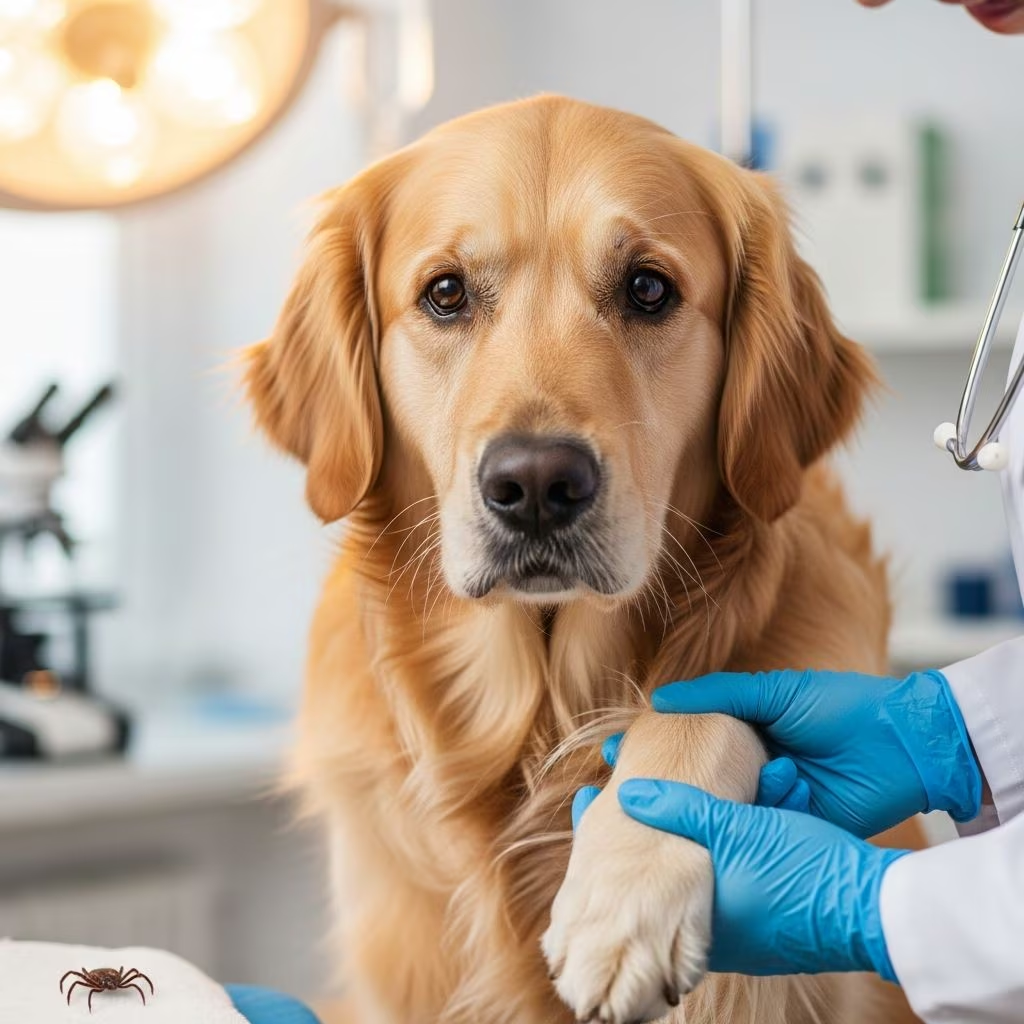
Lyme disease is a serious infectious condition that affects thousands of dogs annually, particularly in regions where infected tick populations are prevalent. This bacterial infection, caused by the spirochete organism known as Borrelia burgdorferi, represents a significant health concern for dog owners. Understanding the transmission, recognition, diagnosis, and treatment of Lyme disease is essential for maintaining your dog’s health and preventing complications.
What is Lyme Disease and How Do Dogs Get Infected?
Lyme disease is an infectious disease caused by bacteria called Borrelia, most commonly transmitted through the bite of an infected deer tick, also known as the black-legged tick. The cycle of infection begins when these ticks feed on infected mice, birds, or deer, becoming carriers of the bacteria themselves. When an infected tick attaches to your dog, the transmission of Borrelia burgdorferi occurs through the tick’s saliva.
The timing of infection is important to understand: dogs generally become infected after a tick has been attached for 1-2 days. This knowledge emphasizes the importance of regular tick checks and prompt removal of any ticks found on your pet. Early detection and removal can significantly reduce the risk of infection.
It’s crucial to note that direct spread of Lyme disease from one dog to another has not been reported, even when infected and uninfected dogs have lived together for extended periods. Similarly, transmission from dogs to humans has not been documented, although people face equal risk if bitten by an infected tick themselves.
Clinical Signs and Symptoms of Lyme Disease
Recognizing the signs of Lyme disease in your dog is critical for early intervention. The symptoms vary in presentation and severity, and many affected dogs may not show signs immediately after infection.
Primary Symptoms
Many dogs affected by Lyme disease are brought to veterinary clinics because they appear to be experiencing generalized pain and have stopped eating. Owners often describe their affected pets as “walking as if they are on eggshells,” indicating significant discomfort. These dogs frequently exhibit the following symptoms:
- Painful lameness that appears suddenly and may shift from one leg to another
- High fever (temperatures exceeding the normal range of 101-102.5°F)
- Swollen joints and limping that may seem to migrate between limbs
- Generalized pain and reluctance to move
- Loss of appetite and cessation of normal eating patterns
Secondary and Systemic Symptoms
If left untreated, lameness may eventually disappear, only to recur weeks or months later. The disease can progress to affect internal organs, particularly the kidneys, leading to what is known as Lyme nephritis or the kidney form of the disease. Non-specific signs that may indicate kidney involvement include:
- Vomiting and nausea
- Lethargy and lack of energy
- Anorexia (complete lack of appetite)
- Unexplained weight loss
The kidney form of Lyme disease is less common but often fatal if not properly managed. Most dogs infected with the Lyme disease organism take two to five months before they show any symptoms, and by this time, the disease may have spread throughout the body, making treatment more challenging.
Diagnosis of Lyme Disease in Dogs
Proper diagnosis is essential for confirming Lyme disease and distinguishing it from other conditions that may present with similar symptoms. Veterinarians employ several diagnostic approaches to identify this condition accurately.
Initial Screening Tests
The primary diagnostic tools for screening Lyme disease include the SNAP 4DX PLUS and Accuplex 4 tests. These screening tests detect antibodies to Borrelia exposure as early as three to five weeks after a dog has been bitten by an infected tick, often before the dog shows signs of illness. These antibody tests are frequently offered as part of comprehensive test kits that also screen for other tick-borne diseases.
Your veterinarian can perform these tests in-clinic using a blood sample, or the sample can be sent to an outside laboratory for more comprehensive analysis. The timing of testing is important: it is recommended to test no earlier than four weeks after a suspected tick bite to allow adequate antibody formation.
Understanding Test Results
A positive screening test indicates that your dog has been exposed to Lyme disease, but importantly, a positive test does not necessarily mean your dog is currently infected or will develop the disease. Test results can be falsely negative if the dog is infected but has not yet formed sufficient antibodies, or if antibodies have declined over time due to a chronic or resolving infection.
If your dog tests positive on initial screening, your veterinarian may recommend repeating the test with a different methodology to confirm the result. A follow-up test called the QC6 test can be performed to measure the numerical antibody level as additional confirmation.
Confirmatory and Additional Testing
Other diagnostic tests, including PCR (polymerase chain reaction), ELISA (enzyme-linked immunosorbent assay), and joint fluid analysis and culture, can be performed with varying degrees of sensitivity, though they are used less frequently. When a positive Lyme disease test is confirmed, your veterinarian will typically recommend general blood and urine tests to assess kidney function and screen for proteinuria (protein in the urine).
The presence of abnormal levels of protein in the urine could signal serious underlying kidney disease, representing a complication of Borrelia infection that requires careful monitoring and management.
Treatment Options for Lyme Disease
Antibiotic Therapy
Because the Lyme spirochete is a bacterium, Lyme disease can be treated with antibiotics. The antibiotic of choice is doxycycline (sold under brand names such as Doxirobe and Vibramycin), which is typically prescribed first. Alternative antibiotics include amoxicillin and azithromycin if doxycycline is not suitable or tolerated.
Standard antibiotic treatment lasts for four weeks. Dogs experiencing joint pain often show significant improvement within one to three days of beginning treatment, which can serve as an additional diagnostic indicator. However, this response to treatment is not 100% accurate, as Lyme disease naturally waxes and wanes over time.
Treatment Decision Considerations
The decision to treat Lyme disease is somewhat controversial within the veterinary community, since many infected or exposed dogs show no signs of illness. Factors that would support treatment include:
- Presence of clinical signs compatible with Lyme disease at the time of testing
- Abnormal levels of protein detected in the urine
- Evidence of kidney involvement or systemic disease
Treatment Effectiveness and Long-term Outcomes
Often the obvious clinical signs of Lyme disease resolve completely with antibiotics. However, it remains unknown whether the bacterial infection is completely eliminated in every patient or how to detect ongoing infection. If your pet is not responding to treatment, or if clinical signs recur during or after treatment, your dog likely has another disease requiring additional diagnostic testing and alternative treatment approaches.
Occasionally, the initial infection may recur, or the pet may become re-infected by being bitten by another infected tick, highlighting the importance of continued tick prevention measures even after successful treatment.
Prevention and Vaccination
Tick Prevention as First Line of Defense
Year-round parasite preventives remain the most effective method for protecting your dog against Lyme disease by preventing tick attachment and transmission. These preventive medications work by repelling or killing ticks before they can transmit disease-causing organisms.
Lyme Disease Vaccination
Vaccination against Lyme disease is recommended for dogs that live in endemic areas or that travel to regions where Lyme disease is prevalent. The Lyme vaccine works best as a safety net for dogs whose risk of Lyme disease is particularly high. The vaccination protocol includes an initial series of two doses given at two to four-week intervals, followed by annual revaccination to maintain immunity.
When combined with year-round parasite preventives, the Lyme vaccine provides the best possible protection against Lyme disease. In areas where Lyme disease is rare, regular parasite preventives alone are typically sufficient protection.
Assessing Your Dog’s Risk Level
To determine whether vaccination is appropriate for your dog, consider the following factors:
- Geographic location and prevalence of Lyme disease in your area
- Your dog’s lifestyle and outdoor exposure, particularly time spent in grassy, wooded, or sandy areas
- Frequency of tick exposure and adherence to parasite prevention schedules
- Travel habits and exposure to endemic regions
Discuss the decision to vaccinate with your veterinarian, who can assess your individual dog’s risk factors and provide personalized recommendations based on lifestyle and geographic considerations.
Co-Infection Risks and Complications
Dogs in areas where Lyme disease is common may be exposed to multiple tick-borne pathogens simultaneously. Co-infection with multiple agents, particularly Borrelia burgdorferi, Anaplasma phagocytophilum, and other Anaplasma species, occurs frequently. Dogs co-infected with two or more tick-borne agents are nearly two times more likely to develop clinical disease than those infected with a single pathogen. This increased risk underscores the importance of aggressive tick control measures for all dogs living in endemic areas.
Frequently Asked Questions About Lyme Disease in Dogs
Q: Can Lyme disease be transmitted directly between dogs or from dogs to people?
A: No, direct transmission of Lyme disease from one dog to another has not been reported, even among dogs living together long-term. Transmission to humans has also not been documented, though people face equal infection risk if bitten by infected ticks.
Q: How long after infection will my dog show symptoms of Lyme disease?
A: Most dogs infected with Lyme disease take two to five months before showing symptoms, which is why early detection through regular tick checks and testing is crucial.
Q: What should I do if my dog tests positive for Lyme disease but shows no signs of illness?
A: A positive test indicates exposure but not necessarily active infection. Your veterinarian should recommend implementing an aggressive tick control program and may suggest monitoring for kidney function through urinalysis and bloodwork.
Q: How long does antibiotic treatment for Lyme disease last?
A: Standard antibiotic treatment for Lyme disease lasts for four weeks using doxycycline as the primary medication choice.
Q: Is the Lyme vaccine necessary if my dog uses year-round tick prevention?
A: In high-risk areas or for dogs with outdoor lifestyles, vaccination provides an additional safety net despite tick prevention. However, in low-risk areas, regular parasite preventives alone may be sufficient.
Q: What are the signs that Lyme disease is affecting my dog’s kidneys?
A: Signs of kidney involvement include vomiting, lethargy, loss of appetite, and unexplained weight loss. Protein in the urine detected through urinalysis indicates potential kidney disease from Lyme infection.
References
- Lyme Disease in Dogs — VCA Animal Hospitals. 2025. https://vcahospitals.com/know-your-pet/lyme-disease-in-dogs
- Testing for Lyme Disease in Dogs — VCA Animal Hospitals. 2025. https://vcahospitals.com/know-your-pet/testing-for-lyme-disease-in-dogs
- Does Your Dog Need the Lyme Vaccine? — VCA Animal Hospitals. 2025. https://vcahospitals.com/shop/articles/does-your-dog-need-the-lyme-vaccine
- Tick-Borne Illness in Companion Animals — Merck Animal Health USA. 2025. https://www.merck-animal-health-usa.com/pet-owners/pet-health/fleas-ticks/five-signs-of-lyme-disease/
- Anaplasmosis in Dogs — VCA Animal Hospitals. 2025. https://vcahospitals.com/know-your-pet/anaplasmosis-in-dogs



