

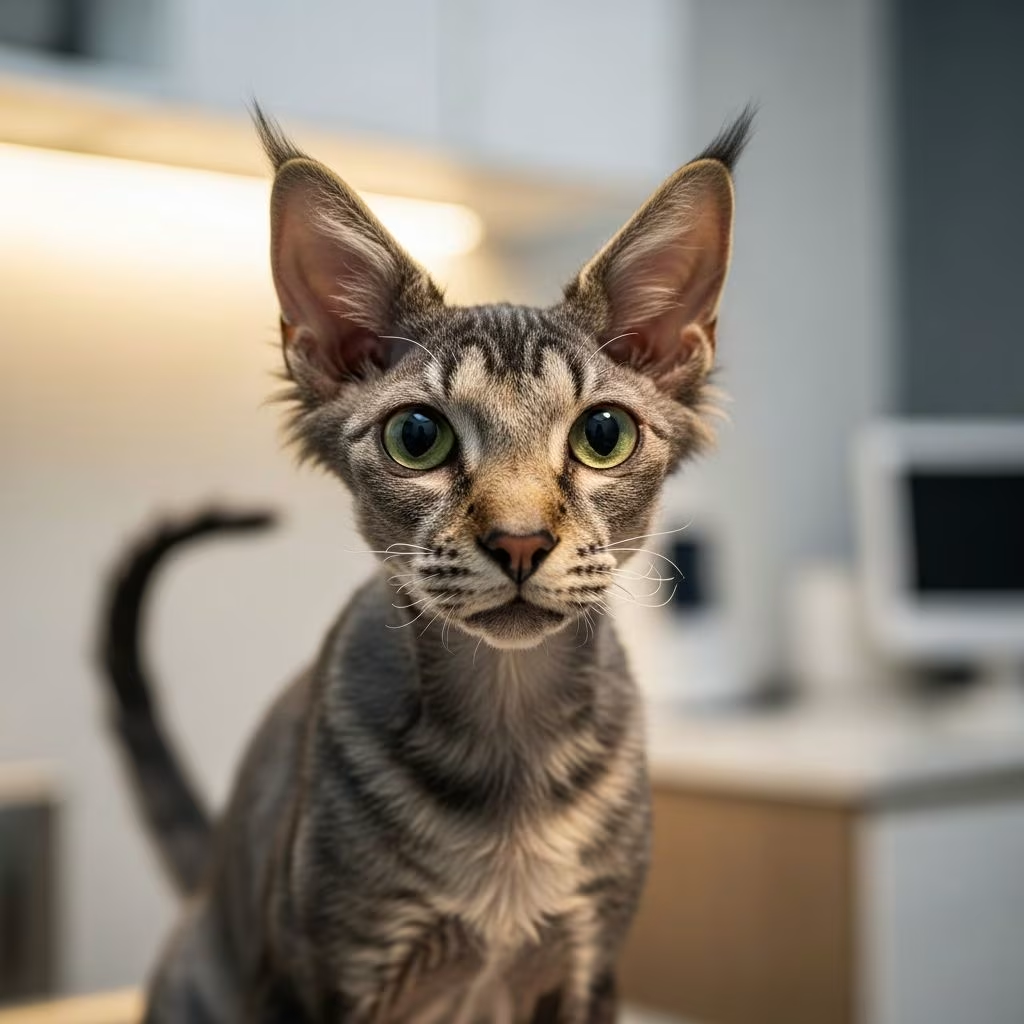
The Lykoi cat, often dubbed the “werewolf cat” for its striking, partially hairless face and grizzled coat, captivates cat enthusiasts with its mythical allure. But for those plagued by cat allergies, a pressing question arises: are these unique felines truly hypoallergenic? This article delves into the science of cat allergies, the Lykoi’s genetic makeup, and practical insights to help you decide if this breed suits your home.
Understanding Cat Allergies and Hypoallergenic Myths
Cat allergies stem primarily from Fel d 1, a potent protein produced in a cat’s salivary glands, skin, and urine. During grooming, cats spread this allergen onto their fur, which then disperses into the air as dander. No cat breed is completely hypoallergenic, but some produce less Fel d 1 or shed minimally, reducing exposure.
- Allergen Production: All cats generate Fel d 1, regardless of coat length or type.
- Shedding Impact: Less shedding means fewer allergen-carrying particles in the environment.
- Genetic Variations: Certain breeds show lower Fel d 1 levels due to selective breeding.
Partially hairless breeds like the Lykoi intrigue allergy sufferers because reduced fur could limit allergen distribution. However, their saliva still carries proteins that transfer during self-grooming.
Origins and Development of the Lykoi Breed
The Lykoi emerged from a natural genetic mutation observed in feral cats in the United States around 2010. Breeders noticed kittens with sparse, roan-patterned coats resembling a werewolf’s mane. Unlike the Sphynx, which lacks hair due to a dominant hairless gene, Lykoi retain guard hairs without an undercoat, creating their signature grizzled look.
| Aspect | Lykoi | Sphynx |
|---|---|---|
| Coat Type | Sparse guard hairs, no undercoat | Completely hairless |
| Genetic Basis | Roan mutation + hairlessness | Dominant hairless gene |
| Hair Regrowth | Cycles seasonally | Permanently minimal |
Recognized by organizations like The Cat Fanciers’ Association (CFA) and The Governing Council of the Cat Fancy (GCCF), Lykoi achieved championship status by 2020. Kittens are born with solid black fur that roans and thins within weeks, revealing the breed’s wolfish mask around eyes, nose, and muzzle.
Distinctive Physical Traits of Lykoi Cats
Lykoi boast a lean, muscular build with medium-length legs and oval paws featuring long toes. Their heads form a modified wedge—slightly longer than wide—with tall, erect ears set high. Large, walnut-shaped eyes slant upward, framed by hairless rims for an alert, inquisitive expression.
- Coat Details: Short to medium guard hairs intermix colored and amelanistic (white) strands, ideally 30-70% roan. Texture feels soft and silky despite a rough visual.
- Mask Feature: Hairless face connecting eyes, nose, muzzle, and chin evokes a mythical creature.
- Body Proportions: Elegant semi-foreign type; tail shorter than body, tapering finely.
Coat density fluctuates with growth cycles—fuller in winter, sparser in summer—sometimes mimicking Sphynx baldness temporarily. All colors are accepted except excessive white, with black roan being most dramatic.
Temperament and Behavior Profile
Beyond looks, Lykoi shine in personality. Highly intelligent and dog-like, they excel at fetch, puzzle toys, and interactive play. Active hunters with strong prey drives, they stalk toys or even owners before pouncing.
These extroverted cats crave human interaction, chirping, trilling, and meowing to communicate. Initially reserved with strangers, they form loyal bonds quickly. Families with children or other pets find them adaptable, though supervision prevents rough play.
- Energy Level: High; daily play sessions essential.
- Affection: Demands attention but not lap-exclusive.
- Vocal Tendencies: Expressive without excess unless bored.
Grooming Needs and Maintenance
Despite partial hairlessness, Lykoi require consistent care. Without an undercoat, loose guard hairs shed noticeably, especially during cycles. Weekly brushing with a rubber mitt removes debris and distributes skin oils.
- Bathing every 1-2 months prevents oil buildup, using cat-safe shampoos.
- Skin checks for dryness or irritation; moisturize as needed.
- Nail trims bi-weekly; ear cleaning monthly.
Diet impacts coat health—high-protein foods support hair regrowth. Lifespan averages 12-15 years with proper care.
Health Considerations for Lykoi Owners
As a new breed, Lykoi enjoy robust health from diverse genetics, avoiding Sphynx issues like hypertrophic cardiomyopathy. Monitor for:
- Skin Conditions: Oiliness leading to acne or infections.
- Dental Health: Brushing prevents plaque.
- Obesity Risk: High activity curbs this.
Veterinarian checkups ensure vaccinations and parasite control, especially given bare skin vulnerabilities.
Are Lykoi Cats Suitable for Allergy Sufferers?
Lykoi are not officially hypoallergenic. Their guard hairs, though sparse, trap and shed Fel d 1 like any coated cat. The hairless mask reduces some dander but doesn’t eliminate salivary allergens licked onto remaining fur. Anecdotal reports vary—some allergic owners tolerate them better than fluffy breeds due to less shedding—but scientific studies on Lykoi specifically are absent.
Compared to Siberian or Balinese cats (known for lower Fel d 1), Lykoi lack that genetic edge. Test exposure via breeder visits; air purifiers and frequent cleaning help regardless.
| Breed | Shedding Level | Fel d 1 Production | Allergy Friendliness |
|---|---|---|---|
| Lykoi | Moderate (cyclical) | Standard | Low-Moderate |
| Sphynx | None | Standard | Moderate |
| Siberian | Low | Low | High |
Living with a Lykoi: Daily Life Insights
Lykoi thrive in active homes, scaling cat trees and chasing laser pointers. Provide vertical spaces and toys for mental stimulation. They adapt to apartments if exercised, but dislike isolation—consider companions for multi-cat households.
Training succeeds with positive reinforcement; they learn tricks like sit or high-five. Nutrition: Premium wet foods mimic prey, supporting muscle tone.
Acquiring a Lykoi Kitten
Seek reputable breeders registered with CFA or TICA. Kittens cost $1,500-$3,000, reflecting rarity. Waitlists are common; prioritize health testing. Shelters occasionally have mixes.
- Questions for Breeders: Parental health records? Socialization practices?
- Adoption Prep: Scratching posts, litter boxes ready.
Frequently Asked Questions (FAQs)
Do Lykoi cats shed a lot?
They shed guard hairs seasonally, less than full-coated breeds but more than Sphynx.
Can Lykoi cats go outside?
Indoor life preferred; sunscreen needed for bare skin in sun.
Are Lykoi good with dogs?
Yes, with proper introductions—their dog-like traits aid compatibility.
How big do Lykoi cats get?
Males 10-12 lbs, females 6-9 lbs; medium build.
Is the Lykoi breed recognized worldwide?
Yes, by major bodies like CFA, GCCF.
References
- Lykoi – The Governing Council of the Cat Fancy — GCCF. Accessed 2026. https://www.gccfcats.org/getting-a-cat/choosing/cat-breeds/lykoi/
- Lykoi – The Cat Fanciers’ Association — CFA. Accessed 2026. https://cfa.org/breed/lykoi/
- Lykoi – Wikipedia — Wikipedia contributors. Accessed 2026. https://en.wikipedia.org/wiki/Lykoi
- 13 Things You Should Know Before Getting a Lykoi Cat — YouTube (My Modern Cat). Accessed 2026. https://www.youtube.com/watch?v=xuk3ru6iysk
- Get to know the Lykoi Cat – a.k.a. the Werewolf Cat — Scrumbles. Accessed 2026. https://scrumbles.co.uk/blogs/news/get-to-know-the-lykoi-cat-a-k-a-the-werewolf-cat



