

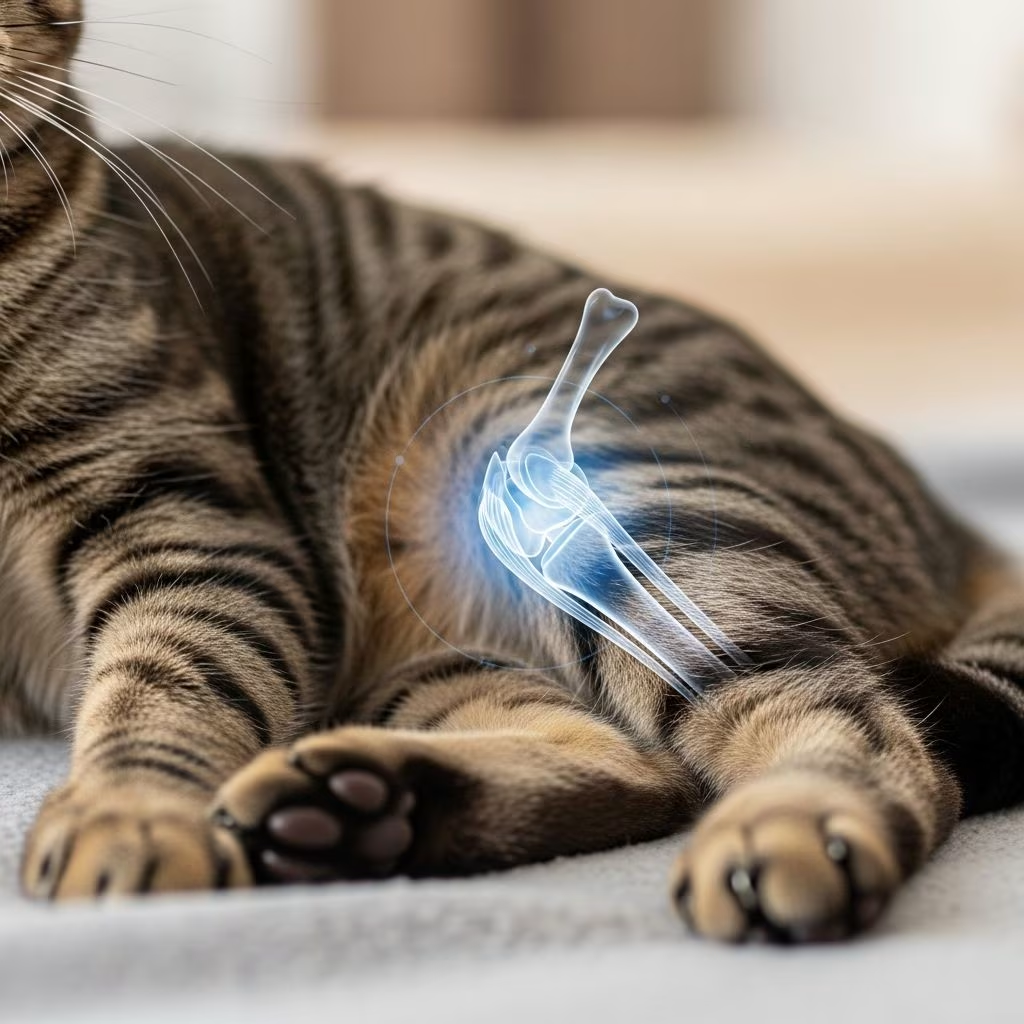
Understanding Luxating Patella in Cats
Luxating patella, also known as patellar luxation, is a condition in which a cat’s kneecap doesn’t stay in the groove in the thigh bone that holds it in place. This condition can lead to significant mobility issues and discomfort for affected felines. The patella is held in place by a groove in the thigh bone called the trochlear groove, and when this groove is too shallow or when structural abnormalities are present, the kneecap can slip out of its proper position.
The kneecap will luxate, or slip out of the groove, during extension of the leg if the trochlear groove is too shallow, if the cat is bowlegged or cow-hocked (meaning the leg bones are excessively curved), or if the point of attachment on the tibia is off center. Most commonly in cats, the patella luxates because the trochlear groove is too shallow, and the direction of luxation is typically towards the inside of the leg.
Causes of Luxating Patella in Cats
Patellar luxation can develop in two primary ways. Most frequently, this condition develops as a kitten grows, resulting from structural or developmental abnormalities in the knee joint architecture. These developmental issues may be congenital, meaning the cat is born with predispositions to the condition.
In other cases, a kneecap can dislocate as the result of physical trauma to the knee joint or leg, including injuries to the bones, patellar ligaments, and tendons. Traumatic luxations are less common but can occur from accidents, falls, or significant impact injuries.
Obesity can also be a contributing factor to patellar luxation, as excess weight places additional stress on the knee joints and supporting structures. Additionally, some cats may have genetic predispositions that make them more susceptible to developing this condition.
Grading System for Patellar Luxation
Veterinarians use a grading system to classify the severity of patellar luxation, which helps determine the appropriate treatment approach. Understanding these grades is essential for cat owners to comprehend their pet’s condition and prognosis.
Grade I Patellar Luxation means the patella can be luxated out of the groove by putting pressure on it, but as soon as the pressure is released, the patella goes back in place. This is the mildest form of the condition.
Grade II Patellar Luxation means the patella intermittently pops out on its own and remains out until the leg is hyperextended and rotated so the patella returns to the groove. The kneecap luxates spontaneously but generally stays in its normal position.
Grade III Patellar Luxation involves the patella being permanently luxated but can be moved back into place with manipulation. The kneecap is out of place most or all of the time.
Grade IV Patellar Luxation is the most severe grade, in which the patella is permanently luxated and cannot be moved back into place. In general, the higher the grade, the more severe the clinical signs the cat will experience.
Clinical Signs and Symptoms
The symptoms of luxating patella in cats vary in type and severity depending on how far the condition has progressed. Early recognition of these signs is important for timely intervention.
Grade I and II Symptoms: Cats with grade 1 patellar luxation typically show few to no symptoms, since their kneecap is in the right place most of the time. With grade 2 luxation, because the patella slips out of place on its own but goes back in easily and generally stays in place, the most common clinical sign is intermittent limping or refusal to bear weight on the affected leg(s). Cats may occasionally hop or skip when walking.
Grade III and IV Symptoms: With grades 3 and 4 luxation, the kneecap is out of place most or all of the time. As a result, signs of instability are more severe and persistent. Common signs include:
- Persistent lameness
- Difficulty or inability to run or jump normally
- Spending less time in favorite high places
- Spending less time grooming, resulting in poor coat condition
- Signs of pain when certain areas of the body are touched
- Inability to bear weight on the affected leg
There may also be signs of arthritic changes to the knee joint, such as swelling, pain, or an abnormally large and knobby shape to the joint. A cat with a grade 3 or 4 patellar luxation won’t bear weight on the affected leg most or all of the time.
It’s important to note that attempting treatment at home before seeking veterinary care for these symptoms is not advised. There are many health issues that can cause these symptoms, some more serious than others. Delaying a vet visit increases the time before proper treatment can be given, potentially allowing the condition to worsen.
Treatment Options for Luxating Patella
Treatment options vary depending on how severe the patellar luxation is. The goal of treatment is to manage pain, prevent progression, and restore normal joint function when possible.
Conservative Management
Minor cases that don’t cause significant lameness may not require treatment at all or may be managed with conservative approaches. These include:
- Exercise restriction to limit stress on the affected joint
- Physical therapy to strengthen supporting muscles
- Medication for pain and inflammation management
- Weight management, particularly important for overweight cats
- Prescription anti-inflammatories and antibody therapy
- Joint supplements to support cartilage health
- Therapeutic mobility diets formulated to support joint health
Low-grade patellar luxations in cats may be managed with supportive care, such as medication, physical therapy, and activity restriction. However, veterinarians generally recommend earlier rather than later surgical intervention for most cats with patellar luxation to minimize the likelihood that arthritis will develop.
Surgical Treatment
A luxating patella can be surgically corrected, especially if the patella luxates frequently. With mild Grade I luxation, surgery may not be necessary. For most cats with patellar luxation, surgery is recommended sooner rather than later to minimize the likelihood that arthritis will develop. The higher the grade of luxation, the sooner the surgery should be performed.
Surgery is typically recommended when the luxation is severe enough to cause persistent lameness or limping. For grades three and four, surgery is usually recommended to prevent chronic lameness and potential inability to use the affected leg.
Surgical Techniques
If surgery is performed, the objective will be to permanently restore the patella to its proper position in the femoral groove and adjust the tension of the tissues that are supposed to be holding the patella in place. Common surgical approaches include:
Trochleoplasty: This procedure involves deepening or reshaping the trochlear groove to provide a better track for the patella to follow, making it less likely to slip out of place.
Tibial Crest Transposition: The attachment point on the tibia may be repositioned to correct any off-center alignment that contributes to luxation.
Soft Tissue Correction: Altering the inappropriate tension on the patella by releasing or cutting tight connective tissue that is pulling the patella out of place, and tightening the stretched tissues that are trying to pull it into the correct position (imbrication). This type of surgery is often used in addition to one of the above interventions to help prevent the patella from luxating again.
Implant Placement: Placing an implant on the inside of the knee, making the patella unable to slip over it.
Surgical Success and Prognosis
Patellar luxation surgery in cats is usually very successful, with little chance of recurrence in grades 1–3. In cats with grades one, two, and three luxating patellas, surgery is usually very successful, with little chance of recurrence. There is an approximately 50 percent chance of recurrence with a grade 4 patellar luxation.
After surgery, recovery is usually rapid, especially with appropriate pain management. Patients are typically kept in the hospital overnight and discharged the day after surgery. Postoperative activity is limited to strict crate rest for 8 weeks after surgery, with recheck examinations performed at 2, 6, and 12 weeks.
Post-Operative Care and Recovery
In the weeks after surgery, additional treatment is usually recommended during recovery. This may include:
- Prescription anti-inflammatories and pain relief medications
- Hot and cold compresses to manage swelling and discomfort
- Maintaining a relaxed environment to promote healing
- Minimal, controlled physical activity as directed by your veterinarian
- Physical therapy and rehabilitation to improve recovery
Your veterinarian may also recommend prescription anti-inflammatories, antibody therapy (Solensia®), joint supplements, and therapeutic mobility diets that may slow the progression of arthritis and help control any discomfort. Weight reduction is also recommended for overweight cats.
Prevention and Long-Term Management
While some cases of patellar luxation are congenital and cannot be prevented, there are steps cat owners can take to minimize risk and manage the condition:
- Maintain a healthy weight to reduce stress on joints
- Provide appropriate exercise that doesn’t overload the knees
- Ensure proper nutrition with joint-supporting supplements
- Regular veterinary check-ups to monitor for early signs
- Avoid high-impact activities if your cat has early-stage luxation
Frequently Asked Questions
Q: Can a cat’s luxating patella heal on its own?
A: Low-grade patellar luxations in cats may be managed with supportive care, such as medication, physical therapy, and activity restriction. However, a severe luxating patella needs surgical treatment to keep the patella in its proper position. While some mild cases may not progress, surgical intervention is often recommended to prevent arthritis development and future complications.
Q: What is the best treatment for a luxating patella in cats?
A: The best treatment for a luxating patella depends on the individual cat and the severity of the condition. Minor cases sometimes do well either without treatment or with conservative management, such as physical therapy, medication, and controlling physical activity. For severe luxations, surgical treatment is warranted and recommended sooner rather than later to minimize arthritis development.
Q: Is patellar luxation surgery successful in cats?
A: Yes, patellar luxation surgery in cats is usually very successful. Surgery is very successful in grades 1–3, with little chance of recurrence. Grade 4 luxations have approximately a 50 percent chance of recurrence, but surgical intervention still provides the best opportunity for improved mobility and pain relief.
Q: How long is recovery after patellar luxation surgery?
A: After surgery, recovery is usually rapid, especially with appropriate pain management. Patients are typically kept in the hospital overnight and discharged the day after surgery. Postoperative activity is limited to strict crate rest for 8 weeks after surgery, with recheck examinations performed at 2, 6, and 12 weeks.
Q: Can patellar luxation in cats be prevented?
A: While congenital cases cannot be prevented, maintaining a healthy weight, providing appropriate exercise, ensuring proper nutrition, and regular veterinary check-ups can help minimize risk and manage the condition effectively.
References
- How to treat luxating patella in cats — Vetster. 2024. https://vetster.com/en/wellness/how-to-treat-luxating-patella-in-cats
- Luxating Patella in Cats — VCA Animal Hospitals. 2024. https://vcahospitals.com/know-your-pet/luxating-patella-in-cats
- Luxating Patella — Cornell University College of Veterinary Medicine. 2024. https://www.vet.cornell.edu/departments-centers-and-institutes/cornell-feline-health-center/health-information/feline-health-topics/luxating-patella
- Surgical Correction of Patellar Luxation in Cats — Today’s Veterinary Practice. 2024. https://todaysveterinarypractice.com/orthopedics/surgical-correction-of-patellar-luxation-in-cats/
- Clinical signs and results of treatment in cats with patellar luxation — National Center for Biotechnology Information (NCBI). 2006. https://pubmed.ncbi.nlm.nih.gov/16649941/
- Patellar Luxation in Dogs and Cats – Musculoskeletal System — Merck Veterinary Manual. 2024. https://www.merckvetmanual.com/musculoskeletal-system/arthropathies-and-related-disorders-in-small-animals/patellar-luxation-in-dogs-and-cats



