

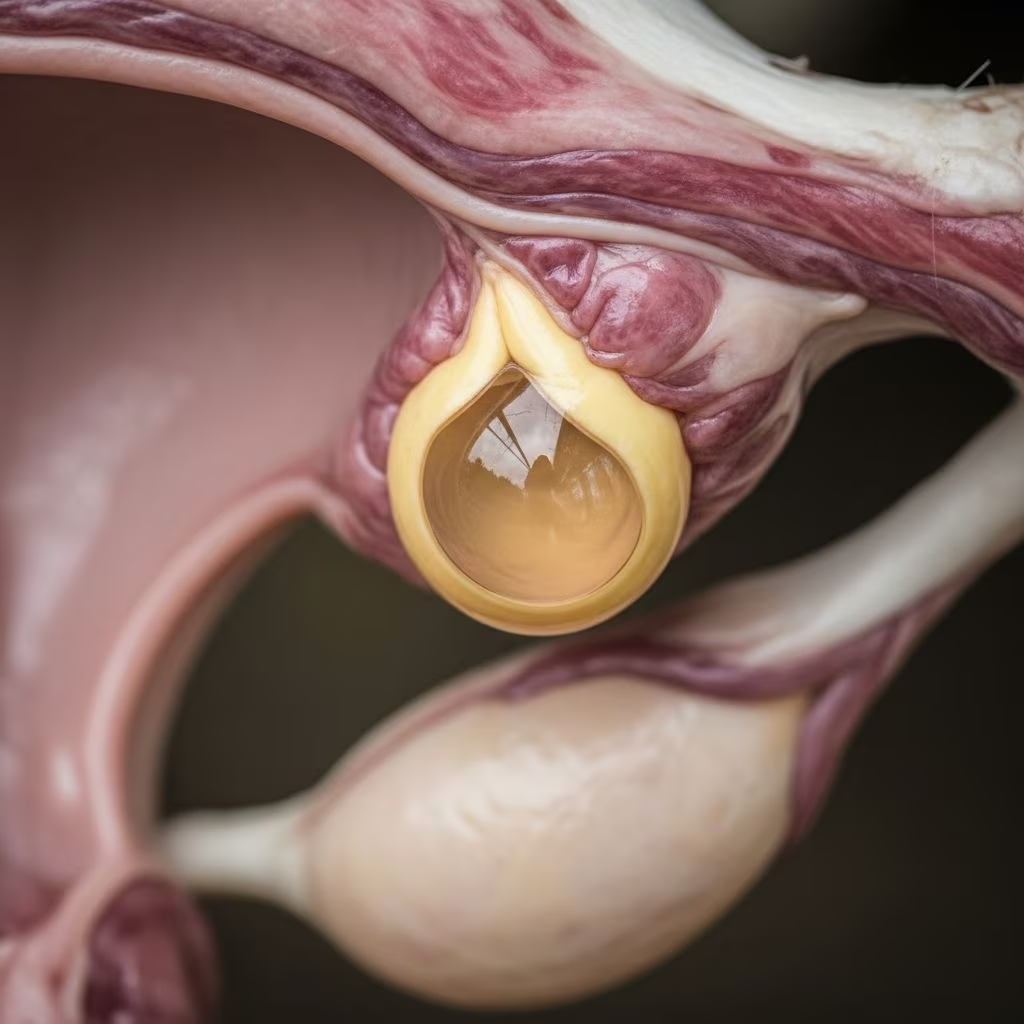
Luteal cysts represent a significant reproductive disorder in dairy cattle, disrupting normal ovulation and extending calving-to-conception intervals by up to 33 days on average. These fluid-filled ovarian structures greater than 25 mm in diameter persist beyond 10 days, often leading to anoestrus or irregular heat cycles that delay breeding and increase culling risks.
Defining Luteal Ovarian Structures
In bovine reproduction, luteal cysts differ from follicular cysts and cystic corpora lutea. While cystic corpora lutea form post-ovulation with small cavities under 20 mm and do not impair fertility, true luteal cysts feature thick walls over 3 mm with gray echogenic tissue on ultrasound, producing progesterone that suppresses estrus in 62-85% of cases. This luteinization without ovulation creates a hormonal imbalance, mimicking a functional corpus luteum but failing to support pregnancy.
Prevalence peaks in high-producing dairy breeds post-calving, affecting 6-19% of cows and contributing to more services per conception and lower overall herd fertility. Early detection during fresh cow exams is crucial to mitigate these impacts.
Root Causes and Risk Factors
The etiology of luteal cysts involves multifactorial triggers, including metabolic stress from negative energy balance in early lactation, where high milk yields deplete body reserves. This disrupts the hypothalamic-pituitary-ovarian axis, leading to excessive luteinizing hormone (LH) surges that cause incomplete ovulation and cyst formation.
- Nutritional imbalances: Low progesterone environments exacerbate cyst persistence, as insufficient proestrus progesterone fails to stabilize follicles.
- Genetic predisposition: Certain dairy lines show higher incidence due to selection for milk production over fertility traits.
- Management stressors: Heat stress, poor body condition scores below 2.5, and abrupt dietary shifts post-calving heighten risk.
- Hormonal factors: Prolonged anoestrus or nymphomania signals cyst activity, with some cows displaying masculinized behaviors like bellowing or pawing.
Research highlights that cows with luteal cysts often have elevated progesterone levels, confirming their luteal nature via milk testing or blood assays.
Clinical Manifestations and Economic Impact
Affected cows typically appear normal externally but exhibit prolonged interestrus intervals or irregular heats. Nymphomania occurs in early stages, while chronic cases lead to anoestrus, delaying first service by 13-49 days. Conception rates drop post-treatment, with cystic cows needing 1.5-2 times more inseminations.
| Impact Metric | Average Delay/Reduction | Source |
|---|---|---|
| Time to First Conception | 13-49 days | |
| Calving-Conception Interval | 33 days increase | |
| Services per Conception | 1.5-2x higher | |
| Culling Risk | Elevated by 20-30% |
Economically, each cystic cow costs $200-500 in lost productivity, semen, and labor, underscoring the need for proactive herd health programs.
Accurate Diagnosis Techniques
Diagnosis relies on transrectal palpation combined with ultrasonography for 75-95% accuracy. Luteal cysts show wall thickness >3 mm, echogenic luteal tissue, and progesterone >1 ng/mL, distinguishing them from thin-walled follicular cysts (≤3 mm, anechogenic).
- Palpation: Detects structures >25 mm persisting >10 days with flaccid uterus and no active corpus luteum elsewhere.
- Ultrasound: Key for wall evaluation; gray echotexture confirms luteinization.
- Progesterone assay: Milk or plasma levels >3 ng/mL indicate luteal activity.
Differentiating cyst types guides therapy: luteal cysts respond best to luteolytics, while follicular ones favor ovulatory hormones.
Treatment Protocols: Tailored Approaches
Treatment aims to lyse the cyst, restore cyclicity, and achieve timely insemination. Prostaglandin F2α (PGF2α, e.g., dinoprost) at luteolytic doses induces estrus in 3-5 days for luteal cysts, with 72-77% rates and 57% conception. GnRH (e.g., buserelin) induces ovulation but yields lower conception (47%) in luteal cases due to persistent luteal tissue.
For unresolved cysts near 50 days in milk (DIM), timed AI protocols excel:
- Ovsynch: GnRH day 0, PGF2α day 7, GnRH day 9, AI day 10. Effective for both cyst types.
- Ovsynch + Progesterone Device: Add CIDR insertion day 0, removal day 7; boosts success in low-progesterone cows by mimicking normal cycles.
Studies show dinoprost superior for luteal cysts (CCI 120 days vs. 125 for GnRH), while GnRH suits undifferentiated cases. Repeat exams ensure resolution before breeding.
Prevention Strategies for Herd Health
Proactive management minimizes incidence:
- Body condition monitoring: Maintain scores 2.75-3.25 at calving via balanced rations.
- Reproductive tracking: Routine vet checks at 14-21 DIM detect early cysts.
- Nutritional optimization: Anionic salts pre-calving, adequate fiber to support rumen health and hormone balance.
- Breeding protocols: Presynch-Ovsynch for high-risk cows shortens intervals.
- Genetic selection: Choose sires with high daughter fertility indices.
Herds with structured programs see 50% cyst reductions, improving overall fertility.
Advanced Insights from Research
Recent studies reveal COD alters ovarian gene expression, impairing follicle function and prolonging cyst persistence. Ultrasonography accuracy improves with experienced operators, emphasizing farm vet training. Combined therapies (GnRH + PGF) yield 77% estrus rates across types.
Frequently Asked Questions (FAQs)
What distinguishes luteal cysts from follicular cysts?
Luteal cysts have thick (>3 mm), echogenic walls and high progesterone; follicular cysts are thin-walled and anechogenic with low progesterone.
How soon after treatment can a cow be bred?
Estrus follows PGF2α in 3-5 days; confirm resolution via palpation before insemination.
Can luteal cysts resolve spontaneously?
Some regress in 10-20 days, but most persist without intervention, risking prolonged infertility.
Is ultrasound essential for diagnosis?
It boosts accuracy to 75-95% over palpation alone, enabling type-specific treatment.
What role does nutrition play in prevention?
Avoiding negative energy balance post-calving reduces LH surges that trigger cysts.
Future Directions in Management
Emerging tools like automated progesterone monitoring and AI-driven ultrasound promise earlier detection. Selective breeding and precision feeding could further curb incidence, enhancing dairy sustainability.
References
- Cystic Ovary Disease and Cystic Corpus Luteum in Cows — MSD Veterinary Manual. 2023. https://www.msdvetmanual.com/reproductive-system/cystic-ovary-disease/cystic-ovary-disease-and-cystic-corpus-luteum-in-cows
- Reproductive performance in dairy cows with cystic ovarian disease — PMC/NCBI. 2018-07-26. https://pmc.ncbi.nlm.nih.gov/articles/PMC6068299/
- Bovine – Cystic Ovaries in Dairy Cattle — MWVetServices. 2023. https://www.mwvets.com/bovine-cystic-ovaries
- Cystic Ovarian Disease in Cows — Partners In Reproduction. 2023. https://www.partners-in-reproduction.com/diseases-disorders/estrus-disorders/cystic-ovarian-disease/
- Cystic Ovaries in Dairy Cows — Virginia Tech (VTechWorks). 2020. https://vtechworks.lib.vt.edu/bitstreams/158a2404-e660-4587-9f91-0914028f7080/download



