

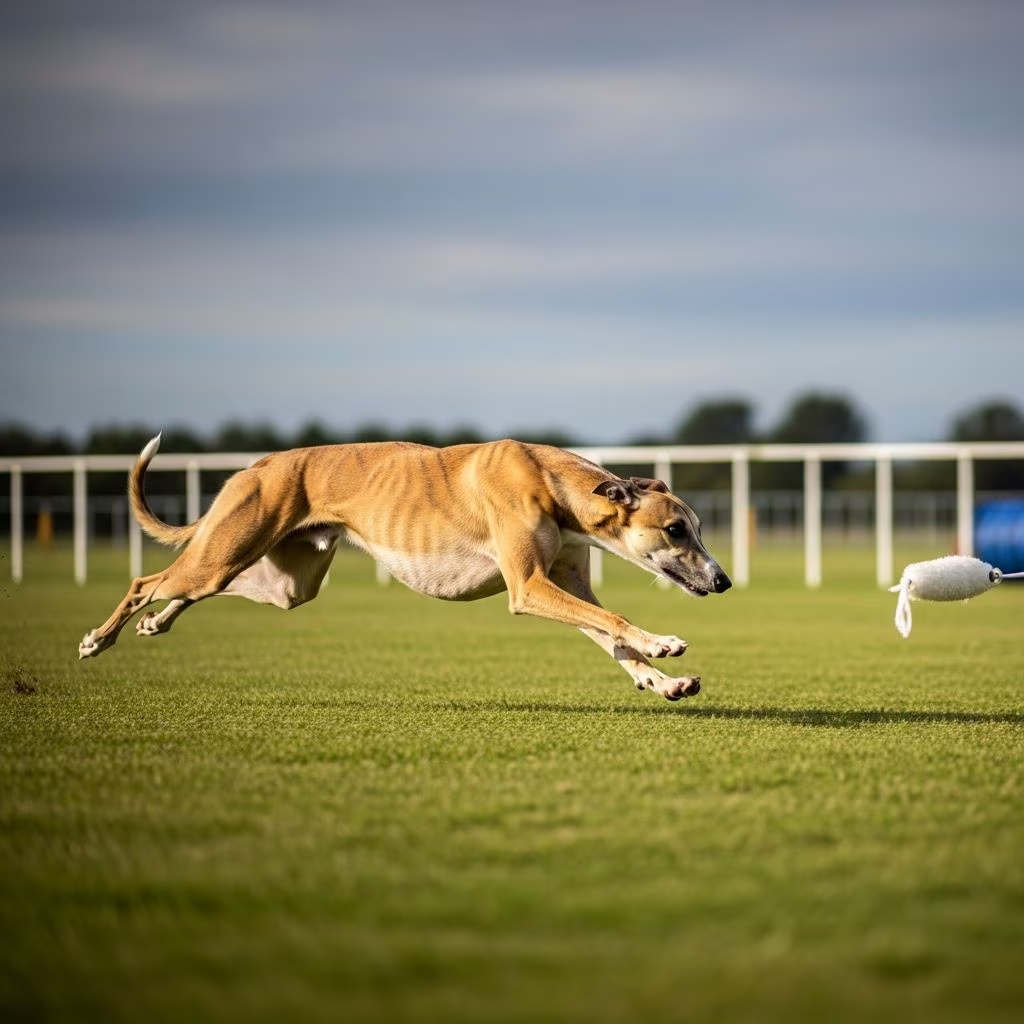
Imagine your dog sprinting across an open field, eyes locked on a fluttering lure zipping erratically ahead, every muscle firing in perfect harmony with its ancient prey drive. Lure coursing recreates this primal thrill in a controlled, safe environment, offering dogs explosive exercise while forging deeper bonds with their owners. This sport isn’t just for elite competitors—it’s accessible fun that boosts physical health, mental sharpness, and pure excitement for pets of various backgrounds.
The Thrill of the Chase: What Makes Lure Coursing Special
At its core, lure coursing involves dogs pursuing a mechanical lure—often a white plastic bag or fabric flag—pulled by a motorized system along a zigzag course. Courses typically span 600 to 1,000 yards, demanding bursts of speed, sharp turns, and endurance that mimic real-world hunting scenarios. Unlike straight-line races, the lure’s unpredictable path challenges agility and focus, making each run a dynamic adventure.
This activity satisfies deep-seated instincts, particularly in breeds bred for sight hunting. Participants report dogs emerging happier, more relaxed, and with improved overall behavior after sessions. It’s low-impact on joints compared to repetitive fetch, yet high-reward in burnout of excess energy.
Ideal Breeds and Who Can Join the Fun
While sighthounds like Greyhounds, Whippets, and Salukis dominate due to their speed and vision, lure coursing welcomes all healthy dogs. The American Kennel Club’s Coursing Ability Test (CAT) opens doors for mixed breeds and non-hounds, focusing on completion rather than competition.
| Breed Group | Top Performers | Why They Excel |
|---|---|---|
| Sighthounds | Greyhound, Whippet, Borzoi | Superior speed (up to 45 mph), keen eyesight, lean build |
| Herding | Border Collie, Australian Shepherd | Agility, stamina, quick directional changes |
| Mixed/Other | Any fit dog via CAT | Fun-focused, no breed restrictions |
Even brachycephalic breeds or seniors can participate in modified, shorter runs at casual events, emphasizing enjoyment over titles.
Setting Up Your Own Lure Coursing System
Creating a backyard or field setup is straightforward and budget-friendly. Essential components include:
- Motor and Line: A 12-volt reel or continuous-loop pulley system (100-300 yards of sturdy cord).
- Lure: Lightweight plastic bag, sock with squeaker, or fur-like fabric for visual/auditory appeal.
- Course Design: Pulley posts or trees spaced 50-100 feet apart, creating 4-8 turns over 200-500 yards.
- Safety Gear: Flat collars (no choke/martingale during runs), first-aid kit, water station.
Start simple: Tie a toy to a fishing reel and pull manually. Progress to electric winches for realism. Detailed guides emphasize even tension to prevent snaps and clear runways free of obstacles. Always scout for hazards like holes or fences.
Training Your Dog for Lure Coursing Success
Preparation builds confidence and prevents frustration. Follow this phased approach:
- Assess Drive: Test interest with a dragged toy. High-chase dogs dive in; low-drive ones need lure/reward conditioning.
- Build Fitness: Incorporate 20-30 second sprints, hill runs, and weave poles 4-6 weeks pre-event. Aim for 3 sessions weekly.
- Introduce Lure: Use treats to teach following a string-pulled item, fading food to hand signals.
- Practice Runs: Short 100-yard bursts, gradually increasing distance and speed.
- Socialize: Expose to crowds, other dogs, and handlers for calm competition demeanor.
Sighthounds often need minimal coaxing—their instinct kicks in instantly. For others, positive reinforcement ensures enthusiasm without pressure.
Safety First: Protecting Your Dog During Runs
Veterinarians stress pre-participation exams to rule out heart issues, joint problems, or obesity. Warm up with trots and stretches; cool down with walks to avoid cramps. Monitor for dehydration—offer ice chips mid-event.
- Run on soft grass or turf; avoid concrete.
- Limit to 2-3 runs per day, with 30-minute rests.
- Inspect equipment pre-run for frays or tangles.
- Know emergency signs: limping, excessive panting, disorientation.
Clubs enforce rules like single-dog runs for novices, escalating to pairs for veterans, ensuring fair play.
Navigating Competitions and Titles
Organizations like AKC and ASFA host trials with escalating achievements.
| Title | Requirements | Stakes |
|---|---|---|
| Junior Courser (JC) | Solo run completion | Open to all |
| Qualified Courser (QC) | Clean paired run | Single/Breed |
| Senior Courser (SC) | 4 qual scores, 3 judges | Open/Veteran |
| Master Courser (MC) | SC + 25 qual scores | All |
| Field Champion (FC) | 15 points incl. majors | Specials |
CAT offers breed-neutral fun: 100-yard single runs for a ‘Coursing Ability’ title after 4 passes. Local clubs provide non-competitive ‘fun runs’ for testing waters.
Benefits Beyond the Track: Health and Happiness Gains
Regular coursing torches 500-800 calories per session, aiding weight control. Mentally, it reduces anxiety by channeling prey drive productively. Owners note stronger recall, calmer homes, and enhanced trust post-training.
For seniors or rehab dogs, slower lures provide gentle cardio. Studies on canine athletics link such sports to longer lifespans via maintained muscle mass and cardiovascular health.
Finding Events and Communities Near You
Search AKC’s event calendar or ASFA directories for trials. Performance centers like Fitdog offer classes such as ‘Chase & Capture’—inclusive, low-stress intros for all breeds. Join Facebook groups or Reddit for tips from veterans.
Hosting a private meetup? Invite neighbors for group safety and shared costs on equipment.
Common Challenges and Pro Tips
Challenge: Dog loses interest mid-run. Solution: Vary lure speed/scent; end on high notes with jackpots.
Challenge: Overexcitement leads to recalls. Solution: Crate breaks, routine desensitization.
Pro Tip: Film runs to analyze gait/form. Hydrate handlers too—it’s a team sport!
Frequently Asked Questions (FAQs)
What age can dogs start lure coursing?
Puppies from 6-12 months with vet approval; focus on fun, not competition until maturity.
Is special equipment mandatory?
No—DIY works for practice. Clubs provide for events.
Can small dogs participate?
Yes! Shorter courses suit toys like Italian Greyhounds.
How often should dogs train?
2-3 times weekly, 20-45 minutes, with rest days.
What’s the cost to get started?
$50-200 for basic setup; events $20-40 entry.
Lure coursing transforms restless pups into focused athletes, blending instinct with modern safety. Whether chasing titles or backyard joy, it’s a win for every wag.
References
- Lure Coursing Field Training Manual: The Basics — Dogwise/Pat Bennett. N/A. https://www.dogwise.com/lure-coursing-field-training-manual-the-basics-of-running-dogs-on-the-field-and-using-the-equipment/
- Beginner’s Guide to Lure Coursing — Fitdog. N/A. https://www.fitdog.com/blog/lure-coursing-guide/
- Vet Approved Guide to Lure Coursing for Dogs — Ask A Vet. 2025. https://askavet.com/blogs/news/vet-approved-guide-to-lure-coursing-for-dogs-training-safety-best-breeds-2025-%F0%9F%90%B6
- Step-By-Step Guide to Lure/Reward Training — 3 Lost Dogs. N/A. https://www.3lostdogs.com/dog-training-101-ep-2-step-by-step-guide-to-lure-reward-training/
- Getting Started in Lure Coursing — American Kennel Club (AKC). N/A. https://www.akc.org/sports/coursing/lure-coursing/getting-started/
- A Beginner’s Guide to Lure Coursing — American Sighthound Field Association (ASFA). 2006-03. https://www.asfa.org/ASFABeginnersGuide06-03.pdf



