
Lung Tumors In Dogs And Cats: 3 Types, Signs, And Treatments
Comprehensive guide to recognizing, diagnosing, and managing respiratory neoplasms in canine and feline patients for better outcomes.
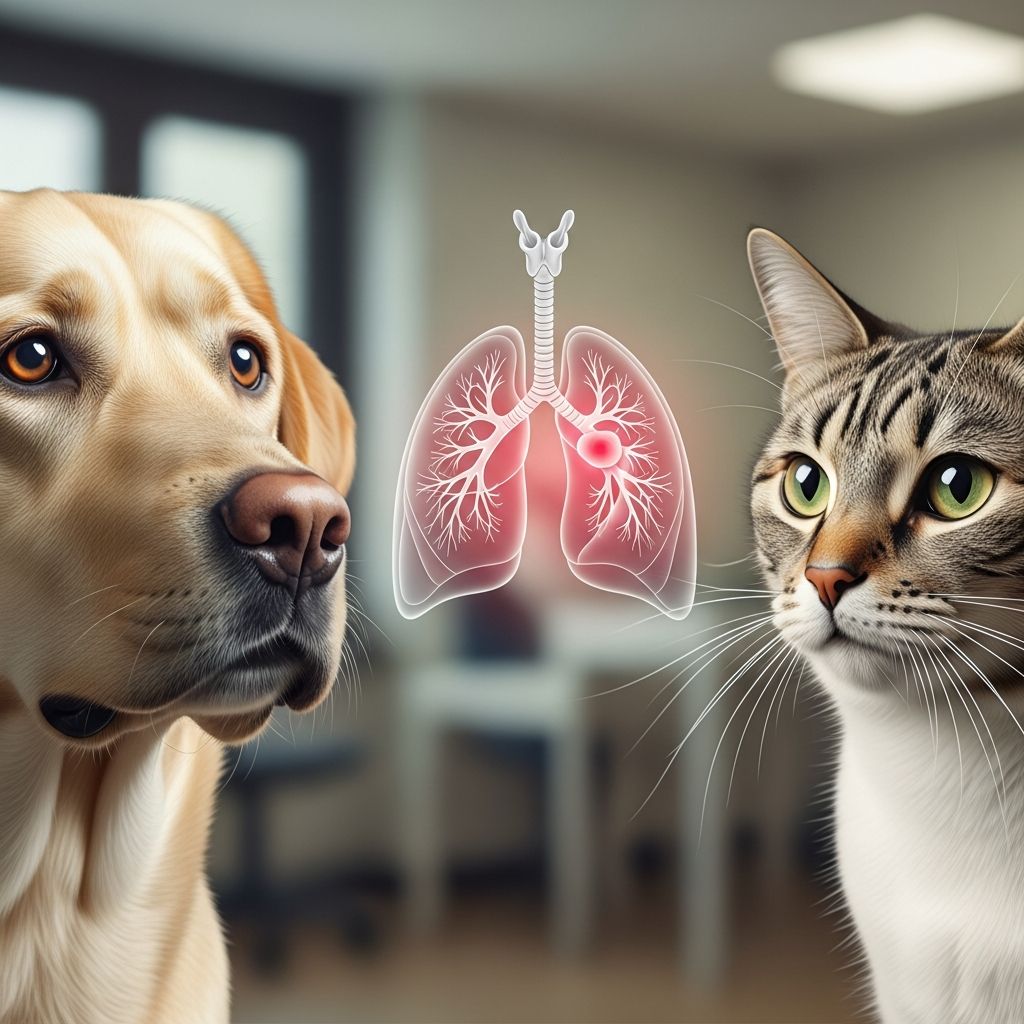
Primary lung tumors represent a rare but serious challenge in veterinary medicine, comprising about 1% of all canine cancers and even fewer in cats. These malignancies, predominantly adenocarcinomas, affect older animals and demand prompt recognition through clinical signs like coughing and lethargy. Early diagnosis via imaging and biopsy can guide surgical resection or targeted therapies, potentially extending survival.
Understanding the Scope of Respiratory Neoplasms
Respiratory system cancers in small animals primarily involve the lungs, bronchi, and mediastinum. In dogs, the average age at diagnosis falls between 9 and 11 years, with no clear breed or sex bias. Cats tend to present slightly later, around 11-12 years. Most lesions are malignant, originating as solitary masses that may progress to metastasis within the thorax or distant sites.
These tumors disrupt normal breathing by obstructing airways, causing fluid buildup, or invading lung tissue. While primary lung cancers are uncommon, secondary metastases from other organs frequently target the pulmonary parenchyma, complicating differentiation.
Common Types of Pulmonary Malignancies
- Adenocarcinoma: The dominant form in both species, often appearing as large, solitary nodules with potential for cavitation or consolidation.
- Squamous Cell Carcinoma: Less frequent, linked to bronchial origins and associated with syndromes like lung-digit metastasis in cats.
- Large Cell Carcinoma and Others: Rare variants that contribute to diffuse infiltrative patterns on imaging.
Beyond parenchymal tumors, mediastinal neoplasms such as thymoma and lymphoma predominate, especially in young FeLV-positive cats presenting with cranial vena cava syndrome.
Clinical Manifestations and Paraneoplastic Effects
Owners often notice nonspecific respiratory distress, including dyspnea, tachypnea, and productive cough. Weight loss, exercise intolerance, and orthopnea signal advanced disease. Radiographic findings reveal soft-tissue opacities, lobar atelectasis, or structured interstitial patterns.
Paraneoplastic phenomena add diagnostic clues:
- Hypertrophic osteopathy in dogs, manifesting as limb lameness resolvable post-lobectomy.
- Hypercalcemia of malignancy, particularly in feline cases.
- Lung-digit syndrome in cats, with digital metastases causing paw pain.
| Symptom | Dogs | Cats |
|---|---|---|
| Coughing | Common, dry or productive | Frequent, variable |
| Dyspnea | Progressive | Acute with effusions |
| Lameness | HO-associated | Lung-digit syndrome |
| Effusions | Pleural, occasional | Common in mediastinal |
Diagnostic Approaches: From Imaging to Cytology
Thoracic radiography remains the cornerstone, identifying masses, consolidations, or hilar enlargement. Advanced cross-sectional imaging like CT excels in staging, delineating tumor margins, and detecting occult metastases, influencing surgical candidacy.
Ultrasound-guided fine-needle aspiration (FNA) offers bedside sampling, though sensitivity for neoplasia hovers at 60-65% due to sampling errors. Contrast-enhanced ultrasound (CEUS) differentiates neoplastic from inflammatory lesions by inhomogeneous enhancement patterns in malignancies.
CT-guided biopsies yield higher diagnostic yields: 92% accuracy overall, 80-91% neoplasia sensitivity, but carry risks like pneumothorax (27%) and hemorrhage (30%). Fluoroscopy or bronchoscopy aids in peripheral or endobronchial lesions, with minimal complications in select cases.
Immunohistochemical Confirmation
Definitive typing relies on markers: Surfactant Protein A (SP-A) shows high sensitivity/specificity for primary lung epithelial tumors, outperforming TTF-1 or Napsin A when combined. These distinguish primaries from metastases, crucial for prognosis.
Treatment Modalities for Respiratory Tumors
Surgical lobectomy offers the best chance for cure in solitary, non-metastatic primaries, with median survival times exceeding 300 days in some cohorts. Stereotactic body radiation therapy (SBRT) emerges as a nonsurgical alternative, achieving 343-day MST in canine pulmonary carcinomas, with 38% one-year survival.
Adjuvant chemotherapy protocols like vinorelbine/cisplatin demonstrate antitumor effects in non-resectable cases, though data remains limited. Targeted therapies exploit mutations like HER2V659E, showing promise in cell lines sensitive to inhibitors such as neratinib.
For pleural effusions from mesothelioma or carcinomatosis, palliative thoracocentesis, intracavitary chemotherapy, or cytoreductive surgery provide symptomatic relief.
Prognostic Factors Table
| Factor | Favorable | Unfavorable |
|---|---|---|
| Tumor Size | Solitary <5cm | Multiple/large |
| Metastasis | None | Thoracic/distant |
| Histology | Adenocarcinoma | Mesothelioma |
| Treatment | Lobectomy/SBRT | Palliative only |
Mediastinal Mass Differentials and Management
Anterior mediastinal enlargements often stem from thymoma (myasthenia gravis paraneoplastic link) or lymphoma, the latter prevalent in young cats. Signs include regurgitation from megaesophagus or edema from vascular compression. Multimodal therapy—surgery, radiation, chemotherapy—yields variable success, better for encapsulated thymomas.
FAQs on Lung Tumors in Pets
What causes lung cancer in dogs and cats?
No definitive etiology exists, unlike smoking-related human cases. Genetic predispositions and environmental factors are suspected but unproven.
How is lung cancer diagnosed in pets?
Combining radiographs, CT, ultrasound-guided FNA, and biopsies provides the highest accuracy. IHC confirms primary vs. metastatic origin.
Can lung tumors be cured?
Yes, in early-stage solitary primaries via lobectomy, with some dogs surviving over a year. Advanced cases focus on palliation.
What is the survival time for cats with pulmonary adenocarcinoma?
Variable; surgical cases may exceed 6 months, but metastases shorten prognosis significantly.
Are there new treatments on the horizon?
SBRT and mutation-targeted inhibitors like those for HER2 show encouraging results in recent studies.
Preventive Monitoring and Owner Education
Routine thoracic imaging in senior pets with respiratory signs facilitates early detection. Owners should watch for subtle changes like reduced stamina. Multidisciplinary veterinary oncologist input optimizes outcomes.
Innovations in diagnostics, such as liquid biopsies detecting circulating mutations, and precision medicine tailoring drugs to tumor profiles, promise improved management. Collaboration between surgeons, radiologists, and oncologists is key.
References
- Canine lung carcinoma—A descriptive review — PMC/NCBI. 2024. https://pmc.ncbi.nlm.nih.gov/articles/PMC11788302/
- Chapter 31: Pulmonary Neoplasia — Veterian Key. 2023. https://veteriankey.com/chapter-31-pulmonary-neoplasia/
- Lung Tumors – Canine — Veterinary Society of Surgical Oncology (VSSO). 2024. https://vsso.org/lung-tumors-canine
- Lung Lobe Tumors — American College of Veterinary Surgeons (ACVS). 2023. https://www.acvs.org/small-animal/lung-lobe-tumors/
- Respiratory Tract Neoplasia in the Dog and Cat — CABI Digital Library. 2010. https://www.cabidigitallibrary.org/doi/pdf/10.5555/20113161652
Similar Articles








Read full bio of Sneha Tete


