

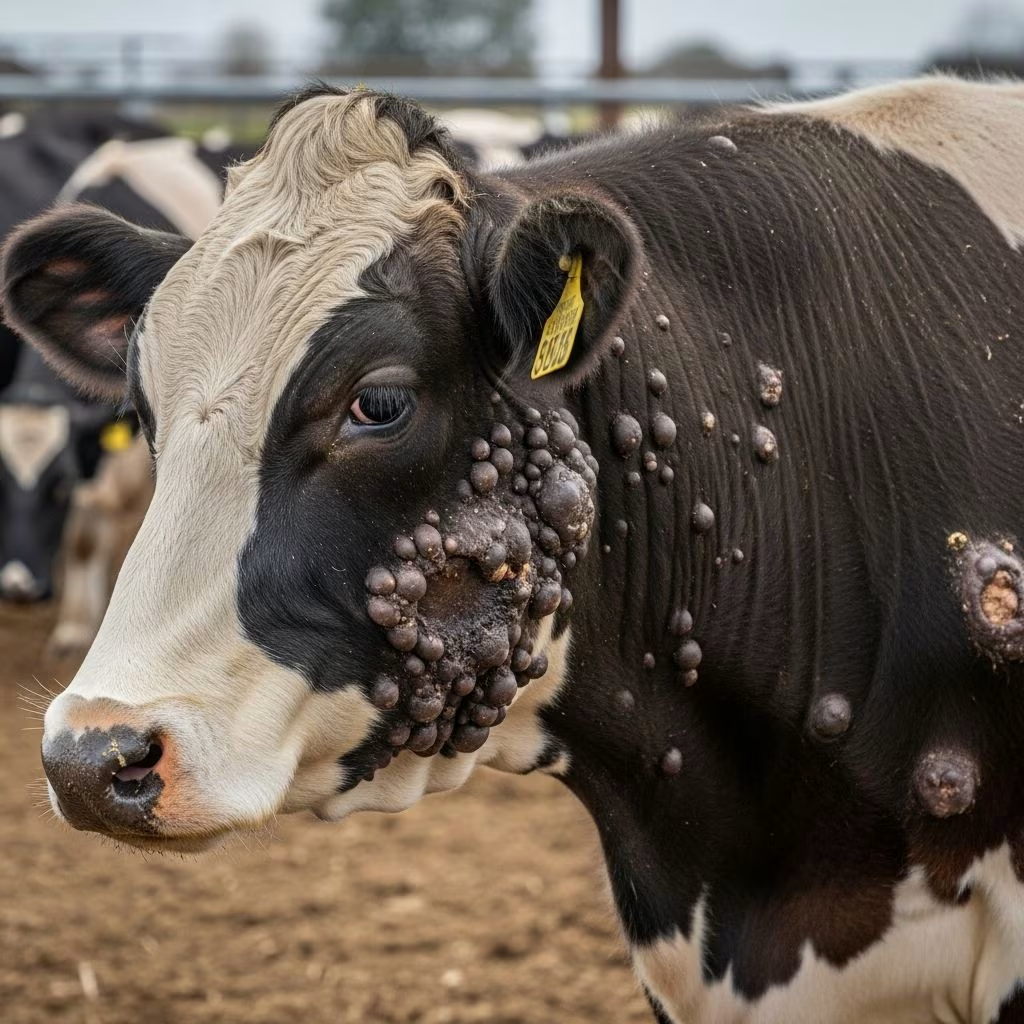
Lumpy skin disease (LSD) represents a significant viral infection primarily targeting cattle, caused by a poxvirus that leads to characteristic skin lesions and systemic effects. This condition has spread beyond its origins in Africa, posing challenges to global cattle industries through reduced productivity and trade restrictions. Understanding its pathology, clinical presentation, and control measures is crucial for farmers and veterinarians alike.
Understanding the Viral Culprit Behind LSD
The causative agent of lumpy skin disease is the lumpy skin disease virus (LSDV), a member of the Capripoxvirus genus within the Poxviridae family. This double-stranded DNA virus is host-specific to cattle and water buffaloes, with transmission occurring mainly through mechanical vectors such as insects including stable flies, mosquitoes, and ticks. Unlike contagious spread via respiratory routes seen in some poxviruses, LSD relies heavily on arthropod intermediaries, which explains its seasonal peaks during warmer months when insect populations surge.
The virus enters through skin abrasions or mucous membranes, replicating in fibroblasts and endothelial cells, leading to cell death and inflammatory responses. Incubation periods typically range from 4 to 14 days, though some reports extend this to 2-5 weeks depending on viral load and host factors. Once established, LSDV induces a robust immune response but can persist in recovered animals, potentially contributing to carrier states.
Recognizing the Hallmark Signs of Infection
Early detection hinges on observing a cascade of symptoms beginning with nonspecific fever often exceeding 40°C (104°F), alongside lethargy, reduced feed intake, and in lactating animals, a sharp decline in milk yield. Within days, the disease’s signature feature emerges: firm, circular cutaneous nodules measuring 2-5 cm in diameter, appearing first on the head, neck, and perineum before spreading across the body.
These nodules evolve from erythematous papules to necrotic centers with depressed scabs, sometimes ulcerating and releasing serous fluid that attracts flies. Additional manifestations include:
- Enlarged superficial lymph nodes, particularly prescapular and prefemoral.
- Ocular and nasal discharges leading to lacrimation, conjunctivitis, and keratitis.
- Edema in limbs, udder, scrotum, or vulva, causing lameness and reluctance to move.
- Respiratory signs like hypersalivation and nasal discharge in severe cases.
- Internal involvement with nodules on mucous membranes of the digestive and respiratory tracts.
Morbidity rates vary widely from 5-45%, with mortality generally low at 1-5%, though economic losses stem from emaciation, infertility, and hide damage. Differential diagnoses include pseudo-lumpy skin disease, bovine herpes mammillitis, and demodicosis, necessitating lab confirmation via PCR, virus isolation, or histopathology.
Management Strategies: Supportive Care as the Cornerstone
No specific antiviral therapy exists for LSD, as the virus must run its course. Treatment focuses on symptomatic relief, preventing secondary bacterial invasions, and supporting recovery to minimize productivity losses. Prompt intervention can reduce mortality and speed healing, as evidenced by case studies from outbreak zones.
Key supportive measures include:
- Antibiotics: Broad-spectrum options like oxytetracycline (10-20 mg/kg IM daily for 3-5 days) to combat secondary infections such as pneumonia or mastitis.
- Anti-inflammatories/NSAIDs: Dexamethasone (0.2 mg/kg IM for 2-3 days) or flunixin meglumine to alleviate fever, pain, and swelling, improving appetite.
- Wound management: Topical antiseptics, fly repellents, and healing sprays to protect nodules from maggots and bacteria.
- Nutritional support: Electrolytes, vitamins (A, E, selenium), and soft feeds for dehydrated or anorexic animals.
- Isolation: Separate affected cattle to curb vector-mediated spread.
In one documented Ethiopian case, a cow treated with oxytetracycline and dexamethasone showed fever resolution within 48 hours, nodule regression over a month, and full recovery by three months. Recovery timelines vary: mild cases resolve in 1-3 weeks, while severe ones with complications may take months, often leaving scars.
Prevention: Vaccination and Biosecurity Essentials
Vaccination stands as the most reliable control method, utilizing live attenuated strains like the Neethling vaccine, administered subcutaneously or intradermally. Protection develops within 2-3 weeks, with annual boosters recommended in endemic areas. Mild side effects such as transient fever or local swelling are common but self-limiting.
| Vaccine Type | Strain | Efficacy | Side Effects |
|---|---|---|---|
| Live Attenuated | Neethling-like | High (90-95% protection) | Temporary fever, local nodules |
| Inactivated | Various | Moderate | Minimal |
Biosecurity forms the first line of defense:
- Vector control with insecticides, screens, and pour-ons.
- Quarantine new arrivals for 28 days.
- Disinfect equipment and premises.
- Restrict animal movements during outbreaks.
In severe epidemics, stamping-out policies involving culling may be enforced, alongside movement bans.
Economic and Global Impact of LSD Outbreaks
LSD inflicts substantial financial burdens through milk loss (up to 50% drop), weight gain reductions, infertility, and hide devaluation. Trade embargoes further amplify costs, as seen in recent Asian and European incursions. For instance, Balkan countries halted spread via mass vaccination. Producers in affected regions report herd impacts costing thousands per outbreak, underscoring the need for proactive surveillance.
Emerging Approaches: Herbal and Alternative Therapies
While allopathic treatments dominate, preliminary research explores herbal remedies. Formulations with amoxicillin alternatives, Anona leaf pastes, or camphorated oils show anecdotal promise for wound healing and vector repulsion, though rigorous trials are lacking. These should complement, not replace, veterinary protocols.
Frequently Asked Questions (FAQs)
What causes lumpy skin disease in cattle?
LSD is caused by a poxvirus transmitted primarily by insect vectors like flies and mosquitoes.
Is there a cure for LSD?
No direct cure exists; management relies on supportive care and antibiotics for secondary issues.
How long does recovery take?
Typically 1-3 weeks for mild cases, up to 3 months for severe ones.
Can LSD affect humans?
No, it is cattle-specific and poses no zoonotic risk.
Is vaccination safe for all cattle?
Generally yes, but pregnant or very young calves may require caution; consult a vet.
Monitoring and Surveillance for Early Detection
Regular herd checks, especially post-rainy seasons, enable early isolation. Report suspicions to authorities for PCR testing, aiding national control efforts.
References
- Lumpy Skin Disease in Cattle: Treatment and Prevention — Diamond Hoof Care. 2023. https://diamondhoofcare.com/lumpy-cow-skin-disease-treatment-explained/
- Future Herbal Treatment for Lumpy Skin Diseases in Cattle — Herald Open Access. 2022-10-15. https://www.heraldopenaccess.us/openaccess/future-herbal-treatment-for-lumpy-skin-diseases-in-cattle-a-systematic-research
- Lumpy Skin Disease in Cattle — Merck Veterinary Manual. 2023. https://www.merckvetmanual.com/integumentary-system/pox-diseases/lumpy-skin-disease-in-cattle
- Lumpy Skin Disease — NADIS. 2022. https://www.nadis.org.uk/disease-a-z/cattle/lumpy-skin-disease/
- Lumpy Skin Disease: Control and Prevention — The Cattle Site. 2023. https://www.thecattlesite.com/articles/lumpy-skin-disease-control-and-prevention
- Lumpy Skin Disease — World Organisation for Animal Health (WOAH). 2024-01-10. https://www.woah.org/en/disease/lumpy-skin-disease/



