

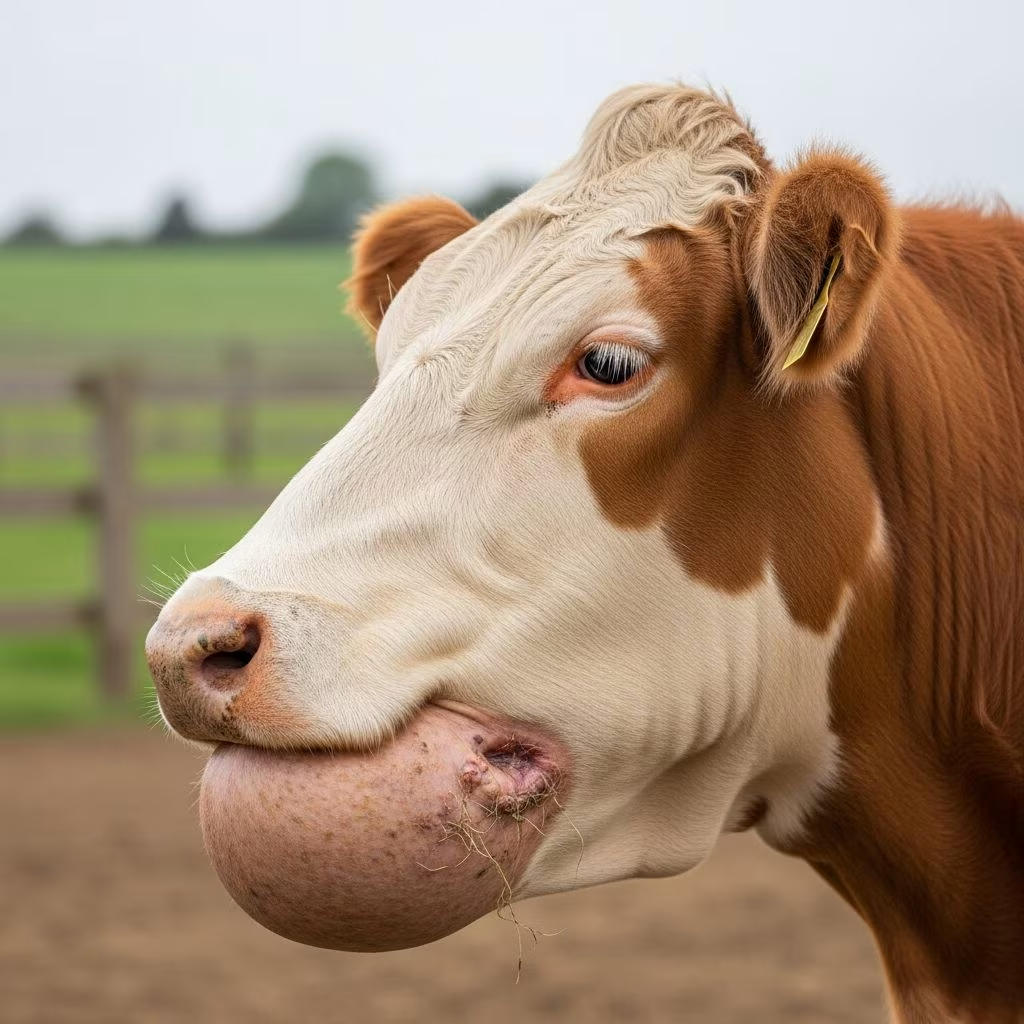
Actinomycosis, commonly referred to as lumpy jaw, represents a significant bacterial infection primarily impacting the oral cavity and skeletal structures of cattle and other ruminants. This condition arises from opportunistic pathogens entering through minor injuries, leading to chronic abscess formation that can severely compromise animal health and productivity. Understanding its mechanisms, clinical presentations, and management is crucial for livestock managers aiming to minimize economic losses.
Understanding the Pathogens Behind Actinomycosis
The primary culprit in bovine actinomycosis is Actinomyces bovis, a gram-positive, filamentous bacterium normally residing in the mouth’s flora. It gains pathogenicity when mucosal barriers are breached by sharp plant material, rough feed, or dental trauma during eruption in young animals. Unlike true fungi, these bacteria form branching filaments resembling mycelia, earning the ‘ray fungus’ misnomer historically.
In parallel, actinobacillosis—often termed wooden tongue—involves Actinobacillus lignieresii, another oral commensal. This pathogen targets soft tissues like the tongue, causing indurated swelling rather than bony involvement seen in true actinomycosis. Both infections thrive in anaerobic environments created by pus accumulation, forming characteristic sulfur granules—colonies of bacteria embedded in host necrotic debris.
These microbes are ubiquitous in livestock environments, with risk amplified by poor feed quality, such as stemmy hay or awny grasses that lacerate gums. Recent field observations confirm higher incidence in dry seasons when abrasive forage predominates.
Clinical Manifestations in Affected Animals
In cattle, lumpy jaw typically presents as a firm, painless swelling on the mandible or maxilla, aligned with premolar or molar teeth. Lesions evolve slowly at first, then expand rapidly, eliciting pain on palpation and interfering with mastication. Soft tissue edema accompanies bony proliferation, and medial mandibular lesions may manifest as facial asymmetry detectable via swelling.
Advanced stages feature sinus tracts erupting through skin, exuding creamy yellow pus laced with hard, yellow ‘sulfur granules’—pathognomonic for the disease. Animals exhibit weight loss, reduced feed intake, and in severe cases, respiratory distress from pharyngeal compression or emaciation over months. Productivity plummets: milk yield drops in dairy cows, and growth stalls in beef stock.
Wooden tongue differs markedly: the tongue enlarges, hardens like wood, protrudes, and causes drooling, foul breath, and reluctance to eat. Swellings may extend to pharynx or lymph nodes, mimicking other abscesses. In sheep and pigs, actinomycosis occasionally affects ribs or vertebrae, forming multifocal osteomyelitis. Early detection hinges on vigilant oral exams, especially in weanlings teething.
Diagnostic Approaches for Accurate Identification
Diagnosis relies on characteristic gross lesions: mandibular osteomyelitis with draining sinuses strongly suggests actinomycosis. Radiographs reveal lytic bone destruction with periosteal reaction, confirming skeletal involvement. Cytological smears from pus show gram-positive filaments in ‘clubs’ or ‘sunburst’ patterns under microscopy, though culture isolation proves challenging due to fastidious growth requirements.
Differentiate from wooden tongue via lesion location—bony vs. soft tissue—and agent identification: A. lignieresii forms similar granules but in tongue biopsies. Rule out abscesses from Trueperella pyogenes or foreign body reactions via history of abrasive feed exposure. In meat inspection, only head condemnation occurs unless dissemination noted. PCR assays, though not routine, enhance specificity in research settings. Prompt veterinary consultation ensures precise differentiation, guiding therapy.
Comprehensive Treatment Strategies
Treatment success pivots on early intervention, combining antimicrobials, iodides, and surgery where feasible. Sodium iodide IV (20% solution, 66 mg/kg) stands as cornerstone, administered weekly for 3-5 doses to liquefy abscesses and fibrotic walls. Oral potassium iodide follows as maintenance, enhancing immune response against filaments.
Antibiotics target bacterial proliferation: penicillin (procaine form, 22,000 IU/kg IM daily for 5-7 days) penetrates well, often curative alone in mild cases. Tetracyclines (oxytetracycline 20 mg/kg IV/SC for 5 days) excel in bone affinity, while ceftiofur, florfenicol, or erythromycin suit resistant strains. Combination protocols—penicillin plus streptomycin (15 mg/kg daily for 14 days)—boosted recovery to 44.4% in one cohort. Isoniazid shows promise in refractory osteomyelitis.
For advanced lumpy jaw, surgical debridement aspirates pus, flushes with povidone-iodine (2%), and packs cavities, paired with NSAIDs for inflammation. Wooden tongue may need tongue lancing in extremes. Relapses demand extended regimens; monitor 48-72 hours post-therapy for response. Prognosis excels (7/8 recoveries with iodide) if pre-fibrosis, but chronic bone distortion persists. Cull non-responders economically.
| Aspect | Actinomycosis (Lumpy Jaw) | Actinobacillosis (Wooden Tongue) |
|---|---|---|
| Iodide Therapy | IV sodium iodide; oral potassium iodide | IV sodium iodide; oral organic iodine |
| Antibiotics | Penicillin, tetracyclines, streptomycin, isoniazid | Tetracyclines, ceftiofur, penicillin, erythromycin |
| Surgery | Debridement, iodine flushing/packing | Drainage, iodine irrigation for advanced |
| Prognosis | Guarded; early cases remodel bone | Favorable with prompt care |
Prevention Tactics for Herd-Level Control
- Feed Management: Supply non-abrasive, high-quality roughage; eschew frosty hay, thistle-infested pastures, or post-flood coarse stalks.
- Oral Surveillance: Routine mouth checks in calves during dentition; trim aberrant teeth.
- Environmental Hygiene: Disinfect troughs, remove debris; supplement minerals to bolster immunity.
- Herd Monitoring: Isolate cases, trace contacts; vaccinal trials ongoing but unproven.
Producers integrating these curb outbreaks, sustaining throughput.
Species Variations and Zoonotic Considerations
While cattle dominate cases, swine suffer mandibular or vertebral lumps; sheep/goats rarely. Horses manifest cutaneous actinobacillosis. Human transmission is negligible—requires massive inoculation—but immunosuppressed handlers note rare abscesses. Meat hygiene focuses on head discard.
Economic Implications for Producers
Untreated lumpy jaw slashes daily gains by 0.5-1 kg, elevates culling rates 10-20%. Treatment costs $50-200/head but recoups via salvage in valuables. Prevention via feed upgrades yields highest ROI, averting 70% incidences.
Frequently Asked Questions (FAQs)
What causes lumpy jaw in cattle?
Primarily Actinomyces bovis invading via oral wounds from rough feed.
Is lumpy jaw contagious?
No direct spread; environmentally opportunistic.
How soon does treatment work?
Improvement in 48 hours; full resolution 4 weeks early cases.
Can pregnant cows receive iodide?
Yes, low abortion risk per vets despite labels.
Does surgery cure advanced lumpy jaw?
Enhances antibiotics; 44% recovery multimodal.
References
- Bovine Actinobacillosis (Wooden Tongue) and Actinomycosis (Lumpy Jaw): Etiology, Clinical Manifestations, and Management Strategies — Mobedco. 2023. https://mobedco.com/bovine-actinobacillosis-wooden-tongue-and-actinomycosis-lumpy-jaw-etiology-clinical-manifestations-and-management-strategies/
- Actinomycosis in animals — Wikipedia. 2024-02-15. https://en.wikipedia.org/wiki/Actinomycosis_in_animals
- Symptoms, Diagnosis, And Treatment Of Lumpy Jaw In Cattle — YouTube (Video Transcript). 2023. https://www.youtube.com/watch?v=_Jw5vGc-bow
- Lumpy Jaw — Province of Manitoba Agriculture. 2024-01-10. https://www.gov.mb.ca/agriculture/animal-health-and-welfare/animal-health/lumpy-jaw.html
- Lumpy jaw and wooden tongue in cattle — NSW Department of Primary Industries. 2023-11-20. https://www.dpi.nsw.gov.au/animals-and-livestock/beef-cattle/health-and-disease/bacterial-diseases/lumpy-jaw-wooden-tongue
- Veterinary Viewpoints: Understanding Lumpy Jaw — Oklahoma State University. 2025-01-15. https://news.okstate.edu/articles/veterinary-medicine/2025/lumpy_jaw.html



