
Lovebird Care: Personality, Feeding, And Housing Guide
Complete guide to lovebird care, personality, diet, and housing requirements for pet owners.
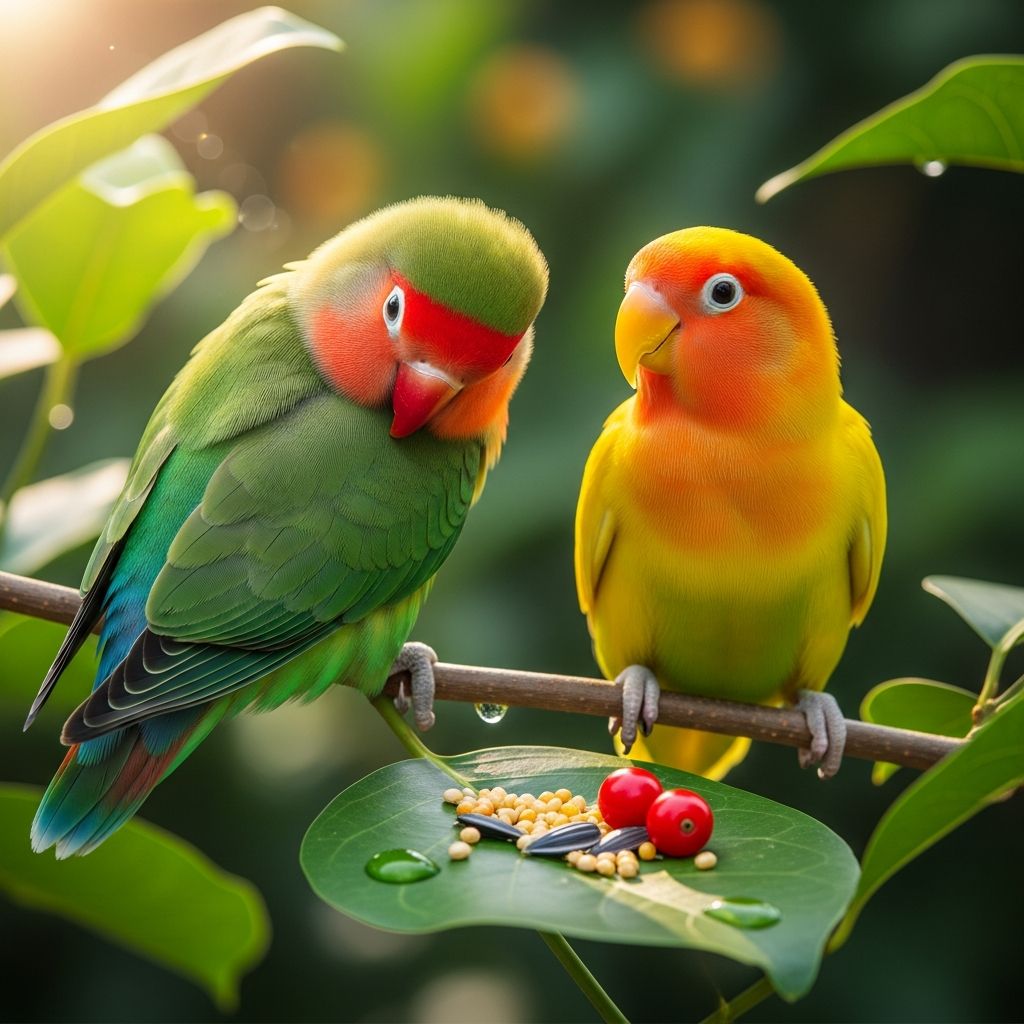
Lovebird Personality, Food & Care
A lovebird might be one of the smaller parrot species available as a companion pet, but this bird is inquisitive and seemingly always on the go. As their name suggests, lovebirds are known for the loving, attentive bond they tend to form with their mates. These delightful birds are among the most popular pet choices for those seeking an affectionate and interactive avian companion. Their small size, combined with their bold personalities and striking colors, makes them an appealing option for both novice and experienced bird owners.
What Is A Lovebird?
There are nine species of lovebirds, and all belong to the genus Agapornis, though only a few are typically available as pets: namely the peach-faced, masked, and Fischer’s lovebirds. Lovebirds are so named because of their strong pair bonds. These remarkable birds range in size from just over 5 inches to just over 6½ inches, which makes them among the smaller parrot species. Lovebirds have short, blunt tail feathers, unlike budgies (parakeets), which have long pointed tails, and lovebirds are also stockier in build.
The peach-faced lovebird (Agapornis roseicollis) is the largest and most commonly kept of the nine species. Most lovebird species originally hail from the continent of Africa, with the exception of the grey-headed lovebird or Madagascar lovebird, which comes from the island of Madagascar. Other species commonly kept as pets include the black-masked lovebird, blue-masked lovebird, and Fischer’s lovebird. Different species display varying feather colorings, with color mutations ranging from lutino (mostly yellow) to aqua, violet, and pied variations.
Personality & Behavior
Lovebirds might be small, but they are bold, inquisitive, curious, and always on the go. They are incredibly playful and possess a delightful, spirited sassiness that makes them entertaining companions. These birds are affectionate, sociable, and intelligent—three characteristics that make them ideal for people seeking a pet bird with personality to spare.
Many people believe lovebirds come in pairs because they are often seen in photos of two lovebirds cuddled up against one another. No doubt, a lovebird often forms a deep bond with another lovebird. Potential owners should be aware, however, that a lovebird pair might choose not to interact with people, as they will be thoroughly focused on each other. When housed alone, lovebirds will seek attention from their humans and can form a wonderful, affectionate, and interactive family pet.
It is important to note that despite their name, these animals can be very territorial and aggressive when they feel frightened or threatened. These tiny little birds will even chase larger bird species and can confront pet dogs or cats. A pair of lovebirds often bond more strongly to each other than their owners, even if they are the same sex. When this happens, they tend not to be as interactive with their human family. Young, single lovebirds, by contrast, bond closely with their owners and make excellent companions.
Vocalizations and Speech
With all that vocalizing, you might think that lovebirds talk. Well, lovebirds usually do not talk in the way you expect. They talk to each other, but not so much to people. Although they are not known for their talking ability, their song is pleasant, more so than many other companion parrots. Lovebirds are generally poor talkers but commonly full of delightful chatter. They love to hide under paper, under the long hair of their owners, or even in pockets.
The more lovebirds you acquire (and it’s difficult to buy just one) the noisier they will become. They are flocking birds in the wild and love to talk to one another. Their normal chirps and squawks are not overly loud, though they can produce a loud high-pitched screech, especially if looking for attention.
Housing Requirements
Providing appropriate housing is essential for your lovebird’s well-being. As a bare minimum, a cage should be at least 2 feet wide by 2 feet long and 2 feet tall, but a larger cage is definitely better, with the length being relatively more important than the height. Bars should be no more than 1/2 to 5/8 inches apart and should be oriented horizontally to allow the birds to climb the sides of the cage. Always avoid round cages, as they do not provide adequate space and can be stressful for your bird.
Provide a variety of perch sizes, including natural branches if possible, as this is healthier for a caged bird’s feet. Different perch diameters help exercise various foot muscles and promote better grip strength. Most lovebird pairs can be housed together successfully and may attempt to build nests. During breeding, pet lovebirds, like their wild counterparts, will take strips of chewed paper or other materials, tuck them under their wing and tail feathers, and carry them to specific areas to build a nest. This repetitive behavior is often seen in lone pet female birds as well.
Feeding Your Lovebird
Proper nutrition is crucial for maintaining your lovebird’s health and vitality. Lovebirds should be fed a variety of foods to ensure balanced nutrition. A good pellet diet can form the basis of the diet, supplemented by a variety of fresh foods and some seeds. Seeds should make up less than 25 percent of the total diet, as they are high in fat. A cuttlebone can be provided for extra calcium, which is especially important for breeding females or those showing signs of calcium deficiency.
Fresh vegetables, fruits, and leafy greens should be offered daily to provide essential vitamins and minerals. Remove any uneaten fresh food within a few hours to prevent spoilage and bacterial growth. Always ensure that food and water dishes are cleaned daily to maintain optimal hygiene and prevent disease.
Toys and Enrichment
Lovebirds are quite aggressive chewers, which must be kept in mind when choosing toys. Make sure there are no small parts that can be chewed off and ingested, and no clips, loose strings, or other parts in which your bird could get its beak, feet, or head trapped. Safe toys include wood, sisal, leather, acrylic, and rawhide toys (including hanging toys as long as they are not long enough to strangle your bird), bells, and ladders.
All toys including their hanging devices should be zinc and lead free. Cotton ropes are good too, but may be best used only under supervision since threads can come loose and entangle birds easily. Household items such as the cardboard tubes from paper towel rolls, paper cups, ink-free cardboard, and dried pasta shapes may also be used by your lovebird. Although not generally very destructive, lovebirds do enjoy chewing. Providing pieces of paper and soft wood affords many hours of entertainment for these curious little birds.
Lovebirds are very active and playful, so it is a good idea to have lots of toys on hand to rotate through the cage to keep them occupied and mentally stimulated. Rotation prevents boredom and encourages continued interest in their environment.
Social Needs and Companionship
A common myth about keeping lovebirds is that they should always be kept in pairs. If you have more than one lovebird, they may become more deeply bonded to each other than to you. A single lovebird will do well as long as it gets the social interaction, contact, affection, and attention it needs from its human family members. If you are short on time to spend with your lovebird, then it is best to get him or her a companion, though be prepared for the possibility that they may bond more closely with each other than with you.
It is important to understand that lovebirds in the wild live in flocks and have an alpha bird. If the alpha bird sees a new lovebird trying to join the flock, there might be a fight or even death, as they are very territorial. If you have a pair of lovebirds and one passes away, it may not be possible to find a mate that will bond with the surviving bird. Introduction of new birds should be done carefully and gradually to minimize stress and aggression.
Color Variations and Physical Characteristics
Lovebirds display remarkable diversity in coloring and appearance. Different species have different feather coloring, and there are many color mutations available. Peach-faced lovebirds are predominantly green with orange, yellow, blue, black, white, or gray markings, usually more dominant on the head, neck, and rump. Fischer’s lovebirds are predominantly green with an orange, yellow, and light-brown head. Yellow-collared lovebirds are predominantly green with a dark, blackish head.
Juvenile lovebirds’ coloring is similar to that of adults. Lovebirds have rounded heads and their beaks are relatively large in proportion to their body size. These physical characteristics, combined with their short, blunt tail feathers, give them a distinctive appearance that sets them apart from other small parrot species.
Behavioral Considerations
Understanding lovebird behavior is essential for successful pet ownership. During breeding season or when housed alone, female lovebirds may exhibit nesting behavior, carrying shredded paper or other materials under their wings. This is completely natural behavior and should be expected. Some experts believe that females are more prone to jealousy and territoriality than males, though individual personality varies significantly.
Hand-raised babies definitely make the best pets. Still, regular handling and training are needed to maintain a tame lovebird, so a hand-raised baby that hasn’t been handled much as it gets older may be hard to hand-tame again. If getting an older lovebird, try to find one that was hand-raised and has been handled regularly with some training. Older lovebirds that are not hand-tamed may require a great deal of patience for taming.
Frequently Asked Questions
Q: Can lovebirds be kept alone or do they need a partner?
A: Lovebirds can be kept alone and will bond closely with their owners if given proper attention and socialization. However, if you have limited time to spend with your bird, a companion may be beneficial. Be aware that paired lovebirds may bond more with each other than with you.
Q: How loud are lovebirds?
A: Lovebirds are not as loud as larger parrots, but they can produce a high-pitched screech, especially when seeking attention. Their normal chirps and squawks are not overly loud, though they do like to chatter, particularly if kept in groups.
Q: Do lovebirds talk or mimic sounds?
A: Lovebirds are generally poor talkers and are not known for their ability to mimic human speech. However, they do talk to each other with pleasant chirping and chatter, and their song is generally more pleasant than many other companion parrots.
Q: What size cage do lovebirds need?
A: As a minimum, lovebirds need a cage at least 2 feet wide by 2 feet long and 2 feet tall. Larger is always better, with length being more important than height. Bars should be 1/2 to 5/8 inches apart and horizontally oriented.
Q: What should I feed my lovebird?
A: Lovebirds should eat a varied diet consisting of a good quality pellet base supplemented with fresh vegetables, fruits, and limited seeds (less than 25% of total diet). A cuttlebone can provide additional calcium.
Q: Are lovebirds aggressive?
A: Lovebirds can be territorial and aggressive when frightened or threatened. Despite their small size, they will chase larger birds and even pets. Paired lovebirds may also be aggressive toward each other if not properly matched.
Q: How long do lovebirds live?
A: With proper care, lovebirds typically live 10-15 years or longer, making them a long-term commitment for potential owners.
References
- Lovebird Personality, Food & Care – Pet Birds by Lafeber Co. — Lafeber Company. 2024. https://lafeber.com/pet-birds/species/lovebird/
- Lovebirds: General Information — VCA Animal Hospitals. 2024. https://vcahospitals.com/know-your-pet/lovebirds—general
- Our Complete Guide To Lovebirds As Pets — Westfield Veterinary Hospital. 2024. https://westfieldvethospital.com/blog/lovebirds/
- What Are Lovebirds? — PetMD. 2024. https://www.petmd.com/bird/what-are-lovebirds
- 7 Lovely Facts About the Lovebird — HowStuffWorks Animals. 2024. https://animals.howstuffworks.com/pets/otherpets/lovebird-facts.htm
Similar Articles








Read full bio of Sneha Tete


