
Louping Ill In Animals: Essential Prevention And Diagnosis
Explore the tick-borne viral threat affecting livestock and wildlife, from symptoms to prevention strategies in endemic regions.
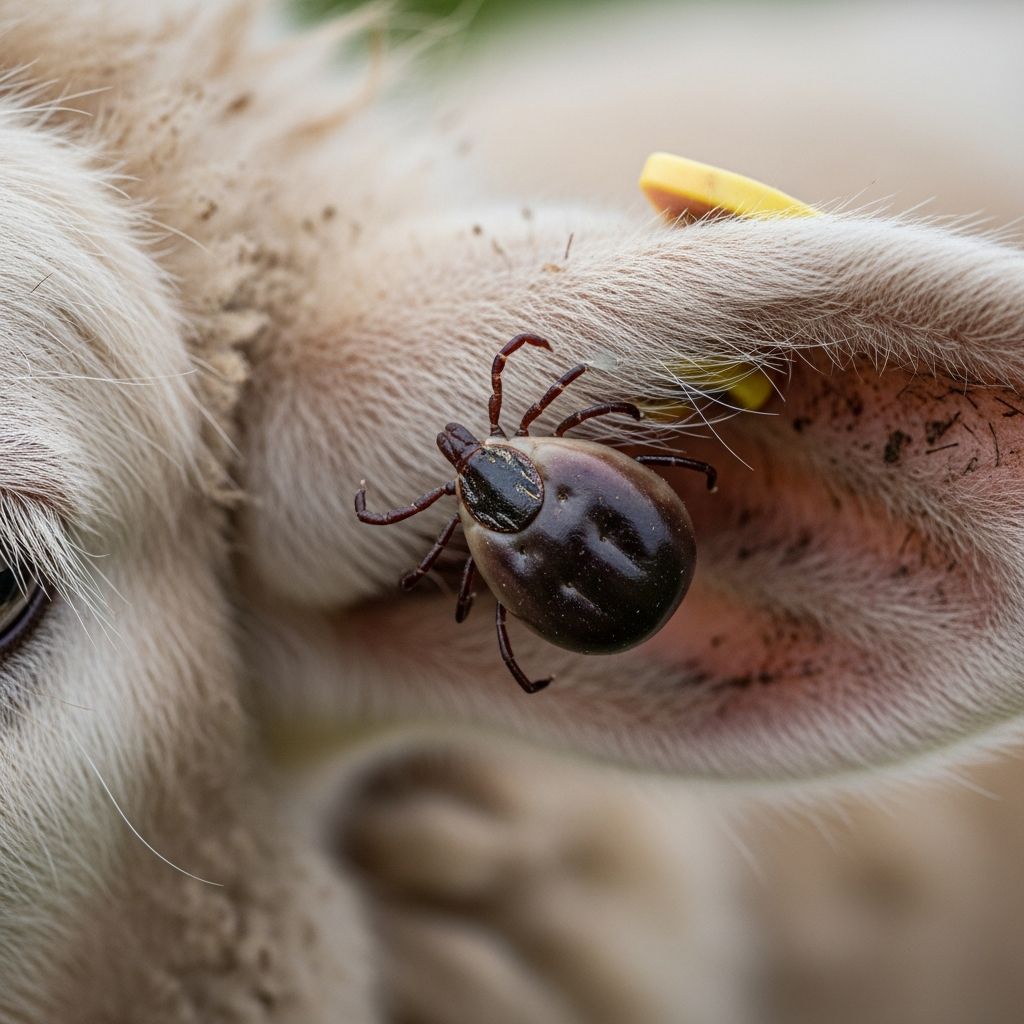
A potentially devastating viral infection primarily targeting sheep and red grouse, louping ill poses significant challenges to livestock health in tick-infested areas. Transmitted mainly by the sheep tick, this disease leads to inflammation of the brain and spinal cord, resulting in a range of neurological symptoms that can culminate in death or long-term disability.
Understanding the Causative Agent
The pathogen behind louping ill belongs to the Flaviviridae family, specifically a flavivirus closely related to other tick-borne viruses like those causing tick-borne encephalitis. This RNA virus thrives in temperate regions, particularly in the United Kingdom and parts of Europe, where it maintains a cycle between ticks, vertebrates, and the environment.
Flaviviruses are enveloped, single-stranded RNA viruses known for their ability to cross the blood-brain barrier, leading to meningoencephalitis. In louping ill, the virus replicates initially in peripheral tissues before invading the central nervous system (CNS), where it causes extensive damage. Genetic studies have identified distinct strains, but all share antigenic similarities that complicate serological differentiation from related viruses.
Epidemiology and Geographic Spread
Louping ill is endemic in upland and rough grazing areas of Scotland, England, Wales, and Ireland, where the primary vector, Ixodes ricinus, flourishes in moist, acidic soils with bracken and heather. Outbreaks peak in spring and summer, coinciding with tick activity and lambing seasons.
Sheep serve as amplifying hosts, with infection rates highest in naive lambs moved to endemic pastures after maternal antibodies wane. Red grouse populations suffer massive losses, with up to 79% chick mortality in affected areas, impacting game management. Sporadic cases occur in cattle, horses, pigs, goats, dogs, and even humans, though human infections are rare and often linked to unpasteurized milk or tick bites.
- Primary reservoir: Sheep and red grouse in the UK uplands.
- Vector: Ixodes ricinus ticks (nymphs and adults most infectious).
- Secondary transmission: Direct via respiratory droplets or contaminated milk.
Transmission Dynamics
Infection begins when ticks feed on viremic hosts, acquiring the virus which persists transstadially (through tick life stages) and transovarially (to eggs). A single infected tick can transmit to multiple animals over its lifespan.
Co-infections with agents like Anaplasma phagocytophilum (tick-borne fever) exacerbate outcomes, often leading to fatal neurological disease in unprotected sheep. Stress from handling or transport can trigger clinical signs in latently infected animals. Unlike purely arthropod-borne diseases, louping ill can spread horizontally within flocks via nasal secretions during viremia.
Clinical Manifestations Across Species
The incubation period ranges from 4 to 13 days, often biphasic with fever preceding CNS involvement. Not all infections are symptomatic; 40-60% of exposed sheep remain subclinical.
In Sheep
Initial nonspecific signs include depression, anorexia, and high fever (up to 42°C). The second phase brings neurological deficits: fine tremors (especially head and neck), hyperesthesia, jaw champing, salivation, and a characteristic ‘louping’ gait—leaping with front legs together. Progression leads to ataxia, recumbency, paralysis, and death within 1-3 days. Survivors may exhibit torticollis or paraplegia.
In Red Grouse and Other Wildlife
Grouse chicks show lethargy, incoordination, and high mortality. Adults experience encephalitis with survival rates under 30% in outbreaks.
In Other Livestock and Dogs
Cattle and goats display milder ataxia and fever; horses may abort. Dogs present with seizures and collapse, with fatal outcomes possible.
| Species | Key Signs | Mortality Rate |
|---|---|---|
| Sheep (lambs) | Ataxia, tremors, louping gait, paralysis | Up to 60% in naive flocks |
| Red Grouse | Encephalitis, chick mortality | 79% in infected chicks |
| Cattle/Goats | Fever, mild ataxia | Low |
| Dogs | Seizures, collapse | Variable, often fatal |
Pathological Changes
Gross lesions are absent or limited to secondary pneumonia. Microscopically, nonsuppurative polioencephalomyelitis dominates: perivascular lymphocytic cuffing, neuronophagia, gliosis, and vacuolation, worst in brainstem, cerebellum, and thalamus. Spinal cord involvement explains posterior paresis.
Diagnostic Approaches
Suspicion arises from history (tick exposure, endemic area) and signs like ataxia post-fever. Confirmation requires lab tests:
- Histopathology: Brain sections show characteristic lesions.
- Immunohistochemistry: Monoclonal antibodies detect viral antigen.
- PCR: Detects viral RNA in CNS tissue.
- Serology: Hemagglutination inhibition (HI), ELISA for IgM/IgG; paired sera show rises.
Differentials include listeriosis, coenurosis, rabies, and enterotoxemia. Postmortem brain fixation in 10% formalin is key for antemortem survivors.
Management and Supportive Care
No antiviral treatment exists; focus is supportive. Isolate affected animals, provide nursing, fluids, and anti-inflammatories. Sedation reduces distress but doesn’t alter prognosis. Euthanasia is humane for recumbent cases.
Antiserum, if given within 48 hours of exposure, may mitigate in high-risk scenarios, though availability is limited.
Prevention and Control Strategies
Vaccination was once available (inactivated vaccine for sheep/goats/cattle) but is discontinued; research into recombinant versions continues.
Tick Control
- Acaricides (pour-ons) on sheep during peak tick season.
- Grazing management: Rotate pastures, avoid bracken.
- Tick mowing and burning heather.
Immunological Protection
Maternal antibodies from colostrum protect lambs up to 3-4 months. Hefted ewes confer herd immunity. Vaccinating sheep reduces viremia, curbing transmission to grouse.
Integrated Approaches
Monitor flocks for ticks and fever; avoid stressing animals in endemic zones. For grouse moors, sheep vaccination plus habitat management cuts virus circulation.
Zoonotic Potential and Human Risk
Rare human cases involve encephalitis, often from tick bites or goat milk. No specific treatment; supportive care only. Lab workers handle as BSL-3.
Research Frontiers and Future Outlook
Ongoing studies focus on vector genomics, vaccine redevelopment, and climate impacts on tick ranges. Climate change may expand louping ill into new areas.
Frequently Asked Questions (FAQs)
What causes louping ill?
A flavivirus transmitted by Ixodes ricinus ticks.
Is louping ill fatal?
Up to 60% mortality in susceptible lambs; lower in adults.
Can I vaccinate my sheep?
Commercial vaccines are unavailable; consult vets for alternatives.
How do I prevent it on my farm?
Tick control, colostrum feeding, and grazing rotation.
Does it affect humans?
Rarely, via ticks or milk; encephalitis possible.
References
- Louping-ill — Farm Health Online. Accessed 2026. https://www.farmhealthonline.com/US/disease-management/sheep-diseases/louping-ill/
- Louping Ill in Animals — Merck Veterinary Manual. Accessed 2026. https://www.merckvetmanual.com/nervous-system/louping-ill/louping-ill-in-animals
- Louping Ill Factsheet — Center for Food Security and Public Health, Iowa State University. Accessed 2026. https://www.cfsph.iastate.edu/Factsheets/pdfs/louping_ill.pdf
- Louping ill virus: an endemic tick-borne disease of Great Britain — PMC (PubMed Central). 2016-04-28. https://pmc.ncbi.nlm.nih.gov/articles/PMC4811648/
- Louping Ill – Best practice — Moredun Research Institute. Accessed 2026. https://moredun.org.uk/louping-ill-best-practice
- Controlling louping ill — Game and Wildlife Conservation Trust. Accessed 2026. https://www.gwct.org.uk/research/species/birds/red-grouse/controlling-louping-ill/
- Louping ill virus: Infectious substances pathogen safety data sheet — Government of Canada, Public Health Agency. Accessed 2026. https://www.canada.ca/en/public-health/services/laboratory-biosafety-biosecurity/pathogen-safety-data-sheets-risk-assessment/louping-ill-virus.html
Similar Articles








Read full bio of medha deb


