

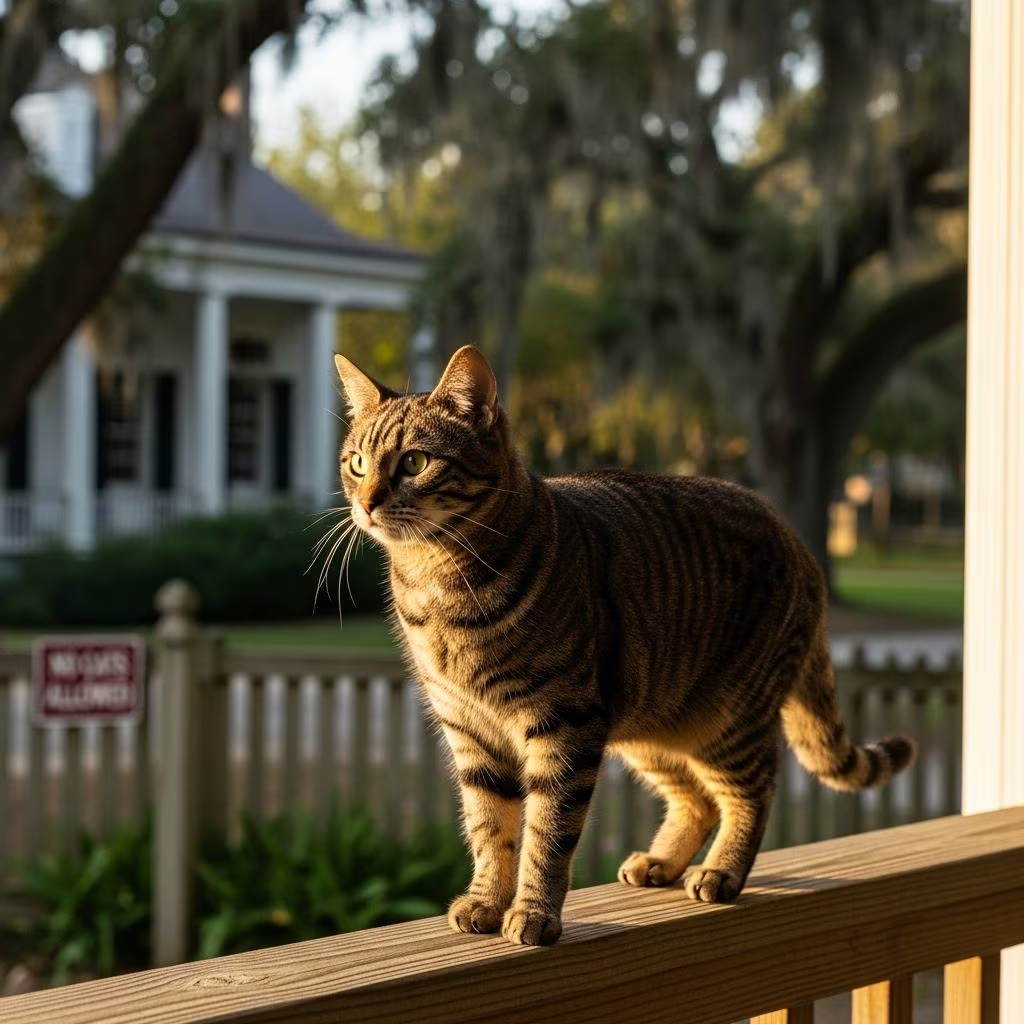
Owning cats in Louisiana involves understanding a patchwork of state, parish, and municipal regulations that prioritize animal welfare, public safety, and community harmony. Unlike some states with rigid statewide caps, Louisiana delegates much authority to local parishes, leading to varied rules on the number of cats permitted, licensing needs, and handling of feral populations. This guide breaks down key aspects to help residents comply while enjoying multi-cat households.
Statewide Framework for Domestic Cat Ownership
Louisiana lacks a uniform statewide limit on domestic cat ownership, allowing flexibility for pet enthusiasts. However, general animal welfare statutes encourage responsible care, including adequate housing, food, and veterinary attention for all pets. State law focuses more on sales restrictions than possession numbers: it prohibits selling dogs or cats on highways, flea markets, public parks, playgrounds, swimming pools, recreational areas, or commercial parking lots without owner permission. Exceptions include humane societies, animal welfare groups, adoption events, private residences, and licensed shows.
This hands-off approach at the state level shifts emphasis to local enforcement. Parishes handle day-to-day rules, often requiring licenses for cats over a certain age but exempting community or feral cats from many mandates.
Parish-Specific Regulations on Cat Numbers and Licensing
Louisiana’s 64 parishes enact their own ordinances, resulting in diverse policies. Most do not impose strict numerical limits on owned domestic cats, provided owners meet sanitation, vaccination, and nuisance prevention standards. Licensing is common for cats three months or older, with annual fees around $5 for spayed or neutered animals.
| Parish Example | Licensing Requirement | Pet Limit Notes | Exemptions |
|---|---|---|---|
| Terrebonne Parish | Annual license for cats 3+ months, $5 for S/N | No specific cap mentioned | Community cats exempt |
| Orleans (New Orleans) | Covered under municipal code Ch. 18 | Focus on nuisance control | Feral/community cats protected |
| Other Parishes | Varies; check local animal control | Rare hard limits; welfare-based | Outdoor cats until ownership verified |
In Terrebonne Parish, owners must license each dog or cat over three months, excluding community cats. The certificate details the animal’s description and includes a tag. New Orleans protects community cats under Chapter 18 of the municipal code, exempting them from licensing, feeding bans, and registration if a caretaker provides daily care. Outdoor cats are presumed feral until proven otherwise. For issues, contact the Humane Law & Rescue Team at 504.821.2222 or local animal control elsewhere.
Understanding Community and Feral Cats in Louisiana
Community cats—often feral or semi-feral—play a unique role in Louisiana’s ecosystem, controlling pests while receiving legal safeguards. In New Orleans and many parishes, they are protected from removal unless sick or injured. Caretakers feed, water, and ensure medical care, gaining exemptions from standard pet rules.
- Trap-Neuter-Vaccinate-Return (TNVR): Encouraged to manage populations humanely. Louisiana SPCA offers resources for feral care and nuisance mitigation.
- Nuisance Handling: Parishes prohibit trapping healthy ferals; seek assistance from local authorities instead.
- Verification: Prove caretakership to avoid licensing fees and affirm outdoor cat status.
These policies reflect a balance: supporting feral colonies while addressing complaints like property trespass.
Exotic and Wild Cats: Strict Prohibitions
Domestic cats face few quantity hurdles, but exotic felines trigger rigorous oversight. Louisiana bans private ownership of big cats without permits, classifying them as regulated. Savannah cats are legal, but hybrids over 30 pounds or other wild crosses may not be. Bobcats require permits for captivity, limited to zoos, research, or fur farming; private pets are restricted.
Owners of exotics need individual permits per animal, background checks, liability insurance, caging standards, and fees up to $300 yearly. Exemptions cover accredited zoos, USDA-licensed circuses, universities with mascots, and short transits. Importing bobcats or mountain lions is prohibited without special approval.
Spaying, Neutering, and Breeder Considerations
Many parishes incentivize sterilization via lower license fees. Breeders or intact pet owners face higher scrutiny, though Louisiana-specific breeder permits are parish-dependent. State law bans roadside or public sales, pushing ethical adoptions through shelters.
In some areas, intact animals over four months trigger fines starting at $100, escalating to mandatory sterilization or misdemeanors. Veterinarian letters can exempt for health reasons, requiring license numbers and diagnostics. This promotes population control amid feral management efforts.
Rental Properties and Cat Policies
Renters must navigate landlord rules alongside ordinances. Louisiana law allows pet restrictions in leases, such as breed bans (e.g., pit bulls) or unit limits, especially in New Orleans. Tenants keep properties clean, leash pets in common areas, and dispose of waste promptly.
- Common Limits: 1-2 pets per unit to prevent overcrowding.
- Deposits/Fees: Often required for damages.
- Service Animals: Exempt from restrictions under fair housing laws.
Clear lease terms prevent disputes; communicate early with landlords.
Health, Welfare, and Multi-Cat Household Tips
Beyond limits, thriving with multiple cats demands attention to space, litter boxes (one per cat plus one extra), feeding stations, and veterinary care. Overcrowding risks disease spread, aggression, and neglect citations. Parishes enforce welfare via inspections for extreme cases.
Best Practices:
- Provide enrichment: scratching posts, vertical spaces.
- Regular vet checkups, vaccinations, flea control.
- Monitor for signs of hoarding: poor hygiene, underfeeding.
Frequently Asked Questions (FAQs)
Is there a maximum number of cats I can own in Louisiana?
No statewide cap exists; parishes rarely limit domestic cats if welfare standards are met. Check local ordinances.
Do feral cats need licenses in New Orleans?
No, community cats are exempt if under caretaker supervision.
Can I own a bobcat as a pet?
Private ownership requires special permits, mainly for zoos or research; hunting is allowed separately.
What if I rent with cats?
Landlords can limit pets; review leases for rules on numbers and breeds.
How do I report a nuisance feral cat colony?
Contact local animal control; removal is limited to ill/injured animals.
Staying Compliant: Resources and Next Steps
Consult parish animal services for precise rules. Participate in TNVR to aid feral control. Responsible ownership fosters community goodwill and legal peace.
References
- Feral Cats Frequently Asked Questions — Louisiana SPCA. Accessed 2026. https://www.louisianaspca.org/community-clinic/trap-neuter-vaccinate-return/feral-cat-faqs/
- Animal Shelter – Ordinances Governing Pets — Terrebonne Parish Consolidated Government. Accessed 2026. https://www.tpcg.org/AnimalShelter/Ordinances
- Louisiana Laws – §102.27. Unlawful sale of a live dog or cat — Louisiana State Legislature. Accessed 2026. https://legis.la.gov/Legis/law.aspx?d=814040
- State Laws Exotic Cats — Big Cat Rescue. Accessed 2026. https://bigcatrescue.org/conservation-news/state-laws-exotic-cats
- S/N Exemptions and Breeder’s Permit Page — LA Animal Services. Accessed 2026. https://www.laanimalservices.com/breeders-permits
- Pet Laws and Regulations For Rental Properties In Louisiana – 2026 — Steadily. 2026. https://www.steadily.com/blog/pet-laws-regulations-rental-properties-louisiana



