
Lory Personality, Food & Care – Pet Birds Guide
Complete guide to lory bird care, personality traits, diet, and behavior for pet owners.
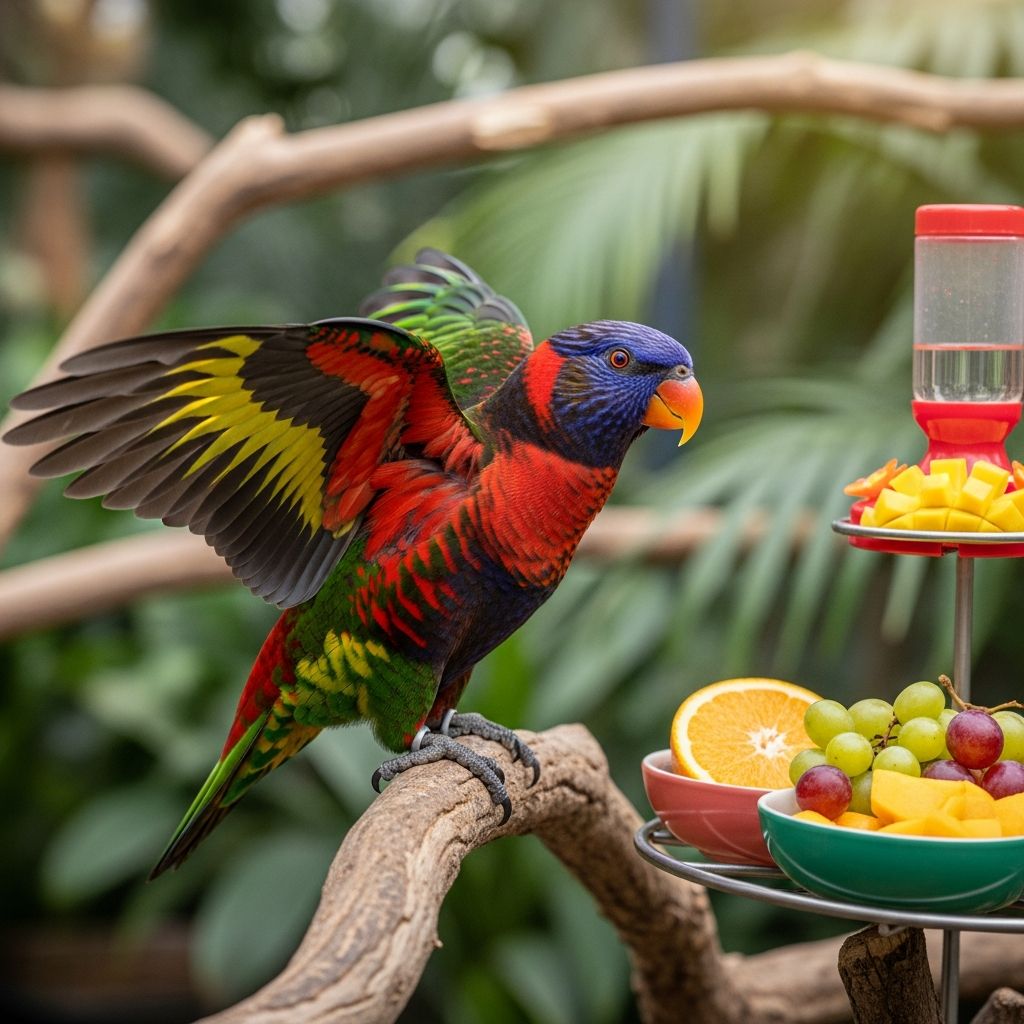
What Is A Lory?
Lories, also called lorikeets, are a standout group among parrots that captivate bird enthusiasts with their exceptional beauty and unique characteristics. These remarkable birds are among the most colorful parrot species in existence, displaying vibrant plumage in combinations of red, green, blue, yellow, and black. What truly sets lories apart from other parrot species is their distinctive brush-like tongue, a specialized adaptation that allows them to efficiently remove pollen and nectar from flower blossoms. With nectar serving as a main component of their diet, it’s no surprise that lories are high-energy birds that require active engagement and specialized care from their owners.
Physical Characteristics
Lories display remarkable physical diversity within their family. These birds typically measure between 5 to 17 inches in length, with weights ranging from 0.7 to 10 ounces depending on the specific species. The basic body color is predominantly green or red, with various combinations of blue, black, yellow, and red markings that vary by species. One key distinction between lories and lorikeets lies in their tail structure: lories generally have shorter, rounded, or square tails, while lorikeets tend to possess longer, pointed tails.
The most distinctive physical feature of lories is their specialized tongue. Unlike other parrots, lories possess a unique brush-like tongue with tiny hair-like structures called papillae lining the end in the shape of a “U.” When these birds extend their tongue to feed, the papillae stand on end like bristles on a brush, allowing nectar and pollen to be easily absorbed. This adaptation has earned them the affectionate nickname “Brush-Tongued Parrots.” Additionally, lories have weak gizzards and crops compared to other parrot species, which is perfectly suited to their specialized nectar and pollen diet rather than nuts and seeds.
Lory Personality & Behavior
The lory personality is decidedly intense and outgoing. These birds are not shy by nature; instead, they are inquisitive, bubbly, enthusiastic, and constantly seeking interaction with their human companions. The rainbow lory, in particular, exemplifies these characteristics as the “coach” of the bird world, enthusiastically encouraging play whenever its favorite human is around.
Activity Level and Temperament
Lories are among the most active bird species in the avian world. These birds are constantly busy and lively, allowing little time for rest. Their antics are extremely entertaining for most people, though they can become overwhelming for someone accustomed to a more laid-back avian companion. Approximately 70 percent of their day is spent foraging, and in the wild, they travel more than 30 miles daily to find sufficient food sources.
Because lories are so excitable and intelligent, they tend to be often nippy. However, they will generally bite only out of excitement or fear, particularly when they fear being returned to their cage. Their playful nature means that handlers should be prepared for enthusiastic interactions and understand that this behavior is typical of the species rather than a sign of aggression.
Social Behavior
In the wild, lories are highly social birds that live in large flocks and establish daily flight paths connecting their feeding sites. These paths tend to follow natural landscape contours such as hills, valleys, and rivers. At night, they retreat along these same paths back to their communal roosts, which can contain as many as several thousand birds. This communal living arrangement provides multiple eyes watching for danger from predators such as birds of prey and snakes.
Speech & Sound Characteristics
Lories are quite chatty birds; in fact, there is even a species called the chattering lory that exemplifies this trait. These vocal birds can learn to talk and develop words and phrases, but they tend to express themselves with a high-pitched shrill that might catch the attention of nearby neighbors. Prospective lory owners should be aware that the noise level can be significant, especially during dawn and dusk hours when birds are most active.
Diet & Nutritional Requirements
The specialized diet of lories is one of the most critical aspects of their care and differs significantly from the typical nut and seed diet of other parrots. Their diet in the wild consists mainly of nectar, flowers, pollen, insects, fruit, and seeds. However, their specialized diet causes their droppings to be very messy and far-reaching, which makes the lory and lorikeet somewhat less popular species in aviculture than others.
Primary Food Sources
Lories feed on fruit, seeds, buds, nectar, grain, and pollen. Their specialized tongue allows them to extract maximum nectar when they insert their long brushy tongues into flowers. The tongue can also gather pollen particles and pack them into easy-to-eat bundles. Some lories may feed on as many as 650 flowers each day during their foraging activities.
When caring for lories in captivity, it is essential to consult with a veterinarian regarding appropriate diet formulations specifically designed for these birds. Commercial diets formulated for lories and lorikeets are available and should form the basis of their nutritional intake, supplemented with fresh fruits, flowers, and vegetables when possible.
Lifespan & Sexual Maturity
Lories have a typical lifespan of 10 to 15 years in captivity, though with excellent care some individuals may live longer. Sexual maturity varies by species, typically occurring between one to three years of age. However, birds often do not breed until they are 2 to 3 years old despite reaching sexual maturity earlier.
Breeding Characteristics
Like many parrots, lories usually stay with one partner and may breed at any time of year, though in southern Australia the breeding season occurs between August and January. Nest sites are positioned high above the ground in the hollows of trees, which birds layer with a covering of decayed wood.
During breeding, the female and male often roost together, but only the female incubates the eggs. Females typically lay two to three small white eggs, with an incubation period lasting about 24 to 26 days. The male actively helps feed the chicks, which hatch with eyes closed and no feathers. The chicks slowly develop plumage and are able to fly after seven to eight weeks. Young birds may remain with their parents over the summer before moving into the communal roost.
Identifying Lories: Key Differences
It is almost impossible to tell lories and lorikeets from other types of parrots just by looking at them; the best way to tell is by getting a glimpse of their unique brush-like tongue. The primary distinction between lories and lorikeets relates to their tail structure and overall size. Lories are generally bigger with short, rounded, or square tails, while lorikeets tend to be smaller with longer, pointed tails.
Most lories are predominantly red with patches of yellow, purple, and green; most lorikeets are predominantly green with patches of red and yellow. However, there are numerous exceptions, and these birds can be found in virtually all colors of the rainbow. Sexing is generally difficult, as there are few external differences in most species.
Behavioral Traits & Acrobatics
Lories use their strong beak and four-toed feet to perform impressive acrobatics. They climb around on branches and hang upside down to access all the flowers on a tree, demonstrating remarkable agility and flexibility. Their small size and bright colors help these birds hide effectively in trees, typically staying safe from would-be predators. Living in large flocks provides additional protection, as multiple birds can watch for danger from predators such as birds of prey and snakes.
Many birds in the lory and lorikeet family are commuters. They even fly from island to island to find adequate food sources and maintain their high-energy lifestyle. These fascinating birds establish daily flight paths and demonstrate remarkable navigation abilities based on seasonal food availability.
Frequently Asked Questions (FAQs)
Q: Are lories good pets for beginners?
A: Lories can be challenging pets for beginners due to their intense personalities, high energy levels, specialized dietary requirements, and loud vocalizations. They are best suited for experienced bird owners who understand their unique needs and can provide appropriate care and enrichment.
Q: What is the difference between a lory and a lorikeet?
A: The primary difference is tail structure: lories have shorter, rounded or square tails, while lorikeets have longer, pointed tails. Lories are also generally larger birds. Most lories are predominantly red, while most lorikeets are predominantly green, though exceptions exist.
Q: How often should I feed my pet lory?
A: Lories are active birds that spend approximately 70 percent of their day foraging. In captivity, they should be provided with commercial lory diet formulations supplemented with fresh fruits and vegetables daily. Consult with an avian veterinarian for specific feeding schedules and portion sizes.
Q: Do lories require specialized veterinary care?
A: Yes, lories require veterinary care from avian specialists familiar with their specialized dietary needs and unique health considerations. Their specialized diet and thin-walled gizzards make them different from other parrot species in terms of health management.
Q: How can I tell if a lory is male or female?
A: Sexing lories is generally difficult, as there are few external differences in most species. DNA testing or surgical sexing by an avian veterinarian is typically necessary to accurately determine a lory’s sex.
Q: Are lories loud birds?
A: Yes, lories are quite vocal and can produce high-pitched shrill sounds that may disturb nearby neighbors. They are chatty by nature, and their noise level can be significant, especially during dawn and dusk hours. Prospective owners should consider noise levels before acquiring a lory.
Q: What is the average lifespan of a pet lory?
A: The average lifespan of a lory in captivity is 10 to 15 years, though with excellent care some individuals may live longer. Proper diet, veterinary care, and enrichment can contribute to a longer and healthier life.
References
- Red Lory – Facts, Diet, Habitat & Pictures — Animalia.bio. https://animalia.bio/red-lory
- Blue-Streaked Lory Facts and Information — United Parks & Resorts (SeaWorld). https://seaworld.org/animals/facts/birds/blue-streaked-lory/
- Lories and Lorikeets – General — VCA Animal Hospitals. https://vcahospitals.com/know-your-pet/lories-and-lorikeets—general
- Lory and Lorikeet — San Diego Zoo Animals & Plants. https://animals.sandiegozoo.org/animals/lory-and-lorikeet
- Lories + Lorikeets — BirdTricks Store. https://birdtricksstore.com/blogs/birdtricks-blog/lories-lorikeets
- Lories & Lorikeets — Parrot Fun Zone. https://www.parrotfunzone.com/learn-about-parrots/parrot-species/lories-lorikeets
- Lory Personality, Food & Care – Pet Birds by Lafeber Co. — Lafeber Company. https://lafeber.com/pet-birds/species/lory/
Similar Articles








Read full bio of medha deb


