

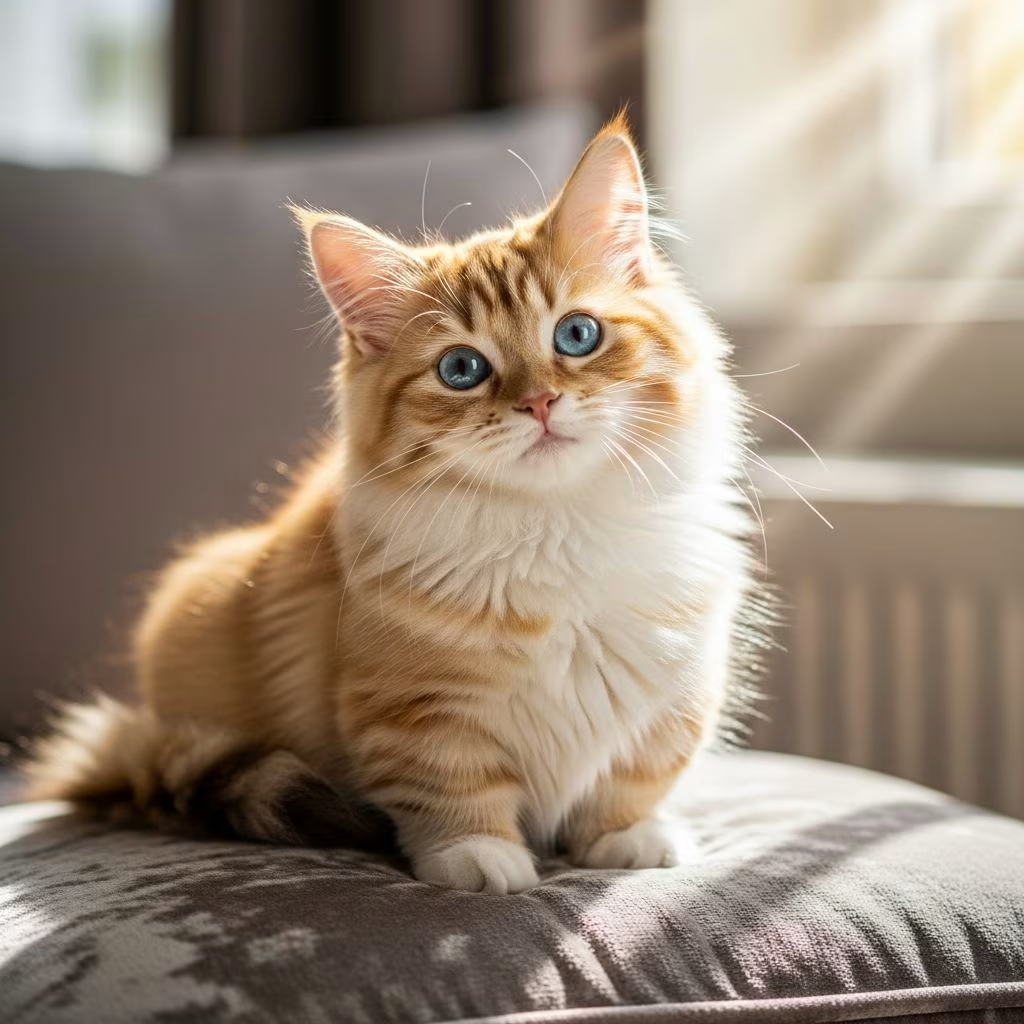
Long-Haired Munchkin cats stand out in the feline world due to their distinctive short legs paired with flowing, silky coats. These cats combine the playful spirit of domestic felines with a one-of-a-kind appearance that draws admiration from pet enthusiasts. Originating from a natural genetic variation, they offer companionship marked by curiosity, sociability, and agility despite their compact stature.
The Genetic Origins of Short-Legged Wonders
The hallmark trait of Long-Haired Munchkins traces back to a spontaneous autosomal dominant mutation affecting the long bones in their legs. This genetic change, which shortens the limbs without impacting the spine’s flexibility, has appeared multiple times in domestic cats. Unlike dwarfism in dogs, this mutation allows full mobility, enabling these cats to leap, run, and navigate spaces with ease.
Breeders maintain genetic diversity through outcrossing with other domestic cats, introducing a wide array of colors and patterns. The long-haired variant features a semi-long, silky coat that requires regular care but adds to their elegant appeal. Organizations like The International Cat Association (TICA) recognize both short and long-haired Munchkins, emphasizing their health and vitality.
Physical Characteristics and Variations
These cats typically weigh between 4 to 9 pounds and measure up to 18 inches in length, with their low-slung bodies giving a kitten-like illusion. Hind legs may be slightly longer than front ones, creating a gentle rise from shoulders to rump. Coats come in every imaginable hue and pattern, from solids to tabbies, ensuring no two Long-Haired Munchkins look exactly alike.
| Feature | Short-Haired Munchkin | Long-Haired Munchkin |
|---|---|---|
| Coat Type | Medium-plush, resilient | Semi-long, silky |
| Grooming Frequency | Weekly combing | Twice-weekly to prevent mats |
| Shedding | Moderate | Higher, requires vacuuming |
| Leg Structure | Short with possible slight bowing | Same, fully mobile |
This table highlights key differences, aiding owners in choosing based on maintenance preferences.
Temperament: Playful and People-Oriented
Long-Haired Munchkins embody high energy and sociability, often dubbed “sausage cats” for their elongated bodies on stubby legs. They thrive on interaction, chasing toys, exploring, and curling up for lap time. Intelligent and responsive to handling, they adapt well to family life but prefer calm environments over chaotic households.
- Extremely curious, investigating every nook.
- Spirited runners who corner sharply despite short legs.
- Affectionate, seeking human company without being overly demanding.
- Playful into adulthood, enjoying games with owners.
Owners report these cats as talkative yet not excessive, making them ideal for interactive homes.
Grooming and Daily Care Essentials
Maintaining the lustrous coat of a Long-Haired Munchkin demands consistency. Brush twice weekly to remove dead hair, prevent tangles, and distribute natural oils. Their all-weather fur sheds noticeably, so regular vacuuming keeps homes tidy. Nail trims, ear cleaning, and dental care round out routines, similar to other breeds.
Provide elevated food stations to ease eating, as their stature can make ground bowls challenging. Interactive toys and scratching posts support their active nature, preventing boredom.
Health Considerations and Ethical Breeding
While many Munchkins enjoy robust health, their mutation prompts scrutiny. Ethical breeders avoid mating two short-legged cats, as this homozygous pairing leads to lethal outcomes. Reputable programs outcross to ensure kitten viability.
Potential issues include osteoarthritis in later years, pectus excavatum (hollow chest), or lordosis (spinal curvature), though research shows no inherent predisposition beyond leg-related concerns. Regular vet checkups, including radiographs for aging cats, help monitor joint health. TICA’s oversight confirms no debilitating linked genes.
Some registries withhold recognition due to welfare debates, underscoring the importance of sourcing from health-tested lines.
Nutrition and Exercise for Optimal Wellness
A balanced diet supports their moderate build and energy levels. High-quality kibble or wet food formulated for active cats meets needs, with portion control preventing obesity that could strain short legs. Fresh water and dental treats promote longevity.
Exercise comes naturally through play, but encourage climbing via cat trees adapted for low reach. Daily sessions keep them fit and mentally sharp.
Bringing Home a Long-Haired Munchkin
Selecting a breeder involves verifying health clearances, genetic testing, and outcross practices. Kittens should display vigor, clear eyes, and social demeanor. Prepare with grooming tools, litter boxes at accessible heights, and safe exploration zones.
Integration tips: Introduce gradually to multi-pet homes, providing vertical space despite their ground preference. They flourish indoors, away from traffic risks.
Common Myths Debunked
Myths persist about Munchkin limitations. Contrary to beliefs, they jump capably, hunt effectively, and age without mobility loss beyond typical felines. Their spine remains flexible, averting dog-like issues.
Long-Term Ownership Insights
Expect 12-15 years of companionship with proper care. Annual vet visits catch issues early. Their adaptability suits apartments, though not always bustling families.
Frequently Asked Questions
Are Long-Haired Munchkins good with children?
Yes, their patient, playful nature suits gentle kids, but supervise interactions due to their small size.
How often do they need grooming?
Twice weekly brushing prevents mats; weekly for less intensive care.
Do short legs cause pain?
Studies show no increased arthritis risk inherently; monitor seniors.
Can they jump high?
They leap well for their build, accessing moderate heights with ease.
Are they hypoallergenic?
No, they shed moderately like most cats.
References
- Munchkin – TICA – The International Cat Association — The International Cat Association. 2023. https://tica.org/breed/munchkin/
- Long-Haired Munchkin: Info, Pictures, Facts & History – Catster — Catster. 2023. https://www.catster.com/cat-breeds/long-haired-munchkin/
- Munchkin Cat Breed Information | Purina UK — Purina UK. 2024. https://www.purina.co.uk/find-a-pet/cat-breeds/munchkin
- Munchkin Cat Personality: How Do Munchkin Cats Act? – Litter-Robot — Litter-Robot. 2023. https://www.litter-robot.com/blog/munchkin-cat-personality/
- Munchkin cat – Wikipedia — Wikipedia. 2024. https://en.wikipedia.org/wiki/Munchkin_cat



