

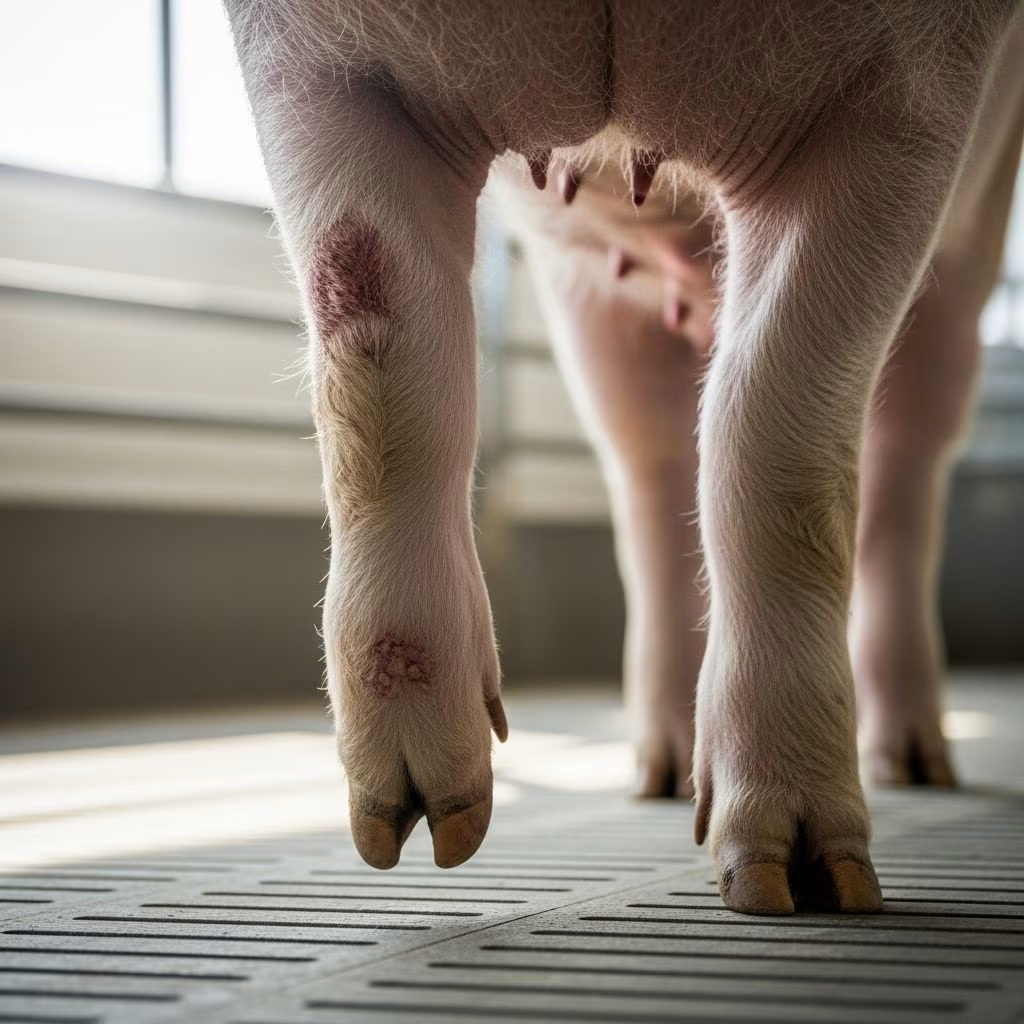
Introduction to Movement Disorders During Lactation
Abnormal gait or inability to move freely represents one of the most consequential health challenges within modern swine production systems, particularly during the lactation and farrowing cycle. The transition into the nursing period creates a physiologically demanding state for reproductive sows, during which metabolic demands peak and environmental stressors converge. Movement dysfunction during this critical phase carries substantial economic ramifications through increased culling rates, compromised reproductive performance, reduced milk production, and elevated mortality among nursing piglets. Understanding the underlying mechanisms and recognizing early clinical manifestations are essential competencies for swine health professionals and farm managers seeking to maintain productivity and animal welfare standards.
Defining Locomotor Dysfunction Within Farrowing Operations
The medical terminology “locomotor dysfunction” encompasses any deviation from normal gait patterns or weight-bearing capacity in swine. This condition manifests across a spectrum ranging from subtle reluctance to bear weight on affected limbs to complete inability to rise or support body mass. The biological foundation underlying these visible abnormalities may originate from musculoskeletal structures, the nervous system, or integumentary tissues. Etiological pathways include traumatic injury, infectious agents, nutritional insufficiency, or developmental abnormalities affecting skeletal architecture.
Within farrowing operations specifically, nursing sows frequently demonstrate behavioral changes preceding obvious physical lameness. These early indicators include reduced appetite, diminished willingness to maintain standing posture, and apparent discomfort when repositioning. Observant stockpeople who recognize these subtle signs can implement interventions before progression to severe incapacity or when secondary complications emerge.
Pathophysiological Mechanisms and Disease Classification
Infectious Origins of Farrowing-Associated Lameness
Bacterial and viral pathogens represent significant contributors to movement dysfunction in lactating sows. Certain microorganisms possess particular affinity for articular structures, establishing inflammatory reactions that generate pain and functional impairment. The bacterium Erysipelothrix rhusiopathiae constitutes a classic infectious agent capable of precipitating acute joint inflammation in susceptible populations. Similarly, Mycoplasma hyosynoviae induces chronic or recurrent arthritis patterns that may persist despite treatment interventions.
When foot and skin lesions breach the integumentary barrier, pathogenic organisms gain portal entry to deeper tissues. These wounds function either through direct pain mechanism or by establishing ascending infections toward joint structures. Progression from localized lesions to systemic bacteremia carries risk of establishing secondary complications including septic arthritis, endocarditis, or meningitis.
Viral agents, particularly those causing vesicular manifestations, produce lameness through tissue destruction and inflammatory responses. Foot-and-mouth disease, while uncommon in vaccinated populations, remains a critical differential diagnosis warranting regulatory notification when suspected.
Skeletal and Degenerative Pathology
Structural bone and cartilage degeneration represents another substantial etiological category. Degenerative joint disease develops progressively through repetitive microtrauma or developmental dysplasia. Osteochondrosis—abnormal endochondral ossification affecting articular cartilage development—creates architectural vulnerability predisposing toward lameness, particularly when combined with trauma from slippery surfaces or aggressive animal interactions.
Metabolic bone disease, including osteomalacia resulting from calcium-phosphorus imbalance, undermines skeletal integrity. Spiral fractures of long bones such as the femur may develop spontaneously or with minimal traumatic insult when mineral metabolism becomes severely compromised. Hypocalcemia during lactation intensifies this risk, manifesting through weakness, posterior paresis, recumbency, or sudden death in severe presentations.
Traumatic Injury and Environmental Contributions
Physical trauma constitutes an immediate and frequently preventable etiology. Abrupt onset of clinical signs typically correlates with specific inciting events—slippery flooring promoting sudden loss of traction, aggressive conspecific interactions during mounting behavior, or misadventure during constrained movement within farrowing structures. Strong muscle contractions during stressful episodes or handling can precipitate fractures in animals with underlying skeletal compromise.
Clinical Presentations in Nursing Sows and Associated Piglets
Observable Signs in Lactating Females
Lactating sows manifesting locomotor dysfunction exhibit characteristic behavioral and physical signs. Early recognition depends on consistent observation patterns during routine herd inspections. Affected individuals frequently demonstrate marked reduction in voluntary movement, remaining recumbent except when compelled to rise for essential functions. Reluctance to assume standing posture becomes apparent when sows resist rising even when presented with environmental stimuli that normally trigger standing behavior.
Physical examination reveals localized or generalized joint swelling, often appearing as fluid accumulation affecting major articulations including elbows, knees (stifles), hocks, and shoulders. Some affected sows display asymmetrical weight distribution, bearing reduced load on affected limbs while compensating through hyperextension of contralateral limbs. Fever may accompany infectious etiologies, though afebrile presentations characterize Mycoplasma-associated arthritis.
Pain manifestations include audible vocalization when rising or during movement, defensive responses when affected areas contact surfaces, and alteration of normal posturing. The distinctive “sitter” or “dog-sitting” position—where the sow maintains posterior limbs extended while supporting anterior body weight through thoracic structures—frequently appears in severe cases.
Reproductive consequences emerge as secondary effects. Sows experiencing mobility constraints demonstrate reluctance or inability to assume receptive posture during breeding attempts, effectively removing them from reproductive cycling. This reproductive failure, combined with potential milk production diminution through systemic illness effects, generates substantial economic impact beyond direct production loss through the affected lactation.
Clinical Manifestations in Nursing Piglets
Newborn and nursing piglets associated with affected sows encounter elevated risk for locomotor dysfunction through multiple mechanisms. Direct trauma during farrowing—particularly crushing injuries when sows struggle due to pain or discomfort—causes fractures and soft tissue injuries precipitating acute lameness. Additionally, environmental contact with contaminated surfaces introduces pathogenic organisms to abraded or lacerated integument.
Piglets demonstrate signs including shivering (particularly in systemically affected individuals), reluctance to move toward nursing sites, and visible joint swelling. Severely affected piglets may display inability to rise, failure to nurse, and rapid deterioration if traumatic injuries or septic arthritis develops. The correlation between farrowing pen flooring characteristics and piglet lameness prevalence demonstrates environmental determination of incidence rates.
Environmental and Management Determinants of Disease Incidence
Flooring Systems and Trauma Prevention
The physical environment within farrowing structures exerts profound influence over lameness prevalence independent of infectious disease status. Different flooring materials present distinct advantages and disadvantages regarding lameness risk profiles. Solid concrete surfaces, particularly when contaminated with excrement or moisture, create extremely slippery conditions promoting sudden traction loss and traumatic falls. Slatted flooring systems, while improving drainage and manure handling, concentrate weight-bearing across narrow contact points, increasing pressure per unit area on hooves and joints.
Deep litter systems incorporating soft bedding materials such as peat or straw demonstrate substantially lower lameness prevalence compared to unpadded concrete alternatives. The cushioning effect distributes force across wider contact areas, reduces impact loading on skeletal structures, and provides psychological comfort encouraging normal movement patterns. Piglets born in peat-bedded systems experience lameness prevalence in approximately one of four litters compared to one of two litters in concrete systems—representing a fifty percent reduction in clinical incidence.
Conversely, litter systems paradoxically increase mastitis incidence in nursing sows through elevated moisture, bacterial proliferation, and increased contamination contact with mammary tissue. Farm managers must therefore balance skeletal health benefits against potential mammary disease risk, implementing rigorous hygiene protocols when selecting bedding systems.
Housing Design and Sow Confinement Considerations
Farrowing crate design influences lameness risk through constraint effects and movement restriction. Animals confined within tight structures experience limited repositioning capability, potentially exacerbating pain perception and preventing relief behaviors. Extended recumbency without postural adjustment promotes pressure necrosis of underlying tissues and circulatory compromise. Structural specifications regarding width, height, and access design significantly impact clinical outcomes.
Nutritional Adequacy During Growth and Reproduction
Gilts and young sows represent particularly vulnerable populations regarding nutritional contributions to lameness. Inappropriate feeding protocols during adolescent growth generate skeletal deficiency. Some producers inadvertently feed finisher rations—formulated for rapid growth and lean deposition in younger animals—to replacement gilts destined for breeding. Conversely, some operations feed gestation rations to growing gilts before service, providing excessive mineral and caloric density inappropriate for developmental requirements.
Calcium, phosphorus, vitamin D, zinc, and copper deficiencies or imbalances undermine skeletal development. These nutritional insufficiencies create architectural weakness rendering developing animals susceptible to osteochondrosis and degenerative disease emerging during reproductive phases. During lactation specifically, escalated mineral demand for milk production compounds any pre-existing skeletal reserve limitations.
Diagnostic Approach and Investigation Protocol
Clinical Examination and History Integration
Systematic evaluation begins with comprehensive herd history assessment, documenting disease chronology, affected animal demographics, and temporal patterns relative to farrowing cycles. Individual affected animals require thorough physical examination including gait observation, joint palpation identifying swelling and pain responses, limb manipulation assessing range-of-motion limitations, and hoof inspection identifying lesions or deformation.
Ancillary Diagnostic Investigations
Severely affected animals may warrant necropsy with histopathological and microbiological examination of affected joints. Joint fluid collection and bacterial culture with antimicrobial susceptibility testing provide definitive pathogen identification when infectious arthritis is suspected. Radiographic imaging identifies fractures, degenerative changes, or other structural abnormalities contributing to clinical signs.
Prevention and Management Strategies
Environmental Optimization
Fundamental prevention depends upon environmental modification prioritizing animal movement safety. Regular flooring inspection and maintenance removes hazardous debris and manages moisture accumulation. Anti-slip treatments applied to concrete surfaces enhance traction, particularly in high-traffic areas. Transition zones between different flooring types require gradual slope modifications preventing sudden load redistribution.
Nutritional Program Development
Gilt development should incorporate age-appropriate nutrition supporting skeletal development. Diets should be specifically formulated for replacement gilts from selection through early pregnancy, incorporating adequate mineral density and bioavailable micronutrient forms. Lactation rations must provide sufficient calcium and phosphorus supporting milk production without depleting maternal skeletal reserves.
Infectious Disease Management
Vaccination programs targeting common bacterial arthritis pathogens should be implemented according to herd-specific serology and historical disease patterns. Biosecurity measures controlling introduction of novel pathogens, combined with prompt isolation of clinically affected animals, minimize disease spread. Judicious antimicrobial use based on culture results rather than prophylactic administration reduces selection pressure toward resistant organisms.
Economic Impact and Production Consequences
Movement dysfunction during the farrowing cycle generates multifaceted economic consequences beyond direct treatment costs. Culling of affected sows removes productive females from breeding programs. Compromised milk production from systemically ill sows impairs piglet growth and survival. Increased mortality in nursing piglets born to affected sows reduces saleable production per mated female. Reproductive delays from animals failing to conceive following recovery extend nonproductive inventory intervals. Treatment expenses, including antimicrobials and supportive care, accumulate rapidly in herds experiencing significant prevalence.
Conclusion
Movement dysfunction in lactating sows encompasses a complex spectrum of etiologies requiring multifaceted diagnostic and preventive approaches. Recognition of early clinical signs enables timely intervention before progression to irreversible stages. Systematic attention to environmental design, nutritional adequacy, infectious disease control, and genetic selection collectively minimize incidence within modern swine operations. Continued vigilance through consistent observation and willingness to invest in environmental improvements and diagnostic investigations maintain herd health and economic sustainability within farrowing populations.
References
- Lameness — The Pig Site. Accessed 2026. https://www.thepigsite.com/disease-guide/lameness
- Abrasions and lameness in piglets born in different farrowing systems — PMC/NCBI. 2008. https://pmc.ncbi.nlm.nih.gov/articles/PMC2564923/
- Overview of Lameness in Pigs – Musculoskeletal System — MSD Veterinary Manual. Accessed 2026. https://www.msdvetmanual.com/musculoskeletal-system/lameness-in-pigs/overview-of-lameness-in-pigs
- Lameness in Breeding Stock — NADIS (National Animal Disease Information System). Accessed 2026. https://www.nadis.org.uk/disease-a-z/pigs/lameness-in-breeding-stock/
- The key causes of lameness in sows — 3tres3.com. Accessed 2026. https://www.3tres3.com/en-af/articles/the-key-causes-of-lameness-in-sows_361/



