

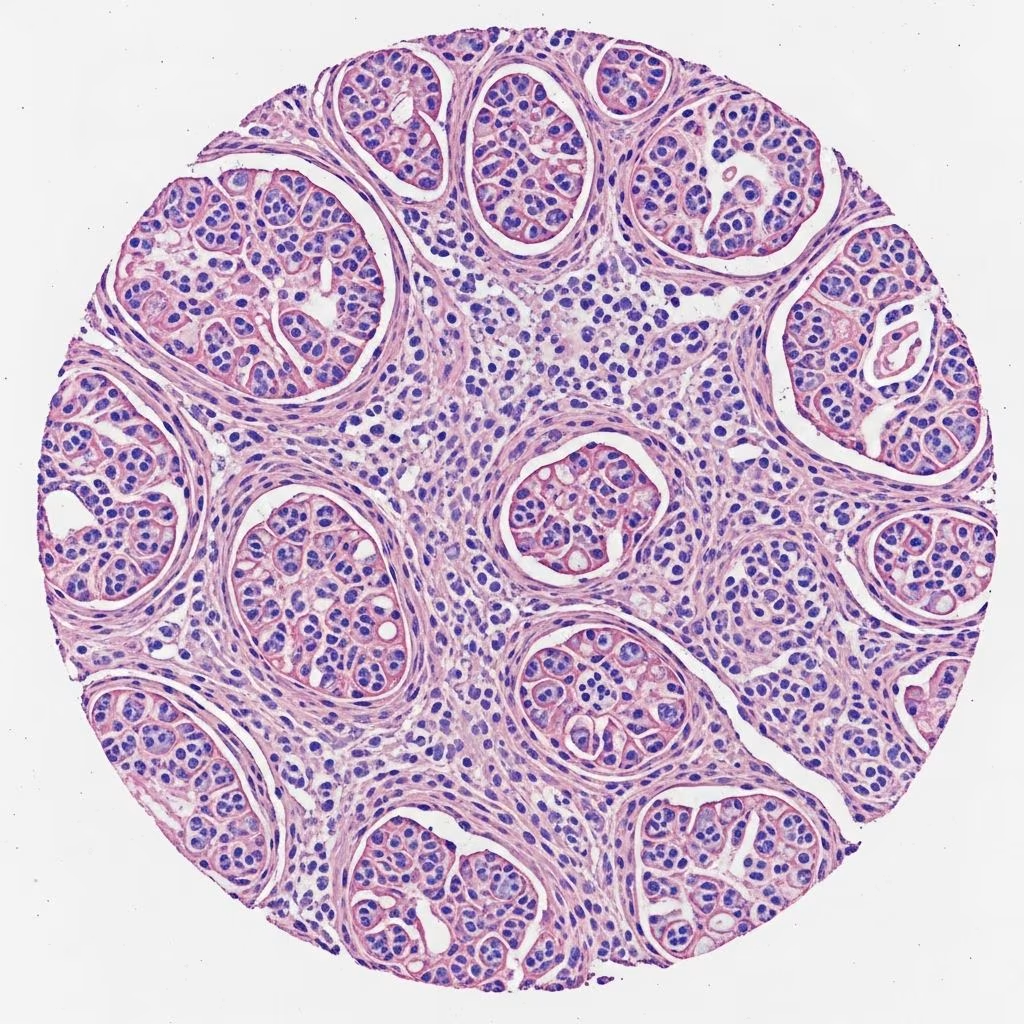
Lobular dissecting hepatitis (LDH) represents a distinctive form of chronic liver disease primarily observed in juvenile and young adult dogs. This condition involves progressive fibrosis that disrupts the normal architecture of the liver lobules, often culminating in portal hypertension and severe clinical complications. Unlike typical chronic hepatitis patterns, LDH features minimal inflammation alongside extensive fibrous septa that isolate hepatocytes into small clusters, distinguishing it pathologically and clinically.
Understanding the Pathophysiology of LDH
The core pathological hallmark of LDH is the dissection of hepatic lobules by fine reticulin and collagen fibers. These fibers infiltrate the parenchyma, subdividing it into individual hepatocytes or tiny groups, while sparing the limiting plates around portal triads to a lesser extent. This process leads to a contracted liver with a smooth or minimally nodular surface, contrasting with the irregular nodularity seen in end-stage cirrhosis from other hepatitides.
In affected livers, dilated vascular channels—encompassing expanded sinusoids and portal venules—become prominent, contributing to inefficient blood flow and subsequent portal hypertension. Fibroblasts, likely derived from hepatic stellate cells, proliferate along sinusoids, driving the fibrotic response. Regeneration occurs in the form of small, sublobular nodules, though these are less pronounced than in conventional chronic hepatitis.
Portal inflammation remains inconsistent and mild, typically comprising mixed infiltrates of lymphocytes, plasma cells, and occasional neutrophils. This subdued inflammatory component underscores why LDH may not elevate typical markers of inflammation as dramatically as other liver diseases. The condition’s onset in the neonatal or juvenile phase suggests a possible maturational vulnerability in the canine liver, akin to neonatal hepatitis patterns observed in humans.
Breeds and Demographics at Risk
LDH predominantly affects young dogs, with cases documented between neonatal stages and young adulthood. Certain breeds show predisposition, notably American Cocker Spaniels, where the condition has been increasingly reported. English Springer Spaniels and other spaniel breeds may also be involved, hinting at a potential genetic component, especially in litters or siblings.
- American Cocker Spaniels: Frequently associated, with distinct gross and microscopic features like fewer hyperplastic nodules and prominent lobular dissection.
- Young Dogs Generally: Disease develops early, often before two years of age, with rapid progression to clinical signs.
- No Strict Gender Bias: Both males and females are equally represented in reported cases.
Genetic clustering in families supports heritability, though environmental triggers remain unidentified. The minimal necrosis and inflammation differentiate it from copper-associated hepatopathies common in some spaniels.
Clinical Presentation and Progression
Dogs with LDH typically present with insidious signs that escalate over time. Initial nonspecific symptoms include lethargy and poor weight gain, progressing to overt hepatic failure manifestations. Key clinical features encompass:
- Ascites: A hallmark due to portal hypertension, often the presenting complaint.
- Jaundice (Icterus): Resulting from cholestasis and impaired bilirubin clearance.
- Weight Loss: Despite normal appetite initially, due to metabolic inefficiencies.
- Hepatic Encephalopathy (HE): In advanced stages, with neurological signs like disorientation or seizures.
Laboratory abnormalities mirror progressive liver dysfunction: elevated alanine aminotransferase (ALT) and alkaline phosphatase (ALP) early on, followed by increased total serum bile acids (TSBA) and hyperbilirubinemia. Coagulopathies and hypoalbuminemia emerge in later phases. Acquired portosystemic shunts (APSS) develop secondary to hypertension, exacerbating toxin circulation and HE.
| Stage | Clinical Signs | Lab Findings | Imaging |
|---|---|---|---|
| Early | Lethargy, anorexia | ↑ ALT, ALP | Normal liver size |
| Moderate | Ascites, mild jaundice | ↑ TSBA, bilirubin | Small liver, APSS |
| Advanced | HE, coagulopathy | Hypoalbuminemia, azotemia | Micronodular, ascites |
Diagnostic Approaches
Definitive diagnosis hinges on histopathology from liver biopsy, as imaging and serology alone cannot confirm LDH. Ultrasonography reveals a small, hypoechoic liver with irregular margins, ascites, and APSS, but these are nonspecific.
Biopsy protocols demand multiple samples from various lobes, encompassing at least 15 portal triads for representativeness. Key stains include:
- Reticulin: Highlights lobular dissection patterns.
- Masson’s Trichrome: Quantifies collagen fibrosis.
- Rhodanine: Rules out copper accumulation, often absent in LDH.
Alpha-smooth muscle actin staining confirms stellate cell activation. Cultures for bacteria and quantitative metal assays are routine to exclude infectious or toxic etiologies.
Differential Diagnoses
LDH must be differentiated from other chronic hepatopathies:
| Condition | Key Distinctions from LDH |
|---|---|
| Chronic Active Hepatitis | Prominent portal inflammation, bridging fibrosis, more nodules. |
| Copper Hepatopathy | High copper levels, granulomas, zone-specific necrosis. |
| Idiopathic Cirrhosis | Macronodular regeneration, intense inflammation. |
| Neonatal Hepatitis | More necrosis, less fibrosis in very young pups. |
Treatment and Management Strategies
No curative therapy exists; management focuses on symptom palliation and complication prevention. Supportive measures include:
- Diuretics: Spironolactone and furosemide for ascites control.
- Low-Protein Diet: Mitigates HE by reducing ammonia load.
- Lactulose/Antibiotics: For HE management.
- Antifibrotics: Experimental use of drugs like pentoxifylline, though evidence is limited.
- Colchicine: May inhibit fibrosis in select cases.
Prognosis varies; early detection offers better control, but portal hypertension often proves refractory. Monitoring via serial TSBA and imaging guides therapy adjustments.
Research Insights and Future Directions
Studies emphasize LDH’s uniqueness, with histopathological reviews confirming its prevalence in spaniels. Genetic screening for at-risk breeds and novel antifibrotic agents represent promising avenues. Pathogenesis likely involves aberrant wound-healing responses in immature livers, warranting further molecular investigations.
Frequently Asked Questions (FAQs)
What is lobular dissecting hepatitis in dogs?
LDH is a chronic liver condition where fibrous bands dissect liver lobules, leading to dysfunction, mainly in young dogs.
Which breeds are most susceptible to LDH?
American Cocker Spaniels top the list, followed by other spaniels, often in young adults.
How is LDH diagnosed?
Liver biopsy with reticulin staining is essential to visualize the characteristic dissection.
Can LDH be treated effectively?
Treatment is supportive; prognosis depends on early intervention and complication management.
Is LDH hereditary?
Familial patterns suggest a genetic basis, particularly in predisposed breeds.
References
- Lobular dissecting hepatitis in juvenile and young adult dogs — van den Ingh TS, Rothuizen J. J Vet Intern Med. 1994-05-01. https://pubmed.ncbi.nlm.nih.gov/8064658/
- Lobular dissecting hepatitis in the dog — PubMed. 1983. https://pubmed.ncbi.nlm.nih.gov/6836874/
- Conference 20 – 2018 Case: 2 — askJPC. 2018. https://www.askjpc.org/wsco/wsc_showcase2.php?id=bVpTT3REeVZHOHB3WWt2RGVQck9BQT09
- Canine Chronic Hepatitis — MSD Veterinary Manual. https://www.msdvetmanual.com/digestive-system/hepatic-diseases-of-small-animals/canine-chronic-hepatitis
- Lobular Dissecting Hepatitis in the Dog — Bennett AM, Davies JD. Vet Pathol. 1983-01-01. https://journals.sagepub.com/doi/10.1177/030098588302000205
- Hepatitis, Lobular Dissecting — Wiley Online Library. https://onlinelibrary.wiley.com/doi/pdf/10.1002/9781119376293.ch123



