

Llamas and alpacas, both members of the camelid family native to South America, have become increasingly popular domesticated animals worldwide. Despite their similar appearance and shared ancestry, these creatures possess distinct characteristics that influence their behavior, utility, and care requirements. Understanding these differences is essential for anyone considering raising these animals or simply seeking to appreciate their unique qualities. This comprehensive overview explores the defining features that set these remarkable animals apart.
Physical Dimensions and Body Structure
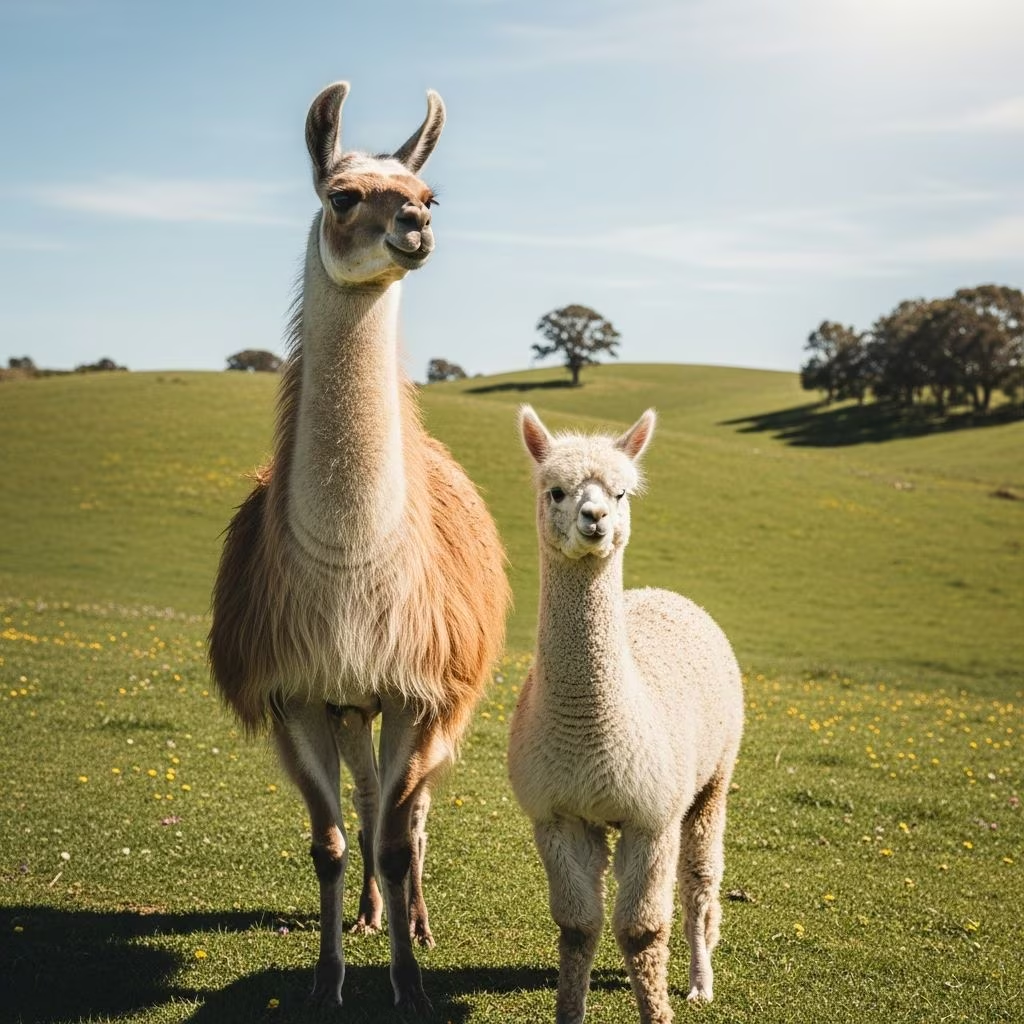
One of the most obvious distinctions between llamas and alpacas lies in their overall size and proportions. Llamas are considerably larger animals, typically standing approximately 120 centimeters at the shoulder and weighing between 100 to 113 kilograms, with some individuals reaching up to 180 kilograms or more. In contrast, alpacas are notably smaller and more delicate, measuring roughly 90 centimeters in height and weighing between 50 to 85 kilograms. This size difference reflects their evolutionary adaptations: llamas were traditionally used as beasts of burden for transporting goods across challenging mountain terrain, while alpacas were primarily developed for fiber production.
The structural differences extend beyond mere size. Llamas possess a more robust and muscular frame designed to carry substantial loads over long distances, whereas alpacas maintain a more compact, elegant physique suited to their fiber-focused purpose. The llama’s back runs relatively straight, providing stability for cargo transport, while the alpaca’s back curves slightly upward, a characteristic that distinguishes the two species at a glance.
Facial Features and Ear Morphology
The heads and facial structures of these animals offer some of the clearest visual indicators for differentiation. Llamas feature longer, more pronounced muzzles with elongated faces that give them a distinctive appearance, whereas alpacas possess shorter, more rounded snouts that create an endearing, compact facial expression. Many describe alpaca faces as having a “smushed in” quality, contributing to their characteristic charm.
Perhaps the most immediately recognizable distinction appears in ear structure. Llamas display long, banana-shaped ears that curve gracefully and are proportionally larger relative to their head size. These expressive ears serve as important communication tools, with their positioning reflecting the animal’s emotional state. Alpacas, by contrast, possess noticeably smaller, triangular or spear-shaped ears that stand more upright and straighter than those of llamas. The alpaca’s facial features typically include fuller, more woolly cheeks and a generally softer appearance throughout the head region.
Fiber and Coat Characteristics
The fiber quality and utility of these animals represent perhaps their most significant functional difference. Alpacas are bred primarily for their luxurious fleece, which represents one of the finest natural fibers available—comparable in softness and quality to cashmere. Alpaca fiber is remarkably dense, fine, and silky, growing faster than llama hair and featuring superior spinning qualities for textile production. The breed comes in approximately 22 naturally occurring colors, ranging from creamy whites and pale fawns to rich browns, blacks, and complex multicolored patterns known as “fancy.”
Llama fiber, by contrast, serves primarily a protective function rather than commercial textile application. Llamas possess a double-layered coat consisting of a soft undercoat and a coarser, wiry overcoat that are difficult to separate from one another. This structure makes llama fiber less suitable for garment production, though the hair provides excellent weather protection and insulation. Llama coat colors typically include solid shades or spotted patterns, displaying browns, whites, blacks, and grays, often in combination.
Behavioral Characteristics and Social Structures
The personality differences between llamas and alpacas significantly impact their interactions with humans and other animals. Alpacas are fundamentally herd animals that require group living to thrive, displaying gentle, shy, and cautious temperaments, particularly in unfamiliar situations. They form strong bonds within their herds and depend on these relationships for emotional security and confidence. When threatened or frightened, alpacas prefer retreat and avoidance, only resorting to spitting as an absolute last resort when experiencing extreme anger or fear.
Llamas exhibit more independent and confident personalities, demonstrating assertiveness and a strong territorial sense stemming from their historical role as herd guardians. This confidence extends to their interactions with humans, often displaying calm and collected demeanor despite their larger size. Llamas can serve as effective protectors for groups of smaller livestock, actively defending against predators through their alertness and protective instincts.
The spitting behavior deserves particular attention, as it represents a notable behavioral distinction. Llamas are known for spitting quickly and readily when feeling threatened, while alpacas are considerably gentler and typically only spit when experiencing extreme provocation, usually related to reproduction or maternal protection. Understanding these behavioral tendencies is crucial for handlers and owners managing these animals.
Strength, Capability, and Practical Applications
The physical capabilities of these animals determine their practical applications in contemporary and historical contexts. Llamas possess considerable strength and were historically employed as pack animals traversing challenging Andean terrain, earning the nickname “ships of the Andes” for their capacity to transport heavy loads across long distances. Their powerful frames and enduring nature make them suitable for mountainous regions and difficult terrain.
Alpacas lack the strength for carrying heavy loads and cannot even reliably support the weight of a small child on their backs. Instead, their value lies in fiber production and their gentle companionship qualities. Many alpaca breeders utilize llamas as guardian animals for their alpaca herds, leveraging the llama’s protective instincts and superior strength.
Sensory Communication and Ear Expression
The ears of both species function as sophisticated communication instruments, conveying emotional information to both other animals and human observers. The positioning and movement of ears reflect immediate emotional states: pinned-back ears indicate agitation or fear, while perked-up ears signal happiness and curiosity. This ear-based communication system allows these animals to express their feelings nonverbally and serves as a “status update” of sorts to herd members and caretakers observing them.
Intelligence and Trainability
Cognitive abilities differ notably between the two species. Alpacas demonstrate considerable intelligence and possess the capacity to learn various tricks and commands, responding well to patient training and positive reinforcement. Their gentle nature facilitates learning interactions with humans. Llamas, despite their intelligence, often display a confidence or pride that limits their inclination toward trick training, though they can certainly be trained for practical purposes like leading on halters or basic obedience.
Health, Husbandry, and Management Considerations
Effective care for both llamas and alpacas requires understanding their specific health needs and management requirements. Both species benefit from:
- Regular veterinary monitoring and preventive health care
- Appropriate grazing space with quality pasture or supplemental hay
- Fresh water available continuously
- Shelter from extreme weather conditions
- Annual shearing (particularly important for alpacas)
- Routine hoof trimming and dental care
- Parasite management through appropriate preventive protocols
- Social companionship with other herd members
While both species are generally hardy animals adapted to various climates, proper nutrition remains essential for maintaining health and supporting production goals, whether those involve fiber quality in alpacas or overall vitality in llamas.
Selecting Between Llamas and Alpacas
Prospective owners should carefully consider their goals and resources when choosing between these animals. Alpacas suit individuals interested in fiber production, seeking gentler temperaments, or operating smaller-scale operations requiring less carrying capacity. Llamas appeal to those needing guardian animals for other livestock, requiring pack animals for terrain navigation, or preferring independent, confident animals suitable for working roles. Both species offer rewarding ownership experiences when their specific needs and characteristics align with the owner’s objectives.
References
- Llamas and Alpacas (FS917) — Rutgers New Jersey Agricultural Experiment Station. https://njaes.rutgers.edu/fs917/
- Alpacas vs Llamas: What’s the Difference? — Discover Wildlife. https://www.discoverwildlife.com/animal-facts/mammals/alpacas-llamas-difference
- What’s the Difference Between Alpacas and Llamas? — PETA. https://www.peta.org/features/alpaca-and-llama-differences/



