
Llama And Alpaca Breeding Guide: Comprehensive Herd Management
Master the essentials of camelid reproduction for successful llama and alpaca farming and breeding programs.
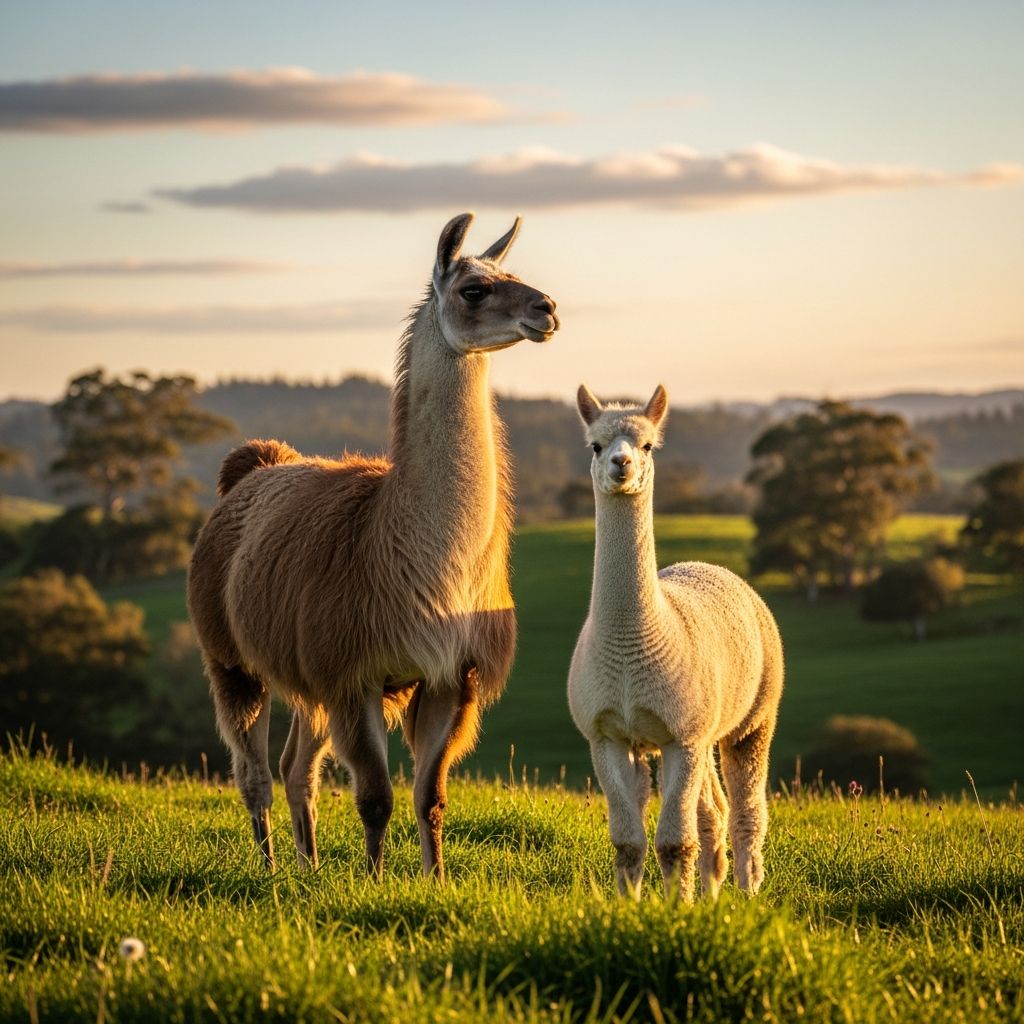
Successful breeding of llamas and alpacas hinges on understanding their unique reproductive physiology. These South American camelids exhibit induced ovulation and seasonal tendencies, making management practices crucial for herd productivity. This guide delves into their breeding cycles, mating dynamics, gestation, and neonatal care to support farmers and veterinarians.
Understanding Puberty and Sexual Maturity
Puberty in female llamas and alpacas typically emerges between 10 and 12 months of age, marked by the start of ovarian follicular waves. A dominant follicle develops every 12 to 14 days, signaling reproductive readiness. However, to avoid complications like dystocia, breeders delay first mating until females reach over 24 months and achieve specific weights: at least 40 kg for alpacas and 90 kg for llamas.
Males begin androgen production before 8 months, with initial sperm detectable by 14 months via vaginal methods. Full functionality is hindered by preputial adhesions until 18 to 24 months, when most enter breeding programs. Full fertility often arrives by 30 months, potentially later in alpacas.
Mating Behaviors and Physiology
Females display receptivity by assuming a sternal recumbency, known as ‘kushing,’ shortly after male introduction. Males respond with mounting and a distinctive ‘orgling’ vocalization. Copulation lasts up to 45 minutes, with ejaculation of 2-5 mL directly into the uterus following cervical dilation.
Semen contains an ovulation-inducing factor, triggering reflex ovulation 24 to 30 hours post-mating. A corpus luteum forms within 2-3 days, supporting early pregnancy. Fertilized oocytes reach the uterus by day 7, implanting around day 30.
- Key Mating Indicators: Rapid kushing by female; prolonged mounting with orgling by male.
- Ovulation Timeline: 24-30 hours after breeding.
- Early Embryo Detection: Uterus by day 7.
Seasonal Breeding Patterns
Native to high-altitude Andean regions, llamas and alpacas are seasonal breeders, peaking in summer. Outside natural habitats, such as North America or Europe, they often breed year-round due to milder climates. This adaptability allows flexible management but requires monitoring for optimal timing.
Diagnosing Pregnancy Effectively
Pregnancy is first suspected if the female rejects the male beyond 15 days post-mating, indicating a functional corpus luteum. Serum progesterone levels exceeding 1 ng/mL confirm ovulation at 6-9 days or pregnancy after 21 days, though persistent corpora lutea can cause false positives.
Advanced methods include:
- Transrectal ultrasonography: Reliable after 21 days.
- Rectal palpation: Accurate for llamas post-45 days.
- Transcutaneous ultrasonography: 45-60 days for both species.
| Method | Timing | Best For |
|---|---|---|
| Female Rejection Test | >15 days | Initial Indicator |
| Progesterone Assay | >21 days | Biochemical Confirmation |
| Transrectal Ultrasound | >21 days | Early Visualization |
| Rectal Palpation | >45 days (llamas) | Manual Assessment |
| Transcutaneous Ultrasound | 45-60 days | Non-Invasive Check |
The Gestation Journey
Gestation averages 342 days, with alpacas slightly shorter at 332-352 days. Over 70% of births occur in the morning, minimizing dystocia risks. Females show minimal mammary changes pre-parturition, with four teats and low mastitis incidence.
Postpartum, uterine involution enables rebreeding within 14-21 days, supporting efficient herd expansion.
Stages of Labor and Delivery
Labor unfolds in three stages:
- Stage I (1-6 hours): Subtle signs like frequent urination, humming, and herd separation. Often overlooked.
- Stage II (<30 minutes): Rapid expulsion of cria; alpacas 5.5-8 kg, llamas 11-16 kg.
- Stage III (4-6 hours): Placenta expulsion; retained cases rare.
Primiparous dams experience prolonged stages. Monitoring ensures cria viability.
Male Reproductive Development
Testicles descend at birth, maturing to 2×4 cm in alpacas and 3×6 cm in llamas. Scrotal positioning aids thermoregulation. Breeding soundness involves semen evaluation post-18 months.
| Parameter | Alpaca | Llama |
|---|---|---|
| Mature Testes Size | 2×4 cm | 3×6 cm |
| Puberty Onset | ~10-12 mo | ~10-12 mo |
| Breeding Entry Age | 18-24 mo | 18-24 mo |
| Full Fertility | By 30 mo | By 30 mo |
Postpartum Care and Rebreeding
Females resume fertility quickly, but condition assessment prevents overbreeding. CriAs require immediate bonding; survival rates improve with vigilant monitoring. Year-round data from farms show gestation variability (314-400 days), emphasizing record-keeping.
Common Reproductive Challenges
Persistent corpora lutea mislead progesterone tests. Early breeding risks dystocia. Seasonal shifts demand adjusted nutrition. Veterinary intervention optimizes outcomes.
Nutritional and Management Strategies
Support breeding with balanced diets rich in energy and minerals during late gestation. Herd separation during labor minimizes stress. Ultrasound training enhances diagnosis accuracy.
Frequently Asked Questions (FAQs)
When do llamas and alpacas reach puberty?
Ovarian activity starts at 10-12 months in females; males produce androgens earlier but mate effectively from 18 months.
How is ovulation triggered in camelids?
They are induced ovulators; semen factor prompts release 24-30 hours post-mating.
What is the average gestation length?
Around 342 days, ranging 332-352 days, shorter in alpacas.
How soon after birth can a female rebreed?
Typically 14-21 days, following uterine involution.
What are signs of impending labor?
Increased urination, humming, isolation; Stage I lasts 1-6 hours.
Optimizing Herd Productivity
Integrate behavioral cues, diagnostics, and timely interventions for thriving herds. Track individual records to refine breeding schedules, ensuring sustainable camelid operations.
References
- Reproduction of Llamas and Alpacas — MSD Veterinary Manual. 2023. https://www.msdvetmanual.com/exotic-and-laboratory-animals/llamas-and-alpacas/reproduction-of-llamas-and-alpacas
- Reproduction of Llamas and Alpacas — Merck Veterinary Manual. 2023. https://www.merckvetmanual.com/exotic-and-laboratory-animals/llamas-and-alpacas/reproduction-of-llamas-and-alpacas
- A retrospective study on reproduction in alpacas (Lama pacos) — PMC (PubMed Central). 2025. https://pmc.ncbi.nlm.nih.gov/articles/PMC12246586/
Similar Articles








Read full bio of medha deb


