

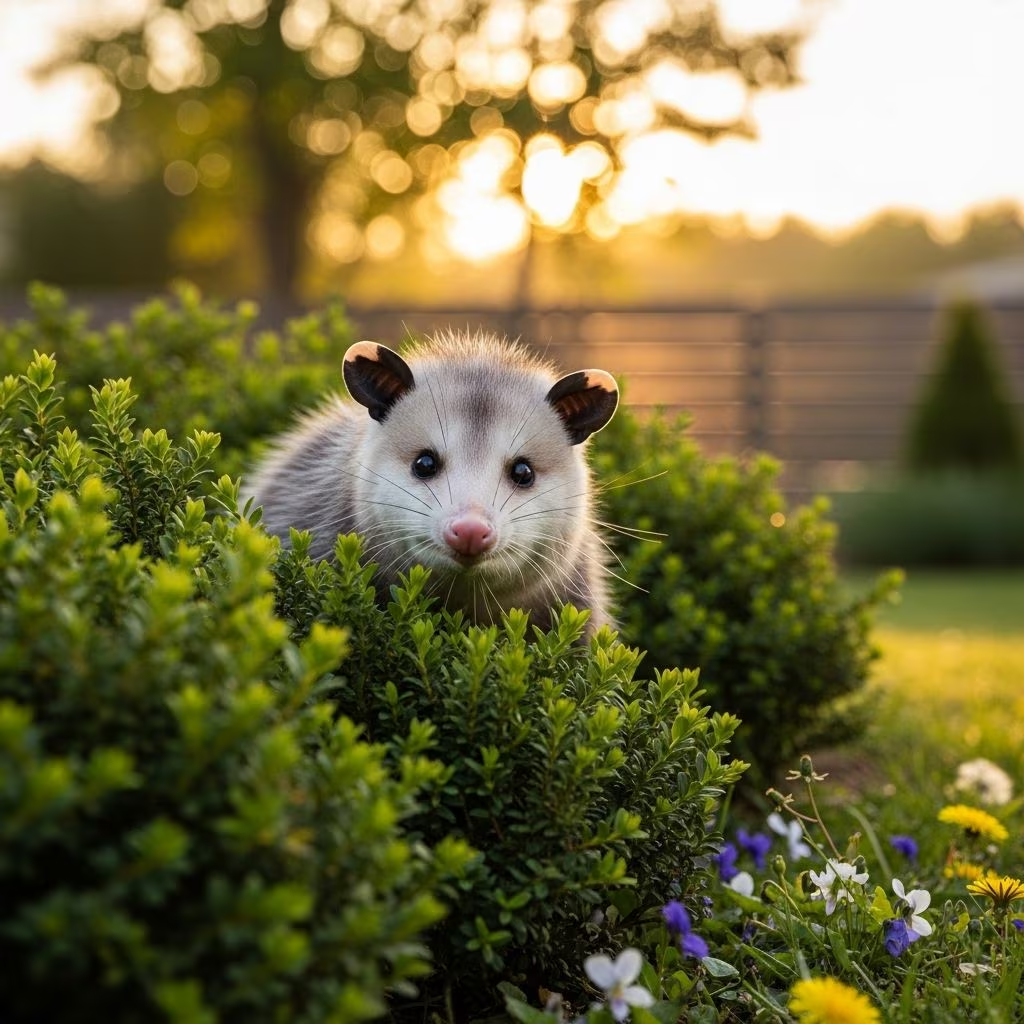
Opossums, often misunderstood as pests, are North America’s only marsupials that play a vital role in controlling insects and scavenging waste. Understanding their needs and behaviors allows homeowners to address visits humanely without harm.
Understanding Opossum Biology and Adaptability
These resilient creatures thrive across diverse landscapes, from dense forests to bustling suburbs, due to their opportunistic nature. Virginia opossums, the common North American species, feature grayish fur, pointed snouts, and prehensile tails for climbing. Adults measure about the size of a house cat, with body lengths of 14-19 inches plus a 10-17 inch tail.
Their adaptability stems from a flexible diet encompassing fruits, vegetables, insects, snails, carrion, and even pet food or garbage. This omnivorous approach enables survival near human developments where natural food sources dwindle. Unlike rodents, opossums rarely damage structures but seek shelter opportunistically.
Preferred Habitats and Daily Routines
Opossums favor areas near water like streams, swamps, or wetlands, combined with cover such as woodlands or brush. In wild settings, they inhabit deciduous forests, marshes, and fields providing climbing opportunities and hiding spots. Urban expansion hasn’t deterred them; they now frequent backyards, farms, and cities.
- Natural shelters: Hollow logs, tree cavities, rock crevices, and abandoned burrows from skunks or foxes.
- Urban adaptations: Under decks, porches, sheds, garages, attics, or woodpiles.
- Daily patterns: Nocturnal by nature, they rest in hidden spots during daylight and forage at night.
They don’t construct nests but repurpose existing sites, lining them with leaves carried in their tails for insulation. Home ranges span 10-350 acres, larger for males, with females staying closer during rearing. Solitary except in breeding season (late winter to summer), they avoid confrontation.
Why Opossums Frequent Human Spaces
Proximity to people offers easy access to food and shelter, drawing opossums into yards. Open garbage, fallen fruit, bird feeders, compost, and pet bowls act as magnets. Overgrown vegetation and debris piles provide ideal daytime hides.
| Attractant | Why It Draws Opossums | Quick Fix |
|---|---|---|
| Garbage cans | Easy scavenging | Secure lids, elevate bins |
| Fallen fruit | Sweet, abundant food | Daily cleanup |
| Pet food | Protein source | Feed pets indoors |
| Bird seed | Spilled grains | Use baffled feeders |
| Debris piles | Shelter sites | Remove or secure |
While they may startle residents, opossums pose minimal threat: low rabies incidence due to body temperature deterring the virus, and they eliminate ticks (up to 5,000 per season per animal via grooming).
Humane Deterrence Strategies for Your Property
Prevention focuses on eliminating attractants and sealing access points. Start by observing activity at night with minimal lights to identify entry spots.
Secure Food Sources
Store trash in animal-proof containers with tight lids. Harvest ripe produce promptly and remove pet food after meals. Install bird feeders with trays to catch spills and baffles to block climbers.
Modify the Landscape
Trim overhanging branches away from roofs to prevent attic access. Clear brush piles, leaf litter, and wood stacks regularly. Keep grass short and fences intact (add smooth metal flashing if gaps exist).
Block Entry Points
Inspect foundations, vents, and gaps larger than 4 inches; seal with hardware cloth or metal flashing. For sheds or decks, add skirting. Before sealing dens, confirm vacancy by covering holes with soil and monitoring for disturbance.
Use motion-activated lights or sprinklers to startle without harm. Natural repellents like ammonia-soaked rags or commercial capsaicin sprays offer temporary deterrence around gardens.
Handling Active Encounters Safely
If an opossum appears trapped indoors, remain calm—they feign death (playing possum) when stressed, a non-aggressive defense. Open exterior doors, dim lights, and retreat to encourage exit. Avoid touching; use thick gloves or a broom if relocation needed.
For attic or crawlspace residents, employ one-way exclusion doors after young are mobile (post-April). Never separate mothers from joeys, as infants die without care.
Health and Safety Facts
Opossums carry few diseases transmissible to humans; their 94-97°F body temperature inhibits rabies. They may host fleas or mites, but proper sanitation mitigates risks. Bites are rare, occurring only if cornered—wash wounds and seek medical advice.
- Myths debunked: Not aggressive; slow runners preferring flight or freeze.
- Benefits: Consume pests like roaches, rodents indirectly by eating eggs, and clean carrion.
Legal Protections and When to Seek Help
In many areas, opossums are unregulated, but check local wildlife laws before trapping. Relocation stresses them, reducing survival odds—prefer on-site deterrence. Contact licensed rehabilitators for injured or orphaned young; never raise as pets due to specialized needs and short lifespan (1-2 years wild, 3-4 captive).
Professional removal services use humane live traps baited with fruit or peanut butter, releasing nearby if permitted.
FAQs
Are opossums dangerous?
No, they avoid humans and rarely bite unless provoked. They control harmful insects effectively.
How do I know if opossums are denning nearby?
Look for tracks (five-toed hind feet), scat (dark, pointed), or greasy rub marks on entry points.
Can I trap and relocate them?
Humane traps work, but release on-site or consult pros; laws vary by location.
Do they carry rabies?
Extremely rare due to physiology.
What if I find babies alone?
Wait 24 hours—mother may retrieve. If not, contact rehabber.
Appreciating Opossums’ Ecological Role
Beyond nuisance perceptions, opossums aid biodiversity by recycling nutrients and curbing pests. Coexistence through simple modifications fosters balance without conflict.
References
- Opossums: Where They Live and Their Unique Way of Life — Critter Care Wildlife. 2023. https://www.crittercarewildlife.org/opossums-and-their-unique-way-of-life
- Facts About Opossums — Havahart. 2024. https://www.havahart.com/opossum-facts
- The Opossum: Our Marvelous Marsupial, The Social Loner — Wildlife Rescue League. 2023. https://www.wildliferescueleague.org/animals/the-opossum-our-marvelous-marsupial-the-social-loner/
- Opossum — UC IPM, University of California Agriculture and Natural Resources. 2025-01-15. https://ipm.ucanr.edu/home-and-landscape/opossum/
- Opossums — PAWS. 2024. https://www.paws.org/resources/opossums/
- WEC426/UW471: Wildlife of Florida Factsheet: Virginia Opossum — University of Florida IFAS Extension. 2024-06-01. https://edis.ifas.ufl.edu/publication/UW471



