

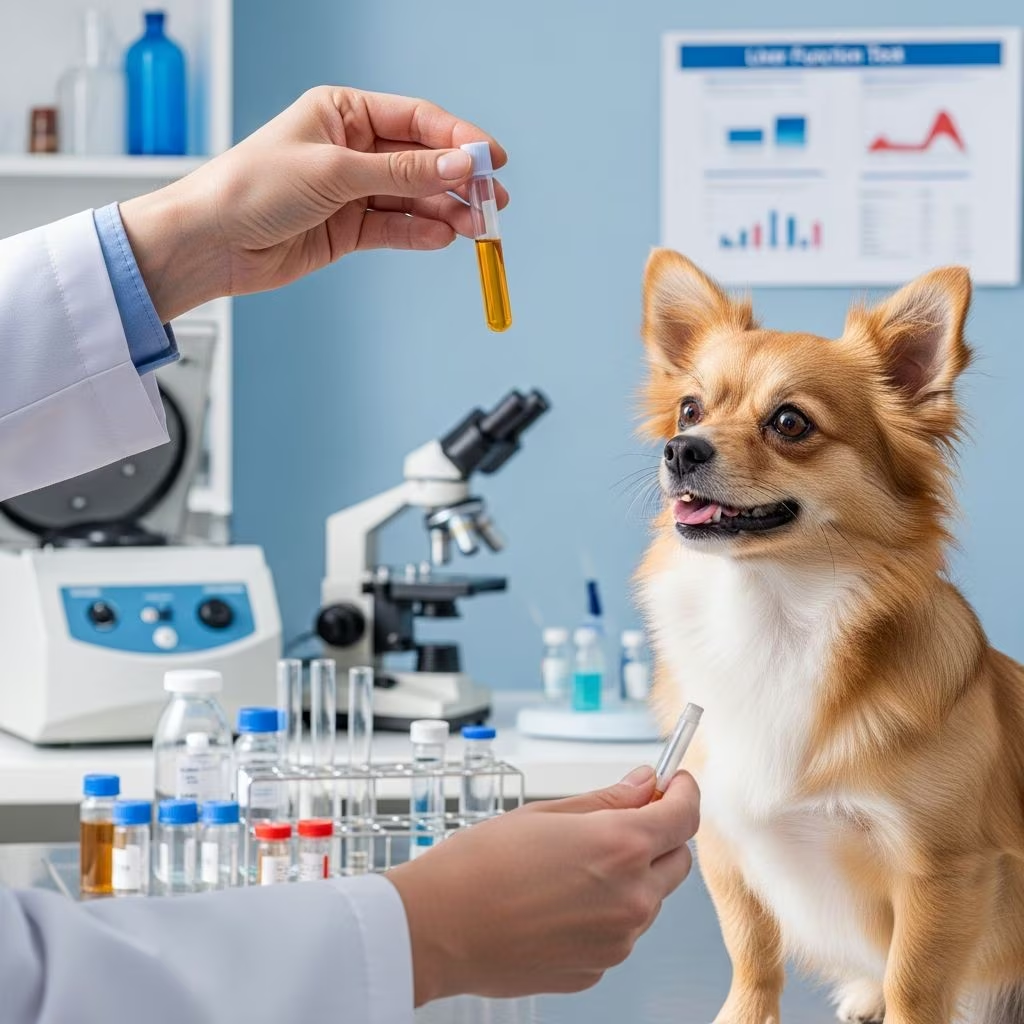
The liver plays a crucial role in small animals like dogs and cats, handling detoxification, protein synthesis, and bile production. When it falters, early detection through targeted lab tests becomes vital. This article delves into the primary methods for evaluating liver performance, focusing on practical applications in veterinary practice.
Why Assess Liver Performance in Pets?
Liver issues in small animals often remain silent until advanced stages due to the organ’s substantial reserve capacity. Routine screening helps uncover problems like cholestasis, shunts, or reduced synthetic ability. Tests go beyond enzyme elevations, measuring actual function to guide biopsies or imaging.
- Large functional reserve masks early disease.
- Function tests complement enzyme panels for full picture.
- Ideal for breeds prone to congenital anomalies.
Core Principles of Hepatic Evaluation
Hepatic assessment starts with baseline blood work but emphasizes dynamic tests that challenge liver capacity. Static measures like albumin or cholesterol hint at chronic failure, while bile acids and ammonia provide direct functional insights.
| Test Type | Primary Use | Small Animal Relevance |
|---|---|---|
| Bile Acid Levels | Cholestasis & Shunts | High sensitivity in dogs/cats |
| Ammonia Concentration | Encephalopathy Risk | Supports shunt diagnosis |
| Synthetic Markers | Chronic Dysfunction | Late-stage indicators |
Bile Acid Analysis: The Gold Standard Test
Serum bile acids stand out as the most reliable and accessible way to gauge liver function in companion animals. Produced by the liver and recycled via the enterohepatic circulation, elevated levels signal impaired clearance due to cholestasis or vascular shunts.
To perform accurately, collect samples pre- and post-meal, as feeding stimulates gallbladder contraction and bile release. Abnormal thresholds are typically above 25 μmol/L in dogs and 20 μmol/L in cats, regardless of fasting status. Single samples risk missing fluctuations, so paired testing is standard.
Clinical Scenarios for Bile Acid Testing
- Screening young terrier breeds for microvascular dysplasia.
- Evaluating unexplained enzyme rises.
- Confirming portosystemic shunts before surgery.
In breeds like Yorkshire Terriers, Maltese, and Shih Tzus, routine checks at six months catch subtle shunts early, preventing misinterpretation during illness. Hemolyzed or lipemic samples invalidate results, requiring centrifugation or redraw.
Limitations and Complementary Use
While sensitive for shunts (93-100% detection rate), normal bile acids don’t rule out parenchymal disease due to reserve capacity. Pair with imaging for confirmation, and consider biopsy if persistent elevations occur.
Ammonia Measurement: Detecting Toxic Buildup
Blood ammonia arises mainly from gut bacteria breaking down proteins and urea. Healthy livers convert 85% to urea; shunts or failure allow systemic spillover, causing encephalopathy.
Hyperammonemia flags acute failure or shunts, especially with crystalluria. However, normal levels don’t exclude encephalopathy, as multifactorial causes exist. Postprandial or tolerance tests amplify detection: administer ammonium chloride orally (100 mg/kg) or rectally, sampling at intervals up to 60 minutes. Caution: this can induce symptoms in vulnerable pets.
When to Pursue Ammonia Testing
Indicated for neurological signs, low BUN, or suspected shunts. Serial monitoring tracks progression, though poor correlation limits standalone use.
Synthetic Capacity Markers: Late but Telling Signs
The liver synthesizes albumin, clotting factors, urea, and cholesterol. Declines signal end-stage disease:
- Albumin: Hypoalbuminemia (<2.5 g/dL) after weeks of illness.
- BUN/Cholesterol: Drops in 40% of chronic cases, especially cirrhosis.
- Protein C: Reduced in shunts (cutoff 70% distinguishes from dysplasia, 93% sensitivity).
These lag behind function tests but confirm severity.
Breed-Specific Risks and Screening Protocols
Small, terrier-like dogs face higher congenital shunt risks. Annual wellness panels should include bile acids for:
- Yorkshire Terrier
- Maltese
- Bichon Frise
- Shih Tzu
- Cairn Terrier
- And similar breeds.
Early detection allows management, avoiding surgical needs later.
Integrating Tests with Imaging and Biopsy
Abnormal function tests prompt ultrasound or CT to visualize shunts or nodules. Biopsy remains gold standard for histology, essential when enzymes alone mislead.
Algorithm: Enzymes → Function Tests → Imaging → Biopsy.
Case Examples in Practice
Young Puppy with Growth Issues
A 3-month Irish Wolfhound shows lethargy. Normal enzymes but high bile acids/ammonia point to shunt; ultrasound confirms.
Adult Cat with Jaundice
Mild ALP rise, postprandial bile acids >30 μmol/L indicate cholestasis; biopsy reveals lipidosis.
Common Pitfalls in Interpretation
- Ignoring paired bile acid samples.
- Over-relying on ammonia for encephalopathy.
- Missing breed predispositions.
- Forgetting sample handling (no hemolysis).
FAQs on Liver Function Testing
What if bile acids are normal but enzymes high?
Indicates damage without functional loss; pursue imaging.
Is fasting required for bile acid tests?
No—test pre- and 2-hour post-meal for accuracy.
Which breeds need routine screening?
Terriers and small dogs like Yorkies, Shih Tzus.
Can normal tests rule out liver disease?
No, due to reserve; combine with history.
How do I prepare for ammonia tolerance test?
Baseline + post-challenge samples; monitor for vomiting.
Advances and Future Directions
Emerging protein C assays refine shunt vs. dysplasia differentiation. Consensus guidelines stress multimodal approaches for chronic hepatitis.
References
- Hepatic Function Tests in Small Animals — Merck Veterinary Manual. 2023. https://www.merckvetmanual.com/digestive-system/laboratory-analyses-and-imaging-in-hepatic-disease-in-small-animals/hepatic-function-tests-in-small-animals
- Liver function tests — eClinpath. 2024. https://eclinpath.com/chemistry/liver/liver-function-tests/
- Liver Enzyme Interpretation and Function Tests — Today’s Veterinary Practice. 2023. https://todaysveterinarypractice.com/hepatology/liver-enzyme-interpretation-and-function-tests/
- The Approach to Abnormal Liver Enzymes in Companion Animals — Zoetis Diagnostics. 2022. https://www.zoetisdiagnostics.com/assets/Resources/PDF/The-Approach-to-Abnormal-Liver-Enzymes-in-Companion-Animals-Technical-Bulletin.pdf
- ACVIM consensus statement on the diagnosis and treatment of chronic hepatitis in dogs — PMC (PubMed Central). 2019-05-20. https://pmc.ncbi.nlm.nih.gov/articles/PMC6524396/
- Guidelines for Collecting Liver Samples — Texas A&M Veterinary Medical Diagnostic Laboratory. 2024. https://tvmdl.tamu.edu/education-library/guidelines-for-collecting-liver-samples-to-characterize-liver-disease/



