

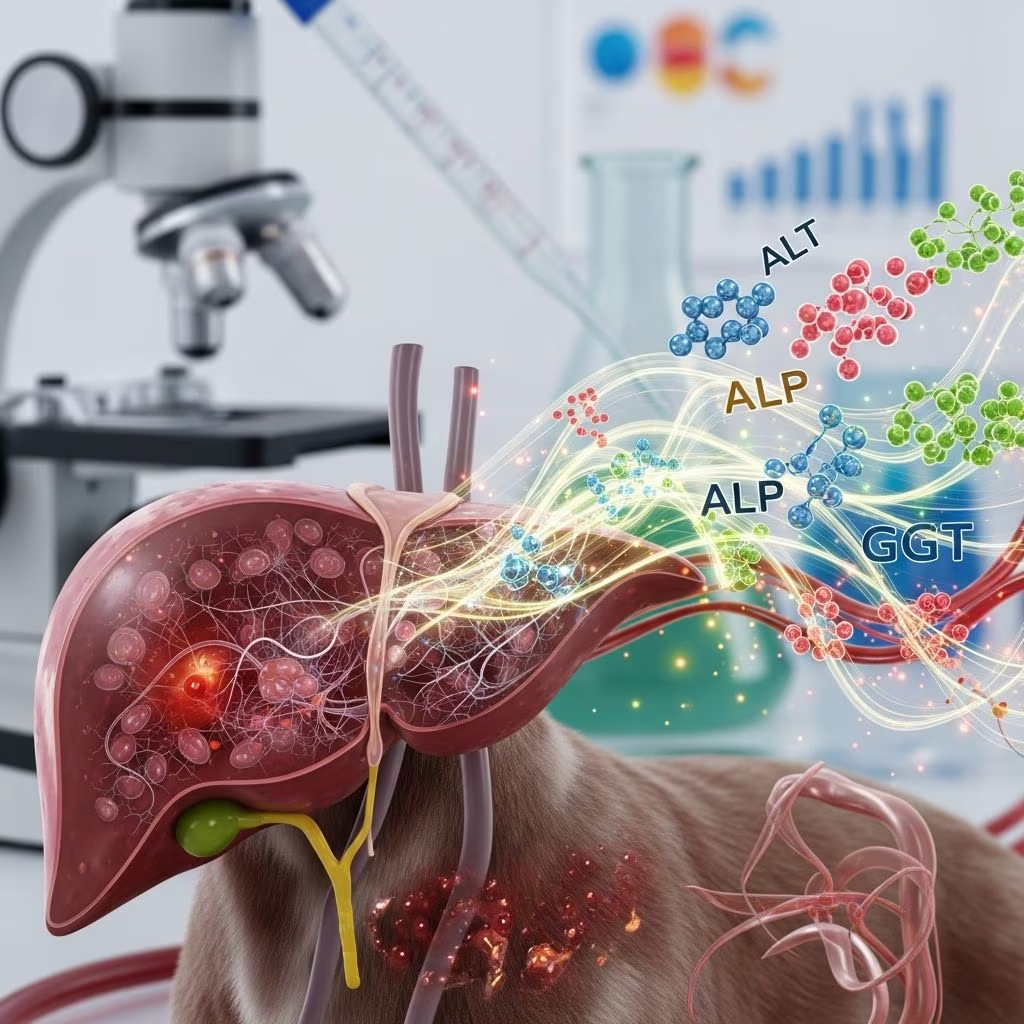
Elevated liver enzyme levels in routine blood panels often signal potential hepatic concerns in dogs and cats, though they primarily indicate cellular damage rather than organ function. These markers help veterinarians pinpoint issues like hepatocyte injury or bile flow obstruction, but require contextual evaluation with clinical history and additional assays.
Fundamentals of Hepatic Enzyme Testing
Liver enzymes serve as indicators of tissue damage or physiological stress rather than direct measures of liver performance. Common panels assess alanine aminotransferase (ALT), aspartate aminotransferase (AST), alkaline phosphatase (ALP), and gamma-glutamyl transferase (GGT). While sensitive to changes, their low specificity means non-liver conditions like muscle trauma or endocrine disorders can also elevate them.
Interpreting results demands consideration of patient age, breed, fasting status, and medications. Neonates exhibit naturally higher ALP and GGT due to growth and colostrum effects, necessitating age-specific ranges. Persistent elevations over serial tests suggest chronic pathology, while transient spikes may reflect transient stressors.
Key Enzymes and Their Roles
Alanine Aminotransferase (ALT)
ALT stands out for its liver specificity, with concentrations in hepatocytes vastly exceeding plasma levels in healthy pets. Even minor injuries release substantial amounts, making it highly sensitive for detecting necrosis or inflammation. However, it cannot distinguish disease types or severity, and muscle damage occasionally contributes.
In dogs, ALT rises mark hepatocellular damage; in cats, milder increases (2-3 times normal) still hold diagnostic value despite lower baseline hepatic activity.
Aspartate Aminotransferase (AST)
AST appears in multiple organs, including heart, muscle, and kidneys, reducing its hepatic exclusivity. It complements ALT by highlighting widespread tissue injury but demands correlation with other markers to confirm liver involvement.
| Enzyme | Primary Tissue | Sensitivity to Liver Injury | Specificity |
|---|---|---|---|
| ALT | Liver | High | Moderate-High |
| AST | Liver, Muscle, Heart | Moderate | Low |
| ALP | Liver, Bone, Intestine | High (dogs) | Low |
| GGT | Liver, Bile Ducts | High (cholestasis) | Moderate |
Alkaline Phosphatase (ALP)
The most frequent abnormality in canine profiles, ALP boasts high sensitivity but poor specificity due to isoenzyme variants like liver-specific (L-ALP), glucocorticoid-induced (G-ALP), and bone-derived types. In dogs, steroid hormones or growth spurts induce G-ALP, complicating interpretation. Cats show smaller elevations (2-3 fold), aligning with lower hepatic ALP content and rapid clearance.
Gamma-Glutamyl Transferase (GGT)
GGT excels at detecting cholestasis, rising with bile duct proliferation or obstruction. It pairs effectively with ALP; isolated GGT increases suggest biliary issues, while combined elevations indicate broader hepatic compromise.
Patterns of Enzyme Elevations
- Hepatocellular Pattern: Predominant ALT/AST spikes signal direct liver cell damage, as in toxic hepatitis or infectious processes.
- Cholestatic Pattern: ALP/GGT dominance points to bile flow impediments, common in gallstones or neoplasia.
- Mixed Pattern: Concurrent rises of all enzymes reflect advanced multifocal disease.
- Mild/Isolated: Low-grade ALP in small breeds may indicate benign microvascular dysplasia rather than progressive pathology.
Breed predispositions matter: terriers and small dogs warrant routine screening for shunts via enzyme trends.
Distinguishing Damage from Dysfunction
Enzymes detect injury but not capacity; normal levels can mask end-stage cirrhosis with shrunken livers. Total serum bile acids (TSBA) bridge this gap, measuring function via pre- and post-prandial samples. Elevated TSBA flags insufficient mass or shunting, sensitive for portosystemic anomalies in young pups.
Other function tests include ammonia levels, protein synthesis (albumin, clotting factors), and protein C assays, which differentiate shunts from dysplasia.
Diagnostic Approach Step-by-Step
- Initial Screening: Chemistry panel identifies abnormalities.
- Trend Monitoring: Repeat in 2-4 weeks to assess persistence.
- Function Confirmation: Paired TSBA; consider ammonia if encephalopathy suspected.
- Imaging: Ultrasound evaluates architecture, guiding biopsy feasibility.
- Biopsy: Gold standard for histopathology, avoiding in microhepatica or coagulopathies.
Avoid unnecessary invasives in microvascular dysplasia cases with isolated TSBA rises.
Common Pitfalls and Confounders
Up to 2.5% of healthy pets show borderline values; medications like phenobarbital induce ALP. Neonates require adjusted norms. Non-hepatic causes—hyperadrenocorticism, sepsis—mimic primaries, underscoring multimodal evaluation.
Species-Specific Considerations
Dogs: ALP dominates due to isoenzyme complexity; high sensitivity aids screening.
Cats: ALT/GGT more reliable; ALP less dramatic but valuable in context.
Advanced and Emerging Tests
Protein C differentiates shunt types with 93% sensitivity. Cytology via fine-needle aspirates aids initial triage, though histology trumps for etiology.
Frequently Asked Questions (FAQs)
What causes elevated liver enzymes in my dog?
Common culprits include infections, toxins, shunts, or medications; further tests clarify.
Are high enzymes always serious?
No, mild transient rises occur in healthy animals; trends and function tests guide urgency.
Should I fast my pet before testing?
Not for enzymes, but TSBA requires pre/post-meal protocol.
When is a liver biopsy needed?
For persistent abnormalities with function deficits, post-imaging.
Can diet affect results?
Yes, post-prandial TSBA rises normally; neonates from colostrum.
Prognostic Insights from Enzyme Profiles
Severe, sustained ALT/AST elevations (>10x) predict necrosis; cholestatic dominance correlates with obstruction outcomes post-relief. Integrating enzymes with function tests refines prognosis, aiding therapy like ursodiol for cholestasis or surgery for shunts.
For small animal practitioners, a systematic approach—history, serial biochemistries, function assays, imaging—optimizes diagnostics, minimizing overtreatment while catching insidious diseases early.
References
- Hepatic Function Tests in Small Animals — Merck Veterinary Manual. 2023. https://www.merckvetmanual.com/digestive-system/laboratory-analyses-and-imaging-in-hepatic-disease-in-small-animals/hepatic-function-tests-in-small-animals
- Enzyme Activity in Hepatic Disease in Small Animals — Merck Veterinary Manual. 2023. https://www.merckvetmanual.com/digestive-system/laboratory-analyses-and-imaging-in-hepatic-disease-in-small-animals/enzyme-activity-in-hepatic-disease-in-small-animals
- The Approach to Abnormal Liver Enzymes in Companion Animals — Zoetis. 2023. https://www.zoetisus.com/content/_assets/docs/Approach-to-Abnormal-Liver-Enzymes-Whitepaper-TI-07106.pdf
- Liver Enzyme Interpretation and Function Tests — Today’s Veterinary Practice. 2023. https://todaysveterinarypractice.com/hepatology/liver-enzyme-interpretation-and-function-tests/
- Bile Acids in Companion Animals Technical Bulletin — Zoetis Diagnostics. 2023. https://www.zoetisdiagnostics.com/us/assets/Resources/PDF/Bile-Acids-in-Companion-AnimalsTechnical-Bulletin.pdf
- Laboratory Evaluation of the Liver — PubMed (Vet Clin North Am Small Anim Pract). 2017-01-01. https://pubmed.ncbi.nlm.nih.gov/28063744/



