

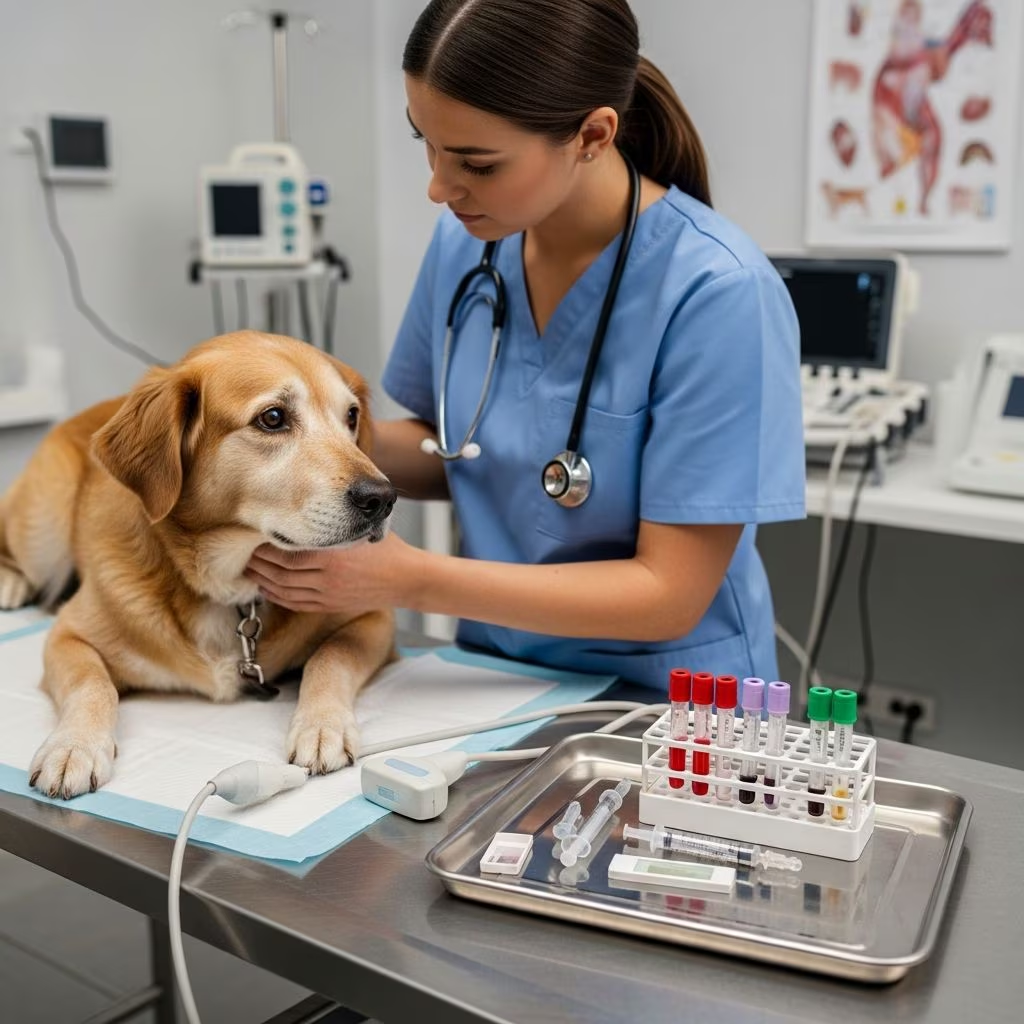
Understanding Liver Disease Testing in Pets
The liver is one of the most vital organs in your pet’s body, responsible for numerous essential functions including detoxification, protein synthesis, and nutrient metabolism. When liver disease is suspected, proper diagnostic testing is crucial for identifying the condition early and determining the most appropriate treatment plan. Veterinarians use a variety of diagnostic tools and laboratory tests to evaluate liver function and identify the underlying cause of hepatic disease in dogs and cats.
Recognizing the signs of liver disease and seeking prompt veterinary care can make a significant difference in your pet’s outcome. Understanding the testing methods available can help pet owners make informed decisions about their pet’s healthcare and work effectively with their veterinarian.
Clinical Signs and Physical Examination
The diagnostic process for liver disease begins with a thorough evaluation of your pet’s clinical signs and physical examination findings. Physical examination findings in animals with liver disease range from minimal changes to more significant signs such as jaundice (icterus), discolored urine, bleeding abnormalities, and signs of hepatic encephalopathy.
Common clinical signs that may warrant liver disease testing include:
- Jaundice or yellowing of the skin, gums, and whites of the eyes
- Vomiting and loss of appetite
- Lethargy and weakness
- Abdominal pain or distension
- Diarrhea or constipation
- Increased thirst and urination
- Dark-colored or discolored urine
- Pale gums or bleeding disorders
During physical examination, your veterinarian will assess your pet for jaundice, hepatomegaly (enlarged liver), or microhepatica (abnormally small liver). In cats, the earliest evidence of jaundice is often detected on the caudal hard palate. A thorough physical examination helps guide the diagnostic process and determines which additional tests are necessary.
Blood Work and Laboratory Testing
Blood work is typically the first diagnostic step when liver disease is suspected. A comprehensive blood panel provides valuable information about liver function and helps differentiate between various types of liver disease.
Complete Blood Count (CBC)
A complete blood count evaluates red blood cells, white blood cells, and platelets. While routine hematology is an important tool to assess for underlying disease processes, the results are usually non-specific in pets with liver disease. A mild non-regenerative anemia of chronic disease is not uncommon in hepatic patients. Mild neutrophilia and monocytosis can be seen with inflammatory liver diseases.
Liver Enzymes
Serum chemistry panels measure liver enzyme levels, which are among the most commonly evaluated markers of hepatic disease. The primary liver enzymes include alanine aminotransferase (ALT), alkaline phosphatase (ALP), and aspartate aminotransferase (AST). Elevated liver enzyme activities may indicate hepatocellular injury or cholestasis. However, it is important to note that normal liver enzyme values do not definitively rule out liver disease. In cases of severe cirrhosis where liver tissue is extensively scarred, enzyme levels may remain normal despite significant liver dysfunction.
Bilirubin Levels
Bilirubin is less sensitive but more specific than liver enzymes in identifying hepatobiliary disease. Using bilirubin values in conjunction with liver enzymes improves the diagnostic specificity of the enzymes. Bilirubinuria (bilirubin in the urine) is always abnormal in cats and suggests liver disease.
Serum Bile Acids
Serum bile acid (SBA) measurement should be considered the primary functional test to assess liver function in non-jaundiced pets. Abnormal serum bile acid concentrations approach 100 percent specificity for hepatic disease when concentrations exceed 20 μM/L in cats (normal 5 μM/L) and 30 μM/L in dogs (normal 10 μM/L). The primary bile acids, cholic and chenodeoxycholic acids, are synthesized in the liver from cholesterol and then conjugated to an amino acid (primarily taurine in dogs and cats). Significantly elevated pre- or post-prandial serum bile acids can result from reduced hepatic reuptake following active absorption of bile acids from the intestinal lumen through enterohepatic circulation.
Plasma Proteins
Albumin is the major plasma protein synthesized in the liver and serves as an important marker of hepatic synthetic function. Albumin has a half-life of approximately 23 days in dogs. Severe hypoalbuminemia (less than 2.0 g/dL) in dogs may warrant additional liver function testing. Changes such as hypoalbuminemia can suggest hepatic dysfunction, particularly in cases of chronic liver disease.
Cholesterol
Cholesterol levels may be increased, decreased, or normal in canine liver disease. Hypercholesterolemia is associated with decreased biliary excretion and also with endocrine diseases that secondarily affect the liver, such as diabetes mellitus and hyperadrenocorticism. Hypocholesterolemia occurs most commonly in dogs with portosystemic shunts.
Coagulation Markers
Coagulation parameters should be assessed in patients with suspected hepatic disease, as the liver synthesizes many clotting factors. Protein C activity has shown promise in distinguishing certain types of liver disease. Dogs with congenital and acquired portosystemic shunts, hepatic failure, and chronic hepatitis had decreased levels of protein C, with a cutoff value of 70% activity distinguishing dogs with congenital portosystemic shunt from those with microvascular dysplasia with a sensitivity of 93% and a specificity of 88%.
Urinalysis
Urinalysis provides important diagnostic clues regarding the presence and nature of liver disease. Certain urine abnormalities may be present in animals with hepatic dysfunction, including:
- Poorly concentrated urine (specific gravity less than 1.025)
- Bilirubinuria (bilirubin in the urine)
- Ammonium biurate crystals, indicating improper ammonia metabolism
- Bacteriuria
The presence of bilirubin in the urine is significant, especially in cats where any bilirubinuria is considered abnormal and suggests hepatic disease or hemolysis.
Imaging Studies
Diagnostic imaging plays a crucial role in evaluating liver disease and identifying potential underlying causes.
Radiography
Abdominal radiography can be used to assess liver size, position, shape, and evaluate for the presence of other abdominal pathology. As a general rule, dogs with acute liver disease have normal to enlarged livers, while those with chronic disease typically have small livers. Reduced hepatic size is also a common finding in dogs with portosystemic shunts. Survey radiography may produce useful information in animals with suspected hepatobiliary disease, though radiography in the presence of ascites is generally unhelpful because the fluid obscures serosal detail.
Ultrasonography
Ultrasonography can provide very useful information in provisional differentiation of various liver diseases and is highly beneficial in the diagnosis of liver disease. Ultrasonographic findings can help differentiate hepatic lipidosis from other major causes of feline liver disease, including extrahepatic bile duct obstruction, cholangiohepatitis, and metastatic neoplasia. Ultrasonographic features of hepatic lipidosis include diffuse homogeneous hyperechogenicity of the hepatic parenchyma and hepatomegaly, where liver echogenicity is equivalent to or greater than that of spleen and renal cortex (in normal animals the liver is less echogenic than the spleen).
Liver Biopsy and Tissue Sampling
The gold standard for obtaining a definitive diagnosis of liver disease is to perform histopathology, with the exception of portosystemic shunts that have been identified with imaging. Histopathology allows for examination of hepatic tissue architecture, enabling recognition of specific patterns of disease that can help lead to a diagnosis.
Biopsy Methods
Several methods are available for collection of liver tissue, and the technique used will depend on clinician preference, equipment availability, technical skill, and patient stability. Laparoscopy is the method of choice for liver biopsy in dogs with suspected chronic hepatitis, as this minimally invasive method enables gross evaluation of the liver.
Cytologic Examination
Although cytologic examination may not always provide specific information, the cytologic report can provide guidance on differential diagnoses and future diagnostic tests when sufficient clinical history is provided. If cytologic evaluation is attempted, animal owners should be warned that a definitive diagnosis is not guaranteed. When a diagnosis is not identified on cytologic evaluation, biopsy with histologic examination is indicated.
Specialized Testing
For certain suspected liver conditions, specialized testing may be recommended:
Ammonia and Protein C Testing
Suspicion for portosystemic shunting (evidenced by seizures or other signs of encephalopathy), persistently increased liver enzyme activities, or unexplained ammonium urate urolithiasis may warrant ammonia or protein C measurement. Measuring serum bile acid or ammonia concentrations provides a more accurate assessment of liver function than enzyme levels alone.
Breed-Specific Screening
Young small-breed and terrier-type dogs should have serum bile acid concentrations routinely measured during normal health screenings to detect microvascular dysplasia (a hereditary condition affecting liver blood flow) during apparent health. Detection during healthy life allows identification of dogs in which later abnormal serum bile acid concentrations might be misleading when discovered during evaluation of illness.
Diagnostic Approach and Interpretation
Proper selection of tests and knowledge regarding accurate interpretation will enable the clinician to determine if there is significant disease of the liver and whether a liver biopsy is needed. The first step in evaluation of an icteric patient is to rule out hemolytic anemia, which may be life-threatening. A packed cell volume should be determined immediately in any compromised patient.
It is important to recognize that patients with normal liver function test results can still have liver disease. Therefore, although laboratory tests play an important role in diagnosing canine and feline liver disease, definitive diagnosis usually requires a combination of diagnostic imaging and cytologic or histologic assessment of liver tissue.
Frequently Asked Questions About Liver Disease Testing
Q: What is the most important first step when my pet shows signs of liver disease?
A: The first step is a thorough physical examination and blood work (serum chemistry panel). If your pet appears jaundiced, your veterinarian will immediately check for hemolytic anemia to rule out life-threatening conditions.
Q: Can normal liver enzyme levels rule out liver disease?
A: No. Particularly in cases of advanced cirrhosis, liver enzymes may remain normal despite significant liver dysfunction because severely scarred liver tissue contains few enzymes to leak into the bloodstream. Your veterinarian may recommend additional testing such as serum bile acids or imaging.
Q: What does jaundice indicate?
A: Jaundice (yellow discoloration of skin, gums, and mucous membranes) indicates elevated bilirubin levels. While this suggests hepatic disease, your veterinarian must first rule out hemolytic anemia, which is also accompanied by jaundice and can be life-threatening.
Q: Is liver biopsy always necessary?
A: Not always. If imaging clearly identifies portosystemic shunt, biopsy may not be necessary. However, for definitive diagnosis of most liver diseases, histopathology from a biopsy is the gold standard. Your veterinarian will determine if biopsy is indicated based on diagnostic findings.
Q: Why does my cat need special attention for liver disease screening?
A: Cats are particularly susceptible to certain liver conditions like hepatic lipidosis (fatty liver disease) and cholangiohepatitis. Additionally, any bilirubinuria in cats is abnormal and warrants investigation for liver disease.
Q: What does microhepatica indicate?
A: An abnormally small liver (microhepatica) is most commonly found in conjunction with congenital portosystemic shunt or chronic severe liver disease such as cirrhosis, and warrants further investigation.
Q: Should my young small-breed dog be screened for liver disease?
A: Yes, young small-breed and terrier-type dogs should have serum bile acid concentrations measured during routine health screenings to detect microvascular dysplasia, a hereditary condition affecting liver blood flow.
References
- Liver Disease: Diagnostic Evaluation (Proceedings) — DVM360. 2024. https://www.dvm360.com/view/liver-disease-diagnostic-evaluation-proceedings
- Liver Disease in Dogs — PetMD. 2024. https://www.petmd.com/dog/conditions/digestive/liver-disease-dogs
- Liver Enzyme Interpretation and Liver Function Tests — Today’s Veterinary Practice. 2024. https://todaysveterinarypractice.com/hepatology/liver-enzyme-interpretation-and-function-tests/
- What to Do if You Suspect Liver Disease — Veterinary Practice. 2024. https://www.veterinary-practice.com/article/what-to-do-if-you-suspect-liver-disease
- How We Diagnose Liver Disease in Animals — Long Beach Animal Hospital. 2024. https://lbah.com/tips/how-we-diagnose-liver-disease-in-animals/
- Hepatic Function Tests in Small Animals — Merck Veterinary Manual. 2024. https://www.merckvetmanual.com/digestive-system/laboratory-analyses-and-imaging-in-hepatic-disease-in-small-animals/hepatic-function-tests-in-small-animals
- Guidelines for Collecting Liver Samples to Characterize Liver Disease — Texas A&M Veterinary Medical Diagnostic Laboratory. 2024. https://tvmdl.tamu.edu/education-library/guidelines-for-collecting-liver-samples-to-characterize-liver-disease/
- ACVIM Consensus Statement on the Diagnosis and Treatment of Chronic Hepatitis in Dogs — Journal of Veterinary Internal Medicine, National Center for Biotechnology Information. 2019. https://pmc.ncbi.nlm.nih.gov/articles/PMC6524396/



