

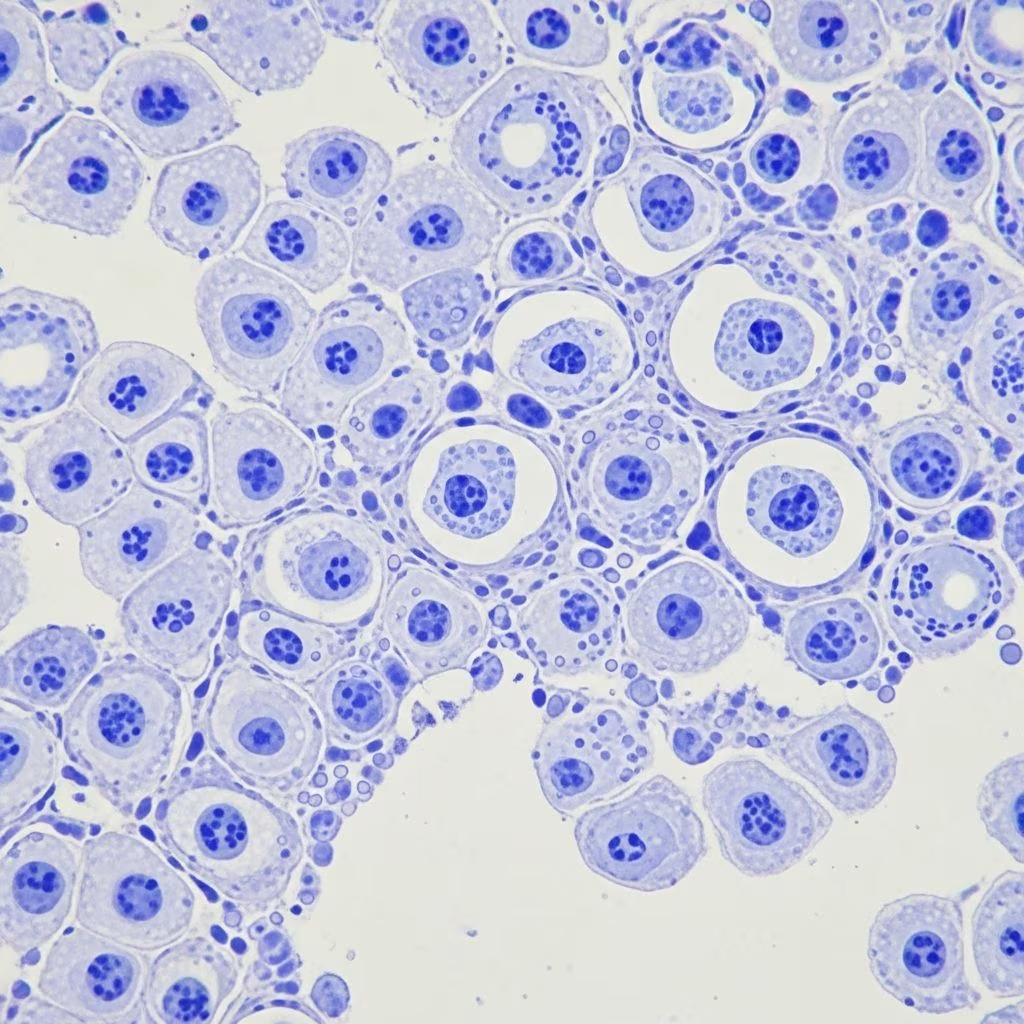
Liver cytology serves as a minimally invasive method to assess hepatic health in dogs and cats, primarily through fine-needle aspiration (FNA). This approach yields quick insights into cellular changes, aiding in the identification of infections, tumors, and metabolic disorders while often avoiding the need for surgical biopsies initially.
Why Perform Liver Cytology?
Veterinarians turn to liver cytology when routine blood tests reveal elevated liver enzymes, imaging shows enlarged livers or unusual masses, or clinical signs like jaundice and lethargy persist. Ultrasound-guided FNA is preferred for precision, targeting specific areas of concern. This technique is cost-effective and provides rapid results, making it ideal for initial screening.
- Key triggers: Abnormal liver function tests, hepatomegaly detected on palpation or ultrasound, focal lesions or diffuse parenchymal changes.
- Advantages: Low risk, outpatient procedure, high cellular yield from most liver regions.
- Patient preparation: Minimal; sedation may be used for anxious pets, with clotting profiles checked beforehand.
Step-by-Step Procedure for Sample Collection
Collecting optimal samples is crucial for reliable interpretation. Use a 22-25 gauge needle attached to a 10-12 mL syringe for ultrasound-guided aspirations. Perform 3-5 passes from different liver lobes to ensure representative sampling. Air the material onto glass slides, make direct smears, and stain with Wright-Giemsa or Diff-Quik for immediate review.
| Step | Description | Tips for Success |
|---|---|---|
| 1. Imaging | Ultrasound to identify target areas | Avoid vascular structures |
| 2. Aspiration | Insert needle, apply suction, redirect | Multiple sites for heterogeneity |
| 3. Smear Preparation | Expel, spread thinly | Prevent clotting; fix promptly |
| 4. Staining | Wright-Giemsa or Romanowsky | Assess cellularity on-site |
Post-procedure monitoring is brief, with rare complications like hemorrhage in coagulopathic animals.
Recognizing Normal Liver Cells
Healthy hepatocytes dominate aspirates, appearing in clusters or singly with abundant pale blue cytoplasm and fine granulation. Nuclei are round with prominent nucleoli; binucleation occurs normally in up to 10% of cells. Greenish pigment (lipofuscin) in older animals signals aging, not disease.
- Hepatocytes: Large (20-30 μm), polygonal, eccentric nuclei.
- Bile duct cells: Smaller clusters, uniform cuboidal shape.
- Supportive cells: Sparse macrophages, endothelial fragments.
Low numbers of lymphocytes or plasma cells may appear without pathology.
Common Pathologic Findings
Neoplastic Changes
Cytology excels at detecting round cell tumors like lymphoma, where uniform large lymphocytes with scant cytoplasm and high mitotic rates fill the slide. Mast cell tumors show purple granules, while histiocytic sarcomas feature pleomorphic giant cells. Metastatic carcinomas present as cohesive clusters of atypical epithelial cells. However, well-differentiated hepatocellular carcinomas mimic normal cells, often requiring histopathology.
Inflammatory Patterns
Neutrophils indicate acute suppurative hepatitis, possibly bacterial. Lymphocytic infiltrates in cats raise cholangitis concerns, but distinguishing from low-grade lymphoma demands ancillary tests like flow cytometry or PCR. Mixed inflammation with macrophages suggests chronic processes.
Metabolic and Storage Disorders
Hepatic lipidosis in cats yields vacuolated hepatocytes with empty cytoplasmic spaces, a hallmark of obesity-related disease. Copper accumulation, common in Bedlington terriers, appears as refractile granules, confirmed by special stains.
Diagnostic Challenges and Pitfalls
Not all diseases yield diagnostic samples. Fibrosis, vascular anomalies, and nodular hyperplasia appear non-specific or acellular. Cysts often provide fluid with few cells, misleading cytology. Negative results do not exclude disease; correlate with biochemistry and imaging.
- False negatives: Low-sensitivity for subtle hepatitis or early neoplasia.
- Artifacts: Blood contamination obscures cells; over-staining distorts morphology.
- Species differences: Cats show more lymphocytic backgrounds normally.
When to Escalate to Biopsy
If cytology is inconclusive, pursue incisional or laparoscopic biopsy. Collect samples from multiple lobes: formalin-fixed for histology, fresh for culture and copper quantification. Special stains like rhodanine (copper), Prussian blue (iron), and trichrome (fibrosis) enhance characterization.
ACVIM guidelines recommend at least four samples from two lobes for chronic hepatitis evaluation.
Integrating Cytology with Other Diagnostics
Combine cytology with serum bile acids, ammonia levels, and abdominal radiographs for a holistic view. Ultrasound features—hypoechoic masses suggest malignancy, while hyperechoic patterns indicate lipidosis—guide interpretation.
| Cytology Finding | Likely Differentials | Next Steps |
|---|---|---|
| Large lymphoid cells | Lymphoma, leukemia | Immunophenotyping, PARR |
| Vacuolated hepatocytes | Lipidosis, vacuolar change | Biochemistry, biopsy |
| Granular pigment | Copper, lipofuscin | Quantitative analysis |
| Neutrophils + bacteria | Abscess, infection | Culture, antibiotics |
Advances and Future Directions
Emerging tools like digital cytology and AI-assisted pattern recognition promise improved accuracy. Molecular panels for clonality (PARR) already aid lymphoma differentiation.
Frequently Asked Questions (FAQs)
What is the success rate of liver FNA?
High cellularity in 80-90% of cases, diagnostic in 60-70% for overt diseases.
Is sedation always required?
No, but recommended for patient comfort and safety.
Can cytology diagnose cancer definitively?
Yes for round cell tumors; inconclusive for primary hepatic carcinomas.
How do I prepare my clinic for cytology?
Stock fine needles, stains, and partner with a cytopathologist.
What breeds are prone to copper issues?
Bedlington terriers, Westies, Dobermans.
References
- Color Atlas of Canine and Feline Liver Cytology — MSPCA-Angell. Accessed 2026. https://www.mspca.org/angell_services/color-atlas-of-canine-and-feline-liver-cytology/
- Guidelines for Collecting Liver Samples to Characterize Liver Disease — Texas A&M Veterinary Medical Diagnostic Laboratory. Accessed 2026. https://tvmdl.tamu.edu/education-library/guidelines-for-collecting-liver-samples-to-characterize-liver-disease/
- Cytologic Evaluation of the Liver — PubMed (Elsevier). 2025. https://pubmed.ncbi.nlm.nih.gov/40360339/
- Liver Cytology — Veterian Key. Accessed 2026. https://veteriankey.com/liver-cytology/



