

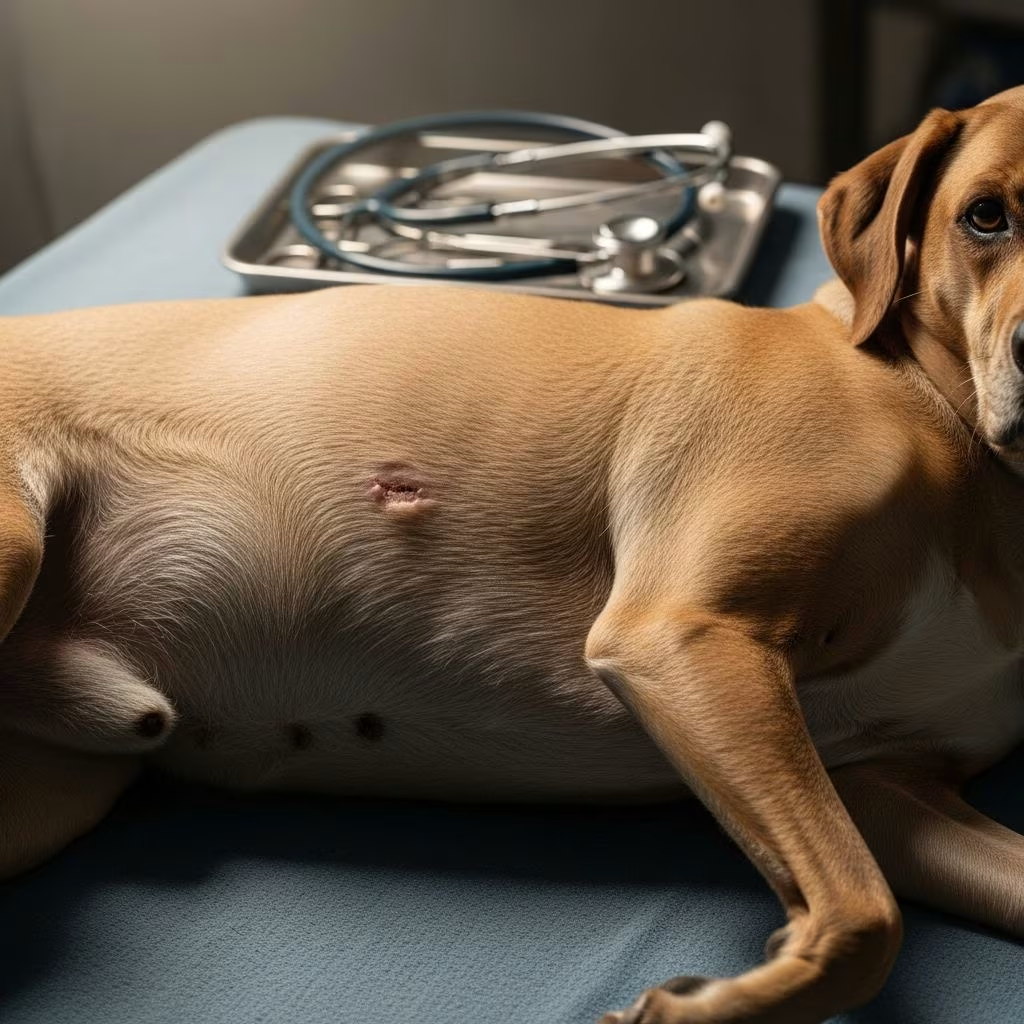
The liver is a vital organ in dogs, responsible for detoxification, metabolism, and nutrient processing. When cancer affects this organ, it can lead to severe health complications. Primary liver cancers originate in the liver tissue, while secondary ones spread from elsewhere in the body. Understanding this disease is crucial for timely intervention.
Understanding the Liver’s Role and Cancer Development
Dogs rely on their liver for filtering toxins, producing proteins, and aiding digestion. Cancer disrupts these functions, potentially causing widespread effects. Most liver tumors in dogs are benign, but malignant ones, particularly hepatocellular carcinoma (HCC), pose significant risks. HCC is the predominant primary liver cancer, often appearing as a single large mass, multiple nodules, or diffuse infiltration.
Benign tumors like nodules or cysts rarely spread, but malignant types can metastasize to lungs, lymph nodes, or other sites. Factors like age (older dogs over 10 years), breed predispositions (e.g., German Shepherds, Labrador Retrievers), and environmental toxins may contribute, though exact causes remain unclear.
Recognizing Early Warning Signs
Liver cancer often remains silent in initial stages, making routine veterinary check-ups essential. Bloodwork can reveal elevated liver enzymes before symptoms appear. As tumors grow, dogs exhibit noticeable changes:
- Lethargy and weakness: Reduced energy and reluctance to play or walk.
- Appetite loss and weight reduction: Refusal of food leading to rapid emaciation.
- Gastrointestinal issues: Frequent vomiting, diarrhea, or nausea.
- Increased thirst and urination: Polydipsia and polyuria due to toxin buildup.
- Abdominal swelling: Fluid accumulation (ascites) from liver enlargement or portal hypertension.
- Jaundice: Yellowing of gums, eyes, and skin from bile buildup.
- Neurological symptoms: Seizures, disorientation, or stumbling from hepatic encephalopathy.
Owners should monitor for these signs, especially in senior dogs, and seek immediate veterinary care if multiple symptoms coincide.
Diagnostic Approaches for Accurate Detection
Veterinarians use a multi-step process to confirm liver cancer. Initial blood tests assess liver enzymes (ALT, AST, ALP), bilirubin, and clotting factors. Abnormalities suggest liver dysfunction.
Imaging plays a key role:
| Method | Purpose | Advantages |
|---|---|---|
| Ultrasound | Visualize tumors, size, and location | Non-invasive, detects masses and fluid |
| CT/MRI Scan | Assess tumor extent and metastasis | High detail for surgical planning |
| X-rays | Check for spread to lungs or abdomen | Quick initial screening |
A definitive diagnosis requires biopsy, either via needle aspiration or surgical sampling, to differentiate benign from malignant tumors and identify the type. Fine-needle aspiration carries risks like bleeding due to the liver’s vascular nature.
Primary Types of Canine Liver Tumors
Liver cancers vary in form and aggression:
- Hepatocellular Carcinoma (HCC): Most common primary type, often a massive single tumor with lower metastasis rate but high local invasion risk.
- Cholangiocellular Carcinoma: Originates from bile ducts, more aggressive with higher spread potential.
- Other Rare Types: Neuroendocrine tumors, sarcomas, or hemangiosarcomas.
- Metastatic Tumors: From spleen, pancreas, or elsewhere; account for most malignant liver masses.
The massive HCC form offers the best prognosis post-surgery, while diffuse types are harder to treat.
Treatment Strategies: From Surgery to Supportive Care
Treatment depends on tumor type, size, location, and overall health. Surgery remains the gold standard for resectable primary tumors.
Surgical Options: Lobectomy removes affected liver lobes. The liver’s regenerative capacity allows dogs to recover function remarkably, often within weeks. Dogs with single-lobe HCC can live 1-3 years post-surgery. Untreated HCC increases mortality risk 15-fold due to rupture or bile duct obstruction.
Non-Surgical Alternatives:
- Chemotherapy: Metronomic low-dose protocols or drugs like Palladia (toceranib) target tumor growth with minimal side effects like mild fatigue or GI upset. Effective for multi-lobe or metastatic cases.
- Stereotactic Radiation: Precise beams destroy tumors without surgery; promising for inoperable masses, extending survival months to years.
- Palliative Care: For advanced cases, focuses on symptom relief with fluids, anti-nausea meds, and low-fat diets.
Post-treatment, monitoring includes regular bloodwork and imaging. Supplements like SAMe or milk thistle support liver health, alongside antibiotics if infections arise.
Prognosis and Long-Term Outlook
Outcomes vary widely. Surgical removal of massive HCC yields median survival of 1-2 years, with some dogs exceeding 3 years. Metastatic or diffuse cancers have poorer prognoses, often 3-6 months without aggressive therapy.
Factors influencing survival:
- Tumor stage at diagnosis
- Metastasis presence
- Dog’s age and comorbidities
- Response to treatment
Early detection dramatically improves chances. Many treated dogs regain normal activity levels.
Preventive Measures and Routine Monitoring
While not fully preventable, risk reduction includes:
- Annual senior wellness exams with blood panels.
- Avoiding toxins like aflatoxins in moldy food or certain chemicals.
- Maintaining ideal weight and balanced nutrition to support liver function.
- Spaying/neutering may lower certain cancer risks.
Breed-specific screenings for at-risk dogs enhance early intervention.
Frequently Asked Questions (FAQs)
What is the most common symptom of liver cancer in dogs?
Lethargy, appetite loss, and jaundice are frequent, but early stages may be symptom-free.
Can liver cancer in dogs be cured?
Surgery can cure resectable primary tumors like massive HCC, with long-term survival possible.
How much does liver cancer treatment cost for dogs?
Varies widely: surgery $3,000-$7,000; chemo/radiation additional $2,000-$5,000. Consult vets for estimates.
Is liver cancer hereditary in dogs?
No strong genetic link, but breeds like Labs show higher incidence.
What diet helps dogs with liver issues?
Low-protein, high-quality diets reduce liver workload; vet-prescribed options best.
Living with a Dog Diagnosed with Liver Cancer
Emotional support for owners is vital. Join pet cancer groups, track symptoms via apps, and prioritize quality time. Hospice care ensures dignity in end stages. Advances in veterinary oncology offer hope, with ongoing research into targeted therapies.
References
- Liver Cancer in Dogs: Signs, Symptoms, Treatments — American Kennel Club. 2023-10-15. https://www.akc.org/expert-advice/health/liver-cancer-in-dogs/
- Hepatocellular Carcinoma in Dogs: Understanding This Common Liver Cancer — FidoCure Blog. 2024-05-20. https://blog.fidocure.com/fidocure-blog/hepatocellular-carcinoma-in-dogs-understanding-this-common-liver-cancer
- Signs & Symptoms of Liver Cancer in Dogs — Matthews Carolina Veterinary Specialists. 2020-07-29. https://www.matthews.carolinavet.com/site/pet-health-blog/2020/07/29/liver-cancer-in-dogs-signs-symptoms-causes
- Liver Cancer in Dogs – Symptoms, Causes, Types & Treatment — Greensboro Carolina Veterinary Specialists. 2024-05-30. https://www.greensboro.carolinavet.com/site/greensboro-specialty-veterinary-blog/2024/05/30/dog-liver-cancer
- Learn About Liver Cancer In Dogs — PetCure Oncology. 2023-11-10. https://petcureoncology.com/liver-cancer-in-dogs/
- Canine Hepatobiliary Tumors — NC State Veterinary Hospital. 2024-02-14. https://hospital.cvm.ncsu.edu/services/small-animals/cancer-oncology/oncology/medical-oncology-canine-hepatobiliary-tumors/
- Liver Tumors — American College of Veterinary Surgeons. 2023-08-05. https://www.acvs.org/small-animal/liver-tumors/



